Pokémon and baseball might seem like an odd pairing at first glance, but they’re actually tapping into the same deep well of nostalgia that defines how millennials and Gen Z relate to their hobbies. Both franchises emerged in the 1990s at precisely the moment when these generations were forming their foundational memories. When you spent your Saturday mornings watching Pokémon episodes before heading to Little League games, or collected Pokémon cards in the same dugout mentality you brought to baseball card trading, the two became intrinsically linked in your cultural DNA. The 2026 Pokémon Baseball Festival, which launched in February to commemorate Pokémon’s 30th anniversary, proves this connection is more than nostalgic sentiment—it’s a genuine market convergence.
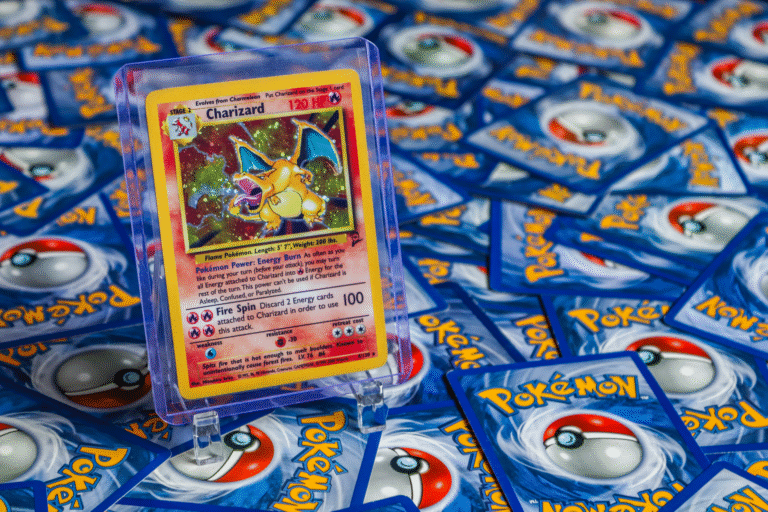
The partnership feels inevitable when you examine the numbers. Gen Z has a 71% engagement rate with Pokémon, with 40% expressing genuine affection for the franchise, while millennials track close behind at 57% engagement and 30% affection. Baseball, too, retains this multigenerational pull, even as its core audience ages. What makes the pairing particularly potent is that both properties operate in the same collector economy, use similar pack-based randomization mechanics (whether opening baseball card packs or Pokémon booster boxes), and evoke the same specific flavor of childhood freedom. In May 2026, people remain “obsessed with Pokémon cards” to the point of driving retail shortages—and increasingly, those same collectors are the ones wearing baseball jerseys and understanding why a 1952 Topps card and a first-edition Charizard can sit comfortably in the same investment portfolio.
Table of Contents
- How Baseball and Pokémon Became the Nostalgia Pairing Collectors Couldn’t Resist
- The 2026 Moment – When the Pokémon Baseball Festival Made the Connection Official
- From Stadium Fans to Card Collectors – How MLB Players Are Reshaping Pokémon Culture
- The Market Reality – Why Pokémon Cards Outperform in the Collector Economy
- The Saturation Question – Understanding Limits to the Nostalgia Convergence
- Backyard Baseball and Modern Nostalgia – How Gen Z Is Rekindling Pre-Digital Collecting Culture
- The Sustainability Question – What’s Next for the Pokémon-Baseball Nostalgia Cycle
- Conclusion
- Frequently Asked Questions
How Baseball and Pokémon Became the Nostalgia Pairing Collectors Couldn’t Resist
The nostalgia connection between these two properties runs deeper than surface-level overlap. Both emerged during the same cultural window and both rely on the same fundamental mechanic: the thrill of opening sealed packs and discovering what’s inside. For anyone who grew up in the 1990s and early 2000s, these weren’t just separate hobbies—they were parallel activities that occupied the same Saturday afternoon. You traded pokémon cards at recess and baseball cards in the dugout. You watched anime on one channel and baseball on ESPN on another. The properties didn’t compete for attention; they coexisted in the same cultural space.
Generationally, the math is striking. According to YouGov data, 71% of Gen Z has engaged with Pokémon in some form, with 40% reporting genuine affection for the franchise. Millennials aren’t far behind at 57% engagement and 30% affection. Baseball maintains similar penetration, particularly among millennials who grew up attending games or collecting cards as a core part of childhood. What’s remarkable is that these engagement percentages suggest that for many collectors, both properties occupy significant mental real estate. The pairing works because it doesn’t require you to choose between them—instead, it reinforces the idea that both are equally legitimate repositories of childhood memory and grown-up collecting passion.

The 2026 Moment – When the Pokémon Baseball Festival Made the Connection Official
Any doubt about whether these properties could successfully merge was erased in February 2026, when Japan’s Professional Baseball league launched the Pokémon Baseball Festival 2026 to commemorate Pokémon’s 30th anniversary. All 12 professional baseball teams participated in what the league called “Putting 30 Years of Memories into the Ball”—a campaign that went far beyond a simple crossover. The initiatives included Pokémon-themed games across all 12 teams, dedicated Pokémon merchandise sales at stadiums, and integrated Pokémon GO events designed to draw players into the physical baseball experience. This wasn’t a one-off marketing gimmick.
The baseball festival demonstrates that both properties understand they’re not competing for the same audience—they’re serving the same audience with complementary nostalgia hooks. A 35-year-old who attended Pokémon tournaments in middle school and played Little League is the exact demographic both industries have been trying to reach for the past decade. By creating a formal partnership around Pokémon’s 30th anniversary, the baseball establishment implicitly acknowledged what collectors have known for years: the childhood memories connected to both properties are inseparable for an entire generation. The risk, however, is that casual crossovers can feel forced if they’re not grounded in genuine shared history. This partnership works because it’s rooted in actual demographic overlap, not manufactured synergy.
From Stadium Fans to Card Collectors – How MLB Players Are Reshaping Pokémon Culture
What legitimizes this pairing most powerfully is the fact that professional baseball players themselves have become serious Pokémon collectors. As of 2026, MLB players are “at the forefront of celebrity Pokémon collectors,” participating in pack-ripping sessions inside clubhouses and even wearing custom-made gloves featuring actual Pokémon cards. This isn’t casual fandom—these are elite athletes treating Pokémon cards with the same collecting seriousness they’d apply to vintage memorabilia from their own sport. The specificity of this trend is important. MLB players aren’t just buying Pokémon cards; they’re integrating them into the clubhouse culture in ways that blur the line between their two professional identities.
A pitcher might wear a glove adorned with a Charizard card, then discuss in interviews which vintage Pokémon packs they recently acquired. This normalizes Pokémon collecting within sports culture in a way that trickles down to younger fans and casual collectors. It signals that serious card collecting—whether you’re focused on baseball or Pokémon—is a legitimate adult hobby worth time and capital. The limitation here is that celebrity endorsement, even organic ones like this, can drive artificial hype that eventually corrects. Players’ involvement in Pokémon collecting may be genuine, but it’s also happening during a documented surge in Pokémon card demand and prices, which means it’s difficult to separate authentic passion from market momentum.

The Market Reality – Why Pokémon Cards Outperform in the Collector Economy
To understand why this pairing resonates with serious collectors and investors, you need to understand the raw market dynamics. The global trading card market was valued at approximately $7.5 billion in 2025, with projections for 7-8% annual growth. Within this market, Pokémon cards have dramatically outperformed traditional sports cards. While PSA graded 9.10 million sports cards in 2024, Pokémon and non-sports trading cards combined for 6.23 million—a gap that would seem to favor baseball, except that Pokémon’s per-card value appreciation tells a completely different story. Over a 20-year period, Pokémon cards have appreciated 3,261% in value—a return that puts even the strongest sports card markets to shame.
Quarterly data from GameStop in Q1 2025 showed that collectibles (primarily Pokémon and sports cards) comprised 29% of total sales, actually outselling video game software. For investors and collectors, Pokémon represents not nostalgia with upside potential, but upside potential wrapped in nostalgia. The pairing between baseball and Pokémon works at the investment level because collectors can diversify their nostalgia holdings. You’re not betting entirely on whether vintage baseball cards will appreciate; you’re hedging into a market where Pokémon has demonstrated significantly stronger 20-year returns. The tradeoff is that Pokémon’s superior returns have attracted market speculation and price inflation in ways that baseball cards haven’t experienced at the same scale. Higher returns mean higher risk, and the sustainability of 3,261% appreciation across 20 years is not guaranteed to continue.
The Saturation Question – Understanding Limits to the Nostalgia Convergence
While the Pokémon-baseball pairing is undeniably powerful for certain demographics, it’s important to recognize that not everyone finds both properties equally resonant. Yes, Gen Z shows 71% engagement with Pokémon, but that still leaves 29% of the generation with little to no connection to the franchise. Baseball engagement, while still strong, is actually declining among younger demographics in ways that Pokémon engagement isn’t. The pairing works exceptionally well for the millennial and older Gen Z cohorts who lived through both properties’ originating moments, but it becomes less universally appealing the younger you go. There’s also a real risk of market saturation from the collector side.
If professional baseball players are ripping Pokémon packs in clubhouses and casual investors are entering the market based on the 3,261% historical appreciation figure, you’re adding speculation to what has been a supply-constrained market. Increased demand pushes prices up, but it also attracts counterfeits and market manipulation. The baseball-Pokémon crossover has temporarily amplified demand for both collectibles, but that amplification is itself a warning signal. When niche hobbies become mainstream investment vehicles, the enthusiasts who actually love the properties often find their hobby has become priced out of reach. A genuine Pokémon collector in May 2026 is navigating a market where cards are more expensive than ever, partly because institutional and celebrity interest has spiked. That’s good for existing collectors, bad for new ones entering the hobby.

Backyard Baseball and Modern Nostalgia – How Gen Z Is Rekindling Pre-Digital Collecting Culture
One of the clearest signals that this pairing is resonating across generations came at PAX East 2026, where millennial attendees were actively playing “Backyard Baseball” video game demos, with nostalgia “on full display” according to coverage from The Boston Globe. This detail matters because it shows that the nostalgia cycle isn’t just about cards or franchises—it’s about the entire ecosystem of how these properties were consumed. For millennials, Backyard Baseball was the digital extension of their baseball cards and Pokémon collection experiences. Seeing grown adults line up to play this game in March 2026 demonstrates that the nostalgia is multi-dimensional. This cross-media nostalgia creates a complete experience loop that baseball cards or Pokémon cards alone can’t provide. You can open a pack of Pokémon cards and remember the rush of discovery. You can play Backyard Baseball and remember the strategy and humor of childhood gaming.
You can watch a baseball game and remember the summer afternoons. When all three exist in the same cultural moment—as they did at PAX East 2026—they reinforce each other. For collectors, this means the pairing isn’t just about relative value or investment potential; it’s about recreating the complete childhood experience in adulthood. The practical implication is that collectors pursuing this nostalgia pairing might find themselves spending across multiple product categories, not just cards. Pokémon collections expand to include video games, vintage editions, and modern reprints. Baseball interests expand to include attending games, collecting memorabilia, and participating in fantasy leagues. The pairing is powerful partly because it encourages spending across multiple revenue streams.
The Sustainability Question – What’s Next for the Pokémon-Baseball Nostalgia Cycle
Looking forward into late 2026 and beyond, the sustainability of this pairing depends on several factors that aren’t entirely in the control of either franchise. Pokémon’s 30th anniversary celebration will eventually conclude, and the Pokémon Baseball Festival, while successful in February 2026, is a time-limited initiative. Baseball seasons cycle annually, and while the 2026 partnership was meaningful, there’s no guarantee it will be formalized into an ongoing partnership. What the convergence has demonstrated, however, is that the collector base for both properties is substantial, overlapping, and willing to spend on crossover experiences.
The real indicator of long-term viability will be whether this pairing survives beyond the 30th anniversary moment. If Pokémon and baseball continue to find ways to integrate—whether through card collaborations, stadium events, or celebrity athlete involvement—the pairing could become a permanent feature of the collector landscape. If the convergence was purely anniversary-driven and fails to extend, we’ll likely see demand cycle back to the separate, parallel collecting culture that existed before February 2026. For individual collectors and investors, the lesson is clear: the pairing is powerful right now, but treating it as a permanent market dynamic might lead to poor purchasing decisions down the road. Buy what resonates with your actual nostalgia, not what you think the market demands.
Conclusion
Pokémon and baseball are the perfect nostalgia pairing not because the franchises were ever formally linked in their original marketing, but because they occupied the same childhood moment for millions of people. Both emerged in the 1990s, both use randomized pack mechanics that create identical psychological rewards, and both retain powerful generational audiences who are now adults with disposable income. The 2026 Pokémon Baseball Festival and the participation of MLB players in Pokémon collecting simply made official what collectors have known for years: these properties are inseparable in the memory ecosystem of anyone who grew up in the 1990s and early 2000s. For collectors and investors, the pairing represents both opportunity and risk.
Pokémon cards have demonstrated superior long-term appreciation compared to sports cards, and the crossover moment has temporarily amplified demand for both. But with that amplification comes saturation, price inflation, and the question of whether this convergence is sustainable beyond 2026. The strongest approach is to engage with both properties authentically—collect what you genuinely love, understand the market dynamics driving current prices, and recognize that nostalgia, while powerful, is a volatile basis for investment decisions. The pairing will likely remain meaningful for this generation of collectors, but its role as a temporary market phenomenon is worth acknowledging as you make long-term collecting decisions.
Frequently Asked Questions
Are Pokémon cards actually a better investment than baseball cards?
Pokémon cards have appreciated 3,261% over 20 years, significantly outpacing most baseball card categories. However, this reflects historical performance, not guaranteed future returns. Current prices have been inflated by recent investor interest, which increases risk.
Will the Pokémon Baseball Festival partnership continue beyond 2026?
The 2026 festival was specifically tied to Pokémon’s 30th anniversary. While successful, there’s no announced continuation. The partnership’s long-term status is unclear, which means basing collecting decisions on this specific collaboration carries risk.
Is it too late to start collecting either Pokémon or baseball cards?
It’s never too late to collect, but it’s arguably a bad time to start if your primary motivation is investment returns. Current prices are elevated, and the market is experiencing more speculation than it was even six months ago. Collect for enjoyment first, potential appreciation second.
Why do MLB players collecting Pokémon cards matter?
Celebrity involvement legitimizes Pokémon collecting within sports culture and signals to younger fans that card collecting is a serious, adult-appropriate hobby. However, this involvement also potentially inflates demand and prices in ways that may not be sustainable.
What’s the difference between collecting for nostalgia versus investment?
Nostalgia-driven collectors buy what they personally love and feel emotionally connected to, regardless of current market value. Investment-driven collectors prioritize appreciation potential and market trends. The best approach combines both: collect what you love while being realistic about market dynamics.
Is the Pokémon card market saturated?
May 2026 data shows sustained, intense demand for Pokémon cards, suggesting the market isn’t saturated yet from a demand perspective. However, prices are at historic highs, and celebrity/institutional interest has increased counterfeiting risk and market volatility. Supply constraints are easing, which could pressure prices downward over time.