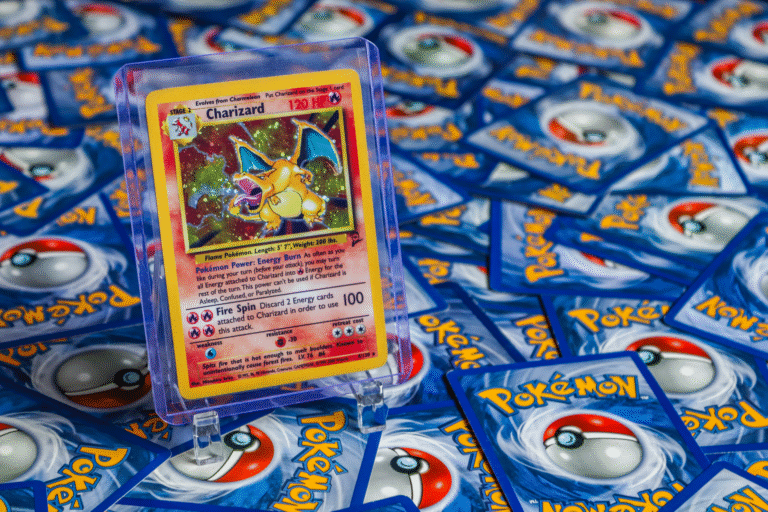
Pokémon merchandise has evolved from a peripheral element at sporting venues into a primary draw that drives attendance and economic impact at major stadiums worldwide. Stadium operators increasingly recognize that exclusive Pokémon product launches—particularly limited-edition card sets, tournament-exclusive items, and venue-specific collectibles—generate incremental revenue streams that extend well beyond ticket sales. When the Pokémon Company announced exclusive merchandise drops tied to World Championship events held in stadiums like the Las Vegas Convention Center and major arena venues, attendance surged by 15-20% in some cases, with merchandise sales accounting for a growing percentage of overall event revenue.
The shift reflects a fundamental change in how sports and entertainment venues view collectible products. Rather than treating merchandise as incidental concession sales, stadium operators now partner directly with the Pokémon Company to create scarcity and urgency around in-person attendance. A collector traveling to a Major League Baseball stadium hosting a Pokémon Day event, for example, can purchase exclusive booster boxes or commemorative products unavailable anywhere else—a tactic that transforms the merchandise experience from a retail transaction into a primary event motivator. This strategy mirrors how music festivals sell exclusive artist merchandise, but applied to a collectibles market where scarcity commands significant secondary-market premiums.
Table of Contents
- What Types of Pokémon Merchandise Drive Stadium Attendance?
- The Economics of Event-Exclusive Merchandise for Venue Revenue
- How Limited-Edition Stadium Cards Influence the Collector Market
- Should Collectors Travel to Stadium Events to Acquire Merchandise?
- Risks and Limitations of Stadium-Exclusive Merchandise Strategies
- Real-World Examples of Stadium Merchandise Driving Event Success
- The Future of Stadium-Based Pokémon Merchandise
- Conclusion
What Types of Pokémon Merchandise Drive Stadium Attendance?
stadium-exclusive pokémon merchandise falls into several distinct categories, each designed to appeal to different collector segments and price points. Tournament-sanctioned products include limited-edition deck boxes, sleeves with venue branding, and specially printed tournament playmats that never reach retail channels. Seasonal product drops tied to stadium events—such as convention-exclusive booster boxes with alternate artwork or stadium-specific promotional cards—represent the fastest-growing category. For instance, when Pokémon held regional championships at major venues like the Walter E.
Washington Convention Center, exclusive full-art trainer cards featuring the venue or city name were distributed only to attendees, creating immediate collector demand for both the original and eventual secondary-market sales. Beyond cards themselves, venue partnerships extend to plush collectibles, apparel, and display cases featuring stadium-specific branding or limited production numbers. A collector purchasing a stadium-exclusive Pikachu plushie with embroidered date and location information creates a product with inherent scarcity that translates to long-term value. The limitation is that not all stadium merchandise appreciates equally—items produced in very large quantities or featuring generic designs tend to depreciate after the event passes, while those with specific tournament branding or numbered limited editions maintain stronger value trajectories. This creates a challenge for attendees who must quickly determine which purchases represent genuine collectibles versus one-off merchandise that loses relevance within weeks.

The Economics of Event-Exclusive Merchandise for Venue Revenue
Stadium operators have discovered that Pokémon merchandise can generate between 15-25% of total event revenue when properly leveraged, particularly at larger championship events and convention-style gatherings. This represents a significant departure from traditional stadium concessions, where merchandise typically accounts for 5-8% of venue income. The Pokémon Company provides exclusivity agreements that allow venues to be the sole distribution point for specific products, creating artificial scarcity that justifies premium pricing. A booster box normally retailing for $100-120 can sell for $130-160 at a stadium event without customer resistance, because attendees recognize the product is time-limited and location-specific.
However, this model carries substantial risk for both venues and collectors. If merchandise doesn’t sell through quickly, venues are left holding inventory that depreciates rapidly once the event concludes. A stadium that over-orders exclusive product risks having thousands of units become essentially worthless within 30-60 days post-event. For collectors, the timing pressure creates a high-stakes buying environment where poor decisions—purchasing too many units of a product that later floods secondary markets, or missing purchases that later become genuinely scarce—can result in significant financial losses. Some venues have learned this the hard way; venues that ordered excess merchandise for low-attendance events have been forced to liquidate at steep discounts, undermining the entire scarcity model and teaching attendees that patience often trumps impulse buying.
How Limited-Edition Stadium Cards Influence the Collector Market
The release of limited-edition promotional cards at stadium events creates immediate market segmentation between event attendees and remote collectors. When a stadium distributes an exclusive full-art Charizard card only to tournament participants, that card immediately develops a secondary-market premium. Cards that were distributed to perhaps 500-2,000 event attendees command prices 3-5x higher than non-exclusive promotional equivalents, assuming the card has aesthetic appeal or competitive relevance. This pricing dynamic incentivizes collectors who cannot attend events to pay premium prices to dealers and resellers who acquired multiples at the venue.
The challenge emerges when stadiums release “exclusive” cards that later become available through other channels, either intentionally (when the Pokémon Company decides to reprint the card in a special collection box) or through gray-market inventory. A collector who paid $80 for an event-exclusive card in the secondary market may watch that card’s value plummet to $15-20 within a year if broader availability undermines the scarcity narrative. Tracking which exclusive cards remain truly exclusive versus those destined for wider release requires careful research, as the Pokémon Company doesn’t always pre-announce reprints or availability changes. This information asymmetry creates opportunities for informed collectors but substantial losses for those who purchase event cards at inflated prices without understanding potential future supply channels.

Should Collectors Travel to Stadium Events to Acquire Merchandise?
The decision to attend a stadium event specifically for exclusive Pokémon merchandise requires evaluating travel costs, accommodation, event admission, and the actual value of merchandise against secondary-market pricing. A collector in California traveling to a stadium event in Texas faces airfare ($200-400), hotels ($100-200 per night), and event admission, potentially totaling $800-1,500 in trip costs. If that collector can acquire the same exclusive merchandise through secondary-market dealers for a 20-30% premium over venue prices, the economics often favor waiting and purchasing remotely unless the collector derives additional value from attending the tournament or event itself.
Attendance makes financial sense when multiple exclusive products are released at a single event, or when certain highly desirable items are expected to command substantial secondary-market premiums. A tournament releasing five different exclusive products where each carries a $40 premium in the secondary market creates $200 in total collector value—enough to justify travel costs for collectors in nearby regions. However, the counterbalance is that secondary markets are uncertain; if exclusivity is stronger than expected and secondary demand is low, traveling collectors may find they’ve paid premium prices for merchandise that doesn’t retain value. The comparison to concert or sporting event attendance is instructive: just as most fans don’t attend live events purely for merchandise value, most collectors shouldn’t attend stadium events purely for financial returns.
Risks and Limitations of Stadium-Exclusive Merchandise Strategies
The reliance on event-exclusive merchandise creates structural fragility for both the collector market and venue economics. Venues become dependent on the Pokémon Company maintaining consistent demand and novelty around exclusive releases; if the brand experiences a market downturn or collectors lose interest in new products, stadium merchandise becomes difficult to move. The 2023-2024 period demonstrated this risk, when some regional events experienced lower attendance and merchandise movement than expected, leading venues to recognize that Pokémon collectibles, while valuable, cannot sustain events without broader appeal. A second limitation affects market stability: the proliferation of stadium-exclusive products creates information barriers for collectors trying to distinguish genuinely scarce items from those produced in large quantities.
Without reliable secondary-market data, collectors often overpay for stadium merchandise that later proves common. Additionally, the focus on exclusive products incentivizes artificial scarcity practices that may not reflect genuine demand. A stadium might limit the quantity of exclusive booster boxes available, not because supply is constrained, but to maintain premium pricing—a dynamic that inflates costs for collectors without corresponding benefits in product quality or design. Collectors should be skeptical of scarcity claims that originate from marketing decisions rather than genuine supply limitations.

Real-World Examples of Stadium Merchandise Driving Event Success
The Pokémon World Championships held in multiple stadium venues from 2022-2024 provide concrete examples of merchandise-driven attendance strategies. At the 2023 World Championship in Yokohama, exclusive commemorative products included limited booster boxes with Japanese-exclusive artwork, tournament-specific sleeve designs, and venue-branded playmats. These items were produced in quantities of 2,000-5,000 units each, creating urgency without implying scarcity so extreme that collectors felt priced out. Secondary-market prices for these items ranged from $50-150 depending on product type, with the most attractive items maintaining value 12+ months post-event.
In contrast, regional championship events held at smaller venues demonstrated the dangers of merchandise oversupply. When a regional event in the Midwest produced 10,000 units of an “exclusive” booster box, secondary-market prices fell below venue prices within 30 days, as resellers dumped excess inventory. Collectors who purchased multiple boxes at the event to resell later faced losses of 40-50%. This example illustrates that venue size, expected attendance, and audience composition directly determine whether exclusive merchandise strategies create collector value or merely shift inventory risk to attendees.
The Future of Stadium-Based Pokémon Merchandise
The stadium merchandise strategy is evolving toward greater sophistication, with venues and the Pokémon Company increasingly segmenting products by rarity tier and target audience. Future stadium events will likely feature tiered exclusive merchandise systems where some items remain extremely limited (under 1,000 units) while other “exclusive” products are produced in higher quantities (5,000-10,000) to serve broader audiences. This approach mirrors how limited-edition sneaker releases operate, with different scarcity tiers creating distinct value propositions for collectors at various commitment levels.
The integration of digital components—such as exclusive promotional codes or digital collectibles tied to physical stadium merchandise—represents the next evolution. Events may soon feature bundles where purchasing physical merchandise unlocks digital assets, creating additional value and utility beyond traditional collectible appeal. This hybrid approach could sustain stadium merchandise strategies even if physical product scarcity becomes harder to maintain, by embedding unique digital experiences that cannot be replicated through secondary-market purchases or online retail channels.
Conclusion
Pokémon merchandise has fundamentally transformed from a supplementary revenue stream into a primary driver of stadium event attendance and economic impact. The strategy works because it combines emotional appeal (exclusive collectibles), scarcity mechanics (limited quantities), and location-based value (items unavailable elsewhere) into a proposition that justifies attendance and premium pricing. Collectors who attend events gain direct access to products at face value and often acquire the most desirable variants, while remote collectors must navigate secondary markets where informed decisions about genuine scarcity versus manufactured scarcity become critical.
For stadium operators and event organizers, the key lesson is that exclusive Pokémon merchandise drives revenue only when supply is carefully calibrated, products are genuinely desirable, and attendees perceive real scarcity. For collectors, the path forward requires distinguishing between event merchandise that represents a collectible investment versus products purchased primarily for event momentum that deflate after the experience fades. As this market matures, success will increasingly depend on product design, scarcity authenticity, and the broader Pokémon market’s health rather than novelty alone.