Pokémon’s partnership with Japanese baseball achieved something remarkable in the card collecting world: it transformed what started as a simple promotional tie-in into one of the most sought-after cards of its era. The baseball promo cards, particularly those released in limited quantities through stadium events and special promotions, became legitimate collector investments not because of flashy artwork or legendary Pokémon, but because of scarcity, condition vulnerability, and the intersection of two passionate collecting communities. What began as a way to promote Pokémon at sporting events evolved into a masterclass in how promotional exclusivity can create value that rivals main-set releases. The mechanics were straightforward but brilliant: Pokémon released special promo cards available only at baseball stadiums or through narrow distribution channels during specific events.
These weren’t cards you could walk into any store and buy. They were event exclusives, often stadium-limited, which meant fewer copies entered circulation compared to standard booster box releases. When a card has inherent scarcity built into its release method, collectors have no choice but to bid up prices as demand exceeds supply. A card that might seem unremarkable on first glance—perhaps a standard-looking Pokémon with typical artwork—becomes a chase piece simply because so few exist in high grade.
Table of Contents
- Why Did Baseball Promotions Create Such Valuable Pokémon Cards?
- The Supply and Grade Problem That Defines Baseball Promo Value
- How the Market Reacted and Pricing Evolution
- Collecting Strategies for Baseball Promo Cards
- Common Mistakes and Warnings About Promotional Card Investments
- How Baseball Promos Compare to Other Limited Pokémon Releases
- The Future of Sports-Themed Pokémon Collectibles
- Conclusion
Why Did Baseball Promotions Create Such Valuable Pokémon Cards?
The baseball promo cards succeeded where many other promotions failed because they combined three critical factors: limited distribution, event-driven exclusivity, and crossover appeal. When pokémon released cards exclusively at baseball stadiums or through specific game-day giveaways, they created an artificial cap on production. Stadium capacity, event duration, and supply limitations meant that unlike a standard booster box that could be manufactured in massive quantities, these cards had a true ceiling on how many could exist. Add to that the fact that collectors weren’t just buying a Pokémon card—they were buying a piece of sports history, and you have appeal across two distinct collector bases.
The condition factor magnified this effect significantly. A card handed out at a stadium during an event often lived a rougher life than a carefully preserved booster pack card. Collectors took them home, sometimes put them in bags, shuffled them, or handled them casually before realizing their potential value. This meant that while thousands might have been distributed, perhaps only a few hundred made it into gem mint condition. A card that started with 5,000 copies printed might have only 50 to 100 in PSA 8 or higher grades, creating extreme pricing power at the top end.

The Supply and Grade Problem That Defines Baseball Promo Value
One critical limitation that separates baseball promo cards from regular releases is the grade scarcity problem. Because these cards weren’t kept in sealed packs—they were event giveaways handled by fans, children, and collectors of varying levels of care—the percentage of copies in high grades tends to be dramatically lower than standard releases. A regular booster box card might have 20 to 30 percent of surviving copies graded at PSA 8 or higher, but a heavily handled stadium promo might only have 5 to 10 percent reach those thresholds. This creates a brutal pricing hierarchy where a PSA 7 of a baseball promo might sell for $200, while a PSA 9 could command $2,000 or more.
Another significant limitation is that condition wear on promotional cards is often more visible due to their paper stock or finish. Some baseball promos were printed on slightly different cardstock than their main-set equivalents, making them more susceptible to creasing or edge wear during casual handling. This means that a card that looks only slightly played to the naked eye might receive a PSA 6 or 7 grade, significantly limiting collector demand from the strictest buyers. For investors focused on high-grade speculation, this can be a painful lesson—you may have believed you were holding a PSA 8, only to receive a 7, with corresponding price impact of 50 to 75 percent lower value.
How the Market Reacted and Pricing Evolution
The baseball promo market followed a classic collector pattern: initial interest, rapid price increases as awareness grew, and eventual correction as supply entered the market from estate sales and dormant collections. When these cards first became recognized as scarce, prices moved quickly. A card that graded for $50 in 2018 might have reached $500 by 2020 as more collectors became aware of the scarcity story. This period represents the peak enthusiasm phase, where narrative and exclusivity drive prices faster than the cards’ fundamental characteristics support. What followed was a crucial phase that separated speculative buyers from strategic collectors.
As prices climbed, more people went searching their collections, attics, and old boxes, finding hidden copies of these supposedly rare baseball promos. Simultaneously, Japanese collectors and dealers, who had original ownership of many cards, began selling into the Western market. This gradual supply increase, combined with broader market corrections in 2021 and 2022, brought prices down from their peaks. A PSA 8 that commanded $1,500 in 2021 might fetch $700 to $900 today. This isn’t a collapse—these cards still hold clear value above casual market cards—but it’s a humbling reminder that even scarce cards aren’t immune to market cycles.

Collecting Strategies for Baseball Promo Cards
For collectors seriously interested in baseball promo cards, a tiered approach works better than all-in speculation. The first tier is the complete PSA 6 or 7 set—achievable, relatively affordable, and represents the card collecting achievement without punishing grade premiums. Completing a full set of baseball promos at this grade level typically costs between $3,000 to $8,000, depending on the release year and specific promos. This gives you the satisfaction of owning all the cards with manageable condition variance. The second tier is selective high-grading, where you focus your budget on the most visually striking cards or the cards with the lowest population in high grades, accepting that you’ll own only 10 to 15 cards rather than full sets.
The comparison to raw card collecting illustrates the tradeoff clearly. You can buy a raw baseball promo for a fraction of the PSA-graded price—sometimes 10 to 20 percent of the graded equivalent. However, you lose the third-party verification, the slab’s protection, and the resale clarity that grading provides. For personal collections, raw cards make sense. For investment or speculation, the graded card’s premium exists because buyers trust the grade and want the protection. A hybrid approach—owning some raw cards for your personal collection while keeping one graded PSA 8 or 9 as your investment piece—balances cost and value capture.
Common Mistakes and Warnings About Promotional Card Investments
The biggest mistake collectors make with baseball promo cards is overestimating their true rarity relative to their price. Just because a card is harder to find than a booster box rare doesn’t mean it’s proportionally rarer. A baseball promo distributed to 10,000 people is scarce, but it’s not the same category as a printed-once test card or a hand-signed artist proof. Yet pricing at the PSA 8 and 9 levels sometimes treats them as equivalent. This creates a fragility in the market where if confidence in the scarcity narrative slips—perhaps new caches of inventory appear or market sentiment shifts—prices can drop 30 to 50 percent quickly. Avoid paying premium prices for cards based purely on the assumption that they’ll continue appreciating.
Another critical warning: grading costs and potential reholder costs add real friction to baseball promo investing. Getting a PSA 7 card reholdered to verify the grade or appeal a grade costs $10 to $15 per card if done in bulk. For a $300 raw card, you’re looking at 5 percent off the top just to verify and slab it. If you bought multiple copies of the same card banking on grade improvements over time, you’ve now locked in significant carrying costs. Some collectors have burned money on cards they believed would be PSA 8 candidates, only to crack and reholder three times before accepting a PSA 7 grade—each holder adding costs. Set realistic grade expectations based on how the card was handled, not on speculation.

How Baseball Promos Compare to Other Limited Pokémon Releases
Baseball promos exist in interesting middle ground between ultra-premium sealed products and standard booster cards. Compare them to Japanese sealed boxes from the same era, and baseball promos look far more scarce on a per-unit basis—you can still buy sealed Japanese e-series or early EX era boxes, meaning those products still have supply. Compare them to secret rare variants or special finishes from the same release period, and the scarcity argument becomes murkier.
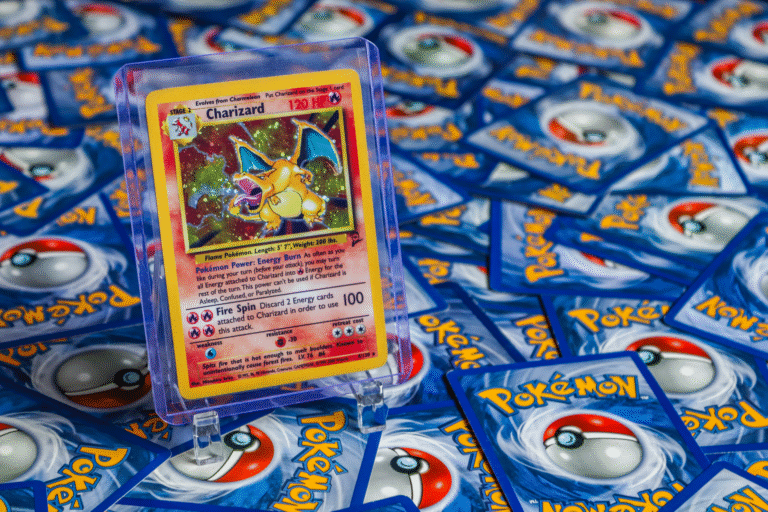
A holo variant Charizard from Base Set is arguably scarcer per PSA 8 copy than many baseball promos, yet it commands completely different pricing due to broader collector demand. The lesson is that scarcity alone doesn’t determine value—demand has to follow. Baseball promos are scarce but represent a narrow collector base compared to mainstream Charizards or Blastoise cards.
The Future of Sports-Themed Pokémon Collectibles
Looking forward, the baseball promo category has likely matured into a stable, niche segment of the Pokémon card market. New baseball promos will continue to appear, but they’re unlikely to recreate the speculative frenzy of the 2019-2021 period because the original baseball promo story has already played out. Collectors now understand the rarity patterns, condition challenges, and market cycles. This maturation is actually healthy—it means baseball promo prices will be driven more by fundamental scarcity and collector demand, less by speculation and narrative inflation.
For long-term collectors interested in these cards, this shift makes them more attractive as portfolio pieces rather than short-term trades. The intersection of Pokémon and sports collecting may ultimately expand in directions beyond baseball. Soccer, basketball, and other sports have emerging crossovers with Pokémon in markets outside North America, creating new promo categories for international collectors. As English-speaking collectors become aware of these regional promos, similar scarcity dynamics may emerge. Collectors who learned the baseball promo lesson—that scarcity plus condition plus demand equals value—will be better positioned to identify and acquire underpriced promos in other sports categories before the broader market catches on.
Conclusion
The baseball promo cards represent one of Pokémon’s most successful accidental value creations. What started as a straightforward promotional strategy—giving exclusive cards to stadium visitors—evolved into a collectible category that commands serious money and teaches fundamental lessons about how Pokémon card values form. The combination of limited distribution, real-world event handling, and crossover collector appeal created conditions where even ordinary-looking Pokémon could become chase pieces simply due to scarcity in high grades.
For collectors evaluating baseball promos today, the opportunity is in strategic acquisition rather than speculative investing. Set realistic grade targets, understand the condition challenges specific to these cards, and recognize that value is now stabilizing at sustainable levels based on true rarity rather than narrative momentum. Whether you’re building a complete baseball promo set or selectively hunting the most visually striking cards, approach these purchases as long-term holds in a mature market—and you’ll avoid the mistakes made by earlier investors who overpaid at the peak of speculation.