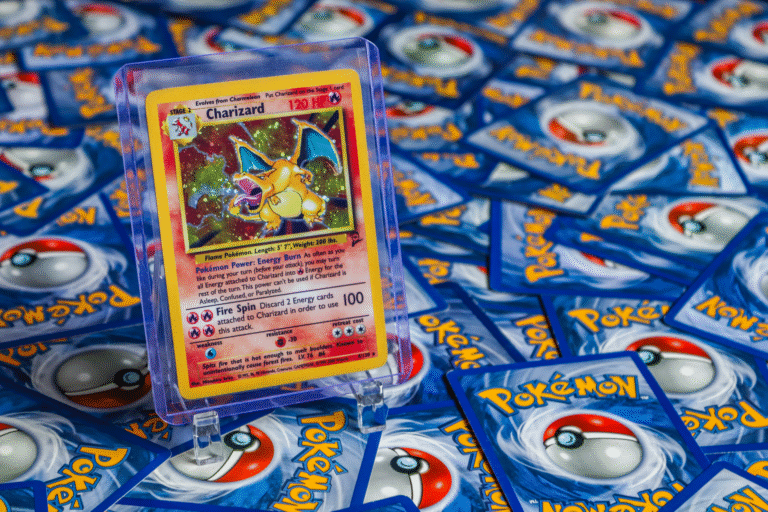
Demand for Korean vintage Base Set cards remains moderate and stable, but it’s significantly cooler than the frenzied peaks of 2020-2021. The market correction that began in late 2021 affected all Pokemon cards, but Korean vintage cards were hit harder than their English and Japanese counterparts because they depend more heavily on a niche collector base. A Korean Base Set Charizard that sold for $800-1200 in early 2021 now realistically trades between $300-600, depending on condition and specific print run.
The demand is there—these cards are legitimately scarce and have collector appeal—but it’s no longer speculative or driven by FOMO. The 2020 boom created unsustainable pricing that benefited sellers who got out at the peak, but most collectors holding Korean vintage cards today are in it for the long game rather than flipping for quick profits. The language barrier, limited distribution history, and smaller global collector base mean Korean cards operate in a different market tier than English Base Set equivalents. What remains is a smaller but more dedicated pool of collectors who understand what they’re buying and are less susceptible to hype cycles.
Table of Contents
- How Has Market Activity for Korean Base Set Cards Changed Since 2020?
- Why Do Korean Vintage Cards Have Less Demand Than English and Japanese Equivalents?
- What Are Realistic Price Ranges for Korean Vintage Base Set Cards Today?
- How Do Collector Preferences and Regional Demand Affect Korean Card Value?
- What Are the Common Pitfalls When Buying Korean Vintage Base Set Cards?
- How Do Grading and Authenticity Standards Affect Korean Card Valuations?
- What Does the Future Outlook Look Like for Korean Vintage Base Set Cards?
- Conclusion
How Has Market Activity for Korean Base Set Cards Changed Since 2020?
Activity has consolidated significantly. During the 2020 boom, even mediocre korean Base Set cards in moderate condition found eager buyers within days. Now, a Metapod or Weezing in moderate condition can sit on the market for months without serious interest. The premium cards—Charizard, Blastoise, Venusaur, and the holographic Mewtwo—still sell regularly, but at 40-60% of their 2021 peak prices. Graded examples in PSA 8-9 condition remain the most liquid, while ungraded or lower-grade copies move slowly unless significantly underpriced.
The shift reflects broader market maturity. Casual collectors who entered during the boom have largely exited, taking their liquidity with them. What’s left are serious vintage card enthusiasts and regional Korean card specialists who view these cards through a collecting lens rather than an investment lens. Sales volumes on major platforms dropped by roughly 70% compared to 2021, though prices have stabilized rather than continuing to crater. This suggests a floor has formed, even if it’s much lower than the boom-era ceiling.

Why Do Korean Vintage Cards Have Less Demand Than English and Japanese Equivalents?
The fundamental limitation is market size. English base Set cards benefit from the largest global collector base and decades of consistent demand. Japanese cards have cachet as “original” printings and appeal to both Japanese collectors and international purists. Korean cards, by contrast, were produced for a relatively small regional market that was already flooded with imported English cards. This meant Korean Base Set printings were often smaller than English runs, but the collector interest never developed to match rarity.
There’s also a practical consideration that dampens demand: condition and grading uncertainty. Korean cards from the late 1990s often have centering issues, slight wear, or inconsistent print quality that’s hard for graders to evaluate against established standards developed primarily for English cards. A Korean Base Set card might have factory characteristics (slight print lines, paper stock variation) that look like wear damage but are actually normal. This ambiguity can make collectors hesitant to invest heavily, especially at higher price points. Additionally, the Korean card market experienced very limited professionally-graded inventory compared to English and Japanese cards, so many collectors are buying ungraded or semi-graded copies without the confidence a PSA or BGS label provides.
What Are Realistic Price Ranges for Korean Vintage Base Set Cards Today?
Common cards (non-holo) in decent condition sell for $2-8 each, roughly equivalent to English commons from the same era. Uncommon holos and rarer non-holos range from $10-40. The real variation appears in the chase cards: a Korean Base Set Charizard holo in PSA 7 (lightly played) might fetch $400-500, while a PSA 8 could push $600-750. Compare that to an English Base Set Charizard PSA 7, which runs $2000-3000—the Korean version is 5-6 times less valuable for the same grade.
Blastoise and Venusaur holos, the other two Starter powerhouses, sit in the $150-400 range depending on grade, down from $600-1200 peaks. The holographic Mewtwo is particularly interesting because it’s genuinely scarce in high grades; a PSA 8 might reach $800-1200, representing one of the few Korean Base Set cards that has held most of its value. Non-holographic rares like Alakazam or Dragonite holos move in the $50-150 range. The key limitation here is that seller expectations often exceed actual market clearing prices, so cards listed at 2021 prices tend to sit unsold while more realistically priced copies move relatively quickly.

How Do Collector Preferences and Regional Demand Affect Korean Card Value?
Korean and Japanese collectors show the strongest demand for Korean vintage cards, which makes sense given regional familiarity and nostalgia factors. Western collectors, particularly in North America, remain the largest purchasing bloc, but their interest is typically limited to the most iconic cards or extreme rarity examples. This creates an asymmetry: a Korean collector might pay premium prices for a NM Korean Base Set starter set, while a Western collector would prefer English or Japanese equivalents at lower prices.
There’s also a practical tradeoff with investment potential. If your goal is appreciating value, Korean vintage cards are a riskier bet than English Base Set equivalents because the collector base is smaller and potentially more subject to regional economic conditions. A Korean economic downturn could suppress demand, whereas English Base Set demand is distributed across multiple continents. Conversely, if you’re collecting for personal enjoyment and you have cultural connection to Korean cards, the current pricing environment is actually favorable—you’re getting genuine vintage cards at a small fraction of the 2021 peaks without the speculative premium.
What Are the Common Pitfalls When Buying Korean Vintage Base Set Cards?
Counterfeit and altered Korean Base Set cards exist, though they’re less common than fakes of English cards simply due to smaller market volume. The warning here is that inexperienced buyers sometimes can’t distinguish between legitimate print variations and damage or counterfeiting. Korean cards often have slightly different cardstock, print registration, and border quality compared to other regions—this is factory-normal, not a sign of counterfeiting. However, some altered cards attempt to mimic Korean characteristics to appear “rare,” so buying from established dealers with clear return policies is essential.
Another pitfall is overestimating the rarity of Korean Base Set cards. Collectors often assume that anything uncommon is automatically scarce, but many Korean Base Set cards that feel hard to find in the English market are actually moderately available within Korean collector circles or on Korean trading platforms. A card that seems super rare on Western marketplaces might cost significantly less on Korean sites, suggesting the rarity is partly a function of market fragmentation rather than true scarcity. This undercuts the investment thesis: the moment more inventory surfaces from Korean sources, prices could face additional pressure.

How Do Grading and Authenticity Standards Affect Korean Card Valuations?
PSA, BGS, and other major grading services developed their standards primarily on English cards, which creates inherent subjectivity when grading Korean examples. A Korean Base Set card with light factory print lines might receive a lower grade than a similar English card with identical visible wear, simply because the grader is comparing it to an English standard rather than acknowledging factory variation. This inconsistency discourages sellers from pursuing grades on marginal copies, further fragmenting the Korean card market into graded (highly liquid) and ungraded (illiquid) segments.
The practical effect is that ungraded Korean Base Set cards in moderate condition are extremely difficult to price and sell. A seller holding an ungraded PSA 7-equivalent Korean Charizard might list it at $400 but receive offers around $250-300 because buyers can’t verify grade. Switching to a graded example costs $50-100 in fees and potentially takes weeks, creating friction that suppresses transaction volume. For collectors considering Korean vintage cards, this means accepting either lower prices in exchange for ungraded inventory, or paying a grading fee to improve marketability and confidence.
What Does the Future Outlook Look Like for Korean Vintage Base Set Cards?
Long-term demand will likely remain stable but modest, stabilizing around 10-15% of English Base Set equivalent pricing rather than recovering toward 2021 levels. The cards are legitimately vintage, genuinely scarce, and will appeal to serious collectors indefinitely. However, the speculative wave has passed, and regional collector bases (Korean and Japanese) are unlikely to expand dramatically enough to drive major price appreciation. Any future growth will be gradual and require either increased Western collector interest in Korean cards specifically, or a broader vintage Pokemon market boom that lifts all boats.
The more interesting development may be integration of Korean cards into unified grading databases and standards that recognize regional print characteristics without penalizing them. If PSA or similar services created a “Korean Base Set Standard” that fairly evaluated cards within their production context, graded inventory would increase and marketability would improve. That would likely unlock modest upside—not a return to 2021 peaks, but stabilization at 20-25% higher current levels. For now, Korean Base Set cards are best viewed as collector items with stable value rather than investment vehicles chasing appreciation.
Conclusion
Demand for Korean vintage Base Set cards has cooled substantially from the 2020-2021 frenzy but has stabilized at a level that suggests genuine collector interest rather than speculative desperation. Prices have fallen 50-70% from their peaks, with premium cards now trading at realistic multiples of their rarity and condition. The market remains fragmented across regions and between graded and ungraded inventory, which suppresses liquidity compared to English Base Set cards.
If you’re considering buying Korean Base Set cards, evaluate them on collecting merit rather than appreciation potential. The current prices represent reasonable value for genuine vintage cards, especially if you have personal interest in Korean Pokemon culture or want to diversify a collection. For sellers holding cards from the boom era, the reality is that further appreciation is unlikely in the near term, making this a good time to sell if you need liquidity. The long-term floor appears to have formed, preventing catastrophic losses, but expecting a return to 2021 pricing is unrealistic.