Over the past twelve months, Korean Pokémon Trading Card Game cards have emerged as a legitimate option for collectors seeking affordability and price stability, though buyers should understand they come with significant tradeoffs compared to English and Japanese versions. The Korean market has grown alongside the broader trading card resurgence—the TCG market itself is valued at $21.4 billion in 2024 and is projected to reach $58.2 billion by 2034 at a 13% compound annual growth rate—but Korean Base Set vintage cards occupy a distinctly different tier. For example, a Korean Base Set Charizard might cost a fraction of what collectors pay for its English or Japanese equivalent, making it accessible to new collectors with limited budgets.
What distinguishes Korean cards from their more sought-after counterparts is their position as a value play rather than a premium investment. The surge in popularity has been driven by collectors who recognize that Korean cards offer stability in an increasingly volatile market, with prices fluctuating less dramatically than English and Japanese releases. However, this affordability comes with a cost: resale value is substantially lower, pull rates from booster boxes are worse, and liquidity can be limited. Understanding this tradeoff is essential before committing to Korean Base Set cards as either a collecting focus or investment vehicle.
Table of Contents
- Why Korean Pokémon Cards Have Surged in Popularity Over the Last Year
- Price Stability Versus Long-Term Investment Returns
- Pull Rates, Product Quality, and Collector Experience
- When to Buy Korean Vintage Base Set Cards and Strategic Timing
- Common Pitfalls and Realistic Risk Assessment
- Recent Korean Product Releases and What’s Available
- Market Outlook and the Future of Korean Vintage Cards
- Conclusion
Why Korean Pokémon Cards Have Surged in Popularity Over the Last Year
The dramatic rise of korean Pokémon cards as a collecting category reflects both market dynamics and collector sentiment. Asia-Pacific now accounts for 46.56% of the entire trading card game market, advancing at an 11.04% CAGR, which has elevated Korean products into the mainstream conversation. Korean cards serve as an entry point for collectors priced out of the English and Japanese markets, where even modestly played vintage Base Set cards command significant premiums. This positioning has created a new demographic of collectors who view Korean cards not as second-rate alternatives but as a distinct category with its own collecting merit.
The timing of this surge is notable. February 2026 coincided with Pokémon’s 30th anniversary celebration, and search interest for Pokémon TCG Base Set cards reached peak levels that month. During this same window, Korean releases gained visibility as collectors sought alternatives to increasingly expensive English Base Set products. The growing accessibility of Korean cards through international retailers has further democratized the vintage base set hobby, allowing collectors outside Korea to participate in what was once a regionally confined market.

Price Stability Versus Long-Term Investment Returns
One of the most significant appeals of Korean vintage Base Set cards is their resistance to dramatic price swings. Unlike English Base Set cards, which experienced explosive growth followed by sharp corrections, Korean cards have maintained relatively stable valuations over the past year. This stability stems partly from lower absolute valuations and partly from a less speculative collector base. For new collectors with modest budgets, this predictability is valuable—you’re less likely to experience buyer’s remorse if prices shift by 15% rather than 50%. However, this price stability comes at a substantial cost: resale value is significantly lower than English and Japanese versions.
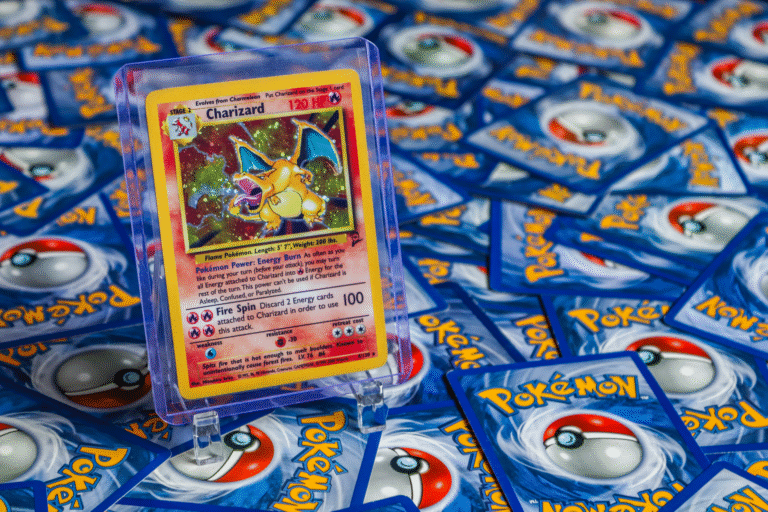
A Korean Base Set Charizard or Blastoise will never command anywhere near the prices fetched by English counterparts. To put this in perspective, a 1999 English Base Set 1st Edition Charizard in PSA 10 Gem Mint condition sold for over $550,000 at Heritage Auctions in late 2025, with approximately 124 known copies in that grade. PSA 9 grades of the same card typically sell for $15,000–$30,000. Korean versions, even in high grades, trade for a tiny fraction of these numbers. Collectors should enter the Korean market with realistic expectations about future appreciation—these cards are unlikely to produce the kind of returns that have made some English Base Set purchases financially significant.
Pull Rates, Product Quality, and Collector Experience
A critical but often overlooked consideration when evaluating Korean vintage Base Set cards is that booster packs have demonstrably worse pull rates than japanese or English products. This means that if you’re opening Korean Base Set product in hopes of pulling premium cards like Charizard or Venusaur, you’ll encounter more disappointment per box than you would with equivalent Japanese packs. Collectors pursuing singles cards, however, benefit from this weakness—lower pull rates in booster boxes mean more singles are available on the secondary market at competitive prices, particularly for lower-value holos and commons.
The product quality itself is generally consistent with Korean Pokémon standards. Centering, print quality, and card stock are comparable to modern Korean releases, though vintage Korean Base Set product shows its age through minor wear and yellowing consistent with sealed product that’s been stored for 20+ years. Unlike Japanese cards, which often feature exceptional centering and clarity, Korean vintage cards can show more variation. This variation affects grading outcomes significantly—a Korean Base Set card that might receive a PSA 8 in Japanese could receive a PSA 7 in Korean due to stricter centering or surface grading standards.

When to Buy Korean Vintage Base Set Cards and Strategic Timing
For collectors deciding whether to pursue Korean Base Set cards, the question of timing is less critical than it is for English or Japanese variants. Since Korean cards exhibit price stability, there’s no urgent window for entry during speculative peaks or crashes. That said, buying opportunities exist around major product releases and nostalgia-driven moments. February 2026 represented one such moment, with the release of Terastal Festival ex Playmat Set and Terastal Festival ex Collection Set in South Korea on February 26.
These newer releases aligned with the 30th anniversary attention, creating temporary buzz that elevated interest in all Pokémon TCG products, including Korean vintage. Strategic buyers should consider Korean Base Set cards when looking to build complete sets or acquire specific cards at known-lower costs compared to English versions. If your goal is owning a PSA 7 Base Set Charizard for display and collecting satisfaction rather than investment, a Korean copy accomplishes this at 10-20% of what an English copy would cost. The tradeoff is that you’re purchasing an artifact of a distinctly Korean collecting experience—different printing, packaging, and market history. This can actually appeal to collectors who view regional variants as valuable documentation of how Pokémon was experienced globally in the late 1990s.
Common Pitfalls and Realistic Risk Assessment
The most significant pitfall collectors encounter with Korean Base Set cards is misjudging their long-term value trajectory. Newcomers sometimes view Korean cards as undervalued versions of English variants that will eventually converge in price. This almost never happens. Korean and English Base Set cards operate in distinct markets with different demand curves. The English market is driven by nostalgia, speculation, and Western collecting culture; the Korean market is primarily regional and has never achieved the speculative fervor that pushed English Base Set prices to five and six figures.
Another risk is liquidity. While major Korean cards have buyers, the pool of potential purchasers is smaller than for English equivalents. If you accumulate a valuable Korean collection and later decide to sell, you may face longer selling timelines or need to accept discounts to move cards quickly. This is particularly true for non-holo or moderately played cards, which can sit listed for weeks without offers. Additionally, authentication and grading present complications—fewer PSA-graded Korean Base Set cards exist, which means a raw Korean Base Set card can be harder to authenticate than graded English versions, potentially affecting buyer confidence and pricing.

Recent Korean Product Releases and What’s Available
The February 2026 releases of the Terastal Festival ex sets represented the most significant new Korean product launches in recent months. These newer releases don’t directly impact vintage Base Set cards but do indicate that Korean TCG product remains an active publishing category.
However, genuine vintage Korean Base Set product from the late 1990s is increasingly hard to source, with most sealed product having been opened by collectors or lost to poor storage conditions over 25+ years. Current availability of Korean vintage Base Set singles focuses on moderately played and heavily played copies graded in the PSA 4-7 range, with occasional near-mint specimens. Sealed Korean Base Set booster packs are exceedingly rare and command premiums that sometimes exceed worn English booster packs from the same era—a counterintuitive market dynamic that reflects both scarcity and collector interest in preserved product.
Market Outlook and the Future of Korean Vintage Cards
The Korean Pokémon market is positioned for steady but not explosive growth in Western collecting circles. As English Base Set prices continue climbing beyond reach for average collectors, more players will likely explore Korean alternatives. This could gradually increase demand and stabilize prices, though probably without generating the dramatic appreciation seen in English markets. The Asia-Pacific region’s 46.56% market share in TCG provides a strong foundation, suggesting that Korean products will remain supported regardless of Western trend cycles.
Looking ahead, Korean Base Set cards serve a functional role in the broader Pokémon collecting ecosystem rather than a speculative one. They fill the gap between reprints (which lack vintage authenticity) and premium English variants (which are increasingly inaccessible for budget-conscious collectors). For the next 12-24 months, expect Korean vintage availability to remain stable, with gradual price appreciation in the single digits annually rather than double digits. This trajectory makes Korean Base Set cards suitable for collectors seeking nostalgia and completion rather than those seeking significant financial returns.
Conclusion
Korean vintage Base Set cards over the past twelve months have established themselves as a legitimate collecting category for buyers seeking affordability, price stability, and access to cards otherwise priced out of reach. The market has grown alongside broader trading card enthusiasm, particularly as the industry is projected to reach $58.2 billion by 2034, and Asian markets drive this expansion at 11.04% CAGR. However, buyers must enter this market with clear expectations: these cards offer stability and value, not investment potential comparable to English or Japanese variants.
The decision to collect Korean vintage Base Set cards should rest on whether you’re collecting for enjoyment, set completion, or display rather than financial appreciation. If you can appreciate the regional variant history and accept lower resale value, Korean cards provide authentic vintage Pokémon TCG experiences at prices that make the hobby accessible. If you’re investing with hopes of substantial returns, English Base Set cards—despite their higher risk profile—remain the superior choice. Regardless of your decision, the Korean market’s emergence over the past year reflects a healthy, expanding trading card ecosystem where different collecting philosophies and budgets can all find value.