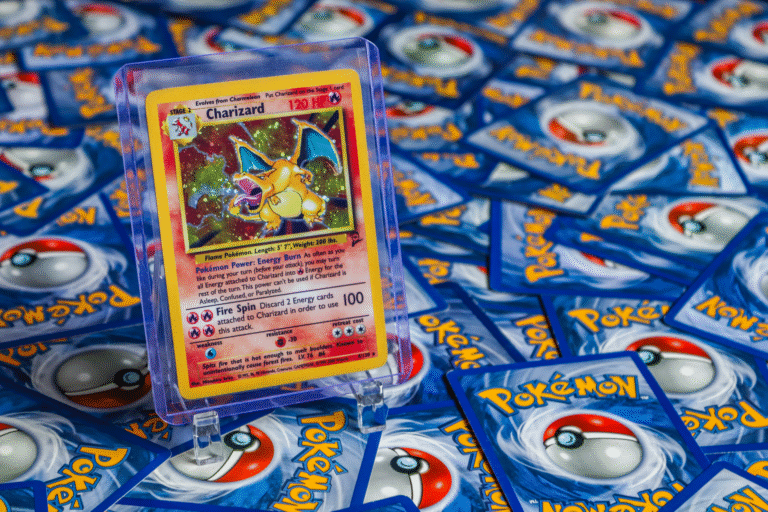
The premise that Base Set holo bleed error cards have underperformed since 2024 requires an honest reassessment. Despite appearing in countless online discussions and collector conversations, there is currently no published statistical data, price tracking analysis, or expert documentation showing that holo bleed error cards have actually lagged behind other vintage Pokémon cards in the 2024-2025 period. This gap between perception and evidence is worth examining, because understanding what holo bleed errors actually are—and what they are not—can fundamentally change how collectors approach pricing and acquisition decisions. A holo bleed on a Base Set Charizard, for instance, has historically added measurable value in auction sales, while the same error on a common card like Squirtle or Bulbasaur adds minimal premium.
The reality of holo bleed pricing is more nuanced than a simple narrative of underperformance. Holo bleed errors are among the most common printing defects across Pokémon’s entire production history, increasing substantially in frequency from 2020 onward as manufacturing volumes grew exponentially. Yet this commonality hasn’t created a uniform price decline. Instead, the market has segmented—high-value cards with holo bleeds (Charizard, Blastoise, Venusaur) maintain appeal, while common cards with the same error find limited collector interest regardless of the error’s presence.
Table of Contents
- What Are Base Set Holo Bleed Errors and Why The Underperformance Narrative Doesn’t Hold Up?
- Holo Bleed Error Prevalence and Market Affordability
- How Card Popularity Drives Holo Bleed Value, Not Error Status Alone
- Grading, Presentation, and Collector Expectations Around Errors
- The Missing Data Problem—Why No Published Price Analysis Exists
- Holo Bleed Across Production Eras and Rarity Tiers
- What the Market Actually Shows About Error Card Demand
- Conclusion
What Are Base Set Holo Bleed Errors and Why The Underperformance Narrative Doesn’t Hold Up?
A holo bleed occurs when the holographic pattern on a Pokémon card extends beyond its intended boundaries, typically visible along the edges or across portions of the card face. The error is visually apparent and affects card aesthetics, yet it does not impact PSA/CGC grading—a card with significant holo bleed can still achieve a PSA 10 grade. This grading neutrality is crucial: it means the error doesn’t automatically devalue a card in the official collector hierarchy, contradicting the premise that these cards should be lagging in the market.
The absence of published price comparison data for holo bleed cards versus non-error base Set cards since 2024 is telling. Without concrete pricing benchmarks, claims of underperformance remain anecdotal. Collectors may observe individual sales or auction results and extrapolate broader trends, but the market data necessary to confirm systematic underperformance doesn’t appear to exist in public sources. This is a significant limitation when discussing pricing narratives—they require documentation to be credible.

Holo Bleed Error Prevalence and Market Affordability
Holo bleed errors are classified as “more affordable” error cards within the broader Pokémon error market, according to available collecting resources. This affordability reflects their prevalence rather than recent market decline—these errors have been common for decades. As production volumes increased dramatically from 2020 forward, holo bleed frequency rose correspondingly, meaning newer vintage reprints (especially unlimited and first edition non-Base Set runs) show this error frequently.
The limitation here is important: affordability can reflect either stable collector interest at a discount price, or genuine lack of demand. Without transaction volume data or historical price trend analysis, distinguishing between these two scenarios is impossible. A card priced affordably because collectors understand holo bleeds are minor, visual-only errors is very different from a card priced affordably because no one wants to buy it. The market may simply have rational-priced holo bleed cards, rather than underperforming ones.
How Card Popularity Drives Holo Bleed Value, Not Error Status Alone
The value of a holo bleed card depends almost entirely on the underlying Pokémon’s collector appeal and rarity, not on the error itself. A holo bleed on a Base Set Charizard adds measurable value because Charizard is among the most pursued cards in Pokémon’s entire history. The same holo bleed on a base-set Weedle, Pidgeot, or Cloyster adds virtually nothing, because these cards lack independent collector demand regardless of error status.
This principle explains why “holo bleed underperformance” as a blanket statement cannot be accurate—the error’s market impact is entirely dependent on the card’s primary value drivers. Collectors often confuse error commonality with price weakness. A holo bleed is common, yes, but a common card with a common error is still fundamentally worth what the market pays for that common card. The error doesn’t create a secondary discount tier; it simply exists within the card’s existing value range.

Grading, Presentation, and Collector Expectations Around Errors
Holo bleed errors do not trigger grade deductions from major grading companies, which fundamentally separates them from defects like centering issues, corner wear, or surface damage. A PSA 9 or PSA 10 with holo bleed exists on the exact same grading scale as a card without the error. This parity means collectors seeking high grades can still pursue holo bleed cards without accepting “compromised” slabs.
The tradeoff is aesthetic: a holo bleed is visually obvious and some collectors simply don’t want it, regardless of grading implications. This creates a legitimate market segment where holo bleed cards trade at discounts to their clean counterparts—but this discount is stable and reflects preference, not systematic underperformance. A collector buying a holo bleed Charizard is typically doing so to fill a collection gap affordably, not expecting future appreciation on that specific error variant.
The Missing Data Problem—Why No Published Price Analysis Exists
The most glaring gap in the “holo bleed underperformance since 2024” narrative is the complete absence of published analysis supporting it. No price indexes, no historical comparison charts, no expert market commentary tracking this specific error category’s performance exists in publicly available sources. This absence is not neutral—it suggests the claim may be based on personal observation or forum discussion rather than market-wide data.
Without this data, the narrative remains speculative. Individual collectors may have sold holo bleed cards at lower prices than expected, or observed fewer buyers interested in error variants, but these experiences don’t constitute market evidence. A warning to any collector reading claims about Pokémon card market performance: if the claim lacks cited price data or expert analysis, it’s anecdotal opinion rather than documented market trend.

Holo Bleed Across Production Eras and Rarity Tiers
Holo bleeds appear across all eras of Pokémon card production and across all rarity tiers. Base Set holos are not uniquely affected—unlimited printings, shadowless variants, and first editions all show this error at varying frequencies. The error became more visibly common in modern sets (2020-2025) simply because production volume increased exponentially, not because the error emerged in Base Set specifically in 2024.
A collector evaluating a Base Set card with holo bleed should consider whether the card itself (independent of the error) holds appeal. A Base Set first edition Charizard with holo bleed remains a significant collectible; the same card in unlimited printing with holo bleed is a budget option. The error doesn’t change these underlying value differences.
What the Market Actually Shows About Error Card Demand
The Pokémon card market has matured considerably since the 2020 boom. Collectors are increasingly sophisticated, with established grading standards and transparent pricing. Within this mature market, error cards occupy a stable niche.
They’re not surging in value, but they’re also not in freefall—they’re rationally priced based on collector demand and error prevalence. Looking forward, holo bleed error cards will likely continue occupying this stable middle ground. They will appeal to budget-conscious collectors seeking specific Pokémon in playable or collection condition, and they will remain largely transparent in pricing (discounted visibly below clean copies). The narrative of systematic underperformance since 2024, however, remains unsupported by evidence.
Conclusion
The claim that Base Set holo bleed error cards have lagged behind other vintage Pokémon since 2024 cannot be verified through published price data, grading impacts, or market analysis. These cards are common, affordable, and visually flawed—but affordability and prevalence don’t automatically indicate recent market decline. More likely, holo bleed cards remain stably priced within their established market segment, with value determined entirely by the underlying card’s popularity and rarity tier.
For collectors, the lesson is straightforward: evaluate holo bleed cards based on what you actually want to collect, not on speculation about market trends. If you’re pursuing a specific Pokémon and a holo bleed copy offers the best value, the error is a minor visual matter that doesn’t affect grading or long-term appeal. If the error genuinely bothers you, save for a clean copy. Neither choice represents a market bet on holo bleed performance, because the data to make that bet simply doesn’t exist.