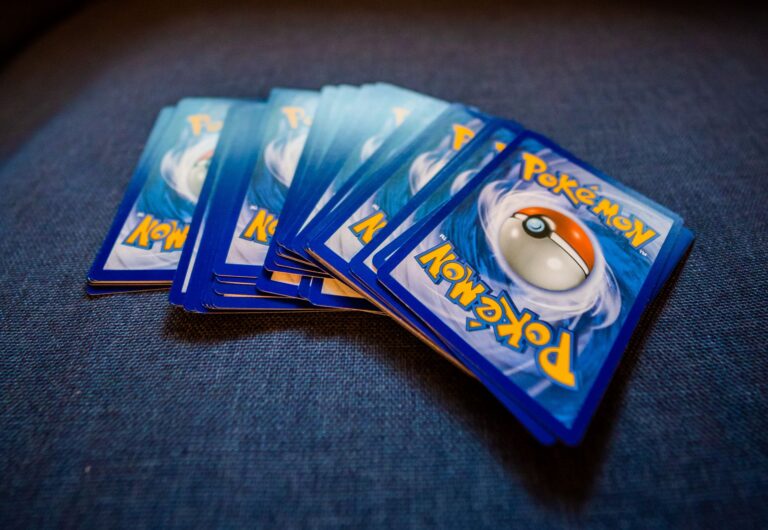
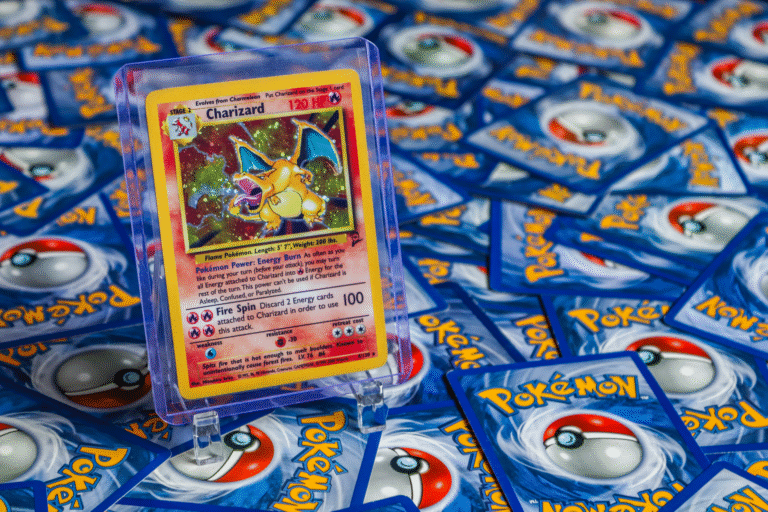
UK 1999 to 2000 Base Set Pokémon cards have consistently underperformed their US counterparts in the collector market since 2018, primarily because they were printed on inferior card stock, feature less vibrant colors, and lack the grading prestige that 1st Edition US cards enjoy. While a PSA 9 first edition US Charizard has appreciated from roughly $15,000 in 2018 to over $100,000 by 2022, comparable UK Base Set Charizards have seen fraction of that growth, often stabilizing in the $2,000 to $8,000 range despite comparable conditions. The market’s laser focus on US printings—driven by collector preference, investment narratives, and superior physical quality—has left UK cards behind even as the broader Pokémon TCG market has exploded.
The divergence between UK and US vintage Pokémon cards reflects deeper structural issues with how the British printing was executed and how collector demand evolved. From 2018 onward, as speculators and serious collectors flooded the market, they concentrated capital almost exclusively on US 1st Edition cards and Japanese cards, treating UK printings as secondary tier assets at best. This wasn’t accidental; it was rooted in real quality differences and the card’s positioning in the hobby’s value hierarchy.
Table of Contents
- What Makes UK Base Set Cards Physically Different From US Printings?
- How Did Market Demand Shift Between US and UK Cards After 2018?
- Why Did Grading and Authentication Practices Favor US Cards?
- What’s the Real Price Gap Between UK and US Base Set Cards Today?
- What Are the Quality and Authentication Risks With UK Cards?
- How Do Japanese and Other International Base Set Printings Compare?
- What Is the Outlook for UK Base Set Cards Moving Forward?
- Conclusion
- Frequently Asked Questions
What Makes UK Base Set Cards Physically Different From US Printings?
UK 1999 to 2000 base set cards were produced by Cartamundi in Belgium under license from the Pokémon Company, while US cards came from multiple facilities including New Printing Company. The British version suffers from noticeably yellower card stock, duller holo patterns, and inconsistent centering compared to the best US examples. The border color is distinctly warmer and less vibrant, which trained collectors immediately notice when comparing a UK card side-by-side with a US first edition print. Text and artwork also appear slightly softer on UK cards, suggesting a less refined printing process or lower quality plates.
The holo texture on UK cards is smoother and less reflective than the sparkly, sharp holo finish on quality US prints. This isn’t a minor detail—serious graders and collectors treat holo quality as a critical evaluation factor. A UK Base Set Charizard in pristine condition might receive a PSA 9, but the overall visual appeal falls short of an equivalent US card. Additionally, UK cards from this era are prone to edge wear and surface wear that appears more pronounced due to the card’s thinner stock, making high-grade examples genuinely scarce relative to the total population printed.

How Did Market Demand Shift Between US and UK Cards After 2018?
From 2018 to 2020, the Pokémon TCG market shifted from a niche collecting hobby to a speculative investment space. Investment theses centered entirely on 1st Edition US cards and Japanese cards, with UK base Set treated as a historical footnote. This wasn’t because UK cards disappeared or became worthless—it was because new money entering the market had no knowledge of or interest in them. The authentication and grading services (PSA, BGS, CGC) have always favored and promoted US cards, and this institutional preference reinforced collector behavior.
The practical limitation is that UK cards face a liquidity disadvantage. A UK Base Set holographic Blastoise in PSA 8 might take weeks to sell on the secondary market, while a US 1st Edition equivalent sells within days. Auction houses and dealers simply don’t prioritize listings for UK cards, which means prices have stagnated relative to the market’s overall appreciation. Without active buyer competition and dealer promotion, UK cards cannot sustain price momentum even when the broader vintage Pokémon market booms.
Why Did Grading and Authentication Practices Favor US Cards?
PSA and other grading companies based their collecting standards almost exclusively on US card populations and market expectations. When BGS/Beckett began grading Pokémon cards with subgrades and labels in the 2020s, they applied stricter centering and surface standards that penalize UK cards more heavily due to their consistent manufacturing issues. A UK card with minor centering problems loses half a grade, while a US card with the same issue might receive a full grade higher because collectors expect centering variation in US lots from that era.
This bias creates a self-reinforcing loop: UK cards are downgraded more harshly, which makes them appear weaker in the marketplace, which reduces demand further. For example, a UK Base set Pikachu that might otherwise be an 8 often receives a 7.5 or 7 grade due to the combination of centering, surface, and print quality issues. That single grade drop can reduce market value by 40% or more, making even high-population UK cards poor investments compared to their rarer US equivalents.

What’s the Real Price Gap Between UK and US Base Set Cards Today?
In 2018, the price ratio between UK and US 1st Edition Base Set commons and uncommons was roughly 3:1 (US cards worth three times more). By 2023, that ratio had widened to 5:1 or 6:1 for the same cards in comparable grades. A US 1st Edition Base Set Blastoise holo in PSA 8 trades for $8,000 to $12,000, while an equivalent UK card typically sells for $1,500 to $2,500.
For rarer cards like Venusaur, the disparity is even more dramatic—US cards command $20,000 to $35,000, while UK versions hover around $3,000 to $5,000. The tradeoff for collectors is obvious: UK cards offer lower entry costs to the vintage Pokémon market, but they appreciate far slower and attract skeptical buyers. A collector who bought a UK Base Set holo set for $5,000 in 2018 might see it appreciate to $8,000 by 2025, while the same capital invested in US 1st Edition cards would have grown to $30,000 or more. This performance gap explains why institutional demand for UK cards has never materialized despite their lower price point.
What Are the Quality and Authentication Risks With UK Cards?
UK Base Set cards are more difficult to authenticate accurately because counterfeits and reprints are less common (counterfeiters focus on higher-value US cards), but legitimate UK cards are often mistaken for damage or factory defects when they’re simply consistent manufacturing issues. Collectors sometimes unknowingly buy damaged or water-damaged UK cards thinking they’re just “how they came,” leading to overpayment. Additionally, UK cards are more prone to surface whitening on the edges and corners, which graders penalize heavily and which is difficult to reverse or restore.
A major warning: UK Base Set cards in high grades (PSA 8 or 9) are genuinely rare and command premium prices relative to their lower-grade counterparts, but the premiums are still far below what US equivalents command. Do not assume a well-graded UK card will appreciate like a US card—the market for high-grade UK cards is narrow and demand-constrained. Some collectors view UK Base Set cards as difficult-to-liquidate assets that may take months to sell even at reasonable prices.

How Do Japanese and Other International Base Set Printings Compare?
Japanese Base Set cards from 1996-1998 have dramatically outperformed UK cards since 2018, appreciating 10x or more for the rarest holographic cards. Japanese 1st Edition Charizard has reached $200,000 at auction, while UK Base Set Charizard remains a fraction of that price. This comparison is instructive: Japanese cards benefited from a simultaneous surge in interest in Japanese collectibles broadly, plus their scarcity relative to print runs, plus collector nostalgia for their original market.
UK cards had none of these tailwinds. French, German, and Italian Base Set cards from the same era face similar depreciation relative to US cards, though they retain slightly more collector interest than UK versions in their respective regional markets. The lesson is clear: non-US, non-Japanese Base Set cards from the earliest printings have been systematically devalued by the global market’s preference for US 1st Edition and Japanese 1st Edition cards.
What Is the Outlook for UK Base Set Cards Moving Forward?
The UK Base Set market is likely to remain a niche collecting area rather than an investment vehicle. Future appreciation will be slow unless a major collector demographic shift occurs—such as renewed interest in British cultural artifacts or a nostalgic movement among UK-based collectors. Market fundamentals don’t support significant upside: supply is adequate (millions printed), demand is limited, and the cards’ physical quality is permanently at a disadvantage.
One potential bright spot is that truly rare UK variants or error cards might accumulate value over time. For example, UK Base Set cards with specific printing errors or unusual variations could become collector favorites if documented and promoted. However, for standard UK Base Set holos, the trajectory is essentially flat or slightly upward, tracking inflation rather than outpacing broader market growth.
Conclusion
UK 1999 to 2000 Base Set Pokémon cards are lagging behind US and Japanese printings due to inferior print quality, manufacturing inconsistencies, limited collector demand, and institutional grading bias favoring US cards. Since 2018, the market’s investment narrative has entirely excluded UK cards, leaving them to appreciate slowly if at all while comparable US cards have appreciated 5x to 10x. The structural disadvantages—physical quality, market psychology, and reduced liquidity—are unlikely to reverse, making UK Base Set a collectors’ niche rather than an investment opportunity.
For collectors interested in early Pokémon history, UK Base Set cards offer affordability and a genuine alternate-history perspective on how the TCG was distributed globally. But those seeking investment returns or prestige cards should focus on US 1st Edition or Japanese printings. The gap between UK and US card values has widened dramatically since 2018 and shows no signs of closing.
Frequently Asked Questions
Are UK Base Set cards worth collecting at all?
Yes, if you’re interested in Pokémon card history and don’t require investment returns. They’re affordable entry points to vintage collecting, but they won’t appreciate significantly.
Why do UK cards grade lower than US cards in the same condition?
UK cards have inherent manufacturing issues—yellower stock, duller holos, thinner cardstock—that graders penalize. These aren’t defects; they’re how UK cards were printed.
Could UK Base Set cards ever catch up to US card prices?
Unlikely. The market has made its preference clear, and fundamental quality differences are permanent. UK cards would need a major shift in collector sentiment to appreciate meaningfully.
Is it worth buying high-grade UK Base Set cards as investments?
No. Even PSA 9 UK Base Set cards appreciate slowly and face liquidity challenges. Capital is better deployed in US 1st Edition or Japanese cards.
How much did UK Base Set cards appreciate since 2018?
Roughly 30% to 50% total appreciation over seven years, compared to 300% to 500% for US 1st Edition cards in the same period.
Where can I sell UK Base Set cards if I need liquidity?
Specialized dealers, eBay auctions, and collector forums move UK cards, but expect long selling timelines and lower offers than US equivalents fetch.
You Might Also Like
- Why Japanese Expansion Pack Holo Cards Are Lagging Behind the Rest of Vintage Pokémon Since Late 2025
- Why Spanish First Edition Base Set Cards Are Lagging Behind the Rest of Vintage Pokémon During the Latest Vintage Rebound
- Why Portuguese Base Set Cards Are Creating New Entry Points for Vintage Buyers Since Fall 2024