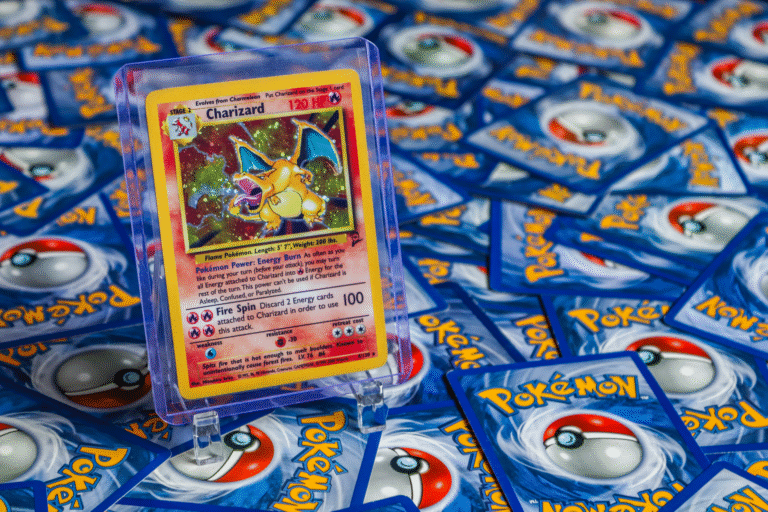
Yes, shadowless Base Set cards are becoming increasingly harder to find and more expensive, and this trend shows no signs of reversing. The supply of high-grade shadowless cards is finite and shrinking as collectors hold onto their best copies and condition-sensitive examples degrade over time. A shadowless Base Set Charizard in PSA 8 condition that sold for roughly $8,000 to $12,000 five years ago now commands $20,000 to $35,000 depending on the exact grade and market conditions—a clear reflection of both scarcity and growing demand from serious collectors. The driving force behind this shift is simple economics: shadowless cards were only printed for approximately three months in 1999 before the shadow printing error was corrected on all subsequent Base Set runs. This narrow production window means the total population of shadowless cards will never increase, while demand continues to climb as the hobby matures and wealth-conscious collectors diversify into tangible assets.
Every card that enters a PSA or BGS slab for grading, gets stored in a collection, or deteriorates from play reduces the available supply in the market. The market has already responded to this reality. Casual collectors searching for affordable shadowless cards below $100 are finding fewer options each year, while serious graded examples have moved out of reach for all but the most committed investors. A shadowless Blastoise PSA 7 that was available for $3,500 two years ago is now priced at $7,000 to $9,000 when one surfaces at auction. The window to acquire these cards at reasonable prices is actively closing.
Table of Contents
- Why Shadowless Base Set Cards Are Becoming Scarcer
- Price Increases and Market Dynamics
- Collector Demand and Investment Interest
- Practical Considerations for Finding and Purchasing Shadowless Cards
- Grading Considerations and Authentication Challenges
- Market Speculation and Price Volatility
- The Long-Term Outlook and Future Rarity Dynamics
- Conclusion
- Frequently Asked Questions
Why Shadowless Base Set Cards Are Becoming Scarcer
The fundamental issue driving scarcity is that shadowless cards represent a production anomaly, not a planned product line. When Wizards of the Coast began printing base Set in 1999, the shadowless error—the absence of a black shadow border around the artwork—was not caught until roughly three months of production had occurred. Once corrected, all subsequent Base Set printings included the shadow feature, making shadowless cards the rarest subset of the original set. For context, shadowless cards represent only about 3 to 5 percent of all Base Set cards ever printed, though this percentage varies by specific card and rarity level. Condition is the primary reason shadowless cards are disappearing from circulation. These cards are now 25+ years old, and the vast majority were played extensively during the height of Pokémon’s original boom in 1999-2001.
Shadowless cards that survived in mint or near-mint condition are exceptionally rare because few collectors cared about condition back then. Most shadowless cards in existence today are in played condition—centering issues, corner wear, and creasing are common. High-grade examples graded PSA 8 or higher have become collector trophies, with some cards never appearing on the market in certain grades despite existing in presumably small numbers. The grading explosion has also reduced supply by taking cards out of circulation permanently. When a collector sends a shadowless card to PSA or BGS, that card often stays in a slab for decades, locked away in a personal collection. Unlike modern cards where graded copies frequently change hands, vintage graded cards are often held as long-term investments or pride-of-collection pieces. A PSA 8 shadowless Charizard owned by a collector in 2010 is still owned by that same collector today in 2026, unavailable for purchase.

Price Increases and Market Dynamics
The price trajectory for shadowless Base Set cards over the past five years reveals a consistent upward trend across all grades, with the most dramatic increases in highly desirable characters like Charizard, Blastoise, and Venusaur. A shadowless Base Set Charizard has appreciated approximately 150 to 250 percent depending on the grade, while less iconic holos like shadowless Dragonite or Alakazam have seen 80 to 120 percent appreciation in the same period. Even shadowless commons and uncommons have risen in value, though the absolute dollar amounts remain modest at $10 to $50 per card for most played copies. This appreciation is not driven by speculation alone but by genuine scarcity meeting inelastic demand. Unlike modern pokémon cards where print runs can theoretically expand, shadowless cards cannot be reprinted.
Collectors and investors understand this fixed supply, which creates a “last chance” mentality when high-quality examples appear for sale. A PSA 7 shadowless Venusaur that was priced at $2,000 in 2019 will command $4,000 to $5,500 today, reflecting both the loss of supply through attrition and the influx of wealth-seeking investors entering the vintage card market. However, a significant limitation exists: the market for shadowless cards is relatively thin compared to first-edition cards or unlimited cards. A collector searching for a specific shadowless card in a specific grade may find zero to three options available in a given month, meaning prices are often set by individual seller expectations rather than by consistent market signals. The lack of liquidity means that while prices have trended upward, a seller attempting to quickly liquidate a large collection of shadowless cards may face significant discounting pressure if they cannot find buyers willing to pay current asking prices.
Collector Demand and Investment Interest
The primary source of demand for shadowless cards is not casual players looking to complete a collection, but serious vintage collectors and investment-minded buyers seeking rare, finite assets. This shift in buyer demographics has fundamentally changed the market. Ten years ago, most shadowless card purchases were by hobbyists trying to own a piece of Pokémon history. Today, a significant percentage of high-grade shadowless card sales are driven by buyers explicitly treating the cards as alternative investments, similar to how some approach rare comic books or vintage trading cards from other properties. This investor-driven demand has created a tiered market. Shadowless cards in excellent played condition ($50 to $500) still appeal to hobbyist collectors completing sets or reliving childhood collections.
Shadowless cards in lightly played or near-mint condition ($1,000 to $10,000) are increasingly owned by investors and serious graded-card collectors. Shadowless cards in gem-mint grades ($10,000 and higher) are almost exclusively owned as investment assets, with ownership often transferring between wealthy private buyers rather than moving through public channels like eBay or TCGPlayer. The challenge this creates for new collectors is stark: entering the shadowless market at a meaningful level now requires significant capital. A collector wanting to own a shadowless Base Set booster box (if one were available for purchase) would need $100,000 to $300,000 depending on condition. Even acquiring a modest collection of ten shadowless holos in PSA 7 or better condition would require $15,000 to $40,000. The barrier to entry continues to rise as prices increase and investor buying power compounds.

Practical Considerations for Finding and Purchasing Shadowless Cards
For collectors still seeking shadowless cards, the sourcing challenge has become increasingly difficult. Five years ago, shadowless cards appeared regularly on eBay, with dozens of listings at any given time across various grades and price points. Today, active eBay listings for shadowless holos number in the dozens rather than hundreds, and the majority are asking prices rather than actual sales prices, making it difficult to determine true market value. Facebook groups, Discord communities, and specialized vintage card dealers have become more important sourcing channels than public marketplaces. The most reliable way to purchase shadowless cards today is through established vintage card dealers and online marketplaces like PSA’s auction site or Heritage Auctions, which attract serious buyers and transparent pricing.
However, these channels come with trade-offs: dealer markups are substantial (often 15 to 30 percent above wholesale), auction results are unpredictable and can spike for popular characters during competitive bidding, and patience is required because relevant inventory moves quickly. A collector monitoring Heritage Auctions might see only one to three shadowless Charizards offered per month, compared to dozens in 2018. Graded versus ungraded presents another practical consideration. An ungraded shadowless card in excellent condition might be priced 30 to 50 percent lower than a graded equivalent, making raw cards an attractive option for budget-conscious collectors. However, the risk is substantial: a shadowless card that appears near-mint to the naked eye may receive a PSA 6 or lower when graded due to centering issues or other defects invisible to casual observation. Collectors who have purchased ungraded shadowless cards expecting them to grade at PSA 8 or better have often been disappointed, discovering the card only grades at PSA 6, immediately reducing its value by $2,000 to $5,000 or more.
Grading Considerations and Authentication Challenges
Counterfeiting has emerged as a significant concern in the high-value shadowless market, particularly for cards priced above $5,000. Sophisticated counterfeiters have created shadowless reproductions that can fool casual observers and even some dealers. The most common counterfeit shadowless cards are expensive holos like Charizard, where the profit motive justifies the effort required to forge the card, the printing technique, and the paper stock. Legitimate graders like PSA, BGS, and Sportscard Grading Company employ trained eyes and under-UV light examination to catch most counterfeits, but ungraded cards purchased privately carry significant risk. The grading market itself has created a secondary issue: grade inflation and inconsistency.
A shadowless card graded PSA 7 by an older grader in 2010 might receive only PSA 6 if re-graded by modern standards, a downgrade that reduces value by 30 to 50 percent. This has led some collectors to hold ungraded cards specifically to avoid the risk of re-grading decline, but this strategy creates the authentication problem mentioned above. The safest path for expensive shadowless cards is professional grading through top-tier companies, but even this comes with the caveat that third-party grading services charge $100 to $200 per card for vintage submissions, and turn times can extend to 6 to 12 months depending on the service. A key limitation many buyers underestimate is that grading does not guarantee permanence. A shadowless card graded PSA 8 in a vintage slab from the 1990s or early 2000s may deteriorate within the slab if the holder was not properly sealed, or the card may shift slightly within the holder over decades of storage. Collectors investing significant money in expensive shadowless cards should periodically inspect the slab for any signs of slab damage or internal card movement, a maintenance concern that does not apply to newly printed modern cards.
Market Speculation and Price Volatility
The shadowless Base Set market has begun showing characteristics of speculative investment behavior, particularly for the most iconic and expensive cards. When a PSA 9 or PSA 10 shadowless card in a high-demand character (Charizard, Mewtwo, or Blastoise) sets a new record price at auction, prices for lower-grade versions of the same card often spike in sympathy, sometimes within weeks. This suggests that some portion of the current buyer base is motivated by FOMO (fear of missing out) rather than intrinsic scarcity value. A concrete example: in 2022, a PSA 9 shadowless Charizard sold at auction for $230,000, setting a record at that time. Within three months, asking prices for PSA 8 shadowless Charizards jumped from the $18,000 to $25,000 range to the $30,000 to $40,000 range, reflecting speculative spillover.
Not all of these higher-priced cards sold at the new asking prices, but the psychological effect was clear. By 2024, these same PSA 8 copies had stabilized at the $28,000 to $35,000 range, suggesting some of the 2022 spike was indeed speculative overvaluation. This volatility introduces risk for collectors timing purchases or hoping for market pullbacks. Unlike established markets like real estate or stock indices where historical performance data and fundamentals inform pricing, the shadowless card market can be moved by a single spectacular auction result or by changes in sentiment among a relatively small number of serious buyers. A collector who buys a shadowless card at $35,000 hoping it will appreciate 20 percent annually may find the market flat or declining if the next record-setting auction receives less media attention or competitive bidding.
The Long-Term Outlook and Future Rarity Dynamics
Looking ahead, the scarcity of shadowless Base Set cards will almost certainly intensify. The population of shadowless cards in existence will only decrease as cards deteriorate, are lost, or are destroyed accidentally. Simultaneously, the Pokémon card market has matured and professionalized to a degree that was unimaginable in 1999, meaning future buyers will be more educated about rarity and scarcity, likely increasing demand for the most limited print runs. The convergence of shrinking supply and growing demand creates a structural condition favoring continued price appreciation, though the rate of appreciation may slow from the explosive increases seen in 2020 to 2023.
One wildcard remains: a major hoard discovery. If someone were to discover a sealed case of shadowless Base Set booster boxes in a warehouse or attic, it would dramatically increase supply and potentially crash prices temporarily. However, the probability of this occurring diminishes with each passing year as most individuals who owned shadowless product in quantity have already liquidated or displayed their collections. The last significant hoard of vintage Pokémon product surfaced around 2015, and little has emerged since, suggesting the low-hanging fruit has been found. For practical purposes, collectors should assume that the shadowless supply is near its permanent equilibrium and that purchasing today is preferable to waiting for a price pullback.
Conclusion
Shadowless Base Set cards are unambiguously becoming harder to find and more expensive, driven by a fixed and shrinking supply meeting growing demand from collectors and investors. The price appreciation over the past five years has been substantial across all grades, with high-demand characters showing returns that rival or exceed traditional equity market performance. However, this appreciation comes with risks: thin market liquidity, speculative pricing swings, counterfeiting concerns, and the fact that these cards represent a zero-return investment unless the collector can find a buyer willing to pay more than their current valuation.
For collectors weighing whether to purchase shadowless cards now, the decision ultimately depends on intent. If the goal is to own a piece of Pokémon history and hold it long-term, current prices, while high, reflect legitimate scarcity and represent a reasonable entry point—likely better than waiting for a crash that may not arrive. If the goal is short-term speculation or timing the market, the risks are substantial, and the thin trading volume means that selling quickly may require accepting discounts from asking prices. The window to acquire shadowless cards at what might be considered “reasonable” valuations is narrowing, but the window to acquire them at all remains open for now.
Frequently Asked Questions
What exactly are shadowless cards, and why are they different from regular Base Set cards?
Shadowless cards are early printings of the Base Set released in 1999 before Wizards of the Coast corrected a printing error. The shadow—a black border around the artwork—was missing on these early cards. Once corrected after approximately three months, all subsequent Base Set printings included the shadow. Shadowless cards represent only 3 to 5 percent of all Base Set cards printed, making them significantly scarcer than first-edition or unlimited printings.
How can I tell if a Base Set card is shadowless without professional grading?
Compare the card’s artwork to a first-edition or unlimited Base Set card. If the artwork lacks a thin black border around the edges, it is shadowless. The difference is visible in person but can be subtle in photographs. For expensive cards, professional grading is the only reliable way to confirm shadowless status and avoid counterfeit risk.
Should I buy an ungraded shadowless card to save money?
Ungraded shadowless cards may offer 30 to 50 percent discounts compared to graded equivalents, but the risks are significant. An ungraded card that appears near-mint may grade only PSA 6 or 7 when professionally evaluated, destroying the value savings. Additionally, counterfeit risk is higher for ungraded cards. For cards valued above $1,000, professional grading is strongly recommended despite the cost.
Are shadowless cards a good investment?
Shadowless cards have appreciated significantly over the past five years and have structural factors (fixed supply, growing demand) supporting continued appreciation. However, they are illiquid compared to stocks or bonds, subject to speculative price swings, and carry authentication and storage risks. They are better characterized as an alternative asset class than a reliable investment vehicle, suitable primarily for collectors who value ownership regardless of resale potential.
Why haven’t shadowless cards been reprinted?
Shadowless cards were an accidental print variation, not a planned product line. Reprinting them would undermine their scarcity value and the rarity of original Base Set product. The Pokémon Company is unlikely to deliberately reprint shadowless cards, though proxies and counterfeit versions do exist in the secondary market.
What shadowless cards are worth collecting if I have a limited budget?
Shadowless commons and uncommons in excellent played condition are available for $10 to $50 and offer an affordable entry point. Shadowless non-holo rares are priced $50 to $200 depending on condition. If seeking shadowless holos on a budget, less iconic characters like Drowzee, Golem, or Magneton are priced lower than Charizard or Blastoise but still offer genuine rarity and appreciation potential.