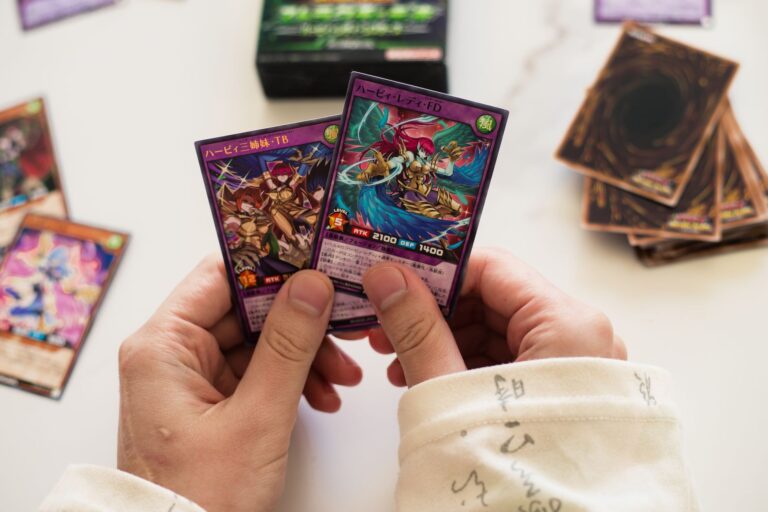
Pokémon cards are positioned to become the next major collecting market because they combine the perfect storm of scarcity, historical significance, and explosive recent valuation growth that institutional investors and serious collectors now recognize. The evidence is tangible: a 1st Edition Base Set Charizard PSA 10 sold for $550,000 at Heritage Auctions in late 2025, and a complete 1st Edition set in PSA 10 condition fetched $911,000 that same period. These aren’t lottery-ticket anomalies—they represent a market that has grown 3,821% since 2004, vastly outperforming the S&P 500’s 483% return over the same timeframe. What separates 1999 cards from other speculation bubbles is the concrete supply constraint. Original print runs were extraordinarily limited compared to modern production volumes, and the surviving population in high grades is vanishingly small.
When only a handful of PSA 10 copies exist worldwide of iconic cards like the Charizard, the pricing follows basic supply-demand economics—not hype. The Pokémon card market itself is on a measurable upswing: January 2026 marked a “watershed moment” with average card values rising 46% year-over-year, followed by another 20% increase over the last six months. The Pokémon TCG is operating within a broader tailwind. The global trading card games market was valued at $8.4 billion in 2025 and is projected to grow to $16.9 billion by 2035 at a 6.9% compound annual growth rate, with Pokémon commanding over 12% market share as the clear leader. With the franchise hitting its 30th anniversary in 2026, institutional interest is accelerating, and a new generation of affluent collectors is entering the market. The convergence of these factors suggests 1999 cards have legitimate fundamentals supporting further appreciation.
Table of Contents
- THE SCARCITY ADVANTAGE AND PRINT RUN REALITIES
- THE GRADING PREMIUM AND CONDITION TRAP
- RECORD AUCTION RESULTS AND VALUATION BENCHMARKS
- STRATEGIC ENTRY POINTS AND THE BUDGET REALITY
- GRADING COST INFLATION AND THE SLABBING DILEMMA
- FRANCHISE MOMENTUM AND THE 30TH ANNIVERSARY CATALYST
- THE INSTITUTIONAL PIVOT AND MARKET MATURATION
- Conclusion
- Frequently Asked Questions
THE SCARCITY ADVANTAGE AND PRINT RUN REALITIES
The gravitational force behind 1999 card values is production volume from nearly three decades ago. Original base set print runs were modest by today’s standards, and the vast majority of cards circulated in played condition, with their corners bent, surfaces scratched, and edges worn from actual gameplay. A 1st Edition Base Set Charizard in PSA-graded condition—typically ranging from $3,000 to $6,000—commands that premium precisely because survivors in mint or gem-mint condition number in the dozens, not thousands. To understand the magnitude of this scarcity, compare 1st Edition Charizard pricing to its Unlimited counterpart: the same card in Unlimited print runs $300 to $500. That 5-20x valuation spread reflects how severely print volume differences influence rarity.
Unlimited sets had much higher production, meaning more copies survived, flooding the market relative to 1st Edition inventory. This dynamic will persist as long as no new 1999 inventory enters circulation—and realistically, sealed boxes from 1999 are now effectively extinct in the retail market. The rarity narrative becomes even starker when examining PSA 10 gem-mint graded cards. A 1st Edition Charizard at this grade tier is worth approximately $13,999.99, and PSA 10 vintage cards typically command 10-30x the value of raw Near Mint copies. These grade gaps reward patient collectors and investors who hold cards that have been professionally preserved, because as cards age and surviving population shrinks further, the handful of genuinely perfect examples become museum pieces in the eyes of serious buyers.

THE GRADING PREMIUM AND CONDITION TRAP
Professional grading—particularly PSA certification—has become the gatekeeping mechanism that separates serious collectibles from bulk inventory. The difference between a raw card assessed at Near Mint by eye and one that receives a PSA 10 official grade can be a 10-30x price spread. This creates an opportunity and a risk: opportunity for collectors who own cards in genuinely pristine condition and want to unlock their maximum value, and risk for those who grade cards expecting a grade and receive something lower. The reality of grading 1999 cards is sobering. Cards stored in closets, attics, and shoeboxes for the past quarter-century almost never grade high. Dust settling on unslabbed cards, slight creasing from stack pressure, and even minor light wear on edges or corners that seemed invisible to the naked eye will result in a PSA 7, 8, or 9—not the PSA 10 that justifies the $13,000+ asking price on a Charizard.
Many collectors open grading submissions expecting their “perfect-looking” Charizard to achieve gem-mint status and receive a PSA 8, which carries a price tag under $5,000. That gap between expectation and reality has left thousands of disappointed graders over the past few years, particularly as grading costs have risen and turnaround times have lengthened. Condition matters with unforgiving finality in the 1999 market. A Base Set Charizard 1st Edition in PSA 9 condition might fetch $8,000, while the same card in PSA 10 could approach $14,000. That $6,000 difference for one grade point reflects the exponential scarcity of perfect survivors. However, this also means that borderline cards—those grading 8 or below—experience a pricing cliff that can devastate seller expectations. The lesson: if you own a potentially high-grade 1999 card, grading is likely worthwhile, but the outcome is never guaranteed.
RECORD AUCTION RESULTS AND VALUATION BENCHMARKS
The credibility of the 1999 market rests on hard transaction data, and the auction results from late 2025 through early 2026 demonstrate unmistakable momentum. A 1st edition Base Set Charizard in PSA 10 condition achieved $550,000 at Heritage Auctions, a figure that would have seemed absurd five years ago but now reads as a rational price for the most iconic card in the franchise’s history, in the highest grade, from the original print run. That same auction house also documented the sale of a complete 1st Edition Pokémon base set in PSA 10 condition for $911,000, establishing a floor for comprehensive collections of the era. These are not one-off lottery results inflated by a single hyperactive bidder. The consistency of high-value transactions signals organized demand from serious collectors and investment groups. Over the last six months alone, Pokémon cards have appreciated 20% in average value, and the January 2026 appreciation of 46% year-over-year was unprecedented in recent memory.
These aren’t small percentage gains—they represent real wealth creation for anyone who held 1999 inventory through the 2024-2025 market cycle. The auction data also provides a calibration tool for other rare 1999 cards beyond Charizard. Holo rare cards like Venusaur and Blastoise, while less iconic, command $2,000-$4,000 in PSA 10 condition. Even non-holo rare cards from the base set can command triple-digit values when graded high. This depth of pricing across multiple cards—not just Charizard—suggests the market is genuine and not driven solely by a single collectible. Cards that seemed worthless ten years ago now have real floor prices, indicating a sustainable shift in collector perception.
STRATEGIC ENTRY POINTS AND THE BUDGET REALITY
For prospective collectors and investors, the 1999 market presents a problem: legitimate blue-chip cards demand significant capital. A 1st Edition Charizard at any desirable grade represents a five-figure investment, which excludes most casual collectors. However, the market offers multiple tiers for different budgets, and understanding these tiers is essential for anyone wanting exposure to 1999 upside without committing $20,000 to a single card. A realistic entry tier starts with Unlimited prints of iconic cards. An Unlimited Charizard in solid condition runs $300-$500 and still offers exposure to “the most valuable card ever printed” at a fraction of the 1st Edition premium. Similarly, Unlimited holos of Venusaur and Blastoise provide collectors with recognizable, valuable cards at $100-$300 price points.
The downside is clear: these Unlimited cards appreciate more slowly than their 1st Edition equivalents, and their valuation ceiling is dramatically lower. An Unlimited Charizard is unlikely to ever approach $100,000, while a 1st Edition in gem-mint condition could. The middle tier involves 1st Edition non-holo rares and lesser-known holo rares in higher grades. These cards cost $1,000-$3,000 and offer higher scarcity than Unlimited prints but more accessibility than an elite 1st Edition Charizard. Many serious collectors have built portfolios by acquiring multiple 1st Edition cards across the spectrum rather than betting everything on a single Charizard. This diversification strategy acknowledges that even within 1999, certain cards will outperform others, and owning a range of first-edition prints hedges against concentration risk. The practical tradeoff is time: curating a portfolio of diverse 1999 cards requires patience, research, and the ability to move quickly when quality inventory surfaces.
GRADING COST INFLATION AND THE SLABBING DILEMMA
One overlooked friction point in the 1999 market is the cost and time required to obtain professional grading. PSA grading fees have increased significantly, particularly for valuable cards where the insurance value justifies paying for expedited service. Grading a card that might be worth $10,000-$15,000 typically requires paying a premium to PSA for faster turnaround and assurance of service, adding $500-$1,500 to the process. For cards worth $2,000-$5,000, the grading expense is more proportionate but still material—a 5-10% additional cost on top of the card’s value. The risk compounds if a card receives a lower grade than anticipated. A collector submits a card they believe is PSA 9 or 10, pays for expedited grading, and receives a PSA 8. The card’s value may have dropped 20-50% from their expectation, while the grading cost is now unrecoverable—they cannot “un-grade” a card and try again.
This volatility in outcomes has created a secondary market of ungraded 1999 cards for price-conscious collectors, but ungraded cards are substantially harder to sell, trade, and value consistently. Buyers demand grading as evidence of authenticity and condition, so the slabbing cost is largely unavoidable if you plan to sell premium 1999 inventory. Another consideration is grading service reliability. While PSA remains the gold standard, its reputation and consistency have faced occasional scrutiny as submission volumes have surged. Some collectors have experienced grade variations they considered inconsistent, and the company’s service standards have been strained during peak demand periods. For large or high-value collections, diversifying across multiple grading services or accepting that the grading outcome is immutable—and planning accordingly—becomes a pragmatic risk-management strategy. The lesson: if you own raw 1999 cards, budget for grading as a necessary cost of monetizing them, and be prepared for the outcome.

FRANCHISE MOMENTUM AND THE 30TH ANNIVERSARY CATALYST
The Pokémon franchise hit its 30th anniversary in 2026, an inflection point that is actively fueling collector interest and media attention. Anniversary years typically generate renewed interest in originating products, and Pokémon’s cultural footprint ensures mainstream media coverage that casual collectors and investors notice. The franchise remains one of the highest-grossing media properties globally, and The Pokémon Company has demonstrated a sustained commitment to the trading card game as a core revenue driver, not a nostalgic sideshow.
This franchise stability matters because collectible value depends on sustained demand from a buyer base that sees the collectible as culturally significant. Pokémon has achieved generational cross-appeal: original 1990s players are now high-income adults with disposable wealth, while younger audiences maintain interest through new games, shows, and products. The result is a collector base that is simultaneously nostalgic and contemporary, which insulates the market from fading into period-specific niche status. A 1999 Charizard is not a relic of a dead franchise—it is the foundational card of an ongoing, commercially vibrant property with expanding reach into Asian markets, emerging collectors in non-traditional markets, and sustained investment from major retailers and online platforms.
THE INSTITUTIONAL PIVOT AND MARKET MATURATION
What distinguishes the current 1999 market from earlier speculative cycles is the involvement of institutional capital and serious collectors who treat Pokémon cards as an alternative asset class comparable to fine art or vintage sports cards. Major auction houses now feature Pokémon cards regularly, and grading services have formalized their processes to match those used for graded sports cards and memorabilia. This professionalization creates infrastructure that supports sustained, liquid pricing—not ephemeral bubble dynamics. The forward outlook for 1999 cards depends on sustained supply constraints and institutional demand.
As long as the surviving population of gem-mint 1st Edition cards remains finite—and no cache of sealed 1999 boxes somehow surfaces—the appreciation trajectory should continue. The Pokémon TCG market’s projected growth to $16.9 billion by 2035 suggests expanding collector participation, which means more demand chasing an inelastic supply. That is the defining characteristic of a genuine collecting market: scarcity meeting rising demand. 1999 cards have both in abundance.
Conclusion
Pokémon cards have a legitimate claim to becoming the next great collecting market because they satisfy the fundamental criteria: extreme scarcity, cultural significance, and demonstrable recent appreciation backed by institutional auction data. The $550,000 Charizard sale and $911,000 complete set transaction are not anomalies; they are anchors establishing realistic price discovery for the market. With the franchise’s 30th anniversary accelerating collector interest and the global TCG market expanding at 6.9% annually, the fundamentals support continued appreciation for authentic 1999 inventory in high grades.
The practical reality for collectors is that entry requires capital, patience, and realistic expectations about grading outcomes and condition. Not every 1999 card will appreciate equally, and Unlimited prints appreciate far more slowly than 1st Edition cards. But for those with the resources to acquire and hold genuine 1st Edition cards in verifiable high grades, the 1999 market offers exposure to an asset class with tangible scarcity, institutional recognition, and a buyer base that extends well beyond nostalgic hobbyists into serious investment territory. The market is no longer speculative; it is established.
Frequently Asked Questions
How much should I expect to pay for a legitimate 1st Edition Charizard?
A 1st Edition Base Set Charizard in PSA-graded condition ranges from $3,000 to $6,000 for mid-grade examples, with gem-mint PSA 10 specimens approaching $14,000. Unlimited versions cost $300-$500. Always verify grading and authenticity before purchasing at these price points.
Is it worth grading a 1999 card I think might be high-grade?
If your card is genuinely near-mint or better, grading typically unlocks significant value—a PSA 10 card can be worth 10-30x the raw card’s value. However, grading fees are substantial, and cards often grade lower than expected. Only grade if you believe the card is legitimately exceptional or plan to sell it.
Can I build a 1999 Pokémon portfolio without spending $10,000 per card?
Yes. Unlimited prints, 1st Edition non-holo rares, and lesser-known holo rares offer lower entry points ($300-$3,000) while still providing 1999 market exposure. Diversifying across multiple cards rather than concentrating on a single Charizard is a practical strategy for budget-conscious collectors.
What is the biggest risk to 1999 card values?
The primary risks are grading uncertainty (cards may grade lower than expected), potential flooding of the market if large hoards of sealed 1999 product surface (unlikely but not impossible), or a broader economic contraction that dampens collector spending. Also, a grading service scandal could undermine confidence in slabbed cards.
Why are 1st Edition cards worth so much more than Unlimited?
1st Edition cards had much lower original print runs and represent the earliest collectible versions of each card design. Since fewer were produced and fewer survived in high grades, supply is dramatically constrained. Combined with symbolic value as “the original version,” 1st Edition cards command 5-20x premiums over identical Unlimited prints.
Should I hold 1999 cards as long-term investments?
The market fundamentals suggest continued appreciation: scarcity is fixed, demand is rising, and institutional recognition is solidifying. However, no collectible market is guaranteed. If you can afford to hold for at least 3-5 years and tolerate illiquidity, 1999 cards represent a credible alternative asset. For short-term speculation or capital-constrained collectors, the risk is higher.