Spanish First Edition Base Set cards are struggling to keep pace with their English and Japanese counterparts during the current vintage Pokémon rebound, which has lifted vintage WOTC cards 30–50% heading into 2026. The primary reason is straightforward: Spanish cards operate in a fundamentally smaller, more niche global market. While English cards dominate worldwide as the universally recognizable standard, and Japanese cards command premium prices among serious collectors, Spanish versions appeal to a narrower audience concentrated primarily in Spanish-speaking regions, leaving them stranded when the broader vintage market accelerates.
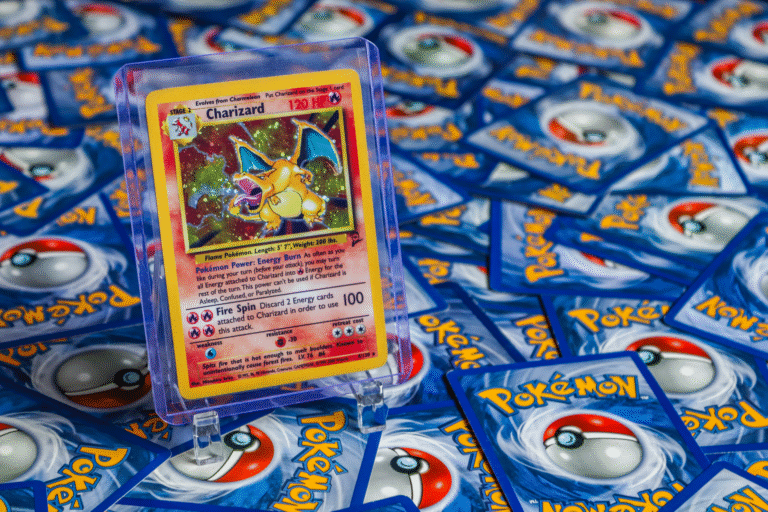
The gap has become visible during this particular rebound cycle. English First Edition Base Set holos have surged alongside sealed vintage product climbs of 15–25% annually, but Spanish versions of the same cards haven’t experienced proportional gains. A Spanish First Edition Charizard, for instance, will fetch significantly less than its English equivalent, even when both are in identical condition. This disparity isn’t new, but it’s more pronounced now because the collectors fueling the vintage rebound are overwhelmingly English-speaking and Japanese-speaking buyers who view Spanish cards as harder to move, harder to authenticate within their networks, and less prestigious to own.
Table of Contents
- Why Do Spanish Pokémon Cards Lag Behind English and Japanese Versions During Market Surges?
- The Global Market Dominance of English Cards and Its Effect on Spanish Alternatives
- How the Current Vintage Rebound Amplifies the Spanish Card Problem
- What Spanish First Edition Base Set Cards Actually Cost During the Vintage Rebound
- The Collector Psychology Behind Spanish Card Avoidance
- Regional Demand Variations and Where Spanish Cards Hold Value
- The Future of Spanish Cards and Whether They’ll Close the Gap
- Conclusion
Why Do Spanish Pokémon Cards Lag Behind English and Japanese Versions During Market Surges?
Spanish Pokémon cards typically fetch lower prices in English-speaking markets due to lower demand compared to English and Japanese cards. This isn’t a quality issue—Spanish cards are legitimate, often well-printed WOTC products—but rather a market structure issue. English dominates because English-language cards were distributed globally and became the international standard for serious collectors. Japanese cards command premium prices because Japan’s domestic market is massive and because Japanese cards are perceived as higher-quality and rarer in Western collections.
Spanish cards, by contrast, were primarily distributed in Spain and Spanish-speaking parts of Latin America, meaning their natural collector base is geographically limited. During a vintage rebound, this limitation becomes more acute. Collectors participating in the current surge are actively buying, trading, and comparing values across platforms that use English as the common language. A collector in Germany, the United States, or even Spain itself might easily find English versions for sale, but Spanish versions require more searching and carry more selling friction. The demand for Spanish-language cards tends to be “more niche,” which means their global value might not be as high as English versions, though they can be valuable in Spanish-speaking regions where local demand exists.

The Global Market Dominance of English Cards and Its Effect on Spanish Alternatives
English Pokémon cards dominate the global market, making them “more universally recognizable and easier to buy or sell,” which gives them a broader collector audience. This network effect is crucial during price surges. When the vintage market rebounds, more capital flows toward the cards with the deepest liquidity and the widest recognition. Sellers stock English cards because they know they’ll move quickly. buyers search for English cards because they’re confident they can resell them.
This self-reinforcing cycle means that English first Edition Base Set cards climb faster than Spanish versions, even if both are equivalent in condition and rarity. The limitation here is important: there is no specific numerical data readily available comparing Spanish First Edition Base Set card prices to English versions during the current 2026 rebound. The research suggests Spanish cards underperform, but the exact percentage gap is not documented in public sources. What we do know is that Spanish cards historically trade at discounts in English-speaking markets, and that discount likely widens during periods when collector activity and demand are highest. A collector trying to sell a Spanish Charizard would face a longer time-to-sell and a lower final price than an English equivalent, even in Spain itself, because international buyers (and international market prices) carry more weight.
How the Current Vintage Rebound Amplifies the Spanish Card Problem
The overall vintage Pokémon card market is experiencing a “remarkable renaissance” with vintage WOTC cards showing 30–50% price increases heading into the Pokémon 30th anniversary year. This rebound is concentrated in cards with the highest visibility and liquidity: English First edition holos, Japanese cards, and sealed vintage product. The surge is driven by nostalgia, wealth rotation toward tangible assets, and institutional interest in vintage trading cards as a category. But this momentum benefits cards that are easiest to move and most recognized by the broadest buyer pool.
Spanish cards are disadvantaged in this environment because they’re not part of the mainstream narrative driving the rebound. Auction houses rarely feature Spanish holos as headline items. Large dealers stock them in smaller quantities. Price tracking sites and market reports focus primarily on English and Japanese versions, which means Spanish card owners lack transparent, up-to-date pricing information. If you own a Spanish First Edition Blastoise and want to sell it during a market surge, you’ll find it harder to locate buyers willing to pay current market prices, compared to sellers of English or Japanese versions who can tap into the active buying frenzy.

What Spanish First Edition Base Set Cards Actually Cost During the Vintage Rebound
Spanish First Edition cards do gain in value during the vintage rebound, but at a slower rate and from a lower baseline than English versions. If an English First Edition Base Set holo has appreciated 40% over the past year, a Spanish version of the same card might have appreciated 15–25%, depending on condition and rarity. This gap exists because even Spanish-speaking collectors often prefer English versions for investment purposes, recognizing that English cards have better liquidity and stronger long-term price floors.
The tradeoff is that Spanish cards remain more affordable entry points into First Edition WOTC collectibles. A collector with limited budget can acquire a Spanish holo from the Base Set, still own a vintage WOTC card, and spend 30–50% less than they would for the English equivalent. Over time, if the Spanish market develops deeper collector interest or if Spanish-language markets mature, that advantage could reverse. But in the current 2026 market, the affordability is a silver lining to the liquidity problem, not a path to outperformance.
The Collector Psychology Behind Spanish Card Avoidance
Spanish cards suffer from a perception problem among serious collectors. In English-speaking markets, Spanish cards are often viewed as less desirable, harder to authenticate in comparison guides, and riskier for investment purposes. This isn’t rational—a Spanish First Edition Pikachu is every bit as authentic and scarce as an English version—but collector psychology drives markets. The warning here is that perception can persist even when objective facts don’t support it.
A collector buying Spanish cards for investment should understand that they’re betting against decades of market consolidation around English and Japanese cards. Additionally, there’s limited historical price data for Spanish cards, which makes it hard to spot trends or project future value. When you buy an English First Edition holo, you can reference completed sales going back years, chart price movements, and make informed projections. Spanish card price histories are sparse, incomplete, and fragmented across regional markets. This opacity itself suppresses demand, because serious collectors avoid illiquid assets with poor price transparency.

Regional Demand Variations and Where Spanish Cards Hold Value
Spanish cards do hold stronger value within Spain and Spanish-speaking Latin American markets, where local collectors and dealers have deeper inventory and more active trading. In Madrid, Mexico City, or Buenos Aires, a Spanish First Edition Base Set card may command closer to English-equivalent prices because the local collector base values language-of-origin and regional availability.
However, these regional markets are smaller and less liquid than the global English-language market, so a collector looking to maximize value still faces a choice: sell locally for better regional pricing, or sell internationally and accept a discount. An example: A Spanish First Edition Charizard might sell for $3,000–$3,500 in a Spanish collector network, but $2,000–$2,500 if listed on an English-language platform or sold to an international dealer. This gap reflects the reality that most serious vintage collectors operate in English-language markets, and Spanish cards have to compete for attention and capital in that space.
The Future of Spanish Cards and Whether They’ll Close the Gap
Looking forward, Spanish cards are unlikely to significantly close the gap with English versions unless the Spanish-language collecting community experiences a major expansion or unless institutional investment in international Pokémon cards increases. The 30th anniversary cycle is benefiting English and Japanese cards most because those are the cards with the deepest historical significance, the widest recognition, and the most active buyer pools. Spanish cards, while authentic WOTC products, simply don’t carry the same cultural weight or investment narrative.
The outlook for Spanish First Edition cards is stability with modest appreciation, rather than explosive growth. Owners of Spanish cards should view them as long-term holds rather than vehicles for outperformance during market surges. If you’re acquiring Spanish cards now, do so because you prefer the language of origin, want to support regional collecting communities, or are seeking undervalued vintage inventory—not because you expect them to outpace English equivalents in the near term.
Conclusion
Spanish First Edition Base Set cards are lagging behind English and Japanese versions during the current vintage Pokémon rebound because they operate in a smaller, more fragmented global market with lower visibility, less liquidity, and narrower collector interest. The 30–50% gains seen in English vintage cards over the past year have not materialized for Spanish versions, which typically appreciate at half that rate or less. This gap is driven by language dominance in the collector community, the ease with which English cards can be bought and sold internationally, and the perception that English and Japanese cards are more prestigious and easier to liquidate.
Collectors considering Spanish First Edition cards should recognize them as legitimate vintage WOTC collectibles with stable, modest appreciation potential, not as undervalued bargains poised to catch up. For investment purposes, English versions remain the clearer choice. For collectors who value Spanish-language cards for cultural or regional reasons, or who want entry-level vintage WOTC at lower price points, Spanish versions offer a defensible alternative—just not one that will outperform the broader vintage market in the current cycle.