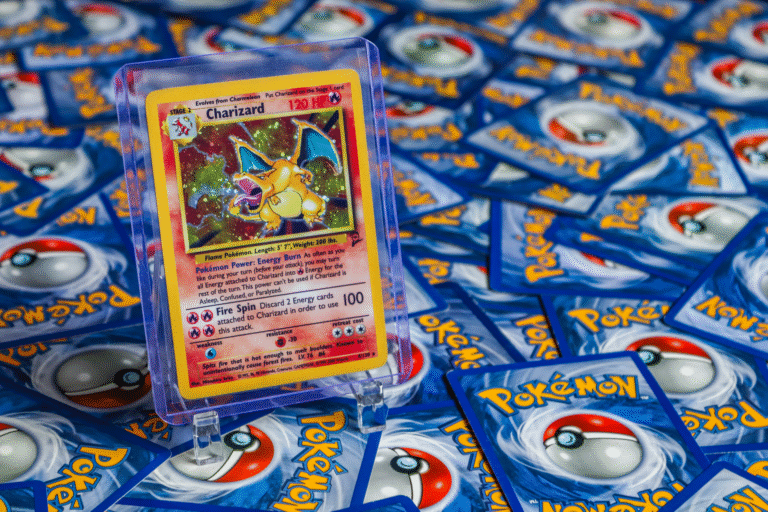
The best Pokémon debate will never really end because there is no objective measure of “best.” Whether a Pokémon is superior depends entirely on the criteria you choose—competitive viability, card rarity, investment potential, nostalgia value, or aesthetic appeal. Someone arguing that Charizard is the best Pokémon based on its iconic status and market price has a legitimate claim, but so does someone championing a lesser-known card like Pikachu Illustrator based on historical significance. The moment you try to settle which Pokémon truly reigns supreme, you’ve already lost, because you’re attempting to solve a problem with infinitely movable goalposts. The Pokémon community has been having this argument since the trading card game launched in 1996, and it will continue as long as new cards are printed and new players join the hobby.
This isn’t a flaw in how collectors think—it’s the natural outcome of a system where different people value different things. A tournament player cares about which Pokémon wins matches. A vintage collector cares about which card was rarest in 1999. A financial investor cares about which card holds or gains value. These are all valid frameworks, and none of them is universally correct.
Table of Contents
- Why “Best” Means Everything and Nothing in Pokémon
- The Shifting Standards of Greatness
- Nostalgia as an Invisible Voting System
- Competitive Viability Versus Collection Value
- Market Manipulation and Hype Cycles
- Regional and Cultural Preferences
- The Future Won’t Settle This Either
- Conclusion
Why “Best” Means Everything and Nothing in Pokémon
The fundamental problem is that pokémon quality operates across multiple, often contradictory dimensions. Take Charizard and Blastoise as examples. Charizard dominates in cultural presence and market value—a first-edition Charizard from Base Set can sell for five figures. Blastoise, also powerful and rare, never achieved the same iconic status despite being equally central to the early trading card game’s competitive landscape. By raw card market price, Charizard wins decisively.
By historical importance in competitive play, the comparison becomes murkier; both shaped the metagame of the late 1990s and early 2000s. The problem deepens when you layer in different collection eras and formats. Modern-era competitive players might argue for entirely different Pokémon than vintage collectors. A Lugia from Legends Awakened represents a pinnacle of modern card artistry and remains relevant in certain competitive formats. A Charizard from 1999 represents historical weight and investment security. These cards exist in different universes of value, making direct comparison almost meaningless.

The Shifting Standards of Greatness
one of the biggest obstacles to settling this debate is that the standards for what makes a Pokémon “best” shift constantly. In 1999, players valued raw card strength in the current metagame. In 2010, collectors began prioritizing rarity and condition grading. In 2020, alternative art treatments and special editions became secondary markets unto themselves.
By 2026, the criteria have shifted again to include modern investment potential, sustainability of value, and authentication assurance. This constant evolution means that even if the community somehow agreed on a “best” Pokémon today, that answer becomes obsolete within months or years. A card that dominates competitive play might plummet in value if the metagame shifts and that Pokémon falls out of favor. Conversely, a card that seemed ordinary might appreciate significantly if a famous player wins a tournament with it or if a celebrity posts about collecting it. The example of Pikachu shows this vividly—its actual competitive power has waxed and waned throughout the trading card game’s history, but its cultural prominence ensures it will always be relevant to the “best” conversation, even when it’s mechanically mediocre.
Nostalgia as an Invisible Voting System
Nostalgia creates another immovable barrier to consensus. Your favorite Pokémon is almost certainly determined by which generation of games or cards you encountered first. A player who started with Pokémon Red and Blue views the original 151 Pokémon with a reverence that later generations, no matter how well-designed, struggle to match. This isn’t irrational—nostalgia is a legitimate emotional value that affects both personal preference and market pricing.
The generational divide appears clearly in card markets. First-edition Base Set cards hold enormous premiums not just because they’re old, but because they represent entry points for millions of collectors who grew up in the late 1990s. A Blastoise Holographic from Base Set might be mechanically weaker than modern printings but vastly more valuable because it carries nostalgic weight for a specific generation. Younger collectors might view this attachment as arbitrary, preferring newer cards with better art or more coherent mechanics. Both groups are right, which is precisely why the debate never ends.
Competitive Viability Versus Collection Value
The split between competitive play and collection creates a fundamental tension that prevents consensus. A card might be the absolute best in competitive formats but relatively common and inexpensive. Conversely, the most valuable cards by market price sometimes have limited competitive utility. Shadowless Charizard represents the ultimate in pricing power but hasn’t been tournament-legal in standard formats for decades. Modern competitive staples like cards from Sword and Shield era might be essential for winning tournaments but hold their value less predictably than vintage cards.
This means different stakeholders genuinely disagree about what “best” means. A player trying to build a competitive deck cares about functionality, legality in their format, and practical performance against current metagames. A collector seeking investment returns cares about scarcity, condition, and historical significance. A casual player reconstructing their childhood collection cares about personal nostalgia and emotional connection. None of these groups is wrong—they’re simply optimizing for different variables. Someone can accurately say “Lugia is the best Pokémon for competitive modern formats” while someone else equally accurately says “Charizard is the best Pokémon overall” because they’re answering different questions.
Market Manipulation and Hype Cycles
The investment aspect introduces another complication: speculation and hype can artificially inflate or deflate opinions about which Pokémon is “best.” When celebrities or prominent collectors publicly endorse a particular card, prices can spike dramatically, which then reshapes community consensus about that card’s value and status. This creates a feedback loop where perceived “bestness” influences market value, which reinforces the perception of “bestness.” This volatility reveals a critical limitation of using market price as your “best” metric. A Pokémon card trading for $500 today might drop to $200 next year if the hype cycle shifts.
A graded PSA 10 vintage card might gain or lose value based on authentication concerns, reprints of similar cards, or broader economic conditions affecting the collectibles market. Relying on current market prices to determine “best” is like using today’s stock prices to determine which companies are objectively superior—it captures the current moment’s sentiment, not some deeper truth. Collectors who bought heavily into hyped cards during 2020-2021 price spikes often faced significant losses, a cautionary tale that “best” by market value can evaporate quickly.

Regional and Cultural Preferences
The “best” Pokémon debate also breaks down across geographic and cultural lines. Japanese collectors often prioritize different cards than Western collectors, reflecting different release schedules, cultural touchstones, and collecting traditions. A Pokémon that’s iconic in Japan might be relatively unknown in North America, or vice versa. These regional variations mean there’s no global consensus on which Pokémon deserves the “best” title—only regional or community-specific champions.
Blastoise serves as an example here. While it achieved significant popularity in the West during the early card game era, it never quite achieved the cultural penetration in Japan that Western collectors granted to Charizard. Similarly, certain promotional cards or regional exclusives carry immense prestige in one market while being relatively obscure in others. This geographic dimension means the “best Pokémon” might legitimately be different depending on which community you’re asking.
The Future Won’t Settle This Either
As Pokémon continues to evolve—new card sets release regularly, new formats emerge, the investment market matures—the debate will only become more fragmented, not more unified. New Pokémon get introduced constantly, offering fresh candidates for “best.” New printing techniques, special editions, and alternative arts multiply the variables to consider. The base set doesn’t shrink; it expands, giving people more reasonable contenders to champion.
Looking forward, the most likely scenario is increasing specialization. Instead of asking “what’s the best Pokémon overall?” the community will increasingly ask, “What’s the best Pokémon for vintage investing?” or “Best for modern competitive play?” or “Best by art quality?” These narrower questions can be answered more productively because they have defined criteria. But the overarching “best” question will remain beautifully, frustratingly unresolvable.
Conclusion
The best Pokémon debate persists not because the community is confused or indecisive, but because the question itself is fundamentally unanswerable without additional context. There are too many legitimate frameworks for evaluation—competitive utility, historical significance, investment potential, nostalgia, aesthetic appeal, rarity—and no hierarchy that convinces everyone. A collector optimizing for one variable will inevitably reach different conclusions than someone optimizing for another.
This isn’t a weakness of Pokémon or its community; it’s a feature. The endless debate keeps the hobby engaging, ensures that older cards and lesser-known Pokémon remain relevant, and allows different collectors to find their own answers. If the question were settled definitively, something would be lost—the joy of discovery, the thrill of finding your own “best,” and the endless conversations that make collecting social and personal rather than purely transactional.