
Pinpointing an exact total market capitalization for Pokemon cards as a standalone asset class remains challenging because Pokemon cards trade across a fragmented secondary market—auction houses, online retailers, local shops, and person-to-person transactions don’t report unified data the way public companies do. However, we can establish a reasonable range by examining the broader trading card game market and Pokemon’s documented market share. As of May 2026, the global trading card games market is valued at approximately $9.2 billion to $15.11 billion, with Pokemon commanding 12 to 22 percent of that total, suggesting the Pokemon card market alone represents somewhere in the range of $1.1 billion to $3.3 billion in aggregate circulation value. The difficulty in arriving at a precise figure becomes clearer when you consider how value is distributed. A single shadowless charizard from a 1999 base set might sell for $50,000 at auction, while a modern booster pack from your local card shop costs $4.
These are the same product category, but their valuations exist on entirely different planes. This fragmentation means estimates depend on which segment of the market you’re measuring—the high-end collectible segment, the speculative investment tier, or the casual player market. What we do know with certainty is that Pokemon cards have experienced extraordinary appreciation. Over the past 20 years, Pokemon cards have appreciated 3,261 percent, vastly outperforming traditional investment benchmarks. Since 2004, values have climbed 3,821 percent while the S&P 500 managed only 483 percent growth. In early 2026 alone, driven by the franchise’s 30th anniversary, average Pokemon card values rose 46 percent year-over-year, demonstrating the asset class remains volatile and sensitive to narrative-driven demand shifts.
Table of Contents
- How Much Is the Pokemon Card Market Worth Right Now?
- Why the Market Capitalization Figure Is Difficult to Pinpoint
- Breaking Down Market Segments and Their Valuations
- Regional Market Size and Growth Projections
- The Volatility Problem and Market Correction Risks
- High-End Collectible Valuations and Rarity Metrics
- Future Market Growth and the 2026-2035 Outlook
- Conclusion
How Much Is the Pokemon Card Market Worth Right Now?
The trading card game market as a whole sits at $9.2 billion to $15.11 billion as of 2026, with significant regional variation. North America represents the largest segment, projected at $3.1 billion in 2026 and expected to climb to $5.8 billion by 2035. The United States specifically accounted for approximately $2.2 billion of the trading card games market in 2025, suggesting growth momentum has continued into 2026. pokemon‘s consistent dominance of this space—holding 12 to 22 percent market share depending on the analysis—puts the Pokemon card segment at somewhere between $1.1 billion and $3.3 billion.
This valuation encompasses everything from $0.25 bulk common cards to $100,000+ vintage holograms. The wide range in Pokemon’s market share estimates reflects different methodologies: some analysts look at trading volume, others at collector valuations, and still others at retail sales. A practical example clarifies the complexity: PSA 10-graded base set charizards sell for $3,000 to $15,000 each depending on specific printing characteristics, while unlimited holos of the same card might trade for $100 to $500. Both belong to the same market, but valuations diverge based on scarcity markers invisible to casual observers.
Why the Market Capitalization Figure Is Difficult to Pinpoint
The core challenge in determining an exact market cap is that Pokemon cards don’t trade on centralized exchanges with transparent, real-time pricing. The stock market knows Apple’s market cap to the cent because every share trades through regulated channels. Pokemon cards, by contrast, sell through auction houses (PSA, Beckett, Heritage Auctions), online marketplaces (TCGPlayer, eBay, OfferUp), hobby shops, and private sales with zero transparency. A seller might list a card for $2,000 but accept $1,200 in a private negotiation, and no aggregator captures that transaction.
Another limitation: valuation differs dramatically based on grading status. An ungraded 1999 charizard might sell for $500 to $1,500, but the same card slabbed and graded PSA 8 could command $5,000 to $8,000. Professional grading adds certification value that’s inherently subjective—the grade reflects the slabbing company’s assessment, not an absolute truth. This creates pricing tiers that don’t exist in public equity markets. Collectors and investors must account for the fact that a significant portion of reported prices reflect psychological value and scarcity perception rather than utility or revenue-generating capacity.
Breaking Down Market Segments and Their Valuations
The Pokemon card market segments into at least three distinct subcategories, each with different valuation drivers. The vintage segment (base set through neo era, roughly 1999–2002) commands the highest per-card premiums, with graded holograms regularly surpassing $1,000. This segment is driven by nostalgia, scarcity, and appeal to long-time collectors. The mid-tier segment (modern holograms and modern-era chase cards) trades at $50 to $500 depending on condition and tournament performance.
The entry-level segment (bulk commons, recent commons, booster pack contents) forms the volume backbone of the market but contributes minimally to total monetary value. The franchise’s 30th anniversary in 2026 has particularly energized the mid-tier and entry-level segments. Newly printed anniversary sets saw immediate sellouts, and secondary market prices for chase cards rose 46 percent year-over-year in early 2026. However, this growth isn’t uniform: vintage cards appreciated at different rates than modern cards, and graded versus raw (ungraded) cards experienced distinct price trajectories. Collectors chasing the anniversary spike saw some positions double in a matter of weeks, but this explosive short-term appreciation often follows boom-bust patterns, meaning sellers who bought at the peak faced significant losses as initial euphoria faded.
Regional Market Size and Growth Projections
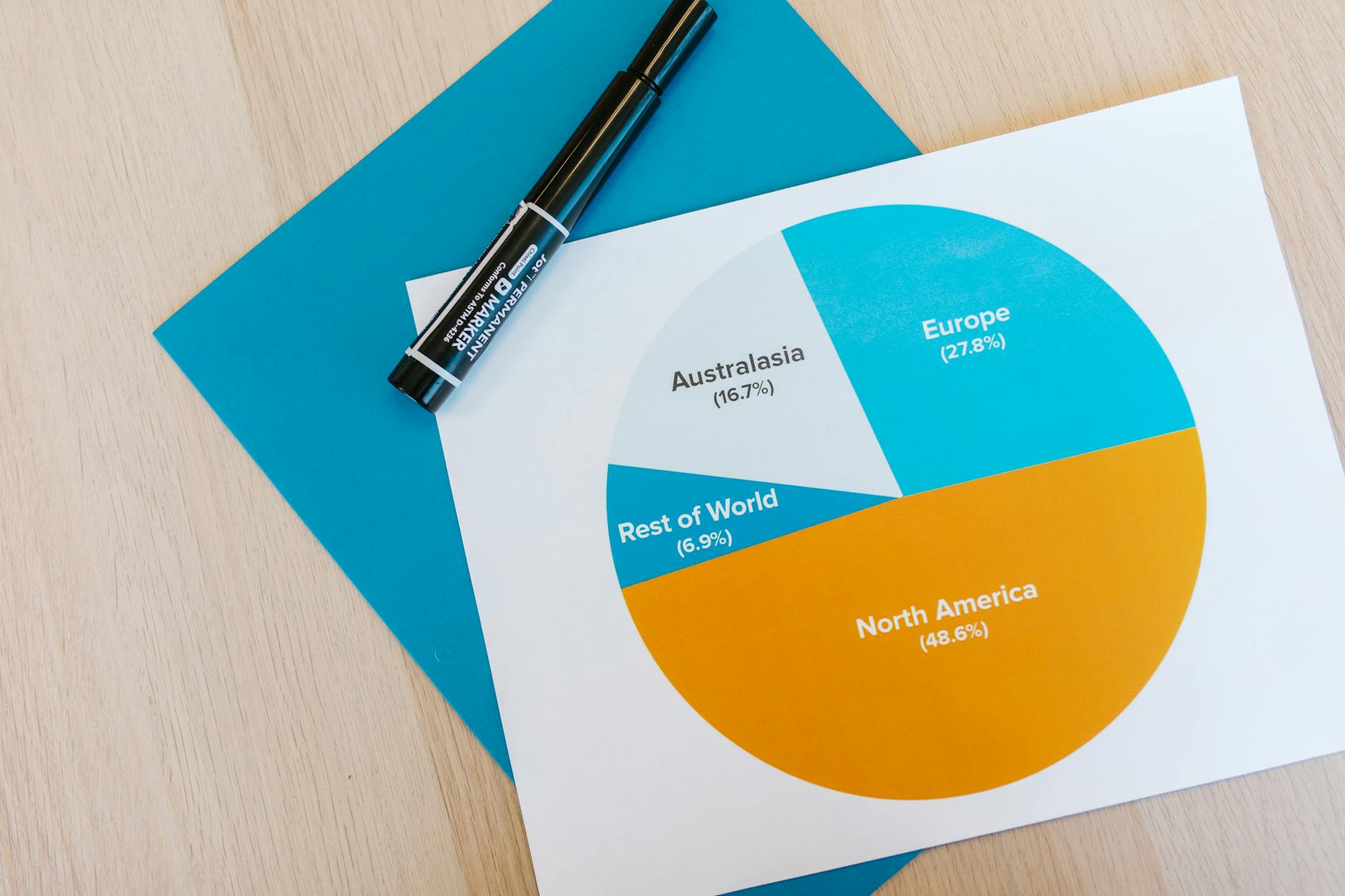
North America dominates the global Pokemon card market, representing $3.1 billion in 2026 with a projected compound annual growth rate of 6.9 to 10.03 percent through 2035. This puts the region’s market at a potential $5.8 billion by 2035, assuming mid-range growth. The United States contributes roughly $2.2 billion of the broader trading card games market (2025 data), suggesting the Pokemon segment alone is worth approximately $264 million to $484 million at U.S. levels, based on Pokemon’s market share.
Comparing regions reveals strategic insights. Asia-Pacific is expected to grow faster than North America on a percentage basis, driven by growing middle-class wealth in Japan and Southeast Asia, yet North America remains the absolute largest market by revenue. A practical example: Japanese vintage cards sometimes command higher prices than American equivalents due to regional scarcity, even for the same card from the same era. This geographic arbitrage opportunity rewards international traders but also introduces currency and shipping friction that reduces margins. Investors betting on long-term appreciation should recognize that regional growth rates are not uniform, and cards popular in one region might face different appreciation trajectories elsewhere.
The Volatility Problem and Market Correction Risks
Pokemon card valuations exhibit extreme volatility, particularly in the modern and vintage-high-end segments. The 46 percent year-over-year appreciation in early 2026 is noteworthy, but it also signals speculative froth. Historically, trading card markets have experienced sharp corrections following speculative booms—the 1990s baseball card bubble saw values collapse when demand collapsed, and the Pokemon card boom of 2020–2021 experienced significant cooling as casual investor interest waned. Buyers entering the market near all-time highs face meaningful downside risk if sentiment shifts.
The psychological component amplifies volatility. Pokemon cards are not dividend-paying assets or revenue-generating properties; their value depends entirely on what the next buyer will pay. Influencer endorsements, viral TikTok trends, or celebrity interest can drive rapid appreciation, but these sentiment waves reverse just as quickly. A warning to collectors and investors: the prices you see on auction sites represent what people paid at a specific moment, not necessarily what you’ll realize if you attempt to liquidate quickly. Ungraded cards are particularly susceptible to sudden valuation drops, as the condition assessment is subjective and changes hands every time ownership transfers.
High-End Collectible Valuations and Rarity Metrics
The ultra-premium segment of the Pokemon card market operates by its own logic. First-edition shadowless charizards from the 1999 base set have sold for $50,000 to $300,000 depending on grade, and these transactions anchor investor perception of the entire asset class. PSA 10-graded versions represent the pinnacle, with only a handful existing in the world. These cards derive value from scarcity, historical significance, condition rarity, and the franchise’s enduring cultural position. A first edition charizard graded PSA 10 appreciated over 8,000 percent from 2005 (when a PSA 10 sold for roughly $3,000) to 2021 (when similar sales reached $250,000+).
However, this apex segment represents an infinitesimal portion of total market value. Fewer than a thousand charizards grade PSA 10 across all printings and conditions. The average Pokemon card collector will never interact with this tier. The broader market—where the majority of trading volume occurs—centers on base set holograms grading PSA 7–9 ($300–$2,000), modern chase cards ($20–$200), and bulk commons (under $1). Understanding this segmentation prevents overestimating how the ultra-premium market reflects overall valuations.
Future Market Growth and the 2026-2035 Outlook
The trading card game market is projected to grow from $9.2–15.11 billion in 2026 to $16.9–24.36 billion by 2031–2035 at a compound annual growth rate of 6.9–10.03 percent. If Pokemon maintains its 12–22 percent market share (a conservative assumption given the franchise’s stability), the Pokemon card segment could expand to $2.0–5.4 billion by 2035. This growth reflects expanding international markets, increased collector investment interest, and the franchise’s resilience across generational cohorts. Several factors will shape whether this optimistic projection holds.
Regulatory scrutiny of card gambling-like mechanics in younger audiences could dampen casual player growth. Competition from digital card games (Pokémon TCG Live, Magic Arena) may fragment the traditional card market. Conversely, veteran collectors aging into higher income brackets and Asian market expansion could fuel appreciation beyond current projections. The 30th anniversary momentum in 2026 provides a data point, but sustained growth requires both new collector entry and retention of existing player bases across two decades or more.
Conclusion
The total market capitalization of Pokemon cards as of May 2026 likely falls between $1.1 billion and $3.3 billion based on Pokemon’s 12–22 percent share of the $9.2–15.11 billion global trading card game market. This range reflects the fragmented nature of secondary card markets and the diversity of card valuations across vintage, modern, and graded versus raw segments. No single database exists to measure this figure precisely, but the research-backed estimates provide a credible framework for understanding the asset class’s scale.
For collectors and investors evaluating their portfolios or considering entry, the key insight is that Pokemon cards have demonstrated exceptional long-term appreciation (3,261 percent over 20 years) while experiencing significant short-term volatility (46 percent year-over-year in 2026). Understanding regional growth patterns, segment-specific valuations, and the speculative dynamics of modern markets will help you make informed decisions about where to allocate capital and what risk tolerance matches your timeline. Monitor market sentiment, diversify across conditions and eras, and be aware that secondary market prices can move sharply when macroeconomic conditions shift or franchise momentum changes.
You Might Also Like
- Why Are Common Base Set Pokemon Cards Worth Hundreds of Dollars?
- Are Thing Stamp Pokemon Cards Worth More than Normal Ones?
- How Much is a 1996 POKEMON JAPANESE BASIC 130 GYARADOS-HOLO PSA 9