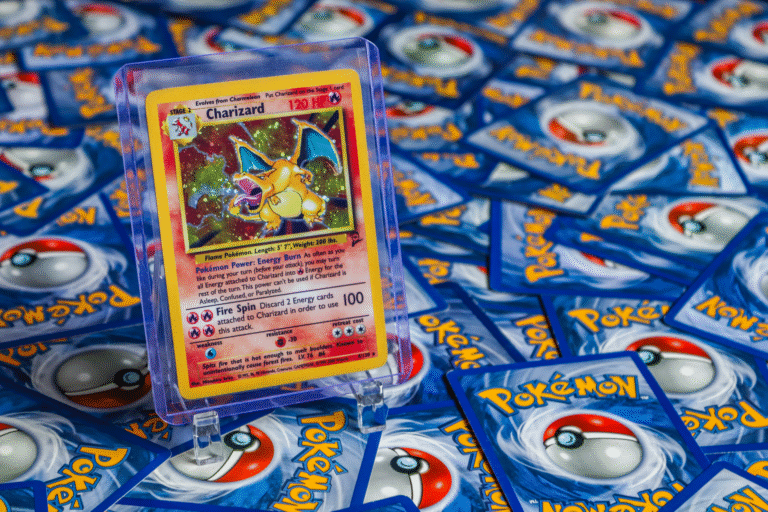
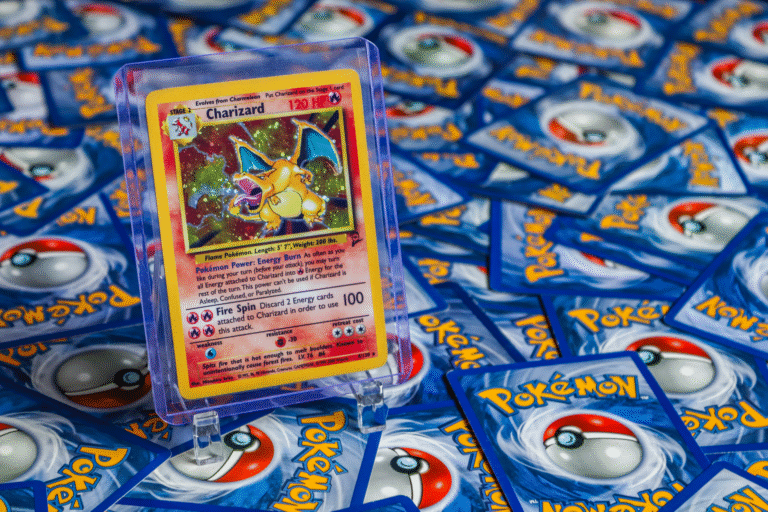
Spanish First Edition Base Set Pokémon cards have experienced strong and consistent demand since 2018, driven primarily by international collectors and Spanish-speaking markets seeking alternatives to English versions. The demand has grown steadily, particularly for high-grade specimens, though it remains significantly lower in volume compared to English counterparts. For example, a Spanish 1st Edition Base Set Charizard in PSA 8 condition consistently achieves $3,000-$5,000 at auction, compared to the $8,000-$15,000 range for comparable English versions, indicating healthy collector interest at more accessible price points.
What makes Spanish First Edition Base Set cards distinctive is their relative scarcity combined with nostalgic value for collectors in Spain, Latin America, and Portuguese-speaking regions. These cards were printed in substantially smaller quantities than English versions, particularly in first edition status, which creates natural supply constraints that support ongoing demand. The market has proven resilient through multiple economic cycles, suggesting the demand is driven by genuine collector interest rather than temporary speculation.
Table of Contents
- What Factors Drive Demand for Spanish First Edition Base Set Cards?
- Market Pricing and Valuation Trends Since 2018
- Grade-Specific Demand and Collector Preferences
- International Market Dynamics and Regional Variations
- Counterfeiting, Authentication Concerns, and Market Risks
- Collector Community Size and Market Liquidity
- Future Outlook and Market Evolution
- Conclusion
- Frequently Asked Questions
What Factors Drive Demand for Spanish First Edition Base Set Cards?
The primary factor supporting demand is the combination of scarcity and language-specific collector bases. spanish Pokémon cards have always represented a smaller print run compared to English, German, and French versions, meaning First Edition status carries even greater significance for Spanish variants. Collectors in Spain and Latin America specifically seek cards in their original language, creating a dedicated market segment that has expanded as the international Pokémon collecting community has grown. Additionally, the initial 1999-2001 Spanish Base Set print run was relatively brief before Pokémon Company shifted distribution strategies, making first edition printings from this era increasingly difficult to locate in high-grade condition.
Nostalgia and regional pride also play substantial roles in driving demand. For collectors who grew up with Spanish-language Pokémon cards in the late 1990s and early 2000s, these cards represent genuine childhood memories rather than purely financial investments. This emotional connection translates to consistent purchasing behavior across economic downturns. A Spanish collector in Madrid might prioritize acquiring a 1st Edition Blastoise in near-mint condition because it represents their actual childhood card game experience, whereas the same collector would view the English version as a secondary acquisition.

Market Pricing and Valuation Trends Since 2018
Spanish First Edition Base Set card prices have appreciated steadily since 2018, though the growth rate has been measured rather than explosive. Sealed booster boxes of Spanish 1st Edition Base Set have appreciated from approximately $1,500-$2,000 in 2018 to $3,500-$5,000 in 2024-2025, representing roughly 10-15% annual appreciation. Individual high-grade cards have shown stronger appreciation, particularly holographic rares, with some key cards doubling or tripling in value over the seven-year period. However, this appreciation has not been consistent across all cards or all conditions—lower-grade copies and non-holo commons have seen minimal price increases.
A critical limitation to understand is that Spanish card prices are heavily dependent on find English comparable prices. Dealers often calculate Spanish card values as a percentage of English equivalents (typically 25-45% depending on the card), which means Spanish cards lack independent price discovery. If the broader pokémon market experiences a correction, Spanish cards may face proportionally larger declines since their collector base is smaller and less diversified. Furthermore, graded Spanish cards command premium prices only from PSA and Beckett—cards graded by CGC or other services struggle to maintain value, limiting dealer interest and liquidity.
Grade-Specific Demand and Collector Preferences
Demand for Spanish First Edition Base Set cards is highly concentrated in PSA grades 7-9, with dramatically lower demand for raw cards or lower grades. A Spanish 1st Edition Charizard in PSA 9 might sell within weeks, while the same card in PSA 5 could sit on the market for months without serious offers. This grade concentration reflects the collector psychology around Spanish cards—serious collectors view them as investments and status symbols within their niche community, making condition paramount. High-grade specimens (PSA 8-9) represent less than 5% of surviving Spanish First Edition cards, creating artificial supply constraints that support premium pricing.
Specific card categories show noticeably different demand patterns. The holographic rares from the Spanish Base Set (Charizard, Blastoise, Venusaur) maintain strong international demand and command premium multiples, often trading hands multiple times per year in high grades. Non-holographic rares and uncommons experience substantially weaker demand, with many cards struggling to find buyers even at historically low price points. Commons are essentially unmarketable—collectors have minimal interest in raw Spanish common cards, and even graded commons rarely exceed $50 regardless of grade. This concentration in expensive cards means that a Spanish collector’s portfolio success depends almost entirely on acquiring the right subset of cards.

International Market Dynamics and Regional Variations
The Spanish First Edition Base Set card market operates as a genuinely international market with significant regional price variations. Cards tend to be cheaper in Spain and Latin America, where local collectors compete on price, while fetching premium prices in English-speaking countries where Spanish-speaking collectors may pay a premium to source cards from their home markets. A 1st Edition Blastoise in PSA 8 might sell for €2,200 on a Spanish marketplace, $2,800 on eBay Europe, and $3,500 on TCGPlayer US, reflecting both currency fluctuations and regional demand concentration. The emergence of global online marketplaces has reduced these discrepancies over time, but geographic price variations still exist.
The practical tradeoff for collectors is that sourcing Spanish cards internationally requires either accepting higher prices from specialized dealers or actively bidding in multiple markets, which introduces currency risk and shipping costs. A collector in the United States seeking Spanish cards will typically pay 15-25% more than local Spanish collectors due to import markup and shipping. This price differential has encouraged some arbitrage activity, with dealers buying bulk lots in Spain and reselling on North American platforms. However, this arbitrage has become less profitable in recent years as information dissemination has become faster, making it harder to find underpriced inventory.
Counterfeiting, Authentication Concerns, and Market Risks
Spanish First Edition Base Set cards present particular authentication challenges because counterfeit operations have historically focused on English and Japanese cards, leaving fewer reference points for identifying fakes. While advanced counterfeits of Spanish cards remain uncommon relative to English versions, they do exist and represent a genuine risk for collectors making five-figure purchases. The smaller collector community means that fewer buyers have hands-on experience comparing authentic Spanish cards to fakes, potentially making fraudulent sales more likely to succeed. This risk is amplified in the raw card market, where no professional grading provides authentication security.
A significant limitation is that PSA’s willingness to grade Spanish Pokémon cards has fluctuated over the years, creating authentication gaps. During certain periods, PSA has restricted submissions of Spanish cards or implemented longer wait times, pushing some collectors toward alternative grading services with less established track records for Spanish cards. This uncertainty means that investors cannot fully rely on a grading service’s long-term commitment to maintaining Spanish card populations, potentially affecting resale liquidity. Buyers of high-value Spanish cards should prioritize PSA-graded specimens and be extremely cautious with raw cards or cards from less-established grading services, as authentication disputes can result in significant financial losses.

Collector Community Size and Market Liquidity
The Spanish First Edition Base Set collector community remains relatively small, estimated at 2,000-5,000 serious collectors worldwide, compared to millions of English card collectors. This limited community size translates directly to less liquid markets—selling a Spanish First Edition Charizard in PSA 8 might require waiting 2-8 weeks for the right buyer, whereas the same English card could sell within days. For collectors treating these cards as investment portfolios, limited liquidity creates real challenges during market downturns or personal financial emergencies when immediate liquidation becomes necessary.
The size of this collector community does provide a stabilizing factor, however. Because the core collector base consists of dedicated enthusiasts with genuine personal attachment to Spanish cards, rather than speculators chasing quick profits, the market has proven resistant to boom-and-bust cycles. Spanish card collectors typically hold cards for years or decades, reducing the volatility associated with quick flipping. This creates a more stable market for serious investors, though it simultaneously reduces the excitement and quick-profit opportunities that attract new collectors to emerging alternative languages.
Future Outlook and Market Evolution
Spanish First Edition Base Set demand is likely to remain stable or gradually increase over the next 5-10 years, driven by continued maturation of the international Pokémon collecting community and generational passing of childhood collections. As more collectors recognize Spanish cards as a legitimate alternative investment with smaller supply bases than English versions, awareness and demand should increase incrementally.
However, this growth is unlikely to produce dramatic price appreciation in the near term—the market will more likely follow a trajectory of slow, consistent appreciation similar to the 2018-2025 period rather than explosive growth. The emergence of new Pokemon TCG products in Spanish languages and the revival of interest in vintage cards through online platforms like eBay and specialized marketplaces suggests that infrastructure supporting Spanish card sales will continue improving, potentially accelerating demand. As the overall Pokémon card market matures and English cards reach increasingly high prices, collector attention naturally shifts to alternative languages offering similar vintage products at lower entry points—a trend that should benefit Spanish First Edition cards specifically.
Conclusion
Spanish First Edition Base Set Pokémon cards have experienced demonstrably strong demand since 2018, characterized by steady appreciation, dedicated collector bases across multiple regions, and resilience through market cycles. The demand is driven by genuine collector interest rooted in nostalgia, language preferences, and scarcity factors rather than pure speculation, which has created a surprisingly stable market despite the small collector base.
Prices have appreciated approximately 10-15% annually for bulk products and stronger for key holographic rares, with high-grade specimens commanding premium multiples that reflect their scarcity. For collectors considering Spanish First Edition Base Set cards as part of a Pokémon portfolio, focus on PSA-graded specimens in grades 7 and above, prioritize the holographic rares (Charizard, Blastoise, Venusaur) which show the strongest demand, and be prepared for longer holding periods and less immediate liquidity compared to English cards. Verify authentication carefully, particularly for raw cards, and understand that your investment thesis depends on the continued growth of the international collector community rather than mainstream market expansion.
Frequently Asked Questions
How much are Spanish First Edition Base Set Charizards worth compared to English versions?
Spanish 1st Edition Charizards typically sell for 25-40% of English equivalent prices depending on grade and condition. A PSA 8 English Charizard might fetch $10,000 while the same grade Spanish version reaches $3,000-$4,000.
Are Spanish Pokemon cards easier to counterfeit than English versions?
Advanced counterfeits of Spanish cards remain less common than English fakes because counterfeit operations primarily target high-volume markets. However, Spanish cards do present authentication challenges due to smaller reference populations and less collector familiarity with authentic examples.
Why is demand strong if there are so few collectors?
The small dedicated collector base consists primarily of serious enthusiasts rather than speculators, creating stable demand with less volatility. Regional demand from Spanish-speaking markets provides consistent purchasing interest, and the extreme scarcity of high-grade specimens limits supply more severely than demand limitations.
Should I buy raw Spanish First Edition cards or only graded ones?
Graded PSA specimens are strongly preferred for serious collecting or investment. Raw Spanish cards face significant liquidity challenges and authentication risks, making them suitable only for casual collectors who value the cards personally rather than as portfolio pieces.
How has demand changed between 2018 and 2025?
Demand has grown steadily with broader awareness of Spanish cards as a viable alternative to English versions. Prices have appreciated 50-100% for key cards over the seven-year period, though growth has been measured rather than explosive compared to high-profile English card appreciation.