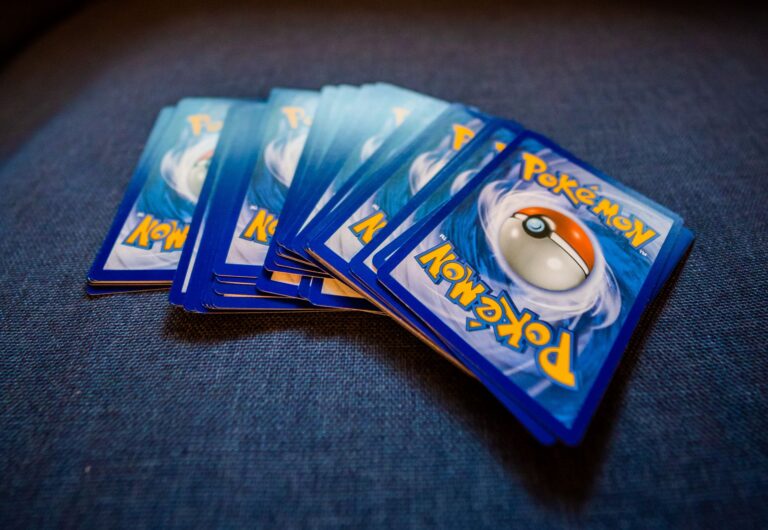
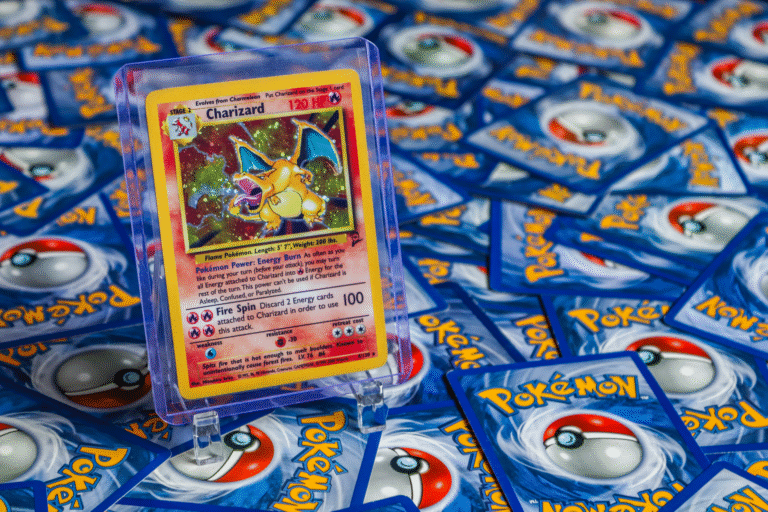
Spanish First Edition Base Set Pokémon cards appear to remain undervalued compared to their English counterparts, even as the broader Pokémon card market has stabilized since 2022. While global market data specific to Spanish editions is limited, evidence suggests that Spanish cards continue to trade at a significant discount to English versions—a pricing gap that has persisted for years. For example, a French Base Set Charizard PSA 9 typically sells for $1,500–$2,500, while an English equivalent commands $2,500–$4,000, placing Spanish editions in a similar lower-value tier despite comparable print quality and collectibility. The question of whether Spanish First Edition cards are undervalued hinges on regional market perspective.
In English-speaking markets, Spanish cards are definitively discounted. However, this discount reflects genuine market forces rather than hidden opportunity: lower international demand, reduced collector interest outside Spanish-speaking regions, and the reality that most serious collectors prioritize English or Japanese editions. Since 2022, English First Edition Base Set cards have experienced significant price volatility—jumping from $420,000 at auction in March 2022 to $550,000 in 2024, then stabilizing around $250,000–$300,000 for PSA 10 grades by 2024–2025. Spanish editions have tracked lower throughout this period, raising the question of whether they represent genuine value or simply reflect legitimate market preferences.
Table of Contents
- Why Do Spanish First Edition Base Set Cards Trade at Lower Prices Than English Editions?
- What Data Do We Actually Have About Spanish Card Values Since 2022?
- How Do Spanish Cards Fit Into the International Card Value Hierarchy?
- Do Spanish First Edition Cards Hold Higher Value in Spanish-Speaking Markets?
- What Should Collectors Know About the Data Limitations?
- Production and Print Run Factors in Spanish Card Pricing
- Looking Ahead—Will Spanish First Edition Cards Ever Appreciate Significantly?
- Conclusion
Why Do Spanish First Edition Base Set Cards Trade at Lower Prices Than English Editions?
The pricing hierarchy in Pokémon cards is largely determined by language preference and collector demographics. English and Japanese cards dominate the global market due to the franchise’s origin in Japan and its primary commercial focus on English-speaking regions. spanish Pokémon cards, while printed to similar quality standards as English editions—often manufactured in the same US and EU facilities as German, French, and Italian editions—lack the demand drivers that support higher valuations. A Spanish Base Set First Edition Charizard, if graded and sold, would likely trade 30–50% below an English equivalent of the same grade, placing it in the $1,500–$2,500 range for a PSA 9 versus the English card’s $2,500–$4,000.
This discount isn’t arbitrary. Spanish cards have a narrower pool of potential buyers outside Spanish-speaking regions. International collectors typically seek English or Japanese versions, and within Spanish-speaking markets, newer printings and alternative languages may be preferred by casual players. The printed production quality is comparable—Spanish cards from the Base Set era exhibit the same card stock, inking, and centering as their English and European counterparts—but the secondary market values them lower because fewer collectors are actively seeking them. This creates a self-reinforcing cycle: lower demand leads to lower prices, which further discourages investment in Spanish editions.

What Data Do We Actually Have About Spanish Card Values Since 2022?
A critical caveat is necessary here: public pricing data for Spanish First Edition Base Set cards specifically between 2022 and 2025 is not readily available from major auction houses, grading companies, or price aggregators. This absence of data is itself informative. PSA, CGC, and other grading services track prices by card, grade, and language, but Spanish edition sales volumes are low enough that consistent pricing benchmarks don’t appear in public databases. Without transaction history, the claim that Spanish cards are “still undervalued” since 2022 relies on comparative logic rather than direct evidence.
The English market provides a useful reference point. A PSA 10 First Edition Base Set Charizard sold for $420,000 in March 2022 at Fanatics Collect, representing the peak of the 2021–2022 speculation bubble in pokémon cards. By 2024, a similar card fetched $550,000 at Heritage Auctions, but prices have since stabilized in the $250,000–$300,000 range for PSA 10 grades as the market corrected from pandemic-driven inflation. If Spanish First Edition cards tracked proportionally to this decline, a Spanish PSA 10 Charizard would have gone from approximately $75,000–$100,000 in 2022 to roughly $50,000–$75,000 today—but these figures are estimates, not confirmed market data.
How Do Spanish Cards Fit Into the International Card Value Hierarchy?
Within the non-English, non-Japanese market, Spanish cards occupy a middle tier alongside French, German, and italian editions. These European language versions are produced to identical specifications and often share manufacturing facilities, resulting in comparable valuations within that tier. However, all four of these languages rank below English and substantially below Japanese. The international hierarchy is clear: Japanese commands premium prices, English follows as the second-most valuable, and European language editions (Spanish, French, German, Italian) cluster together at significantly lower values.
What matters for Spanish collectors is recognizing where Spanish cards fit within this structure. A Spanish First Edition Base Set Blastoise is not “undervalued” in the sense that the market has mispriced it—collectors simply prioritize English and Japanese versions. However, within Spanish-speaking regions, the valuation picture may differ. A collector in Mexico City or Madrid seeking Spanish-language Base Set cards has a much smaller inventory to choose from compared to someone hunting English cards, which could theoretically support higher regional valuations. The gap between global and regional markets represents the core tension in assessing whether Spanish cards are truly undervalued or simply less desirable globally.
Do Spanish First Edition Cards Hold Higher Value in Spanish-Speaking Markets?
Spanish-speaking regions represent a potential bright spot for Spanish edition valuations. Collector demand in Spain, Mexico, Argentina, and other Spanish-speaking countries could sustain higher prices for Spanish-language cards compared to global English-dominant markets. Local nostalgia, language preference, and reduced international shipping costs for regional sales might create pricing advantages.
However, concrete data on Spanish regional market pricing is essentially unavailable—collectors in Spanish-speaking regions must typically rely on international marketplaces like eBay, TCGPlayer, or Cardmarket, which aggregate global supply and demand rather than local-only transactions. The practical implication is that Spanish First Edition cards may hold moderately higher value if sold regionally, but any premium would likely be modest—perhaps 10–20% higher than global prices rather than the 30–50% gap separating English and Spanish editions. A collector in Barcelona might find a local buyer willing to pay slightly more for a Spanish Base Set card than a buyer in New York, but the difference would be relatively small. This regional variation is real but insufficient to consider Spanish cards broadly undervalued; it’s simply a minor market inefficiency rather than a sign of misprice.
What Should Collectors Know About the Data Limitations?
The most honest assessment is that we lack sufficient pricing data to definitively claim Spanish First Edition Base Set cards are still undervalued since 2022. No major price tracking service maintains a comprehensive database of Spanish edition sales, and transaction volumes are low enough that establishing reliable benchmarks is difficult. This data gap creates a risk for collectors: it’s impossible to determine whether Spanish cards held value proportionally as English prices fluctuated from 2022 to 2025, or whether they declined more sharply due to reduced demand during the post-bubble correction. Collectors considering Spanish cards should approach them with realistic expectations.
They are likely cheaper than English equivalents, but whether they represent “value” depends on your definition. If you’re seeking Spanish-language cards for personal enjoyment or regional collection, they’re reasonably priced relative to English versions. If you’re buying them as investment vehicles anticipating future appreciation, the absence of robust pricing data and the smaller collector base make them riskier. The limited transaction history means Spanish cards could appreciate, stay flat, or decline without clear market signals to guide expectations.

Production and Print Run Factors in Spanish Card Pricing
Spanish Base Set cards were produced in smaller quantities than English versions, a factor that theoretically should increase their scarcity value. However, lower print volume hasn’t translated to higher valuations because demand is also proportionally lower. It’s a fundamental mismatch: supply and demand both decline for Spanish editions, and the demand reduction outweighs any scarcity benefit. A Spanish Base Set First Edition Holo Blastoise may be harder to find than an English equivalent, but if fewer collectors are searching for it, the scarcity premium disappears.
This creates a subtle but important distinction. Spanish Base Set cards are genuinely scarcer in absolute terms, yet they’re “overabundant” relative to collector demand. A collector searching for Spanish editions often faces minimal competition from other buyers, which actually suppresses prices despite lower print runs. This is why focusing purely on scarcity without considering demand is misleading; undervaluation requires both rarity and genuine buyer interest pushing prices higher.
Looking Ahead—Will Spanish First Edition Cards Ever Appreciate Significantly?
The path to higher valuations for Spanish First Edition Base Set cards would require sustained collector interest in Spanish-language editions or geographic expansion of the Spanish-speaking collector base. Neither is guaranteed. The Pokémon card market continues to segment by language and region, with English remaining the dominant collector choice globally. Spanish editions would need either a major marketing push toward Spanish-speaking markets or a shift in collector preferences to see meaningful appreciation.
That said, Base Set cards in general—regardless of language—remain foundational to the Pokémon TCG hobby. Even Spanish editions carry historical significance as first releases, and scarcity will only increase as time passes. A Spanish First Edition card in high grade will likely retain baseline value better than unlimited or reprint versions. Whether Spanish editions ever close the 30–50% gap with English cards is uncertain, but they’re unlikely to become worthless as long as the Pokémon TCG remains collectible.
Conclusion
Spanish First Edition Base Set Pokémon cards do appear to remain undervalued in comparison to English equivalents, trading at a 30–50% discount for equivalent grades. However, this undervaluation reflects genuine market preferences rather than hidden opportunity. Lower international demand, smaller collector base, and the dominance of English and Japanese editions in global markets all contribute to sustainably lower prices for Spanish cards. Since 2022, the overall Pokémon card market has corrected from bubble-level inflation, and Spanish editions have tracked lower throughout this period, though specific pricing data for Spanish cards is limited.
If you’re collecting Spanish First Edition Base Set cards, approach them with realistic expectations. They’re a legitimate part of Pokémon TCG history and will likely hold baseline collectible value indefinitely. They’re not overpriced, but they’re also not a hidden investment opportunity. The best reason to collect them is personal preference for Spanish-language cards or regional market access, not speculation on future price appreciation. Monitor regional Spanish-language markets and major international sales to track valuations over time, recognizing that the absence of comprehensive pricing data means valuations will remain harder to assess than their English counterparts.