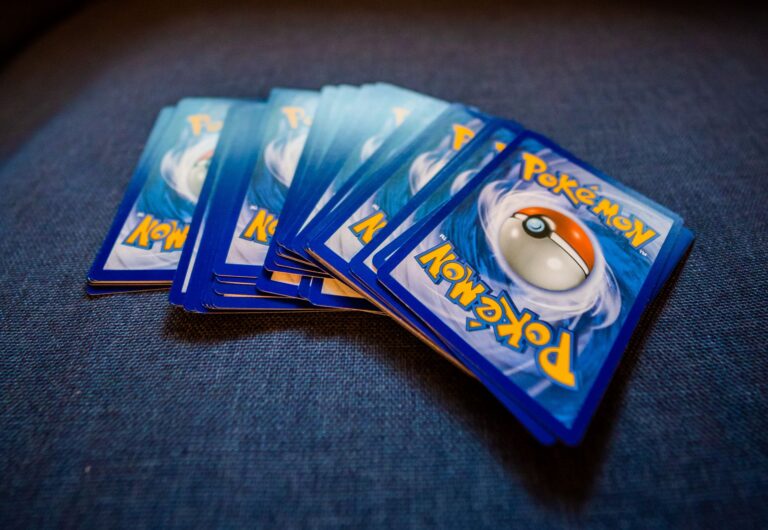
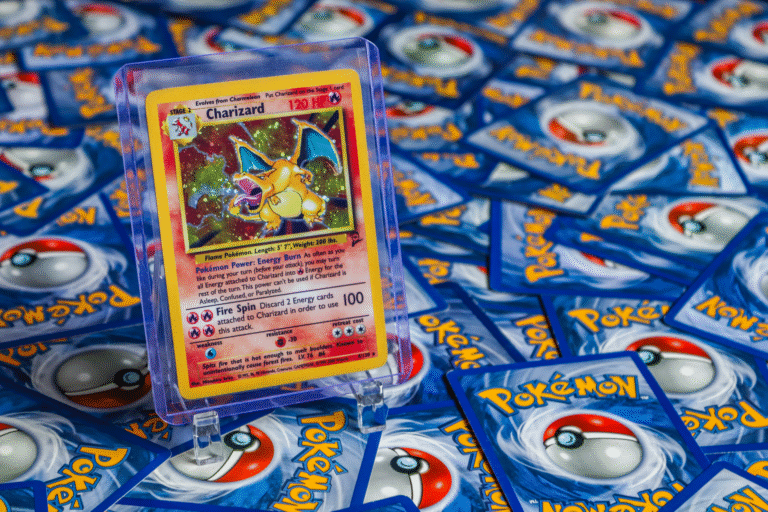
Spanish First Edition Base Set Pokémon cards represent a distinct but often overlooked segment of the vintage TCG market. Since 2023, the landscape for these cards has shifted dramatically due to increased international market attention, growing grading culture, and broader investor interest in limited-edition collectibles. What buyers need to understand is that Spanish First Edition Base Set cards occupy a unique position—they’re rarer than their English counterparts in most cases, yet typically sell for a fraction of the price, creating both opportunity and complexity for collectors willing to navigate the variant specifications and market mechanics.
The research backing current valuations is significant. A complete 1st Edition Pokémon Base Set graded PSA 10 sold for $911,629.69 in November 2025, with the PSA 10 Charizard from that same period commanding approximately $264,000 as the set’s most valuable card. These headline figures represent English versions primarily, but they establish the ceiling for what vintage Base Set cards can achieve. Spanish versions, by comparison, operate in a different pricing tier—sometimes dramatically lower, depending on which specific variant you’re examining and its condition grade.
Table of Contents
- Understanding Spanish First Edition Variants and Their Market Identity
- Pricing Dynamics and Why Spanish Cards Cost Less Than English Equivalents
- Authentication, Grading, and the Role of Third-Party Services
- Acquisition Strategy—Where to Buy and Price Expectations
- Common Pitfalls—Counterfeits, Variant Confusion, and Market Illiquidity
- Market Growth and Investment Context
- Looking Forward—Trends, Market Evolution, and Collector Positioning
- Conclusion
Understanding Spanish First Edition Variants and Their Market Identity
The critical first step for any buyer is recognizing that “spanish First Edition Base Set” is not a monolithic category. Four distinct variants exist within Spanish Base Set First Edition printings, including cards with both 1999 and 1999-2000 copyright dates on the back. These variant differences matter significantly because they affect rarity and collectibility. A Spanish Base Set card printed in 1999 with a first edition mark is fundamentally different from a Spanish card with a 1999-2000 copyright date, even if both cards appear visually identical to the untrained eye. The differences lie in print run size, press durability during production, and supply in higher grades—factors that compound over time.
The market currently has 592+ Spanish First Edition Base Set cards actively listed on eBay alone, which sounds substantial until you examine the price points. A Spanish First Edition Charizard in good condition might sell for $800 to $2,500, compared to the $264,000 commanded by its English PSA 10 equivalent. This price gap reflects both rarity and collector preference. English cards are the international standard for competitive play and grading, while Spanish cards appeal primarily to regional collectors or those seeking budget-conscious nostalgia. The risk for buyers comes from treating Spanish variants as interchangeable with English ones—they have separate collector bases and different demand curves.

Pricing Dynamics and Why Spanish Cards Cost Less Than English Equivalents
The pricing discrepancy between English and Spanish First Edition base Set cards extends beyond simple supply-and-demand curves. Regional demand drives the primary valuation difference. England and North America have larger collector populations, higher average disposable income for hobby spending, and decades of established grading culture centered on English cards. Spain, meanwhile, has a smaller but growing collector base, less historical market infrastructure, and lower price expectations rooted in regional buying power. A Spanish Blastoise that would cost $400 in PSA 8 condition might sell for $1,200 in English PSA 8, with both being authentic first editions from the same production era.
The limitation here is that Spanish card pricing lacks the transparent market data that English cards enjoy. Major price guides like TCGPlayer and PSA’s own price guides emphasize English versions, with Spanish variants often footnoted or omitted entirely. This information gap creates both risk and opportunity. New collectors might overpay because they lack comparable sales history, while patient buyers can find undervalued Spanish cards on secondary markets like eBay and specialized grading sites. The warning: don’t assume a Spanish card is cheaper just because it’s Spanish. Condition, variant, and authentication all determine price, just as they do for English cards.
Authentication, Grading, and the Role of Third-Party Services
since 2023, authentication services have become central to the Spanish First Edition card market. Professional grading through PSA, Beckett, or similar services adds legitimacy and protects buyers from counterfeits. The broader trading card market has seen 300% year-over-year growth in graded card submissions to authentication services, reflecting a shift toward verified, condition-assessed collectibles. Spanish First Edition Base Set cards fit this trend—a Spanish Charizard or Blastoise in authenticated PSA 8 condition is worth 2-3 times as much as an ungraded version of the same card, even if visually identical.
However, there’s a cost to grading that buyers often underestimate. PSA grading can run $15 to $100+ per card depending on service speed, and the authentication service takes a small percentage of insured value. For Spanish cards with lower ceiling prices, this means a Spanish Machamp worth $150 ungraded might only be worth $200-250 after grading, making the economic math questionable. The practical example: if you’re buying Spanish First Edition Base Set commons or uncommons, grading is rarely cost-effective. Focus grading on holo rares and chase cards where the price bump exceeds the grading cost.

Acquisition Strategy—Where to Buy and Price Expectations
Finding Spanish First Edition Base Set cards requires intentional sourcing. eBay remains the largest marketplace, with 592+ Spanish 1st Edition Base Set cards currently available, offering the widest selection but inconsistent pricing and seller knowledge. Specialized grading marketplaces like Graded Power maintain curated inventories with verified inventory, higher average prices, but greater transparency on condition and variant. Local card shops in Spanish-speaking regions sometimes stock these cards at fair regional pricing, but shipping and cross-border logistics add complexity.
The tradeoff comes down to time versus price. Buying from large marketplaces like eBay saves time and offers selection, but requires diligent research to avoid overpaying and to verify variant authenticity. Buying from specialized dealers costs more upfront but eliminates research time and provides authenticity assurance. For a budget-conscious collector, the comparative math works like this: a Spanish Base Set holo Uncommon might cost $30-60 on eBay with inconsistent grading verification, or $45-80 on Graded Power with guaranteed condition assessment. For the premium, you get assurance—no mystery about condition grade or variant type.
Common Pitfalls—Counterfeits, Variant Confusion, and Market Illiquidity
Counterfeit Spanish First Edition Base Set cards exist and are harder to identify than counterfeits in more expensive segments. Because Spanish cards trade at lower absolute prices, counterfeiters focus effort on high-value cards like Charizard, but bulk fakes do circulate. The primary tell is printing quality. Authentic Spanish first editions have crisp text, consistent cardstock weight, and color saturation that matches other cards from the same production run. Counterfeits often have fuzzy text edges, color registration errors, or cardstock that feels too thin. The warning: if a deal seems exceptional—a Spanish PSA 8 Charizard for $400, when market comps show $1,200—it’s likely a fake or a misgraded card. Variant confusion represents another pitfall.
A Spanish First Edition card with a 1999 copyright date differs from the 1999-2000 variant in meaningful ways that affect value by 10-30%, yet sellers and buyers often conflate them. Before purchasing, confirm the exact variant by examining the back of the card. Does it list “1999” or “1999-2000”? This single detail compounds over time as your collection’s valuation depends on accurate cataloging. Liquidity is the final pitfall. Spanish First Edition Base Set cards move slower than English equivalents. A sale that takes 3-7 days for an English card might take 30-60 days for Spanish. If you’re counting on quick liquidation for cash, Spanish cards carry duration risk.

Market Growth and Investment Context
The broader trading card market has experienced significant expansion since 2023. The global trading card market was valued at $11.4 billion in 2024, with projections to reach $7.8 billion to $11.8 billion by 2030—a 5.03% to 7.9% compound annual growth rate. More specifically, the limited-edition and graded card segment now represents 22% of total market revenue, with 33% increases in graded card acquisitions year-over-year in some regions.
This growth context matters for Spanish First Edition cards because it suggests rising international interest in vintage collectibles beyond the English-centric market. The example here is tangible: as global investor capital flows into graded vintage cards, Spanish variants are becoming recognized as an undervalued sub-segment. Collectors in Europe and Latin America are developing stronger collecting habits, pushing regional demand upward. Spanish First Edition Base Set cards, which were essentially ignored by serious collectors in 2020-2022, are now attracting attention from diversified card portfolios seeking both rarity and relative undervaluation.
Looking Forward—Trends, Market Evolution, and Collector Positioning
As of 2026, Spanish First Edition Base Set cards are transitioning from a niche regional interest to a recognized alternative collectible tier. Increased grading submissions (up 300% year-over-year across the entire market) and growing European collector populations suggest that Spanish variants will face sustained demand pressure over the next 3-5 years. This could mean modest price appreciation, particularly for authenticated high-grade Spanish cards and chase rares like Charizard and Dragonite.
The forward-looking insight is that early buyers of well-researched Spanish First Edition collections may benefit from simple supply dynamics—as more cards are graded and cataloged, the supply of ungraded Spanish cards decreases, potentially pushing prices upward. However, this assumes continued growth in international TCG interest, which is not guaranteed. Economic downturns, shifting collector preferences, or new card game trends could flatten demand at any time.
Conclusion
Spanish First Edition Base Set cards represent a legitimate and increasingly recognized segment of the vintage Pokémon TCG market. For buyers entering this space since 2023, the key takeaway is this: these cards are rarer than English equivalents in most cases, cheaper to acquire, but also less liquid and less thoroughly researched. The market data—from the $911,629.69 complete set sale to the 592+ cards currently on eBay—shows both the ceiling for what vintage Base Set cards can achieve and the relative abundance of Spanish variants at lower price points.
Before investing time and capital, confirm variant details, prioritize authentication and grading for chase cards only, and set realistic expectations about liquidity and price appreciation. The opportunity in Spanish First Edition Base Set cards exists, but it requires more diligent research and patience than buying English equivalents. If you’re willing to do the work, Spanish cards offer access to authentic vintage Pokémon TCG collectibles at prices that reward informed buyers.