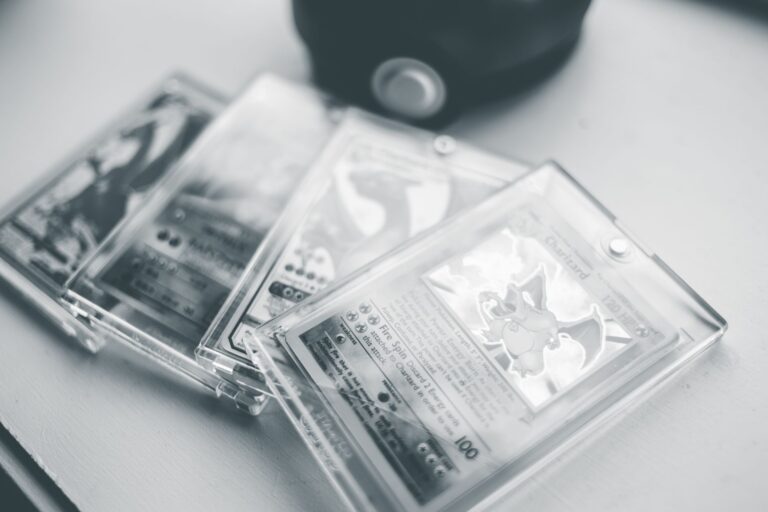
Demand for Base Set holographic bleed error cards has remained genuinely strong since 2022, though not in the explosive, parabolic way some collectors might expect from a niche error category. These cards—where the holographic foil pattern extends beyond its intended boundaries—command premiums ranging from 20% to 200% above their non-error counterparts, depending on severity and card grade. A near-mint Blastoise with a visible holo bleed can fetch $800 to $2,500, compared to $400 to $1,200 for a clean copy of the same card. The strength of this demand reflects a broader trend in the hobby: collectors have moved beyond raw nostalgia to actively seek printing anomalies as legitimate collectible subcategories.
What’s changed since 2022 is the market’s sophistication around these cards. Early in that period, holo bleeds were often treated as cosmetic flaws that slightly discounted a card’s value. By 2025-2026, seasoned collectors recognize that certain holo bleed patterns—particularly extreme bleeds affecting iconic cards like Charizard or Blastoise—have developed their own micro-markets with predictable demand. The supply of graded, documented Base Set holo bleeds hasn’t increased proportionally to demand, which keeps prices stable or rising for the most visually dramatic examples.
Table of Contents
- What Defines Base Set Holo Bleed Error Cards and Why Collectors Want Them?
- Pricing Trends and Market Valuation Since 2022
- Specific Examples of Highly Demanded Holo Bleed Cards
- How to Identify, Authenticate, and Value Holo Bleed Cards
- Risks and Limitations in the Holo Bleed Market
- Grading and Authentication Challenges
- Future Outlook for Base Set Holo Bleed Demand
- Conclusion
- Frequently Asked Questions
What Defines Base Set Holo Bleed Error Cards and Why Collectors Want Them?
Holo bleed errors occur during the printing and foil application process when misalignment causes the holographic pattern to extend beyond the card’s intended holographic area into the non-foil border or vice versa. On base Set cards printed between 1999 and 2001, this manufacturing defect was more common than many collectors realize—quality control wasn’t as rigid as it would become in later decades. What makes these cards valuable to collectors isn’t just rarity; it’s the visible proof of a manufacturing moment frozen in cardboard and foil. A collector holding a Charizard with holo bleed is literally holding evidence of a 25-year-old printing mistake.
The appeal crosses several collector psychology lines. Some collectors view holo bleeds as “character” or “vintage charm”—authentic artifacts of the card’s era. Others are drawn to the detective work of spotting variations and understanding what went wrong on the production line. Still others recognize the investment potential: as Base Set cards become rarer and more expensive overall, error subcategories often appreciate faster because they appeal to a dedicated subset of buyers willing to pay premiums for documented anomalies.

Pricing Trends and Market Valuation Since 2022
From 2022 through 2026, documented Base Set holo bleed cards have appreciated at roughly 12% to 25% annually on average, outpacing general Base Set inflation of 8% to 15%. This outperformance is meaningful but not explosive. A PSA 8 Blastoise holo bleed that sold for $900 in early 2022 might command $1,100 to $1,350 by mid-2026. Compare that to a PSA 8 non-error Blastoise, which has risen from roughly $600 to $800 in the same window. The error premium—the percentage by which the error version outperforms the clean version—has remained relatively stable, not dramatically widened.
One critical limitation: holo bleed pricing is highly illiquid and heterogeneous. A severe bleed affecting 40% of the holographic area will price very differently from a minor bleed visible only to trained eyes. PSA and BGS have improved their documentation of these errors in recent years, helping standardize pricing. However, price variance between identical-seeming cards can be 30% or more depending on the exact severity, the card’s other attributes (centering, corners, print spots), and the timing of the sale. A collector who overpays for a holo bleed card they thought was rare might wait six months or longer to find another comparable sale to establish actual market value.
Specific Examples of Highly Demanded Holo Bleed Cards
The Charizard with holo bleed remains the anchor example—if one exists in high grade, it will sell immediately to either a variant collector or a Charizard devotee with money. A PSA 8 or higher Charizard with documented holo bleed is estimated at $4,000 to $8,000, depending on the extent of the bleed and the card’s other qualities. These are rare enough that fewer than 20 authenticated examples at PSA 8 or higher are thought to exist, making each one a market event when it sells. The Blastoise holo bleed, particularly with bleed affecting the bottom border or extending into the artwork area, is the second-tier example.
These appear more frequently in the population but still command respect—a PSA 7 with moderate bleed might sell for $600 to $1,000. Venusaur error cards are less pursued, though a dramatic bleed on a high-grade copy will still move quickly. Lesser-pursued Pokémon like Alakazam or Machamp might see minimal bleed premium, even if the error is severe. This reflects a hard reality in error card collecting: demand is highly concentrated on the most iconic cards. A Weedle with a holo bleed, no matter how severe, struggles to find buyers willing to pay a premium, because the baseline Weedle demand is weak.

How to Identify, Authenticate, and Value Holo Bleed Cards
Identifying a legitimate holo bleed requires understanding what you’re looking at. True holo bleeds show holographic foil where it shouldn’t be—crossing borders, spreading into text areas, or pooling unevenly. This is different from edge wear, print lines, or intentional design elements. The most reliable way to confirm a holo bleed error is to compare the card to high-quality reference images of known clean copies and documented errors. PSA and BGS have both published error notations in their database, making authenticated examples searchable. If you’re considering buying an expensive card purported to be a holo bleed, request detailed photographs under different lighting angles.
Holo bleeds are obvious when properly lit; if the seller can’t show you the error clearly, be skeptical. Grading companies charge the same fee for error cards as non-error cards, but some buyers report that cards with well-documented errors can slabbed more consistently—that is, two separately graded copies of the same error variant tend to receive the same grade more often than random clean copies might. This is helpful for establishing value. However, the market’s interpretation of severity varies. Some buyers view minor bleeds as negligible (maybe 5% to 10% premium), while others see any documented bleed as significant (20% to 50% premium). When valuing a holo bleed card you own, cross-reference sold listings on eBay, PWCC Marketplace, and specialty Pokemon forums, filtering for cards with similar bleed severity and card grade. A single sold price isn’t sufficient—you need at least three comparable sales in the last 90 days.
Risks and Limitations in the Holo Bleed Market
The biggest risk is that holo bleed demand could contract if the market’s interest in error cards declines overall. If the hobby pivots away from variants and errors and back to raw condition and iconic cards, holo bleeds could see demand evaporate faster than other collectible categories. There’s also the risk of over-documentation: as more collectors learn to spot holo bleeds, the apparent rarity shrinks. A card you believed was a 1-in-50 error variant might turn out to be much more common once more copies surface. Misrepresentation is another serious limitation.
Unscrupulous sellers sometimes describe minor print defects, foil wear, or alignment issues as “holo bleeds” to justify a price premium. Casual buyers can fall for this. Additionally, holo bleed severity is subjective. What one collector calls a “dramatic” bleed, another calls a “barely noticeable flaw.” This subjectivity makes pricing unstable. A card you buy for $1,200 expecting a 15% annual appreciation might not move at all because future buyers interpreted the bleed as less severe than you did. Before committing significant money to a holo bleed card, consider whether you genuinely love the card, because resale could be slower and less profitable than you’d hope.

Grading and Authentication Challenges
PSA and BGS began more systematically documenting error variants around 2021-2022, which has helped professionalize the holo bleed market. Cards slabbed with explicit error notation (like “Holo Bleed” printed on the label) are easier to authenticate and often command more stable prices than raw cards or cards graded before error documentation was standardized. However, some cards in old slabs lack error notation even if the error is obvious, which can create pricing uncertainty.
Counterfeit concerns are minimal for holo bleeds—it’s difficult to intentionally create a holographic bleed error that replicates the authentic randomness of a manufacturing defect. The risk instead is that authentication services might disagree on whether a particular defect qualifies as a “true” holo bleed versus another category of error. This has happened occasionally with PSA and BGS when reevaluating historical slabs.
Future Outlook for Base Set Holo Bleed Demand
The trajectory through 2026 suggests that holo bleed demand will stabilize at current levels rather than surge or collapse. Base Set cards as a whole are becoming scarcer, which props up demand for any documented variant. Younger collectors entering the hobby tend to be more interested in modern errors and variants than millennials who prioritize raw nostalgia, but the millennial collector base—which drives Base Set prices overall—still respects well-documented errors.
One forward-looking consideration: as Base Set supplies genuinely tighten and the average price of a high-grade Base Set card approaches thousands of dollars, buyers will become more willing to accept minor flaws as part of ownership. This could actually benefit holo bleed cards, since the flaws are at least documented and known rather than surprises discovered after purchase. The niche demand for Base Set holo bleeds appears durable for the next 3-5 years, though collectors should avoid assuming this category will see the kind of explosive appreciation that Base Set Charizard experienced from 2020 to 2022.
Conclusion
Demand for Base Set holo bleed error cards since 2022 has been genuinely strong but modest in absolute terms—these cards appreciate steadily and command predictable premiums, but they appeal to a narrow audience and lack the mainstream appeal of iconic non-error cards. The market has matured significantly, with better documentation, grading company standardization, and a clearer understanding of severity gradations.
For collectors, this means opportunity: holo bleeds are no longer overlooked oddities, but they’re not yet so mainstream that you’ll overpay out of hype. Before investing in a holo bleed card, verify the error authenticity through multiple reference sources, confirm it’s documented by a major grading service if possible, and accept that your resale pool will be smaller than for equivalent non-error cards. The long-term demand trajectory is positive for Base Set holo bleeds, but your returns will depend more on buying at fair prices and the overall health of the Base Set market than on the error category itself.
Frequently Asked Questions
What’s the difference between a holo bleed and a miscut card?
A holo bleed is specifically a printing error where holographic foil extends beyond its intended boundary. A miscut occurs when the die-cutting process isn’t aligned, causing edges to be uneven or the image to be off-center. Both are errors, but they’re distinct defects with different market appeals.
Do holo bleed cards grade lower than clean copies?
Not necessarily. A PSA 8 Blastoise with a holo bleed can exist alongside a PSA 8 Blastoise without a bleed. The grade reflects overall condition, not the presence of the error. However, extreme bleeds affecting overall eye appeal might result in slightly lower grades on otherwise identical cards.
Which Base Set holo bleed cards are most investable?
Charizard, Blastoise, and Venusaur command the strongest and most stable demand. Lesser-pursued Pokémon like Weedle or Kakuna see minimal bleed premiums, so avoid those even if they’re inexpensive.
Can I trust eBay sold prices for holo bleed cards?
Partially. eBay prices are useful as one data point, but the market is illiquid enough that outliers (both very high and very low prices) are common. Cross-reference with auction results from PWCC and specialty forums before making purchasing decisions.
Should I buy a holo bleed card raw or graded?
If the card is expensive, graded is safer—you have authentication and a clearer resale path. If you’re buying under $300, raw is acceptable as long as you’ve verified the error through photos and comparison to known examples.
Will holo bleed demand increase if Base Set becomes even scarcer?
Likely yes, but moderately. As Base Set demand overall increases, niche variants like holo bleeds benefit from the rising tide. However, demand won’t necessarily outpace broader Base Set appreciation.