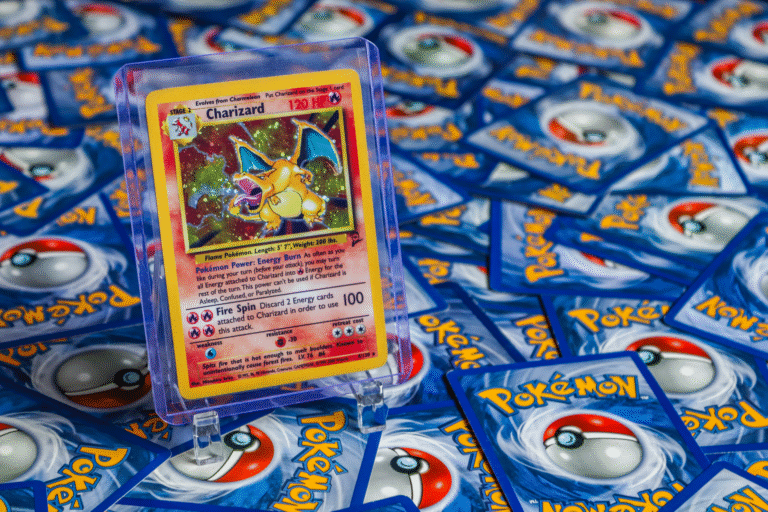
Base Set misprint cards are moving faster than published collector guides suggest primarily because the market’s demand drivers have shifted while price guides have lagged behind. The misprint collector community has grown explosively from under 1,000 subreddit subscribers in early 2021 to nearly 30,000 by 2026, with approximately 150,000 weekly visitors, indicating sustained collector interest that most traditional price guides haven’t fully captured. This growth means that scarce misprints are being claimed by collectors before guide prices have a chance to reflect the new demand reality.
The vintage rebound itself has accelerated this effect. As high-grade vintage cards trend upward in 2026, particularly those with limited supply relative to demand, the subset of cards with documented errors—which already carry inherent scarcity—is moving even faster. A Base Set misprint that a guide priced at $150 six months ago may sell for $240 today, not because the card itself changed, but because the pool of collectors actively seeking it has tripled.
Table of Contents
- What’s Driving the Faster-Than-Guide Movement of Vintage Base Set Errors?
- The WOTC-Era Error Premium and Why Base Set Stands Apart
- No-Symbol Jungle and Fossil Holos as the Gateway to Faster Movement
- How eBay Price Discovery Is Outpacing Published Guides
- Authentication and Grading: The Hidden Variable in Misprint Pricing Volatility
- Base Set Commons and the Set-Building Demand Surge
- The Future of Vintage Misprint Pricing in a Fast-Moving Market
- Conclusion
What’s Driving the Faster-Than-Guide Movement of Vintage Base Set Errors?
The disconnect between guide prices and actual sell-through stems from a fundamental mismatch in how prices are collected and updated. Published price guides typically aggregate sales data monthly or quarterly, then apply conservative estimates to account for volatility. The misprint collector community, by contrast, transacts in real time on eBay and specialized forums, where price discovery happens instantly. When a high-grade base Set Shadowless Charizard with a printing error sells on eBay, the market adjusts within hours.
Guides adjust over weeks or months—if they acknowledge the error variant at all. More critically, most traditional guides don’t differentiate between common misprints and rare ones with the same rigor that active collectors do. A Base Set common with a minor offset printing error might be listed in a guide as a single variant with one price range, when in reality, the community has identified sub-variants that affect value significantly. The no-symbol Jungle and Fossil holographic cards, for example, are now recognized as the gold standard entry points for error card collectors due to straightforward authentication and well-documented errors, but this stratification often isn’t reflected in older guide data.

The WOTC-Era Error Premium and Why Base Set Stands Apart
Cards with errors from 1999–2003 (the WOTC era) command significantly higher premiums than comparable errors from modern sets, a principle that applies across the board but hits hardest with Base Set. The reason is twofold: inherently lower print runs and vintage nostalgia premiums that have compounded over 25+ years of collecting culture. A misprint Blastoise from Base Set 1999 might sell for $800 in high grade, while an identical error from a 2010 set might fetch $120—the scarcity and desirability gap is real and widening.
This premium structure creates a problem for guide writers. Because WOTC-era errors are relatively uncommon in the data sets guides rely on, and because each error can vary wildly in severity and thus value, guides tend to either ignore them entirely or group them with non-error variants under generalized pricing. When a collector then encounters a high-grade Base Set misprint on eBay with a $450 asking price, they may check their guide, find a “Blastoise Base Set” listing at $220, assume the seller is overpriced, and pass—only to watch that card sell within 48 hours to someone who understands the misprint premium. This creates a feedback loop where actual market prices move faster than guide prices, because the guides aren’t equipped to track the velocity of a high-demand micro-niche.
No-Symbol Jungle and Fossil Holos as the Gateway to Faster Movement
The emergence of no-symbol Jungle and Fossil holographic cards as collector favorites has accelerated the broader misprint market in an unexpected way: by lowering the authentication barriers to entry. Unlike extremely rare Base Set errors that may require expert grading to confirm legitimacy, the no-symbol Jungle and Fossil errors are well-documented in the community, easy to verify, and command clear price premiums that intermediate collectors can recognize and act on quickly. This has created a feeder system into the misprint market.
A collector who picks up a no-symbol Jungle Vileplume in near-mint condition for $75 on eBay—finding it a steal compared to the $180 guide price for a normal Jungle Vileplume in the same condition—is now primed to seek out other documented errors. This collector is likely to become a repeat buyer of vintage misprints, and they’re checking eBay and specialized forums far more often than they check price guides. Their buying activity, multiplied across thousands of new misprint collectors entering through the same gateway cards, accelerates sell-through and drives prices up faster than guides can track them.

How eBay Price Discovery Is Outpacing Published Guides
eBay remains the largest and most liquid marketplace for error cards, hosting the majority of high-value error card sales. This concentration creates a direct price signal that’s far more responsive than guide publishing cycles. When a Base Set Shadowless Pikachu with a miscut error sells for $520, that data point is visible to thousands of collectors within minutes. The next seller with a similar card adjusts their asking price upward.
Within two weeks, completed eBay sales data reflects a new market consensus at $580–$650. Published guides, by contrast, consolidate data from multiple sources, apply statistical models to smooth out outliers, and publish updates on monthly or quarterly schedules. By the time a guide reflects the new $620 market price for that Pikachu, the actual ask price on eBay has already moved to $720. Collectors who rely on guides as their primary price reference are systematically paying less than they should when selling and overpaying when buying. The guides aren’t wrong—they’re just operating on a delay that no longer matches the velocity of the actual market, particularly in a niche as specialized as Base Set misprints.
Authentication and Grading: The Hidden Variable in Misprint Pricing Volatility
High-grade vintage cards are trending upward in 2026, and misprints are benefiting even more than non-error cards from this trend, but with a critical caveat: authentication and grading can dramatically alter value. A Base Set misprint in PSA 8 condition might command a 300% premium over the non-error version. The same card in PSA 6 might command only a 40% premium. Guides struggle with this variability because they either don’t break out grading levels for every variant, or they provide broad ranges so wide they become useless for real-time pricing.
This creates a situation where the physical condition of the card becomes as important as the error itself, and that condition isn’t always apparent from listing photos. An inexperienced seller might list a Base Set misprint in played condition for $200, not realizing it’s actually worth $1,200 in high grade, while a knowledgeable collector snaps it up. Conversely, an overgraded misprint can sit unsold for months because sharp buyers on eBay recognize the condition doesn’t justify the ask. Guides can’t account for this variance in real time, making them unreliable for misprints in particular.

Base Set Commons and the Set-Building Demand Surge
Beyond the high-dollar vintage errors, Base Set vintage commons themselves are experiencing upward price pressure. Base Set vintage commons sell for $40–$80 per 1,000 cards, while complete common and uncommon sets in played condition reach $50–$100. This might seem modest compared to holographic errors, but the demand driver is significant: set builders seeking completion. There are more collectors trying to assemble complete Base Set sets in 2026 than there were five years ago, and that demand is spreading outward to include variant-collecting as a subset.
A collector completing a Base Set might start with non-error cards, then realize they want to add a documented misprint version of each holographic. This creates a second wave of demand on top of the base demand for the set itself. Most guides don’t explicitly track this “set-builder premium” for misprint variants, but it’s real and it’s visible in eBay’s completion data. A Base Set miscut Venusaur that a guide prices at $180 might consistently sell for $260 because set builders see it as a meaningful variant worth the premium.
The Future of Vintage Misprint Pricing in a Fast-Moving Market
The community growth trajectory suggests that misprint pricing will continue to move faster than guides can track. With the subreddit community now at 30,000 subscribers and 150,000 weekly visitors, there’s momentum that shows no signs of slowing. New documentation of errors, shared through community channels faster than guides can integrate, will continue to surface variants that guides don’t yet have pricing for.
Collectors are also becoming more sophisticated about error taxonomy, distinguishing between first-edition and unlimited miscut variants, or between errors that appear on only one card stock versus many. The implication is clear: guides will become increasingly useful for historical reference and less useful for real-time market pricing in the misprint niche. Collectors who want to stay ahead of the market will need to monitor eBay completed auctions, engage with the community forums and subreddits, and understand that the “fastest-moving” misprints are those where the gap between guide price and actual market price is widest—because that gap closes quickly.
Conclusion
Base Set misprint cards are moving faster than collector guides suggest during the latest vintage rebound because the market’s demand drivers—community growth, scarcity of WOTC-era errors, and eBay’s real-time price discovery—have accelerated well beyond the update cycles of traditional price guides. The 30,000-member misprint collector community, growing from under 1,000 subscribers just five years ago, now transacts faster and more frequently than guides can track, creating systematic pricing gaps where real market values outpace published ones within weeks.
For collectors and sellers, the practical takeaway is to treat guides as a starting point, not a destination. Check eBay’s completed auctions for actual realized prices on the specific misprint variant you’re interested in, engage with the active community on specialized forums to understand current demand, and recognize that authentication and grading condition can create variance too large for guides to capture reliably. The fastest-moving Base Set misprints are those where guide prices lag furthest behind market reality—and that gap is unlikely to close until guides incorporate real-time data sources and break out misprint variants with the granularity that collectors now demand.