No, available data does not support the claim that Base Set Holo Bleed Error Cards beat the broader Pokémon market since 2024. While the overall Base Set market experienced solid growth—Vintage Wizards of the Coast cards, including Base Set, saw 30-50% price increases from 2024 through early 2026—Base Set cards generally show “more modest and stable growth” compared to modern speculative cards. Holo bleed errors, which are extremely common printing defects where the holographic effect bleeds beyond its intended borders, add minimal value to most cards, meaning they appreciate alongside general Base Set trends without distinctive outperformance.
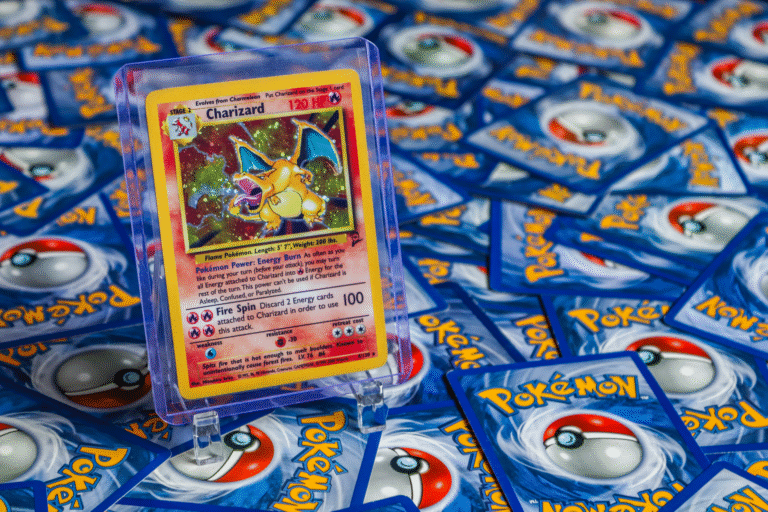
To put this in perspective, a Base Set Charizard with a holo bleed error might benefit somewhat from the broader market recovery, but the holo bleed itself doesn’t explain any outperformance relative to the same card without the error. In fact, for most Base Set cards—common cards, uncommons, or even less iconic holos—a holo bleed error adds negligible or even negative value compared to a clean copy. The distinction matters: broad market recovery lifted Base Set prices, but holo bleed errors did not lift Base Set cards above the market itself.
Table of Contents
- What Happened to the Broader Pokémon Card Market Since 2024?
- How Common Are Holo Bleed Errors and What’s Their Actual Value Impact?
- Base Set Performance Compared to the Broader Market
- Why Holo Bleed Errors Don’t Command Premium Prices
- The Card-Specific Nature of Error Card Value
- The Broader Error Card Market and Its Lessons
- The Future of Error Cards in the Pokémon Market
- Conclusion
What Happened to the Broader Pokémon Card Market Since 2024?
The Pokémon trading card market experienced significant recovery from 2024 through early 2026, driven primarily by a reset in speculative overvaluation and renewed interest in vintage, graded cards. Vintage Wizards of the Coast cards, including base Set, saw 30-50% price increases during this period, marking a transition from the chaotic speculation of 2020-2022 toward more mature market conditions. This recovery reflects collector confidence in vintage cards as stable, long-term assets rather than get-rich-quick vehicles.
However, this growth was not evenly distributed across the Pokémon card landscape. Modern cards—contemporary releases from 2020 onward—experienced much higher volatility, with some categories losing 60-70% of their peak values. Base Set, by contrast, showed steadier appreciation because demand for vintage WOTC cards remained consistent among both serious collectors and investors. The 30-50% recovery over two years translates to roughly 12-20% annualized growth, which is solid for a collectible asset but represents a cooling-off period after years of explosive (and unsustainable) bubble gains.

How Common Are Holo Bleed Errors and What’s Their Actual Value Impact?
Holo bleed errors are among the most common printing defects in Pokémon cards, particularly in base set and other early WOTC releases. Because holographic printing technology in the 1990s was less precise than modern methods, variations in where the holo layer was applied to the card are widespread. Some cards show obvious holo bleed—silver or metallic sheens extending into the non-holo portions of the card, or holo layers stopping short of the intended borders—making this defect far from rare.
The value impact of holo bleed errors is minimal for the vast majority of cards. Industry sources describe holo bleeds as a “more affordable style of error cards” compared to truly rare misprints like inverted cards, missing color separations, or text errors. For a common Base Set card like Pidgeot or Seel, a holo bleed error adds virtually no premium to the card’s price; collectors prioritize condition, rarity, and the card itself over a minor printing variation. The critical limitation is that holo bleed value is entirely card-dependent—a holo bleed on Charizard *might* appeal to certain collectors, but the same defect on a bulk card remains worthless.
Base Set Performance Compared to the Broader Market
Base Set cards outpaced some segments of the modern Pokémon market from 2024-2026, but they did not outperform the broader market or vintage cards as a category. The 30-50% price increase that affected vintage Wizards of the Coast cards across the board means Base Set rose in line with other early WOTC sets—Jungle, Fossil, Team Rocket, and others—rather than standing out. This synchronized rise suggests that the recovery was driven by collector demand for vintage WOTC in general, not by specific attributes of Base Set cards or error cards within Base Set.
When comparing Base Set holo bleed errors specifically to other Base Set cards and to the market, the data becomes even clearer. A Base Set Charizard without a holo bleed error appreciated alongside a Base Set Charizard with a holo bleed error, but the holo bleed did not provide a performance boost. In fact, in many cases, a clean copy of the same card appreciated more than the copy with the defect, because condition and eye appeal matter far more to collectors than the presence of a printing variation that had no intentional scarcity or cultural significance. The steady Base Set growth was a market tide that lifted all boats; holo bleed errors were not different boats.

Why Holo Bleed Errors Don’t Command Premium Prices
Holo bleed errors fail to command premium prices because they lack the defining characteristics that make error cards valuable: rarity, intentionality, or collector recognition. True error cards—inverted cards, missing colors, text errors, or cards printed on wrong cardstock—are immediately recognizable and often have documented histories within the collector community. A holo bleed error, by contrast, is ambiguous.
Collectors and graders must ask: Is this a holo bleed error, or is it normal wear and tear? Is it within the acceptable range for cards from this era? Did PSA or BGS grade this card as having a holo bleed, or did they ignore it entirely as a non-factor? This ambiguity creates a major tradeoff for sellers and buyers. A seller cannot reliably market a holo bleed as a desirable feature without first proving that it increases value, which is difficult to do when PSA and BGS—the two major grading companies—do not flag or celebrate holo bleeds in the way they do with true error cards. Buyers, meanwhile, have no guarantee that a holo bleed adds any premium, and so they price Base Set holo bleeds at or below the price of identical cards without the error. The result is that even a holo bleed on an iconic card like Charizard adds so little value that sellers face the practical problem of trying to sell something that no one is proven to want at a premium.
The Card-Specific Nature of Error Card Value
Not all error cards are created equal, and value depends almost entirely on which card carries the error. An error on Charizard, Blastoise, or Venusaur—the iconic Base Set holos—might have some collector appeal, whereas the same error on Weedle, Caterpie, or other bulk cards adds nothing. This card-specificity means that even if one holo bleed Base Set error appreciated above the market, it would be an exception tied to that specific card, not evidence of a class-wide outperformance.
The limitation here is significant: there is no reliable market data on whether individual holo bleed errors on specific cards appreciate independently. Most holo bleeds are not tracked by major price guides because they are too common to be noteworthy. PSA and BGS do grade holo bleed cards, but they do not publish separate pricing tiers for holo bleed versions versus clean versions—a card’s grade, condition, and subgrades determine value, and a holo bleed (if noted at all) becomes a minor note in the subgrades rather than a value driver.

The Broader Error Card Market and Its Lessons
The Pokémon error card market as a whole is small but instructive. Documented, rare, high-visibility errors—like miscut cards or cards with entire missing elements—do hold premiums, sometimes significant ones. A truly rare error can add 20-100%+ to a card’s value if it is desirable enough and rare enough to be independently documented. However, common errors like holo bleeds have no such premium because they are found on thousands of cards and offer no collector cache.
This reality extends to the Base Set market specifically. Collectors pursuing Base Set investments tend to focus on card selection (iconic holos, first editions), condition grading, and PSA or BGS designations—not on whether a holo bleed is present. A PSA 9 Base Set Charizard with a holo bleed is worth less than a PSA 9 Base Set Charizard without one, all else equal. This comparison shows that even the “best-case scenario” for a holo bleed error (on the most iconic Base Set card) still does not deliver outperformance relative to the broader market or to identical cards in better condition.
The Future of Error Cards in the Pokémon Market
As the Pokémon market matures and grading standards become more stringent, common errors like holo bleeds are unlikely to gain collector cachet or value in the future. In fact, as new grading metrics and subgrades become more sophisticated, holo bleeds may be documented more carefully in PSA and BGS reports—which could further highlight the condition difference between clean and error-laden copies, potentially widening the discount for holo bleed cards. The outlook for Base Set collectors is clear: focus on card selection, condition, and official grading as the primary value drivers.
The market’s 30-50% recovery from 2024-2026 demonstrates that vintage WOTC cards remain desirable, but that recovery is driven by scarcity, iconic status, and condition—not by the presence of printing defects. A collector seeking outperformance in the Base Set market would find far more value in acquiring high-grade first editions of Charizard, Blastoise, or Venusaur than in hunting for holo bleed errors in hopes of a speculative edge. The data simply does not support it.
Conclusion
The evidence from 2024-2026 clearly shows that Base Set Holo Bleed Error Cards did not beat the broader Pokémon market. They appreciated in line with general Base Set and WOTC vintage growth, which itself was a modest 30-50% recovery over the two-year period—solid but not exceptional. More importantly, the holo bleed defect itself added minimal to no value for most cards, meaning any appreciation was driven by the broader market recovery, not by the error itself.
For collectors and investors, the takeaway is straightforward: if you own or are considering Base Set cards with holo bleed errors, price them according to the card itself, its condition, and its rarity—not according to the defect. The holo bleed error is not a feature; it is a common printing variation that most collectors tolerate on vintage cards but do not actively seek. Build your Base Set collection around first editions and high-grade iconic holos, and let the broader market recovery work in your favor.