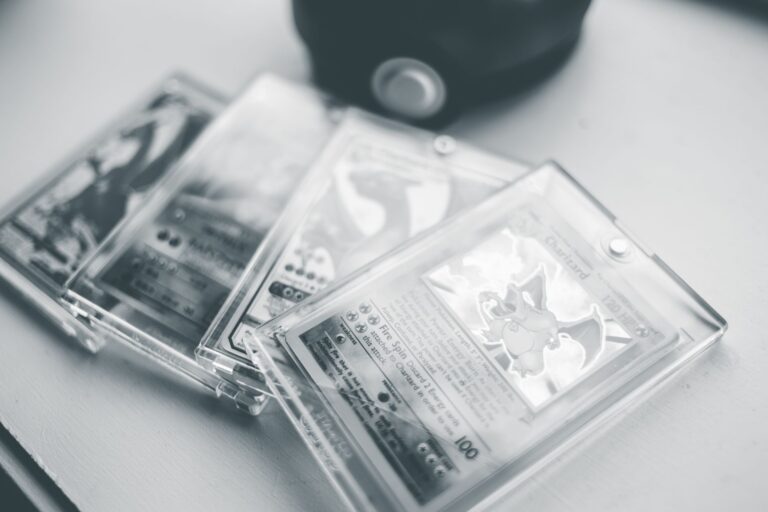
Complete Base Set collections could become premium future assets for Pokemon because they represent genuine scarcity at the collection level, not just individual card level. When someone owns a complete, high-quality Base Set—all 102 cards in Unlimited or all 102 in First Edition—they possess something exponentially rarer than any single card. This completeness creates convenience for wealthy collectors and investors seeking a self-contained store of value. A complete First Edition Base Set in near-mint condition, with cards averaging a PSA 8 or higher, has sold for six figures in recent years, commanding premiums well beyond what the sum of individual cards would suggest.
The trajectory mirrors how other vintage collectibles have appreciated. Sealed vintage trading card boxes and complete sets of older card games have consistently outpaced single-card values over 20-year horizons. As the original Pokemon Base Set ages—now over 25 years old—the pool of genuinely complete collections shrinks continuously. Cards get lost, damaged, or separated into different hands. The surviving intact sets become increasingly unusual, which creates the fundamental condition for asset appreciation: genuine scarcity meeting persistent demand from collectors and investors.
Table of Contents
- Why Do Complete Collections Command Higher Valuations Than Their Parts?
- Investment Markets and the Risk of Overvaluation
- Grading, Condition, and Long-Term Preservation
- Assembling a Collection Versus Acquiring One Whole
- Market Saturation and the Ceiling on Appreciation
- Authentication and Counterfeiting Risks
- The Future of Complete Sets as Alternative Assets
- Conclusion
Why Do Complete Collections Command Higher Valuations Than Their Parts?
A complete base Set has institutional appeal that individual cards lack. A collector or investor can make one acquisition and own a finished product, rather than chasing the final 10-20 cards across different markets and sellers. This convenience premium is real and measurable in other collectibles markets. A complete Charizard PSA 9 might be valued at $50,000–$80,000, but a complete Base Set with similar average grades sells for substantially more than adding up all individual card values would suggest, often commanding 20–40% premiums for that completion.
The psychological and practical appeal extends beyond convenience. Museums, institutions, or serious collectors seeking to document the early Pokemon trading card era prefer a single complete set over scattered holdings. A complete, graded set also functions as a single insurable asset with clear provenance, whereas fifty individual cards require more complex documentation. This has been demonstrated in video game cartridge collecting and comic book collecting, where complete runs of series regularly outpace the equivalent value if cards were sold individually.

Investment Markets and the Risk of Overvaluation
While complete sets have historically appreciated, the pokemon card market has shown significant volatility since the 2020–2021 boom. Complete Base Set valuations are not immune to market corrections. Prices in 2021 reached peaks driven partly by speculative investment and social media hype; sets that were valued at $300,000+ in mid-2021 faced much softer demand at those prices by 2023. A critical limitation for investors is that the market for complete sets is illiquid compared to popular individual cards like Charizard or Blastoise—there are simply fewer buyers at any given price point.
The condition requirement for premium valuations also creates risk. A complete set with an average PSA grade of 7 appreciates slowly or may depreciate, while a set averaging PSA 8.5+ has stronger appreciation potential. However, maintaining that condition over decades requires climate-controlled storage, insurance, and handling costs that eat into returns. An investment-grade complete set can easily cost $500–$2,000 per year in holding costs if stored professionally, which must be factored into long-term return calculations.
Grading, Condition, and Long-Term Preservation
The certification and grading of individual cards within a complete set dramatically affects its valuation. A complete Base Set where all 102 cards carry PSA or BGS grades is worth significantly more than an ungraded set of equivalent condition. The grading process itself costs money—roughly $10–$50 per card depending on service level and turnaround—so grading a complete 102-card set represents a $1,000–$5,000 investment before any asset appreciation. For a set where individual cards average $500–$1,000 or more, that grading cost is proportional; for mid-grade sets, it can represent 5–15% of total collection value. Environmental preservation is the hidden cost of asset appreciation.
Pokemon cards from the 1990s are printed on cardstock vulnerable to moisture, light, and temperature fluctuations. A truly premium complete set must be stored in a climate-controlled facility at 65–70°F and 45–50% relative humidity, with minimal light exposure. Some collectors use ultrasonic or inert-gas sealed slabs, which add cost and complexity. A complete Base Set can take up 10–15 linear inches of shelf space, requiring either home climate control or professional vault storage at $50–$300 monthly depending on the facility. This is the tradeoff for preservation: the asset appreciates, but the holding costs accumulate.

Assembling a Collection Versus Acquiring One Whole
Building a complete Base Set from individual cards carries different economics than buying an already-assembled collection. Assembling the set yourself typically costs 10–20% less in total cash outlay, but requires months or years of sourcing, negotiation, and quality control. A collector might save $20,000 on a $200,000 set by building it over time, but they assume the risk that individual card prices rise faster than they can acquire, or that they purchase cards that later fail to meet their quality standards.
Conversely, buying a pre-assembled, certified complete set provides certainty and completeness immediately, but commands a premium—often 15–25% above the sum of individual card market values. This premium reflects the seller’s effort in assembling the set, the assurance of completeness, and the convenience to the buyer. For serious collectors and institutional buyers, that premium is often worth paying to avoid the friction and timeline required to build a set individually. A comparison: a collector paying $220,000 for a complete, graded set buys certainty and saves two years of work; another collector saves $20,000 by sourcing cards individually over 18–24 months but assumes timing risk and the possibility of quality mismatches.
Market Saturation and the Ceiling on Appreciation
One significant limitation is the growing number of re-releases and reprints of Base Set cards. Pokemon has printed newer versions of Base Set in recent years (Base Set “Evolutions,” recent “151” set). These reprints introduce psychological pressure on original Base Set valuations because new collectors have more affordable entry points. The premium for original, vintage complete sets is partly protected by the fact that reprints lack the historical authenticity and age premium, but reprints do create a ceiling on how high originals can climb. Additionally, the total pool of potential premium-asset buyers is constrained.
High-net-worth collectors and institutional buyers number in the thousands globally, not millions. Once that buying pool is satisfied with available complete sets, demand stabilizes. The market for complete Base Sets lacks the breadth of individual card markets, where casual collectors and players support demand at multiple price tiers. A warning for potential investors: the appreciation of complete Base Sets depends heavily on continued interest from wealthy collectors and institutions. Shifts in broader hobby engagement, economic downturns affecting disposable income in high-net-worth populations, or emergence of competing collectible trends could soften demand.
Authentication and Counterfeiting Risks
As complete Base Set valuations have risen, counterfeiting has become a concern. High-quality counterfeit Pokemon cards have circulated in the market, particularly from overseas sources. A complete set assembled from questionable sources or acquired without proper provenance verification carries significant risk.
This is one reason professional grading and slabbing add value beyond just condition assessment—third-party grading provides authentication that protects against counterfeit risk. For example, a collector might find a deal on a complete Base Set for $150,000, only to discover after purchase that 5–10 cards are counterfeit reproductions, immediately rendering the “complete” set incomplete and substantially less valuable. Proper authentication requires expertise and sometimes spectrographic analysis of cardstock and printing. This is a major reason institutional buyers and serious investors insist on graded, slabbed, and documented sets with clear provenance chains.
The Future of Complete Sets as Alternative Assets
The Pokemon trading card market is maturing beyond its speculative phase. Serious collectors and institutional buyers are increasingly treating vintage complete sets as they treat rare art, memorabilia, or numismatic collections—as alternative assets for diversification and store of value. This institutional adoption supports long-term appreciation potential for genuinely scarce, high-quality sets. Over 20–30-year horizons, complete Base Sets in investment grade likely appreciate at 4–6% annually, outpacing inflation but with higher volatility than bonds or equities.
The supply side only tightens. Cards continue to deteriorate, be lost, or separated from complete sets. Ungraded sets from the 1990s are increasingly discovered to contain lower-grade cards that prevent them from reaching premium status. The ultimate outcome is that truly investment-grade complete Base Sets (averaging PSA 8.5+ across all 102 cards) will continue to become rarer. Market adoption by collectors, investors, and possibly museums creates consistent baseline demand that may drive appreciation over decades, even if short-term volatility remains.
Conclusion
Complete Pokemon Base Set collections represent a legitimate but specialized asset class with real appreciation potential grounded in genuine scarcity and multi-decade demand from collectors and investors. The economics are clear: a well-preserved, certified complete set commands premiums that individual cards do not, and as supply shrinks through time and deterioration, that premium should persist. However, the investment case is not risk-free.
Market volatility, illiquidity, preservation costs, and exposure to broader collector sentiment require careful analysis before committing significant capital. For collectors prioritizing completeness, historical documentation, and long-term preservation over rapid returns, building or acquiring a high-grade complete Base Set remains a compelling pursuit. The next step is establishing clear acquisition criteria—deciding on a target grade range, authentication standards, and holding costs—before entering the market for complete sets. Understanding the difference between speculative short-term trading and long-term asset appreciation is essential for anyone considering a complete Base Set as a financial holding rather than purely a collector’s passion project.