
Base Set Pokémon cards are poised to become ultimate status symbols for future collectors because they represent a finite, historically irreplaceable asset class that combines scarcity, cultural significance, and measurable value in ways few other collectibles can match. As the original 1999 Base Set continues to age and cards are lost to damage, mishandling, and time, the remaining high-grade specimens will become increasingly rare—transforming ownership of pristine Base Set cards from a hobby passion into a marker of wealth and discernment.
A PSA 10 Shadowless Charizard already commands six figures; within a decade, expect comparable cards to become acquisition pieces for serious collectors the same way rare watches or vintage wines function as status symbols today. The path toward this status symbol status lies in the convergence of three forces: the finite supply of original Base Set prints produced in 1999-2000, the widening price gap between affordable mid-grade copies and truly exceptional examples, and the entry of institutional collectors and investors who treat these cards as alternative assets rather than toys. Unlike modern Pokémon cards, which are printed in far greater quantities, Base Set represents a genuine scarcity threshold that time only makes more pronounced.
Table of Contents
- Why Rarity and Historical Significance Drive Prestige in Pokémon Collecting
- The Economics of Base Set Scarcity and Long-Term Value
- Grading and Authentication as Status Markers
- Building a Collection as Personal Wealth Display
- Market Volatility and Speculative Risk
- The Role of Nostalgia and Generational Wealth Transfer
- Future Outlook for Base Set as the Ultimate Collector’s Asset
- Conclusion
- Frequently Asked Questions
Why Rarity and Historical Significance Drive Prestige in Pokémon Collecting
The Base Set’s prestige emerges directly from its scarcity profile, which is mathematical and permanent. Pokémon Company released approximately 4.6 billion Base Set cards during the set’s print run, but the vast majority entered the hands of children, casual players, and people who had no concept of preservation. These cards were stored in shoeboxes, played with, exposed to sunlight, bent, and otherwise damaged in ways that destroyed their value. Current estimates suggest fewer than 1% of original Base Set print run survives in near-mint or gem-mint condition. By contrast, modern Pokémon sets involve print runs in the tens of billions, with production still accelerating. This creates an asymmetry that collectors understand intuitively: Base Set cards represent a closed system of scarcity, while modern cards represent an open system of abundance.
A Base Set Blastoise in psa 9 condition carries cultural weight because its existence proves the owner valued preservation and longevity. Comparison: owning a first-edition Harry Potter hardcover is culturally distinct from owning a modern reprint, even if you read the same words. The Base Set functions similarly—it’s the first edition of Pokémon cards, and that historical primacy compounds over time. The generational dimension reinforces this scarcity narrative. Millennial and Gen-X collectors now in their 30s and 40s possess disposable income that early-2000s players lacked. As this demographic ages and wealth accumulates, collecting becomes a legitimate expression of refined taste and financial success. Base Set ownership becomes the collector equivalent of driving a vintage sports car or owning original artwork—a signal that you can afford to acquire something irreplaceable.

The Economics of Base Set Scarcity and Long-Term Value
Base set card prices have demonstrated the kind of appreciation that typically forecasts status symbol status. A PSA 8 Base set charizard sold for approximately $55,000 in 2020; by 2023, comparable examples reached $350,000. A PSA 10 sold for $420,000 in late 2021. These numbers represent returns that rival cryptocurrency, real estate, and fine art—asset classes traditionally reserved for serious wealth management. The floor for entry-level Base Set collecting has also risen: a moderately played Base Set Charizard in PSA 6-7 condition now costs $8,000 to $15,000, placing it beyond impulse-purchase territory and into considered acquisition. The limitation worth noting is that this appreciation is not guaranteed to continue indefinitely. Card markets experience cyclical demand fluctuations.
The 2021 Pokémon boom created a speculative bubble that corrected sharply in 2022, with some cards declining 40-60% from peak prices. Base Set cards proved more resilient than modern sealed products, but they were not immune. Collectors who bought at the absolute peak in 2021 experienced significant paper losses, highlighting that status symbol status requires conviction and patience rather than timing-dependent trading. What distinguishes Base Set from other collectible bubbles is the underlying scarcity fundamentals. Unlike beanie babies or 1990s sports cards, where artificial scarcity drove price inflation, Base Set scarcity is genuine and permanent. Every Base Set card destroyed reduces the global supply. Every card graded and slabbed removes it from circulation. This physical reality creates a floor beneath price decline—there is a minimum supply below which demand cannot be satisfied, supporting a price floor that bubble-driven assets lack.
Grading and Authentication as Status Markers
Professional grading through PSA, BGS, or SGC transforms Base Set cards from subjective collectibles into objective, authenticated assets. A PSA 9 grade certification guarantees condition consistency across sellers, locations, and time periods. This standardization is essential for status symbol status because it allows wealth to be expressed through specific, universally recognized tiers. You cannot claim prestige from owning a “really nice” Base Set Charizard the way you can claim prestige from owning a PSA 10 or PSA 9—the grade becomes the credential. The grading tier itself functions as a status hierarchy. PSA 10 (gem-mint) represents the absolute pinnacle—fewer than 1-2% of all graded Base Set cards achieve this tier.
PSA 9 (mint) is rare but attainable; PSA 8 (near-mint-mint) exists in slightly larger quantities but still represents the top 5-10% of surviving cards. The cost differential between tiers creates meaningful stratification: a PSA 9 can cost 3-5 times more than a PSA 8 of the same card, making grade selection an expression of financial capacity and collecting sophistication. This creates the framework for status symbols: you communicate your position in the collector hierarchy through the exact grades you own. Acquiring a PSA 10 Base Set Machamp signals different status than owning a PSA 8 Machamp. Neither is objectively “better,” but the grade becomes a language through which collectors read each other’s commitment, resources, and taste. This is identical to how fine art collectors use acquisition details, provenance, and exhibition history to communicate status within that community.

Building a Collection as Personal Wealth Display
Serious Base Set collectors now invest in “rainbow sets”—acquiring one of each card in a set, ideally in matching grades. A complete Base Set rainbow in PSA 8 condition across all 102 cards represents a seven-figure investment. Such collections function as wealth statements: they require sustained financial commitment, specialized knowledge, and years of patient acquisition. They cannot be purchased impulsively or obtained through luck alone. Someone displaying a completed Base Set rainbow has demonstrated discipline, taste, and substantial resources. The comparison to luxury goods clarifies this function. Wealthy individuals acquire luxury watches, limited-edition vehicles, or original paintings partly for aesthetic pleasure and partly to signal taste and resources to their peer group.
A Base Set rainbow serves an identical function in the collector community. It announces that the owner possesses not just wealth, but the specific knowledge and judgment to allocate that wealth toward genuinely scarce, historically significant assets. The status comes not from the objects themselves, but from the deliberate choice to acquire them and the commitment required. A practical limitation: Base Set collecting requires legitimate expertise to execute well. Careless purchases of overgraded cards, authentication failures, or acquisition of cards with problematic provenance can destroy a collection’s value and reputation. This expertise barrier actually reinforces status symbol status—it means Base Set ownership becomes a marker of sophistication, not just spending power. A billionaire cannot simply write a check and own a world-class Base Set collection; they require years of learning, trusted advisors, and accumulated connections within the collector community.
Market Volatility and Speculative Risk
Base Set cards have demonstrated substantial volatility, particularly during boom-bust cycles. The 2020-2021 period saw meteoric price rises driven partly by legitimate demand and partly by speculative investment. A PSA 10 Base Set Squirtle that might have cost $30,000 in early 2020 reached $80,000+ by late 2021, then declined to $45,000-$55,000 by 2024. This volatility creates risk for collectors who view Base Set primarily as an investment vehicle rather than collecting passion. The warning is important: Base Set cards are not stable wealth storage. They are subject to grading reconsideration—PSA has re-evaluated some historical submissions and adjusted grades downward, creating sudden value destruction for affected collectors.
Market liquidity is limited; selling a high-grade card quickly may require price concessions to find a buyer. Authentication challenges remain real; counterfeits of high-value Base Set cards exist, and even PSA submissions occasionally prove problematic upon historical review. A collector who over-extends financially into Base Set expecting guaranteed appreciation can face significant losses. However, the status symbol function operates independently of short-term price volatility. Someone who acquires a PSA 9 Charizard for $80,000 faces potential decline to $60,000, but the card’s status marker function persists. The owner has still secured a proven-rare, historically significant asset that fewer than 50-100 other people in the world own in identical condition. This is the distinction between collecting and trading: collectors can tolerate volatility because ownership satisfaction exists independent of market price, while traders cannot.
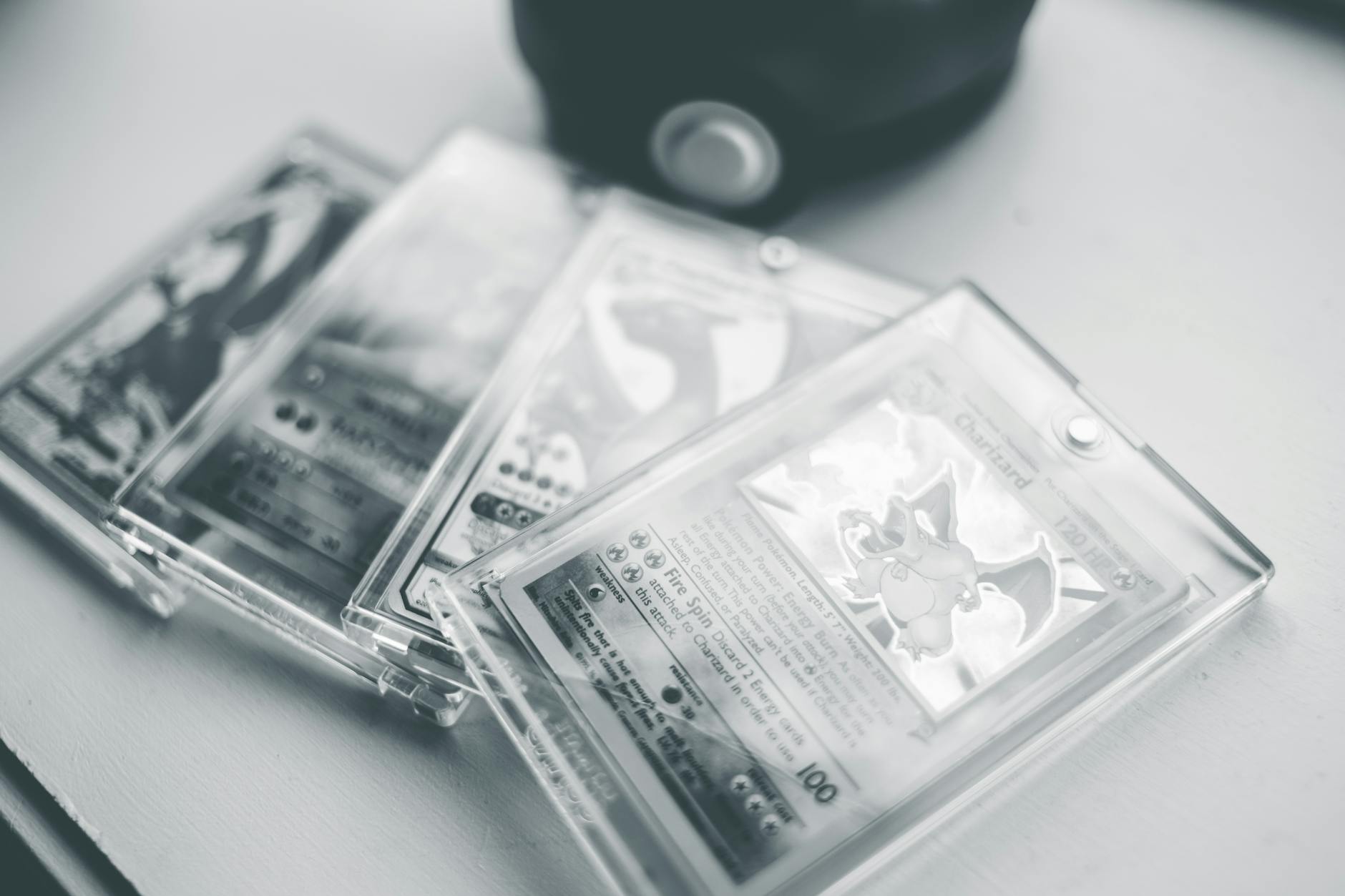
The Role of Nostalgia and Generational Wealth Transfer
Base Set cards carry unmatched nostalgic weight for millennials born between 1985-1995. These individuals grew up with original Pokémon cards as a formative experience, meaning Base Set collecting triggers both emotional connection and authentic historical relevance. As this demographic ages and inherits wealth, they possess both the financial capacity and emotional motivation to acquire serious Base Set collections. Unlike collecting categories based purely on objective rarity (rare coins, stamps), Base Set combines genuine scarcity with deeply embedded cultural memory.
The generational wealth transfer dimension creates a compounding effect. A 45-year-old millionaire who grew up trading Base Set cards in 1999 has authentic personal connection to the asset class. They may acquire a significant collection not just as investment, but as a connection to their childhood and cultural identity. They are also positioned to pass this collection to children and grandchildren, creating family heirlooms around Base Set ownership. This transforms Base Set from transactional collectibles into family legacy assets—the most durable form of status symbol that exists across generations.
Future Outlook for Base Set as the Ultimate Collector’s Asset
Within 15-20 years, expect Base Set cards in PSA 9-10 condition to function identically to fine art or rare watches in serious collector circles. Supply will be essentially fixed—existing cards will only decrease through loss, damage, or removal from circulation. Demand will increase as millennial wealth accumulates and as the historical distance between 1999 and 2040+ makes original Base Set ownership feel genuinely historical. A Base Set Charizard in PSA 10 will likely command prices that require serious institutional or billionaire-level acquisition power.
The institutional acceptance is already beginning. Some insurance companies now insure Pokemon collections separately, treating them as alternative assets similar to fine art. Rare card dealers increasingly operate as professional advisors with expertise requirements comparable to antiquities dealers. This professionalization signals that Base Set collecting has transitioned from hobby to legitimate wealth category. The next decade will likely see accelerated institutional participation, which will further cement status symbol status and drive increased scarcity consciousness among serious collectors.
Conclusion
Base Set Pokémon cards will become status symbols for future collectors because they represent a genuinely scarce, historically irreplaceable asset class that combines financial appreciation with cultural significance and generational resonance. The scarcity is mathematical and permanent; the cultural weight is authentic; and the acquisition process requires genuine expertise rather than pure spending power.
This combination of factors is precisely what transforms collectibles into status symbols rather than mere commodities. For collectors seeking to participate in this trend, the practical path involves acquiring Base Set cards in the highest grades achievable within your financial constraints, focusing on key cards like Charizard, Blastoise, and Venusaur, and building expertise to distinguish genuine rare specimens from overgraded or problematic cards. The status symbol function develops independently of short-term market price; the real value lies in owning something demonstrably rare, historically important, and increasingly out of reach for future collectors.
Frequently Asked Questions
What makes Base Set cards more valuable as status symbols than other collectible card games?
Base Set represents the original print run of Pokémon cards with finite scarcity; modern TCG sets are printed in massive quantities with no natural supply ceiling. This permanent scarcity distinction is what elevates Base Set toward status symbol status rather than commodity status.
How much should I spend to acquire a respectable Base Set collection?
Entry-level serious collecting begins at $5,000-$10,000 for a few key cards in PSA 8 condition. Mid-level collectors invest $50,000-$200,000. Serious collectors assembling complete sets or acquiring PSA 9-10 examples invest $500,000+. Start with cards you genuinely appreciate rather than optimizing purely for investment returns.
Is grading essential, or can I collect ungraded Base Set cards?
Grading is increasingly important for cards above $1,000 in value. Ungraded cards face authentication challenges and lack standardized condition assessment. For status symbol purposes, professional grading is nearly essential because the grade becomes part of the status credential.
What’s the biggest risk in Base Set collecting?
Overpaying during speculative boom periods, acquiring counterfeit or overgraded cards, and overextending financially into an asset class with limited liquidity. Collect cards you genuinely want to own, not purely speculative bets.
Will Base Set prices continue rising indefinitely?
No. Expect continued volatility and cyclical corrections. However, the underlying scarcity fundamentals create a price floor that prevents catastrophic declines similar to bubble-driven collectibles. Long-term appreciation is likely, but short-term volatility is certain.
How do I verify authenticity and grading accuracy?
Use established graders (PSA, BGS, SGC) exclusively for high-value cards. Research grading standards before purchasing. Build relationships with reputable dealers. For cards above $10,000, obtain independent authentication opinions. Never assume historical grades remain accurate indefinitely.
You Might Also Like
- Why Base Set Pikachu May Become More Important to Future Collectors
- How a New Generation of Collectors Could Rediscover Base Set Pokémon
- How Sealed Base Set Packs Could Become Nearly Untouchable in the Future