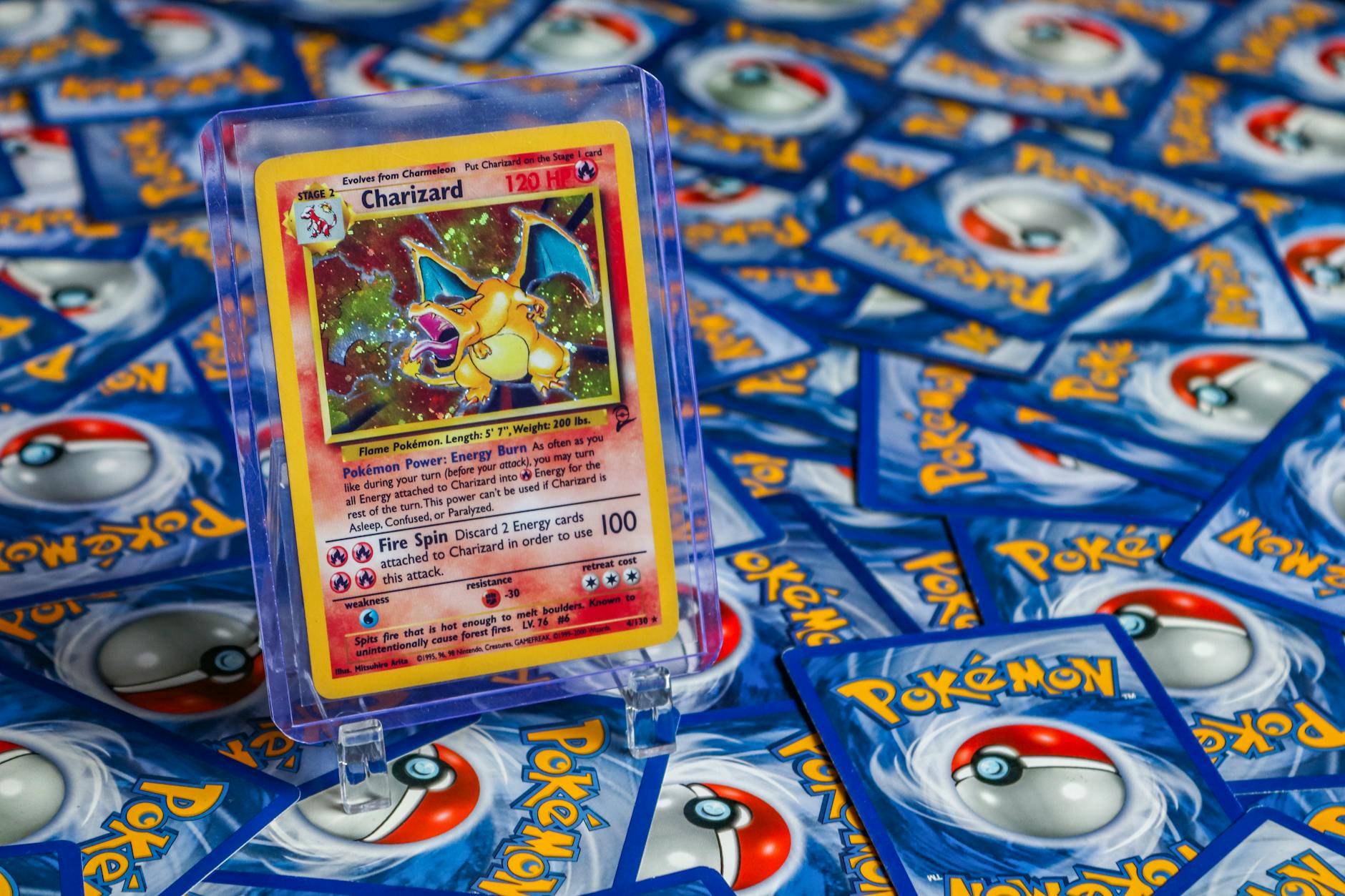
Base Set Pokémon cards possess genuine long-term value potential because they represent a genuinely finite asset with growing demand from multiple buyer segments—collectors, investors, and institutional players. Unlike modern printed sets that flood the market annually, the original 1999 Base Set can never be reprinted in its original form, and the cards that survive inevitably deteriorate through normal wear, storage failures, and damage. The market data supports this: vintage WOTC cards (Base Set, Jungle, Fossil) have shown 30-50% appreciation through early 2026 due to fixed supply and growing institutional interest, while the broader trading card game market reached $2.2 billion in 2024, up 25% year-over-year.
What separates Base Set from speculative bubbles is the stability of its market fundamentals. After the pandemic boom and subsequent correction, the market has stabilized through 2024-2025, creating clearer long-term value signals rather than artificial hype cycles. A Charizard Base Set 1st Edition Shadowless PSA 10 sold for $347,328 in 2024 and another reached $550,000 in late 2025—but these prices reflect a maturing market recognizing inherent scarcity, not frenzied speculation. The recognition that Base Set cards offer long-term potential has historically been underestimated because most casual collectors focus on modern sets or assume vintage cards are simply “old” rather than finite.
Table of Contents
- Why Fixed Supply Creates Durable Long-Term Value
- The Legendary Holo Cards and Price Trajectory
- Institutional Capital and Market Maturation
- Booster Boxes Versus Individual Cards: A Strategic Comparison
- Authentication Risk and Market Manipulation Concerns
- The 2026 30th Anniversary Catalyst and Renewed Collector Interest
- What the Long-Term Outlook Actually Represents
- Conclusion
Why Fixed Supply Creates Durable Long-Term Value
The fundamental driver of base Set appreciation lies in supply that is mathematically fixed and continuously shrinking. The original Base Set was printed only once across three editions (Shadowless, 1st Edition, and Unlimited) between 1999 and 2000. Wizards of the Coast has no incentive to reprint the exact original Base Set cards—doing so would cannibalize the nostalgia premium that makes the franchise valuable to long-time collectors. This stands in sharp contrast to modern sets, where new printings arrive every few months, each diluting the scarcity of previous releases.
Natural attrition accelerates the supply constraint. Cards age, get damaged, are lost in moves and storage failures, or are simply discarded by owners unaware of their value. A 1st Edition Booster Box costs $20,000-$25,000 in near mint condition, yet only a finite number were ever sealed and preserved. Unlimited Base Set Booster Boxes have appreciated 300-400% over five years—an appreciation rate that reflects both increased collector awareness and the simple mathematical fact that there are fewer pristine boxes available each year. Once a card reaches a certain condition threshold or becomes rare enough, no amount of future printing can restore supply.

The Legendary Holo Cards and Price Trajectory
The iconic Base Set holos—Charizard, Blastoise, and Alakazam—demonstrate how scarcity compounds over time in specific, measurable ways. Charizard base set unlimited cards in near-mint condition average around $458, while shadowless versions trade closer to $634. These raw card prices seem accessible to collectors, but the graded market tells a different story. A 1st edition Base Set Blastoise PSA 10 sells in the $88,000-$138,000 range based on recent sales, reflecting how condition and edition premium accumulate value exponentially at higher grades.
However, the market for these cards shows real vulnerability to condition downgrades and authentication issues. A Charizard base set that grades PSA 9 instead of PSA 10 can lose 40-60% of its value—a significant downside that separates this from traditional collectibles like art or real estate. Alakazam Base Set cards, while iconic, range only $30-$200 depending on condition and edition, demonstrating that not every original holo appreciates equally. The takeaway is that legendary cards offer outsized potential, but collectors must understand they’re paying for condition and authenticity, not just the card’s age.
Institutional Capital and Market Maturation
What distinguishes Base Set’s current long-term potential from previous cycles is the entry of institutional investors and established grading infrastructure. The trading card market’s evolution from niche hobby to a $2.2 billion industry with professional grading (PSA, CGC) and clear price guides has legitimized Pokemon cards as alternative assets. Institutional interest in vintage WOTC sets has grown notably, with fund managers and collectibles platforms now tracking Base Set appreciation alongside traditional investments. This institutional attention provides a stability floor that didn’t exist during the 2020-2021 pandemic spike.
Back then, retailers and shipping companies became overwhelmed, counterfeits proliferated, and prices became detached from fundamentals. Today’s market has absorbed those lessons. The 2026 30th Anniversary of the Pokémon franchise is already driving anticipatory buying of vintage cards, signaling that demand drivers are becoming more predictable and measurable. Investors increasingly recognize Base Set cards as satisfying both collector and investor appetites simultaneously—unlike pure speculation plays that require the next buyer to arrive or hype to intensify.
Booster Boxes Versus Individual Cards: A Strategic Comparison
For collectors evaluating long-term potential, the choice between sealed booster boxes and individual graded cards represents a fundamental tradeoff. A 1st Edition Base Set Booster Box at $20,000-$25,000 offers the advantage of a unified, easily verifiable asset with transparent scarcity. Booster box values have appreciated 300-400% over five years, and this segment attracts institutional buyers who treat sealed product as a hedge against both inflation and traditional market volatility. The downside is capital intensity—most individual collectors cannot afford to purchase and hold sealed boxes, limiting their participation to a higher wealth tier.
Graded individual holos like Charizard, Blastoise, or Alakazam offer lower entry costs and fractional exposure to the same supply dynamics. A near-mint Charizard shadowless at $634 or a raw 1st Edition holo at higher grades allows collectors to build a vintage portfolio. However, individual card values depend more directly on condition volatility, authentication risk, and liquidity at the moment of sale. Someone holding a Charizard PSA 10 has significant upside, but selling into an illiquid local market may force discounting, whereas a sealed booster box has a more transparent secondary market. The long-term winner depends on the buyer’s capital availability and risk tolerance.
Authentication Risk and Market Manipulation Concerns
A significant limitation to Base Set’s long-term potential is the growing sophistication of counterfeits and authentication fraud. High-value cards like Charizard attract bad actors; counterfeits have become difficult for untrained eyes to distinguish, and some grading companies have faced criticism for inconsistent standards or historical authentication errors. A collector purchasing a PSA 10 Charizard for $300,000+ is making an assumption about the grading company’s future reputation and the resale market’s continued acceptance of that grade.
Additionally, the grading market itself shows signs of oversupply in recent years, with new competitors entering the space and potentially inflating grades to attract business. If a major grading company is exposed for negligent authentication, it could trigger a revaluation of cards in their holders, creating sudden value destruction. This risk exists but should be understood as manageable through diversification (holding cards from multiple grading companies, holding some raw cards) and purchasing only from reputable dealers with authentication guarantees. The long-term case for Base Set remains sound, but it is not risk-free.

The 2026 30th Anniversary Catalyst and Renewed Collector Interest
The Pokémon franchise’s 30th Anniversary in 2026 is actively driving demand for vintage Base Set cards as collectors seek original-era pieces to commemorate the milestone. Card Chill and TCGrader analysts note that anniversary-driven buying waves typically precede major price discoveries in vintage collectibles. This anniversary catalyst provides a measurable catalyst for the next 12-18 months, potentially accelerating appreciation that might otherwise occur gradually over 5-10 years.
Historical precedent suggests that anniversary-driven demand can sustain price increases beyond the anniversary year itself if supply remains genuinely constrained. The release of modern anniversary sets, special promos, and renewed media attention typically increase baseline interest in the original cards that made the franchise famous. For Base Set, this means collectors who are re-entering the hobby after years away are likely to pursue original Base Set cards they grew up with, competing directly with existing investors for the same finite inventory.
What the Long-Term Outlook Actually Represents
The long-term potential of Base Set cards should be understood not as a guarantee of 300-400% returns every five years, but as a rational expectation of steady appreciation driven by supply reduction and institutionalization of the market. The trading card game market’s projected 15-25% CAGR through 2035 for graded cards provides a realistic framework: not spectacular, but competitive with many alternative investments and significantly better than inflation. Base Set cards offer long-term potential precisely because they sit at the intersection of nostalgia, scarcity, and legitimacy.
They are not a fad like most modern sets, nor are they unaffordable relics like true antiques. A collector purchasing a Base Set card today is betting on continued Pokémon franchise relevance, sustained or growing investor interest in collectibles, and the simple fact that cards deteriorate while appreciation potential doesn’t. The 30-year history of the franchise and the established market infrastructure supporting price discovery suggest that bet has more than sentiment behind it.
Conclusion
Base Set Pokémon cards merit more serious consideration as long-term assets than casual market observers typically grant them. The combination of fixed, shrinking supply; institutional market participation; stable pricing after pandemic volatility; and concrete appreciation data (30-50% through early 2026) aligns with genuine scarcity-driven value rather than speculation. Whether investing in sealed booster boxes or iconic holos like Charizard and Blastoise, collectors and investors are gaining exposure to an asset class that benefits from the franchise’s 30-year momentum and the simple mathematical certainty that no new 1999 Base Set cards will ever be created.
The risks—authentication fraud, grading volatility, condition sensitivity—are real and should inform strategy, but they do not invalidate the underlying thesis. A collector starting a Base Set portfolio today should expect moderate, sustained appreciation over 5-10 years, not explosive returns, and should diversify across editions, cards, and perhaps booster box formats. The long-term potential is there for those who understand they are buying into a finite asset with growing institutional credibility and a 30-year track record of relevance.
You Might Also Like
- Why Base Set Pikachu May Become More Important to Future Collectors
- Why Base Set Pokémon Cards May Become More Valuable With Every Anniversary
- Why Base Set Pokémon Cards May Be Worth More When Supply Gets Even Tighter