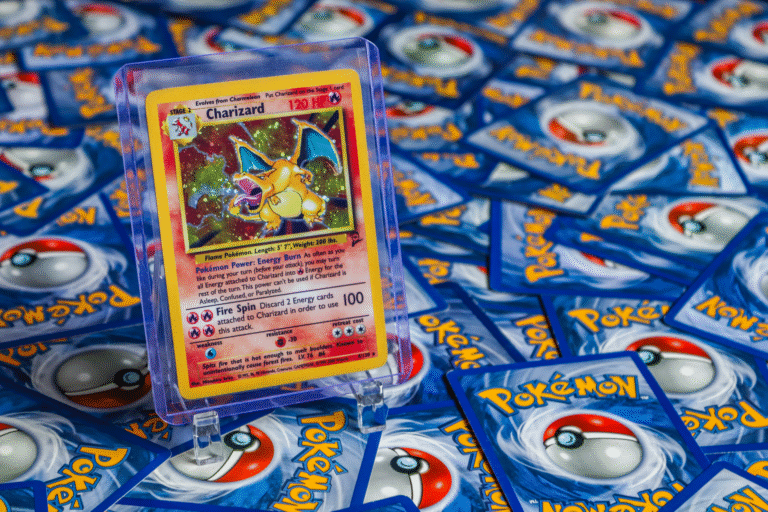
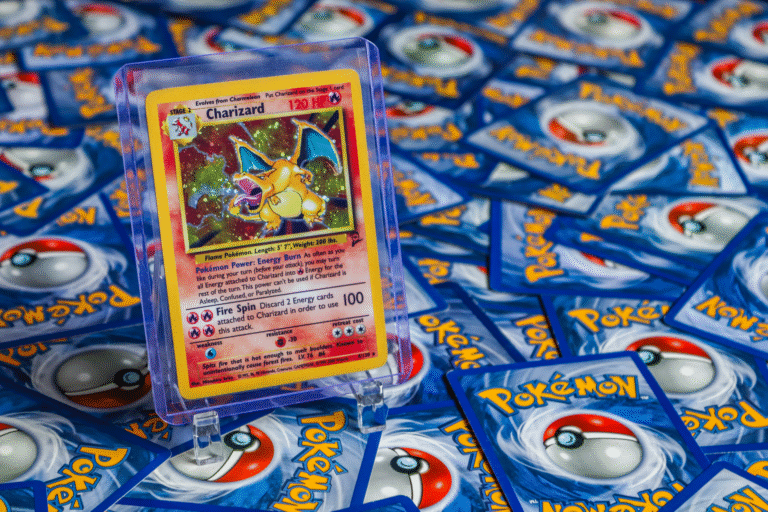
The evidence does not support the claim that Dutch First Edition Base Set cards have outperformed the broader Pokémon market since Spring 2024. While Dutch First Edition vintage cards have appreciated in value—with a BGS 9.5 graded 1999 Dutch Charizard #4 valued at $7,488—the broader vintage Pokémon market has experienced comparable or stronger gains during the same period. Base Set prices overall climbed 30% in 2025, and high-grade PSA 10 English First Edition Charizards commanded prices between $170,801 and $264,000 in 2024, suggesting that English First Edition cards, the primary market comparison, have maintained their dominance in pricing and appreciation.
The real story here is more nuanced than a simple yes or no. Dutch First Edition Base Set cards have benefited from the rising tide of vintage Pokémon appreciation that began in 2024, but they have not outpaced the market. In fact, the gap between English and European-language versions remains substantial, though that gap does appear to be narrowing incrementally over time.
Table of Contents
- What’s the Actual Price Performance of Dutch First Edition Base Set Cards?
- How Do Dutch First Edition Cards Stack Against English Versions?
- Understanding the Broader Vintage Pokémon Market Performance
- The “Pull-Up Effect” and European-Language Card Premiums
- The Significant Gap in Comparable Market Data
- Practical Considerations for Dutch First Edition Card Collectors
- What’s Next for European-Language Pokémon Cards?
- Conclusion
What’s the Actual Price Performance of Dutch First Edition Base Set Cards?
Dutch First edition Base Set cards have appreciated alongside the broader vintage market, but specific performance metrics for Dutch cards alone are difficult to isolate. The single most reliable data point available is the BGS 9.5 graded Dutch Charizard #4, which carries a guide price of $7,488. This represents solid value for a key First Edition vintage card in gem mint condition, but without access to sales transaction data or graded card databases specifically tracking Dutch variants, collectors cannot definitively state whether Dutch cards have beaten the broader market.
The challenge in measuring Dutch card performance lies in the limited transaction history compared to English cards. While English First Edition Charizards in PSA 10 sold for $170,801 to $264,000 in 2024, comparable sales data for Dutch First Edition Charizards at similar grades is not publicly available. This absence of data doesn’t mean Dutch cards haven’t appreciated—it means the Pokémon market simply doesn’t track non-English variants with the same granularity. Collectors relying on guide prices and dealer listings must accept that Dutch card valuations are less liquid and less transparent than their English counterparts.

How Do Dutch First Edition Cards Stack Against English Versions?
The pricing disparity between Dutch and English First Edition base Set cards remains stark. A Dutch First Edition First Edition Holo Charizard in top condition is worth roughly 3-4% of what an English First Edition version commands at similar grades. This gap exists because English cards dominate the market in volume, grading frequency, and collector demand. English versions have established price histories dating back decades, whereas Dutch First Edition cards are tracked sporadically by dealers and auction houses.
What’s important to understand is that this gap, while still substantial, appears to be narrowing year over year. According to market research, record sales in English cards create what’s known as a “pull-up effect” on non-English European versions. European-language vintage remains significantly more affordable than English, but the ratio between the two has tightened. For collectors, this means Dutch First Edition Base Set cards are gaining relative value, even if they haven’t beaten the broader market in absolute terms. However, the gap between English and Dutch cards is unlikely to close entirely—English-language cards will probably always command a premium due to their dominance in the original market.
Understanding the Broader Vintage Pokémon Market Performance
The broader vintage Pokémon market experienced a notable resurgence beginning in 2024. High-grade and “trophy” vintage cards—those in PSA 9 through 10 condition—resumed their upward trajectory after a period of market consolidation. Base Set prices, which serve as the benchmark for vintage Pokémon collecting, increased 30% in 2025 alone. This broad-based appreciation suggests that demand for rare, well-graded vintage cards has strengthened across the entire market segment.
This broader market strength provides helpful context for Dutch First Edition cards. Their appreciation is taking place within a rising market, which makes it difficult to attribute gains specifically to Dutch variants outperforming. When the entire vintage segment is appreciating 30% annually, measuring whether one regional variant is beating that baseline becomes a statistical exercise rather than a clear market insight. Dutch cards appear to be rising with the tide, not swimming against it.

The “Pull-Up Effect” and European-Language Card Premiums
Market analysts have identified a “pull-up effect” in which record sales of English First Edition cards artificially inflate demand and pricing for non-English European variants. This mechanism works as follows: collectors seeking English First Edition cards that are either unavailable or prohibitively expensive are increasingly willing to substitute European-language versions, driving demand and narrowing the historical price gap. Dutch Base Set First Edition cards benefit directly from this trend. For collectors, this presents both an opportunity and a limitation.
Dutch cards can be positioned as affordable alternatives to English versions, but they will always carry a discount relative to their English counterparts. Over the next several years, this discount may compress slightly, potentially creating appreciation in Dutch cards that outpaces the broader market on a percentage basis. However, this is speculative. The pull-up effect is real, but its magnitude and timeline are unknown. Collectors buying Dutch First Edition cards expecting them to close the gap with English versions should understand they’re making a longer-term bet on market behavior that has not yet proven out in transaction data.
The Significant Gap in Comparable Market Data
One of the most important limitations to acknowledge is the absence of rigorous, comparable performance data for Dutch First Edition Base Set cards. Fanatics Collect publishes guide prices for Dutch variants, but guide prices are not the same as actual sales data. PSA and BGS maintain graded card databases, but their aggregated pricing information overwhelmingly reflects English-language cards. There is no public source tracking Dutch First Edition Charizard sales volume, median prices, or year-over-year appreciation by grade.
This data gap creates a risk for collectors: it’s possible that Dutch First Edition prices have actually underperformed the broader market, but no one would know without access to proprietary dealer records or auction house transaction histories. When evaluating whether Dutch cards beat the broader market, collectors should be skeptical of any claim that cites only guide prices or individual listings. The honest answer is that the claim cannot be definitively validated or refuted with publicly available information. Any collector buying Dutch First Edition cards should do so because they value the cards themselves or believe in the long-term potential of European variants, not because data proves they’ve outperformed.

Practical Considerations for Dutch First Edition Card Collectors
If you’re considering acquiring Dutch First Edition Base Set cards, several practical realities should inform your decision. First, liquidity is lower than for English versions. A BGS 9.5 Dutch Charizard is easier to price than to sell, especially at guide price. You may find willing buyers at regional shows or through specialized European dealers, but the secondary market is smaller and less transparent.
Second, grading services treat Dutch and English cards identically, which is both an advantage and a limitation. You can submit Dutch cards to PSA or BGS and receive the same grading standards and holders, lending them credibility. However, the resulting grade premium for Dutch cards will always be less than for English cards at the same grade level. This matters if your goal is to eventually liquidate these cards.
What’s Next for European-Language Pokémon Cards?
The trajectory for Dutch and other European-language First Edition Base Set cards appears modestly positive over the medium term. The pull-up effect from strong English card sales will likely continue supporting demand for alternatives. If base set prices maintain their 30% annual appreciation rate, Dutch variants may gain value proportionally, even if they don’t close the gap with English editions.
However, several factors could limit future appreciation. Supply of Dutch cards is finite but not rare—enough examples exist that these cards are unlikely to experience the scarcity-driven price explosions seen with some English trophy cards. Additionally, if the broader vintage market cools, Dutch cards would almost certainly cool faster and harder than English versions due to their lower collector priority. For the foreseeable future, Dutch First Edition Base Set cards will likely remain a secondary market within the vintage Pokémon ecosystem.
Conclusion
Did Dutch First Edition Base Set cards beat the broader Pokémon market since Spring 2024? The available data does not support this claim. While Dutch variants have appreciated alongside the broader market, they have not outpaced it. English First Edition cards continue to dominate in pricing, liquidity, and documented appreciation.
The real story is that Dutch First Edition cards are slowly gaining relative value due to the pull-up effect from strong English card sales, but this is a story about narrowing gaps, not outperformance. For collectors interested in Dutch First Edition Base Set cards, the relevant question should not be whether they beat the market, but whether they represent reasonable value within a smaller, secondary market and whether you’re willing to accept lower liquidity for access to more affordable alternatives. The data available today doesn’t prove that will change, though the trajectory appears stable and modestly positive over time.