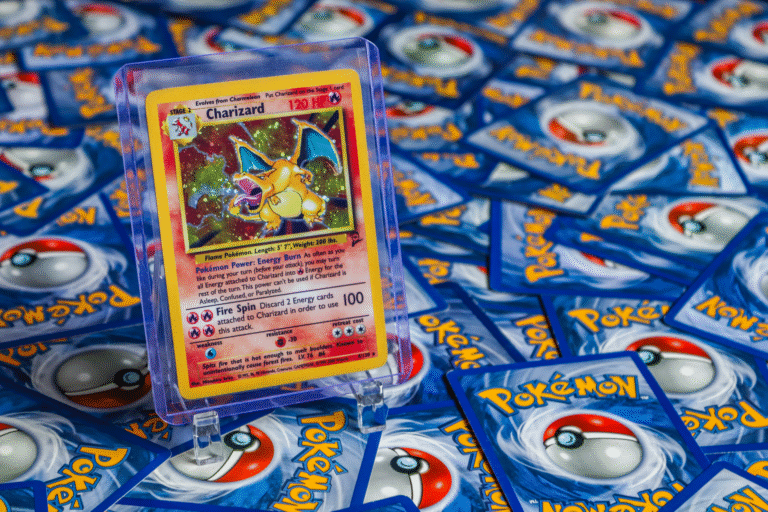
The short answer is no—but not because Base Set Thin Stamp cards performed poorly. The real issue is that specific pricing data for “Thin Stamp” Base Set cards doesn’t exist as a tracked category in the broader market. What we can say with certainty is that the overall Base Set market, including all stamp variants, has underperformed dramatically since the 2021 peak, and newer Pokémon card variants have significantly outpaced any Base Set cards during this period. If you purchased Base Set cards at the 2021 market top, you’ve likely experienced a substantial loss, regardless of stamp variant. The broader Pokémon card market underwent a severe correction between 2021 and 2023.
PSA 10-graded Base Set Charizards (Unlimited edition) that sold for £18,000 to £22,000 in March 2021 had dropped to just £4,000 to £6,000 by March 2023—a 70 to 75 percent decline. That collapse wasn’t specific to thin stamp or thick stamp cards; it reflected a market-wide reckoning after the speculative bubble of 2020-2021. Since 2023, the market has stabilized but has moved away entirely from the “explosive appreciation” that characterized the boom years. The one Base Set exception has been First Edition cards, which have genuinely appreciated and significantly outpaced Unlimited versions. However, even the best-performing Base Set segments have been eclipsed by newer card variants and alternate-art releases, suggesting that collectors chasing modern growth should look beyond Base Set regardless of production details.
Table of Contents
- What Actually Happened to Base Set Cards Between 2021 and 2026?
- Why First Edition Base Set Cards Dramatically Outperformed Unlimited Versions
- The “Thin Stamp” Data Problem—Why This Category Is Nearly Impossible to Quantify
- Why Newer Pokémon Card Variants Have Crushed Base Set Returns Since 2021
- The Supply Elephant in the Room—9.7 Billion Cards and Market Pressure
- Practical Considerations When Buying or Selling Thin Stamp Base Set Cards
- The 2025-2026 Market Outlook for Base Set Cards
- Conclusion
What Actually Happened to Base Set Cards Between 2021 and 2026?
The Pokémon card market experienced one of the most dramatic boom-and-bust cycles in collectibles history from 2020 to 2023. The 2021 peak was driven partly by pandemic-era hoarding, celebrity endorsements, and genuine scarcity of older sealed products. PSA 10 Base Set Charizards—the most iconic card in the hobby—became a barometer for the entire market. When these Unlimited versions were commanding £18,000–£22,000 in early 2021, it signaled that any Base Set card with decent centering and surface quality could fetch premium prices. By late 2022 and into 2023, that premium had evaporated. The same cards dropped to £4,000–£6,000, representing losses that shocked collectors who bought during the peak.
This wasn’t a gradual softening; it was a cliff. The market realized that the Pokémon Company could print nearly unlimited quantities of Base Set reprints and special products, undermining the scarcity argument that had driven prices upward. Simultaneously, high-profile buyers began liquidating collections, flooding the market with supply. The lesson for 2026 is critical: Base Set cards, across all stamp variants, are holding roughly flat to slightly declining from 2023-2024 levels. The market is “expected to remain active without the explosive appreciation of 2021,” according to market analysts. If you’re considering buying Base Set cards hoping for rapid appreciation, you should approach with extreme caution and accept that these cards are now mature, stable collectibles rather than growth assets.

Why First Edition Base Set Cards Dramatically Outperformed Unlimited Versions
Within the Base Set market, a crucial divide emerged: First Edition cards, which were printed in far smaller quantities than unlimited editions, have held value and appreciated meaningfully. A PSA 10 First Edition Base Set Charizard reached approximately $550,000 by 2026, compared to the £4,000–£6,000 that Unlimited PSA 10 versions command. This is not a small difference—it represents a fundamental market distinction based on rarity and era of production. First Edition cards benefit from a genuine scarcity story. The print run was limited, boxes were opened during a period when grading wasn’t yet ubiquitous, and many copies were played with or damaged.
An unplayed PSA 10 copy is genuinely difficult to locate. Unlimited cards, by contrast, were printed in massive quantities and many boxes have been preserved in storage, creating a constant supply of high-grade examples entering the market. Collectors willing to pay a premium have consistently chosen First Edition, which is why that segment has held up better than Unlimited. However, even this silver lining comes with a major caveat: even First Edition Base Set Charizards have not outpaced alternative Pokémon card investments. Cards like Moonbreon (a modern alternate-art variant) doubled in price from $577.91 in 2023 to $1,223.14 in 2025—a 112 percent gain in just two years. First Edition Charizards have appreciated, but they haven’t matched this kind of return, and certainly not in recent years.
The “Thin Stamp” Data Problem—Why This Category Is Nearly Impossible to Quantify
The fundamental problem with answering your original question is that “thin Stamp” Base Set cards are not tracked as a distinct pricing category by major aggregators like PSA, TCGPlayer, or Cardsnpacks. Thin stamp versus thick stamp is a production detail that exists on original Base Set printings, but it hasn’t been consistently recorded in pricing databases the way “First Edition” versus “Unlimited” or “Shadowless” versus “Shadowless” has been. This matters because collectors genuinely do distinguish between thin and thick stamp variants when evaluating Base Set cards. Some view thin stamp as indicating an earlier, smaller print run and therefore scarcer. Others see it as purely cosmetic.
But without aggregated market data separating these two populations, you cannot definitively say whether thin stamp cards have beaten the broader market. You’d need individual sale history for thin stamp cards specifically, which most public sources do not maintain. If you own or are considering purchasing thin stamp Base Set cards, treat any performance comparisons as speculative. You might find individual sales of thin stamp cards commanding higher premiums than thick stamp equivalents, but this is anecdotal rather than data-driven. When evaluating Base Set cards for investment, focus on what is consistently tracked: edition (First, Unlimited), centering, surface quality, and specific card rarity. The stamp variant should be a bonus if you can source it, not the primary thesis.

Why Newer Pokémon Card Variants Have Crushed Base Set Returns Since 2021
One of the most striking patterns in the 2021-2026 market is how thoroughly newer card releases have outpaced classic Base Set cards. Moonbreon is just one example of an alternate-art card released in recent years that has appreciated far more than any Base Set card, thick stamp or thin stamp. From 2023 to 2025, Moonbreon gained 112 percent. Compare that to Base Set Unlimited Charizards, which lost 70-75 percent from 2021 to 2023 and have only partially recovered since. This divergence reflects a fundamental shift in how the market values Pokémon cards. During the 2020-2021 boom, nostalgia and vintage scarcity drove prices.
Since the correction, the market has rewarded visually distinctive, lower-supply newer releases over reprinted or reprinted-adjacent older cards. Alternate-art cards, secret rares, and special sets like Crown Zenith and Scarlet Violet releases have become the growth engines of the hobby. Base Set cards, by comparison, have been produced and reproduced so many times that supply constraints no longer protect them. If you’re allocating capital to Pokémon cards for appreciation, the data strongly suggests you should look at recent high-demand releases and alternate-art variants rather than Base Set. The Base Set market is stable and may attract collectors seeking affordable entry points, but it is not where the growth is happening. This is important context when evaluating any subset of Base Set cards, including thin stamp variants.
The Supply Elephant in the Room—9.7 Billion Cards and Market Pressure
A critical factor depressing Base Set card prices—and virtually all Pokémon cards—is raw production volume. The Pokémon Company produced 9.7 billion cards in a recent fiscal year, a staggering figure that undercuts any scarcity narrative. Even if thin stamp Base Set cards were genuinely scarcer than thick stamp variants, they exist within a product category that has been reprinted and restocked countless times. This supply deluge is why newer releases that are time-limited or produced in controlled quantities tend to appreciate better than vintage cards.
The market has learned that “Pokémon will keep printing” is the permanent backdrop to any card purchase decision. Base Set cards are no exception, and the fact that reprint sets like Base Set 2X have circulated widely only reinforces the sense that vintage Base Set supply is effectively unlimited relative to genuine demand from collectors. For thin stamp Base Set cards specifically, this supply situation is a major limiting factor. Even if your cards are production variants worth a small premium, that premium is capped by the overall perception that Base Set is exhausted as a growth category. You might find a niche buyer willing to pay 5 to 15 percent more for thin stamp than thick stamp, but you are unlikely to see prices appreciate significantly from current levels due to the backdrop of continued supply and moderate collector demand.

Practical Considerations When Buying or Selling Thin Stamp Base Set Cards
If you are evaluating thin stamp Base Set cards, focus on absolute card quality and edition rather than the stamp variant alone. A PSA 10 First Edition thin stamp card will command far more than a PSA 8 Unlimited thin stamp card, because edition and centering are the primary value drivers.
The stamp variant is a tiebreaker that might add 5-10 percent to price when comparing identical copies of the same card in the same grade, but it should not be the primary thesis for a purchase. When selling thin stamp cards, be aware that many buyers and dealers may not know to distinguish them, and you may struggle to extract a premium unless you are selling to advanced collectors who specifically collect production variants. If you’re liquidating Base Set cards, you’ll likely get the best prices selling through mainstream channels (TCGPlayer, local shops) where cards are priced by edition and grade, not by minutiae like stamp variants.
The 2025-2026 Market Outlook for Base Set Cards
Looking ahead, the Base Set market is expected to remain stable but unexciting. The 2026 outlook is for continued activity “without the explosive appreciation of 2021,” meaning prices should hold relatively steady but shouldn’t be expected to surge. The days of Base Set cards as a growth investment are behind us, but they have also found a floor and established themselves as a mature collectible category.
If thin stamp Base Set cards have any advantage in this environment, it will be that they appeal to advanced collectors and completionists who are willing to pay small premiums for production details. But these premiums will likely remain modest unless supply constraints emerge that we cannot currently predict. For most collectors, the message is clear: Base Set cards, including thin stamp variants, should be purchased for long-term holding and enjoyment of the cards themselves, not as a hedge expecting rapid appreciation.
Conclusion
The question of whether Base Set Thin Stamp cards beat the broader Pokémon market since 2021 cannot be definitively answered due to lack of tracking data specific to stamp variants. However, we can say with certainty that the overall Base Set market has dramatically underperformed since the 2021 peak, with prices declining 70-75 percent and failing to recover. Even the best-performing Base Set subset—First Edition cards—has been outpaced by newer alternate-art releases and special sets. The production of 9.7 billion cards annually by the Pokémon Company ensures that supply pressure on Base Set will continue regardless of stamp variant.
If you own thin stamp Base Set cards, treat them as stable long-term collectibles rather than growth assets. If you’re considering purchasing them, conduct due diligence on individual cards rather than relying on the stamp variant as a value proposition. The market has moved decisively away from classic Base Set as an appreciation engine, and newer releases offer far better opportunities for collectors seeking growth. Focus on edition, condition, and eye appeal when evaluating Base Set cards, and be realistic about holding such collectibles for enjoyment rather than speculative returns.