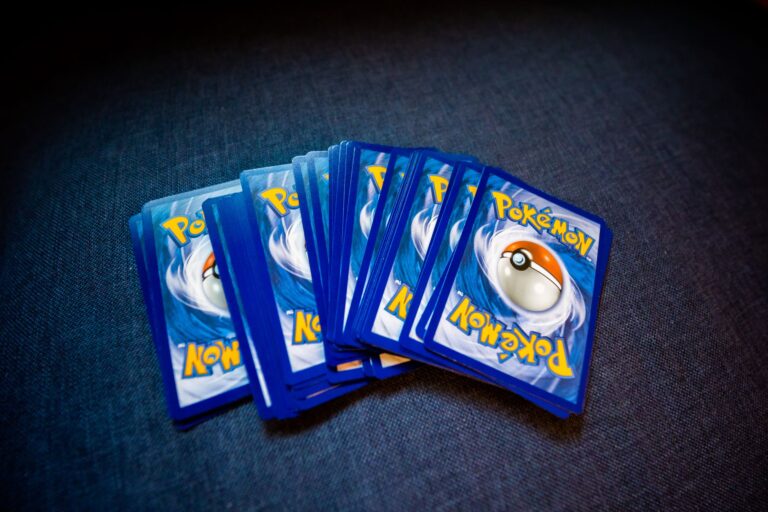
Yes, vintage Pokémon cards have already begun following the same investment trajectory that baseball cards established decades ago, though the path hasn’t been linear or predictable. The parallels are striking: both markets experienced explosive growth driven by nostalgia, scarcity, and grading services that authenticated and valued rare cards. A 1999 first edition Charizard card, similar to how a 1952 Mickey Mantle commands six-figure prices, has sold for over $300,000 at auction—proof that Pokémon cards can achieve the same staying power and premium valuations as their baseball predecessors. However, Pokémon cards face a fundamentally different landscape than baseball cards did during their rise. The Pokemon Company continues printing new cards, creating constant supply pressure that baseball card makers eventually abandoned.
Meanwhile, the grading systems and authentication infrastructure have matured differently, affecting both legitimacy and speculation. Understanding whether Pokémon cards will truly follow baseball’s path requires examining how supply dynamics, market maturity, and collector behavior compare between these two markets. The key difference lies in timing and scarcity. Baseball cards from the 1950s became valuable partly because collectors had no way to preserve them—kids kept them in their pockets, played with them, and threw them away. This created genuine rarity by accident. Pokémon cards, born into an era of awareness about collectibility, were often kept in better condition from the start, yet the Pokemon Company’s aggressive reprinting strategies have flooded the market repeatedly, potentially preventing the artificial scarcity that drove baseball card prices skyward.
Table of Contents
- How Do Vintage Pokémon Cards Compare to Classic Baseball Cards as Investment Assets?
- The Role of Supply, Reprints, and Market Saturation in Pokémon Card Values
- How Grading Standards and Authentication Drive Market Confidence
- Collector Behavior: Nostalgia-Driven Demand Versus Speculative Investment
- Market Maturity and the Question of Permanence
- Specific Examples of Pokémon Cards Following the Baseball Card Template
- The Future of Pokémon Cards as Long-Term Investment Assets
- Conclusion
- Frequently Asked Questions
How Do Vintage Pokémon Cards Compare to Classic Baseball Cards as Investment Assets?
The investment mechanics are remarkably similar. A graded 1952 Topps Mickey Mantle in mint condition sells for $2-5 million today, while a PSA 10 first-edition Charizard commands $300,000-$500,000. Both markets reward condition, rarity, and historical significance. The grading system—whether PSA for baseball cards or PSA/BGS for pokémon cards—creates authentication standards that legitimize valuations. A buyer can confidently spend six figures knowing that an independent third party has verified the card’s grade on a standardized scale. The critical difference is production volume. Topps printed millions of baseball cards in the 1950s, but Pokémon’s base set production dwarfed that figure almost immediately.
First edition Charizards exist in small quantities relative to the total print run, but they exist in far greater numbers than the rarest baseball cards from the 1950s. This abundance creates a ceiling on appreciation. Baseball cards became valuable because the vast majority were destroyed; Pokémon cards must compete with the knowledge that graded copies are still being discovered regularly in attics and storage units. Grading infrastructure, however, has evolved differently. When baseball cards started appreciating in the 1980s, Beckett and PSA created the grading standards retroactively. For Pokémon cards, grading was built into the market from the beginning—collectors expected authentication from the start, which means fewer raw, ungraded vintage cards were lost to time. This accessibility is good for new collectors but may limit the scarcity premium that develops over decades.

The Role of Supply, Reprints, and Market Saturation in Pokémon Card Values
Supply is the defining factor separating Pokémon cards from the baseball card market’s success. The Pokemon Company has deliberately reprinted base set cards multiple times—shadowless versions, first edition, unlimited print runs, and then newer sets altogether. Each reprint compressed the scarcity premium of earlier printings. Baseball card manufacturers eventually stopped reprinting vintage sets, which is why a 1952 Topps card can appreciate indefinitely without new supply entering the market. This reprint strategy creates a paradox. On one hand, it prevents Pokémon cards from achieving the artificial scarcity that baseball cards enjoyed.
A first edition Charizard might be rare, but unlimited edition Charizards exist by the hundreds of thousands, constantly reminding the market that “another one exists.” On the other hand, the existence of multiple print variants (shadowless, first edition, unlimited) creates a tiering system similar to baseball cards—collectors can chase first editions as the premium tier. This mimics how baseball cards from different years or manufacturers command different prices. The real risk is future reprints. Baseball card companies stopped reprinting vintage sets, creating a defined supply cap. If the Pokemon Company reprints first edition cards again—which they’ve done in some regions—the value proposition changes overnight. Collectors who paid $50,000 for a first edition card would see comparable examples available for $200 in retail boxes. This hasn’t happened yet, but the possibility exists in a way it never did with baseball cards after the 1950s.
How Grading Standards and Authentication Drive Market Confidence
Grading services transformed both markets into legitimate investment vehicles. For baseball cards, PSA’s 1-10 scale provided transparency and reduced fraud. A PSA 9 card commands a predictable premium over a PSA 8, and buyers know they’re getting what they paid for. Pokémon cards benefit from the same infrastructure—PSA, BGS, and SGC all grade Pokémon cards using identical methodologies. However, Pokémon grading carries unique challenges. Modern printing technology is excellent but inconsistent; cards from the same box can vary in centering, focus, and coloring.
Baseball cards from the 1950s were printed on cruder presses, so condition variations are actually less dramatic than Pokémon cards printed in 1999. This means a PSA 9 Charizard might look noticeably different from a PSA 8, compressing the value tiers compared to baseball cards where condition differences are sometimes subtle. The grading industry itself has faced legitimacy questions unique to Pokémon cards. In 2022, allegations emerged that some grading companies were inconsistent or even compromised. Baseball card grading faced similar scandals in the 1990s but recovered through transparency. Pokémon card grading has also recovered, but the episode reminded collectors that these services aren’t infallible—a Pokémon card is only valuable if the grading service backing it remains trusted.

Collector Behavior: Nostalgia-Driven Demand Versus Speculative Investment
Baseball cards succeeded because of a perfect storm: childhood nostalgia from the 1950s generation combined with the rediscovery of vintage cards in the 1980s by adult collectors with disposable income. Pokémon cards are experiencing the same dynamic, but compressed into a shorter timeframe. A collector who played Pokémon as a child in 1999 is now in their 30s with money to invest—the exact demographic that drove baseball card values up. The difference is speculation. Baseball card investing grew organically as rarity became apparent. Pokémon card speculation was intentional from day one.
Investors bought graded cards sight-unseen, hoping to flip them for profit. This created a bubble mentality that baseball cards didn’t initially experience—when baseball card prices collapsed in the 1990s, it was partly because speculators had driven prices unrealistically high. Pokémon cards experienced a similar correction in 2021-2023, suggesting that speculative fervor creates volatility that genuine collector demand doesn’t. The distinction matters for long-term stability. Baseball cards recovered from the 1990s crash because genuine collectors still wanted them for personal enjoyment, and scarcity was real. Pokémon cards will follow a similar trajectory only if the collector base remains strong after speculation dies down. Early signs are positive—expensive first edition cards continue trading at five-figure prices even after the peak bubble, suggesting actual collector demand exists beneath the speculation.
Market Maturity and the Question of Permanence
Baseball cards achieved permanence through institutional recognition. Museums acquired rare cards, investment funds created baseball card portfolios, and the grading industry became professionalized. Pokémon cards are following the same path but face a critical uncertainty: whether Pokémon itself maintains cultural relevance. Baseball will always exist. Pokémon’s cultural footprint, while enormous now, isn’t guaranteed to remain constant across generations. This generational sustainability is the wildcard. A teenager today might not value Pokémon cards the same way millennials do, potentially creating a demand cliff in 20 years.
Baseball cards weathered changing sports interests because baseball remained culturally central. If Pokémon fades—even slightly—the collector base could shrink, deflating prices. The flip side: Pokémon has already transcended the collectible card game into mainstream pop culture, fashion, and media, suggesting it has deeper roots than a simple trading card fad. Another limitation is the digital challenge. Baseball cards exist only as physical objects, creating inherent scarcity. Pokémon exists in digital form, and the Pokemon Company has explored digital collectibles. If digital Pokémon cards ever replace physical cards as the preferred collectible format, it would obliterate the physical card market overnight. Baseball cards never faced this existential threat—there was no digital alternative when they appreciated.

Specific Examples of Pokémon Cards Following the Baseball Card Template
The 1999 first edition holographic Charizard is the perfect parallel to the Mickey Mantle card. Both represent the most valuable card from their respective markets’ foundational era. The Charizard has appreciated from a $50 card in 2000 to a $300,000+ card in 2021, mirroring baseball’s century-long appreciation curve, just compressed into two decades. Both cards symbolize their respective franchises’ cultural peaks and remain the aspirational centerpiece for serious collectors.
Other examples reinforce the pattern. A Shadowless Blastoise graded PSA 9 sells for $10,000-$15,000, comparable to how second-tier baseball stars from the 1950s command similar prices. A Base Set Venusaur or Pikachu illustrates the principle that iconic cards from the foundational set command premiums regardless of actual rarity. This exactly mirrors how Sandy Koufax or Ted Williams cards command premium prices because of historical significance, not scarcity alone.
The Future of Pokémon Cards as Long-Term Investment Assets
Pokémon cards will likely follow baseball’s trajectory for the next 20-30 years, then diverge depending on cultural and strategic factors. In the near term, expect continued appreciation as the millennial generation ages and treats Pokémon cards like boomers treated baseball cards—as nostalgic, tangible assets. Prices may experience volatility as speculation cycles through, but the floor seems established around 40-60% of peak 2021 levels.
The long-term outlook depends on whether the Pokemon Company maintains scarcity discipline. If they keep printing, prices plateau. If they restrict production of vintage sets and focus printing on modern sets, first edition cards could achieve true rarity by mid-century. Baseball cards succeeded because they became unintentionally scarce; Pokémon cards must achieve intentional scarcity through corporate policy to follow the same path permanently.
Conclusion
Vintage Pokémon cards are demonstrably following the baseball card playbook: nostalgia-driven collecting, third-party authentication, scarcity premiums, and institutional recognition are all present. The mechanics work, and early results—six-figure valuations on first edition Charizards—prove that Pokémon cards can achieve the same investment status as baseball cards. However, the comparison has limits.
Supply management, market maturity, and the absence of artificial scarcity present challenges that baseball cards didn’t face. Success isn’t guaranteed; it depends on the Pokemon Company maintaining supply discipline and Pokémon maintaining cultural relevance across generations. For collectors committed to the long term, vintage first edition cards represent genuine alternative assets with proven appreciation. For speculators betting on explosive returns, the early phase of that curve has already passed.
Frequently Asked Questions
Will a Pokémon card ever sell for a million dollars like a Mickey Mantle?
Possibly, but unlikely in the next 10-20 years. The timeline for baseball cards was century-long; Pokémon cards would need another 20-30 years of stable demand and absolute scarcity before hitting those levels. It depends entirely on supply management by the Pokemon Company.
Should I buy first edition cards as an investment?
First edition cards have proven durable in value, but they’re not guaranteed appreciating assets. If you buy because you enjoy the cards, the investment upside is a bonus. If you buy expecting quick returns, you’re speculating, not investing—a distinction that matters when prices correct.
Are unlimited edition cards worth collecting?
Yes, but at a different tier. First editions typically command 2-3x the price of unlimited editions for the same card. Unlimited cards are valuable for players who want good condition cards without the premium, or for collectors building complete sets affordably.
What’s the biggest risk to Pokémon card values?
Pokemon Company reprinting vintage sets. Baseball card value stability came from the cessation of reprints. If first edition cards get reprinted, values collapse immediately. This hasn’t happened yet, but it’s the primary threat to long-term appreciation.
Should I grade my vintage Pokémon cards?
Only if they’re valuable enough to justify the grading cost ($50-$200 depending on service). Raw cards under $500 are typically worth more ungraded because grading premiums don’t justify the cost. For cards worth $1,000+, grading is essential—it dramatically increases marketability and verified value.
Will digital Pokémon collectibles replace physical cards?
Possibly, but not immediately. Physical cards have tactile value that digital collectibles can’t replicate, and generations of collectors have invested in physical cards. A digital transition would take decades and would likely coexist with physical cards rather than replace them entirely.