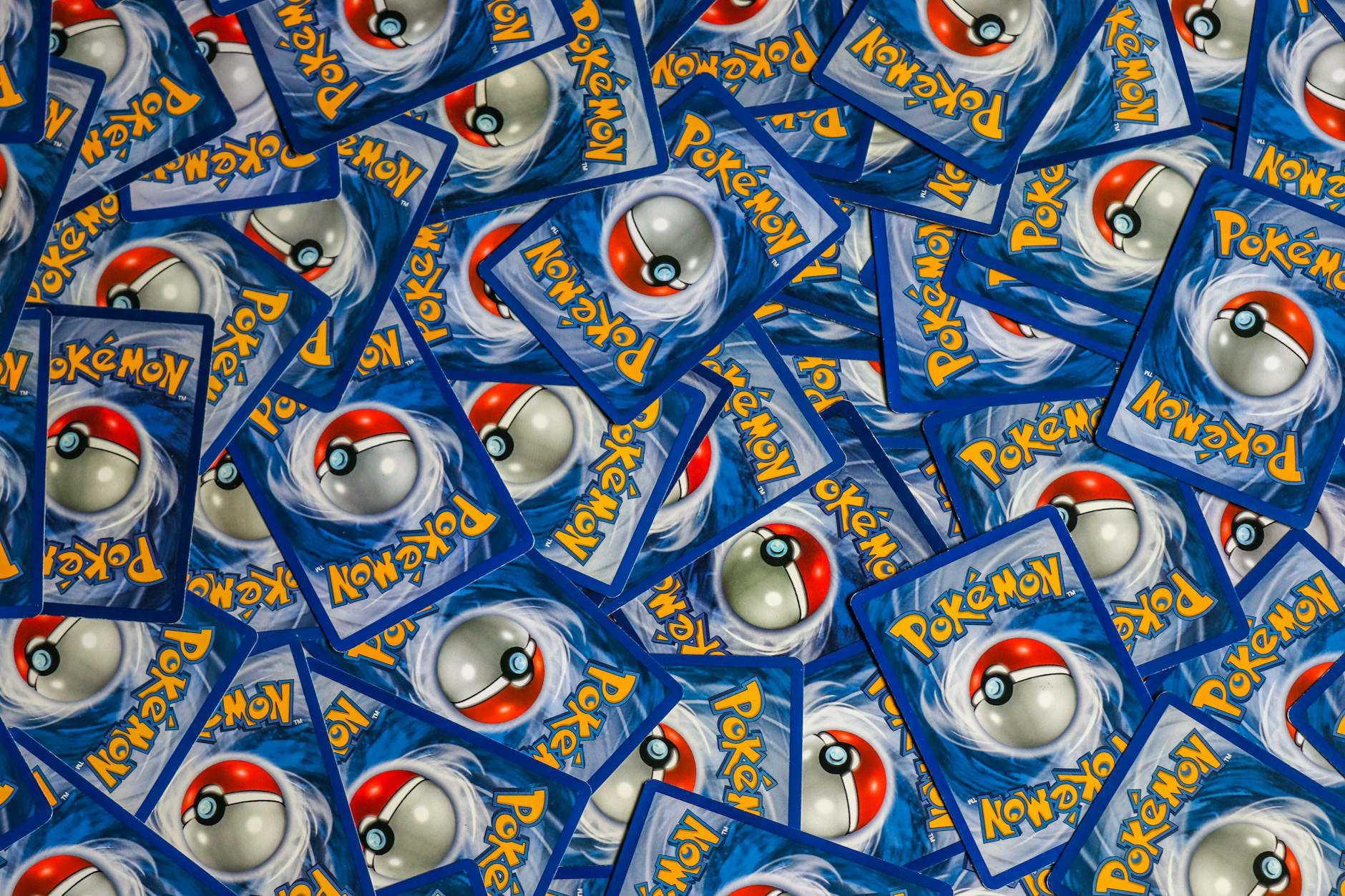
Yes, vintage Pokémon cards have genuine potential to become recognized as museum-level collectibles, though the trajectory depends on continued institutional interest and authentication standards. The evidence is already visible in recent market activity: a Pokémon Shadowless Charizard in PSA 10 condition sold for $369,000 in 2021, and museums including the Children’s Museum of Indianapolis have acquired Pokémon cards for permanent collection. These aren’t isolated anomalies but rather early indicators of a collectible category entering a new phase of legitimacy. What separates museum-level collectibles from other valuable objects is a combination of historical significance, cultural impact, scarcity, and institutional recognition.
Vintage Pokémon cards check multiple boxes: they represent a specific moment in late-1990s cultural history, feature limited first printings from specific sets and conditions, and increasingly attract the attention of curators and cultural institutions. The jump from “expensive card game memorabilia” to “culturally significant artifact worth preserving” is not automatic, but the market fundamentals suggest Pokémon cards are in the early stages of making that transition. The path forward isn’t guaranteed, however. Market maturation, authentication standardization, and preservation standards will need to continue developing for vintage Pokémon cards to achieve the institutional acceptance that fine art, rare coins, or vintage baseball cards have already established. The next five to ten years will likely determine whether this category becomes firmly rooted in museum collections or remains primarily a high-value hobby market.
Table of Contents
- What Makes Vintage Pokémon Cards Qualify as Serious Collectibles?
- The Market Maturation Challenge and Preservation Standards
- Authentication, Counterfeiting, and the Case for Institutional Trust
- Building a Museum-Quality Collection: Standards and Practical Considerations
- Price Volatility, Market Correction Risks, and Speculative Bubbles
- Specific Card Categories with Museum Potential
- Institutional Momentum and the Five-Year Outlook
- Conclusion
- Frequently Asked Questions
What Makes Vintage Pokémon Cards Qualify as Serious Collectibles?
The criteria that define museum-level collectibles are reasonably straightforward: historical significance, verifiable authenticity, scarcity in the original production, and demand that persists independent of momentary trends. Vintage Pokémon cards from the 1999-2000 era increasingly satisfy all four conditions. The initial print runs of base Set, Jungle, and Fossil were finite, no factory conditions original cards are being produced from that era, and the cultural moment they represent is permanent—no new “first edition Pokémon cards from the Nineties” will ever be made. What distinguishes the most valuable cards is a precise combination of age, condition, and original print status. A first-edition Shadowless Charizard from 1999 in pristine condition is categorically different from a 2010 reprint or an unlimited-print version of the same card.
Museums acquire objects that represent specific historical moments and technological states—just as they preserve the first Apple computers or early Polaroid photographs—and the Pokémon cards that launched the franchise internationally have that historical weight. The comparison is apt: a first-generation Pokemon card has the same cultural-artifact status as a first-edition hardcover book or an original film reel from a landmark movie. Institutional buyers are beginning to recognize this distinction. The Smithsonian’s American History Museum now includes Pokémon merchandise in its collection, and specialized card museums have emerged in Japan specifically to house rare vintage cards. This represents a fundamental shift from hobby market to cultural preservation.

The Market Maturation Challenge and Preservation Standards
The transition from collectible hobby to museum-level status requires more than just high prices. It requires establishment of universal authentication standards, temperature and humidity preservation protocols, and independent valuation benchmarks. Pokémon cards are currently navigating this transition, but significant gaps remain. Professional grading services like PSA, Beckett, and CGC have become essential gatekeepers, and without their certification, even genuinely rare first-edition cards face valuation skepticism. This standardization mirrors what happened with rare coins and vintage baseball cards decades ago—a phase where the market separates legitimate scarcity from speculation-driven inflation.
A critical limitation is that grading standards themselves continue to evolve; cards graded as PSA 9 by 2020 standards might receive different scores under 2025 criteria, creating valuation uncertainty that legitimate museums find problematic. The warning here is significant: the Pokémon card market has already shown volatility and speculative behavior. Between 2020 and 2022, prices for rare cards inflated dramatically, driven partly by celebrity endorsements and media coverage rather than organic collector demand. When the speculation cycle cooled, market prices for many cards dropped 30-50%. A genuine museum-level collectible should show stable, long-term value appreciation rather than boom-bust cycles. Pokémon cards are still proving whether they can maintain value during market corrections.
Authentication, Counterfeiting, and the Case for Institutional Trust
One factor that separates true museum collectibles from speculation is the ability to definitively authenticate items. Vintage Pokémon cards have become targets for high-quality counterfeiting, particularly first-edition Shadowless Charizards and other cards known to command premium prices. Museums require absolute certainty about provenance and authenticity, which creates both an opportunity and a risk. The authentication challenge has become more sophisticated as counterfeits improve. Some fake cards now use period-appropriate cardstock and printing techniques that require expert examination under specific lighting or magnification to detect.
This is fundamentally different from the early counterfeits from the 2000s, which were easily distinguishable. Beckett and PSA have invested heavily in developing authentication methods that can survive legal scrutiny—a necessity if these cards are to be acquired by institutional buyers who may face court challenges about authenticity from donors or insurers. A concrete example: in 2023, a major auction house discovered that a card certified as first-edition Shadowless Charizard PSA 8 was actually a high-quality counterfeit with a forged grading label. The incident highlighted that even professional grading services can be deceived, and institutions considering acquisition of expensive cards now demand additional authentication layers, including chain-of-custody documentation and sometimes independent specialist examination. This scrutiny is uncomfortable for the market but essential for legitimacy.
Building a Museum-Quality Collection: Standards and Practical Considerations
For collectors aspiring to own museum-quality vintage Pokémon cards, the requirements extend far beyond purchase price. A genuine first-edition Shadowless Charizard in PSA 10 condition might sell for $300,000-400,000, but preserving that card at that quality level requires active stewardship. Proper storage means acid-free sleeves, climate-controlled environments maintaining 68-70°F and 45-55% humidity, protection from light exposure, and regular professional condition assessment. The practical tradeoff is significant: a serious collection of 5-10 museum-quality cards might require annual preservation costs of $5,000-15,000 depending on insurance, climate control, and authentication verification.
This is comparable to what museums spend annually on conservation for similar-value artifacts. For private collectors, this cost structure fundamentally changes the economics—the question shifts from “can I afford to buy this card?” to “can I afford to properly maintain it?” Comparison with other collectible categories illustrates the point. A first-edition Pokémon card in PSA 10 condition requires similar preservation protocols to a rare first-edition book or a vintage comic book of equivalent value. The difference is that Pokémon cards face the additional vulnerability of being playable game components rather than purely display objects—collectors sometimes struggle with the psychological tension between preserving cards in sealed slabs versus enjoying them as functional game pieces, a tension that traditional fine art doesn’t create.
Price Volatility, Market Correction Risks, and Speculative Bubbles
The most significant barrier to museum-level status is demonstrable market stability over decades. Pokémon cards have experienced dramatic price swings that raise legitimate questions about whether valuations reflect intrinsic scarcity or speculative hype. Between early 2020 and early 2021, prices for first-edition Charizards increased 400-500%, a surge driven largely by media coverage and celebrity purchases rather than fundamental collector demand growth. When market enthusiasm cooled, many cards lost 40-60% of their peak value. This volatility mirrors what happened to comic books in the 1990s, when speculation drove values to unsustainable levels before a market correction.
Museums are extremely cautious about acquiring assets that show speculative characteristics because institutional credibility depends on acquiring objects of stable, recognized value. A museum that acquires a card for $300,000 and sees its value drop to $120,000 faces not only financial embarrassment but questions about acquisition judgment. The warning is straightforward: current high prices for vintage Pokémon cards may not prove sustainable. Production numbers for early sets like Base Set were substantial—estimated at hundreds of millions of cards produced—which means scarcity is relative rather than absolute when compared to, say, rare coins or first-edition books where production sometimes numbered in hundreds. As more cards are professionally graded and enter supply, the marginal card in any given condition becomes marginally less rare. The market needs to absorb decades of modest supply growth without substantial price corrections for museum institutions to feel confident about acquisition values.

Specific Card Categories with Museum Potential
Not all vintage Pokémon cards have equal potential as museum-level collectibles. The cards most likely to achieve institutional recognition are first-edition or Shadowless prints from Base Set, Jungle, and Fossil released between 1999-2001, particularly cards featuring iconic Pokémon (Charizard, Blastoise, Venusaur, Alakazam) or rare holographic errors. A first-edition Shadowless Charizard base set has obvious museum appeal: it represents the starting point of Pokémon’s global market penetration, exists in quantifiable scarcity, and carries cultural weight beyond the collecting community.
Less obvious but equally significant are error cards like the misprint Alakazam Base Set with the backwards or altered holographic pattern—these have museum potential specifically because they represent manufacturing history. Museums collect items that illustrate technological and production processes, which is why a card with a printing defect that survived quality control has documentary value beyond its market price. A single, verified example of a major misprint Alakazam in high condition might have stronger institutional acquisition value than a more common first-edition Shadowless of equivalent market price.
Institutional Momentum and the Five-Year Outlook
The trajectory toward museum recognition is accelerating. Over the past three years, institutions including university libraries, children’s museums, and specialized pop culture museums have begun acquiring vintage Pokémon cards as part of permanent collections. The Children’s Museum of Indianapolis now displays a first-edition Charizard, positioning Pokémon cards alongside other objects the institution considers culturally significant to understanding late-twentieth-century childhood. This institutional activity represents a qualitative shift from hobby collecting to cultural preservation.
The five-year outlook depends heavily on whether museums continue acquiring cards and whether the Pokémon Trading Card Game maintains cultural relevance as new generations discover the franchise. If institutional acquisitions accelerate and market volatility moderates, vintage Pokémon cards will likely achieve legitimate museum-level status within a decade. If the category remains primarily a speculative hobby market, museum interest will stall. The current evidence suggests momentum is building, but the outcome remains contingent on continued institutional investment and market maturation.
Conclusion
Vintage Pokémon cards have a realistic pathway to becoming recognized museum-level collectibles, supported by scarcity, cultural significance, institutional interest, and authentication infrastructure that didn’t exist five years ago. Cards from the 1999-2001 era, particularly first-edition or Shadowless prints in high grades, are increasingly treated by serious collectors and emerging institutions as artifacts worthy of permanent preservation rather than temporary hobby items. The transition isn’t automatic or guaranteed.
Market volatility, counterfeiting risks, and the sheer number of cards originally produced all present ongoing challenges. For collectors considering acquisition of museum-quality cards, the emphasis should be on long-term preservation capacity, professional authentication standards, and acceptance that valuations may fluctuate before settling into the stable appreciation pattern that true collectible categories eventually achieve. If you’re acquiring cards with museum-level preservation aspirations, prioritize first-edition or Shadowless condition, verified authentication through established grading services, and realistic valuation expectations that account for the market’s ongoing maturation.
Frequently Asked Questions
What makes a Pokémon card “museum-quality”?
Museum-quality typically means first-edition or Shadowless printing from 1999-2001, PSA grading of 8 or higher, representation of significant cards (Charizard, Blastoise, rare holos or errors), documented provenance, and condition consistent with careful preservation rather than play wear.
Are vintage Pokémon cards a reliable investment?
They show strong long-term appreciation for verified first-edition cards in high grades, but short-term volatility remains significant. Market prices have fluctuated 40-60% during downturns, making them unsuitable for investors requiring stable short-term returns. Treat acquisition as long-term commitment.
How should I store vintage Pokémon cards to preserve them?
Use acid-free sleeves and archival-quality storage slabs, maintain climate control at 68-70°F and 45-55% humidity, minimize light exposure, avoid temperature fluctuations, and consider professional climate-controlled storage for high-value cards.
Can counterfeit Pokémon cards deceive professional graders?
Yes, sophisticated counterfeits have fooled professional services, including producing forged grading labels. This is why institutions now demand additional authentication layers and chain-of-custody documentation beyond professional grading certification alone.
Which Pokémon card sets have the most museum potential?
Base Set (particularly 1999 first-edition), Jungle, and Fossil first-editions have primary appeal. Within these, iconic Pokémon (Charizard, Blastoise, Venusaur), rare holos, and documented error cards command highest institutional interest.
What’s the difference between first-edition and unlimited Pokémon cards?
First-edition cards were released initially and marked with a “1st Edition” stamp; unlimited printings followed without this stamp. First-edition cards of equivalent condition typically command 3-10x the price of unlimited versions and have stronger museum potential due to scarcity.
You Might Also Like
- Why Vintage Pokémon Base Set Cards Could Become the Next Big Generational Collectible
- Could 1999 Pokémon Cards Become the Defining Collectibles of the 21st Century?
- How Nostalgia Could Turn Base Set Pokémon Cards Into Long-Term Grails