The $12.6 million sale of a 1952 Topps Mickey Mantle card in August 2022 didn’t directly cause Pokemon card prices to spike. However, it sent a signal to investors and collectors worldwide that vintage cards—regardless of sport—could reach astronomical valuations if they met specific criteria: extreme rarity, pristine condition, and historical significance. When a PSA 9.5 Mantle breaks the all-time record for any sports collectible, it validates the entire vintage card market and draws capital from investors who previously ignored trading cards as serious assets. For Pokemon collectors, this matters because it demonstrates that vintage card markets operate on the same fundamentals as fine art or classic automobiles: scarcity plus condition plus demand equals unprecedented valuations.
The Mantle sale didn’t cause Pokemon prices to grow in isolation. Rather, it accelerated an existing trend where serious collectors and institutional buyers began treating rare cards as legitimate investments. The same capital flows that drove the Mantle record had already pushed high-grade Pokemon cards like PSA 10 Charizards into the $300,000+ range. The difference is timing: the Mantle sale happened when the entire collectibles market was experiencing a momentum shift. Media coverage of the $12.6 million record brought mainstream attention to card collecting, legitimizing it as an investment class rather than a hobby for enthusiasts alone.
Table of Contents
- What Made the 1952 Topps Mickey Mantle Sale Historic?
- How Record-Breaking Sales Reshape Collector Psychology and Market Expectations
- The Parallel between Vintage Baseball and Pokemon Card Markets
- What Makes a Card Worth Millions—The Criteria Applied to Pokemon
- Market Timing and the Danger of Chasing Records
- The Role of Media and Investor Interest in Collectibles Validation
- What Comes Next for Pokemon as the Market Matures
- Conclusion
What Made the 1952 Topps Mickey Mantle Sale Historic?
The card that sold for $12.6 million was graded PSA 9.5 (Mint+), making it the finest known example of the 1952 Topps Mickey Mantle rookie card ever professionally evaluated. Heritage Auctions confirmed it shattered the previous record for any sports collectible, surpassing even signed memorabilia and Hall of Fame artifacts. The Mantle card combined three irresistible factors: it was the rookie card of baseball’s most iconic player, it was the most recognizable vintage baseball card design, and its condition was so exceptional that fewer than a handful of examples at that grade level exist worldwide. To understand why this sale mattered, consider what came before.
Prior records for vintage sports cards hovered in the $7-8 million range. The Mantle’s $12.6 million price tag represented a 50% leap, signaling that premium examples of the right cards could fetch prices previously thought impossible. The card featured the famous off-center printing that makes high-grade examples rarer—most 1952 Mantles show centering issues due to manufacturing imperfections of the era. This PSA 9.5 example avoided those flaws, making it a once-in-a-generation piece.
How Record-Breaking Sales Reshape Collector Psychology and Market Expectations
When a collectible reaches a new all-time high, it rewires how collectors and investors evaluate the entire category. The Mantle sale suggested that if a 1952 card could reach $12.6 million, then high-grade Pokemon cards from the 1990s—which had less circulation and often better production quality—might deserve similar re-evaluation. Media outlets from ESPN to CNN covered the story, introducing mainstream audiences to the concept that trading cards could be serious investments. However, there’s a critical limitation: the Mantle sale didn’t cause Pokemon price increases directly.
Rather, both were driven by the same underlying force—a shift toward alternative assets and a growing recognition that vintage, rare items in perfect condition hold value. The danger here is confusing correlation with causation. Investors who bought Pokemon cards purely because of the Mantle record, without understanding the specific factors that make certain cards valuable, often overpaid and subsequently saw losses as the market normalized. The psychological effect matters more than the direct causation. After the Mantle record, collectors began asking: “If that baseball card is worth $12.6 million, what should my PSA 10 Shadowless charizard actually be worth?” This reframing led to increased auction activity, higher asking prices, and more serious capital entering the Pokemon collectibles space—but only for cards that demonstrated the same criteria as the Mantle: extreme rarity, exceptional condition, and historical significance.
The Parallel between Vintage Baseball and Pokemon Card Markets
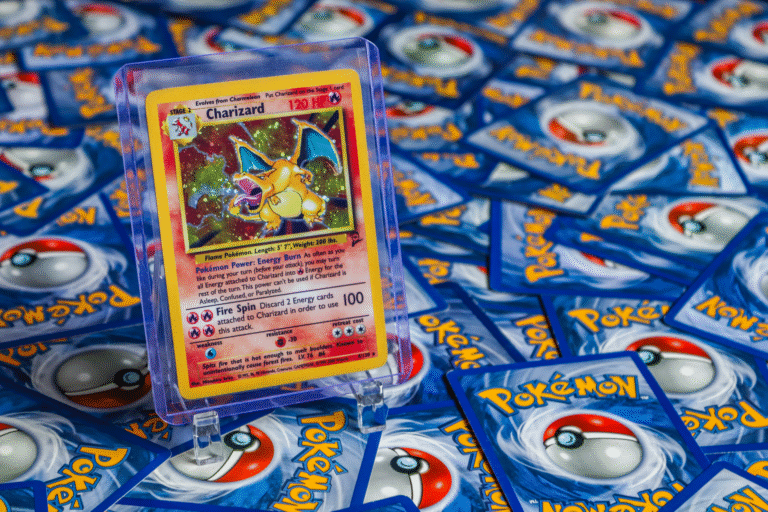
Both the 1952 Topps Mantle and vintage Pokemon cards operate on identical value drivers: condition, rarity, demand, and historical importance. A PSA 10 Shadowless Charizard from 1999 shares more with the Mantle card than either shares with common cards in lower grades. Both exist in a tiny supply—perhaps fewer than 100 examples of PSA 10 Shadowless Charizards exist, similar to the scarcity of pristine 1952 Mantles. The key difference is age and cultural weight. The Mantle card has 70 years of collectibility behind it, while Pokemon cards only have 30 years. This age gap explains why the Mantle reached $12.6 million while the highest-priced Pokemon cards maxed out around $400,000.
As Pokemon cards age and their historic significance crystallizes, comparable valuations become mathematically possible. One important caveat: the Mantle sale occurred at the peak of collectibles demand in 2022. By 2023-2024, the market corrected as speculators exited. Many cards purchased at inflated prices in 2022-2023 saw valuations decline by 30-50%. This warning applies equally to Pokemon buyers who chase records without understanding the underlying value proposition. Investment-grade cards should appreciate based on condition and rarity, not hype.
What Makes a Card Worth Millions—The Criteria Applied to Pokemon
Condition is the primary driver. The Mantle card’s PSA 9.5 grade placed it in the highest tier of preserved cards from its era. For Pokemon, the same principle applies—a PSA 10 Charizard is exponentially more valuable than a PSA 9, which is exponentially more valuable than a PSA 8. The grading scale, while imperfect, directly influences market valuations. Rarity determines the ceiling.
The 1952 Mantle existed in a print run of hundreds of thousands, yet only a handful achieved PSA 9+ grades due to age and handling. First edition Shadowless Charizards faced similar dynamics—they were printed in 1999 in large quantities, but precious few survived with perfect centering, corners, and surface quality. A PSA 10 1st Edition Shadowless Charizard isn’t just valuable because it’s rare; it’s rare because the vast majority of 25-year-old cards have experienced wear that prevents them from grading at the highest levels. The comparison between these markets reveals a tradeoff: older cards (like the Mantle) benefit from nostalgia and proven longevity as investments, while newer cards (like Pokemon) offer lower entry prices and potentially higher growth potential as they age. Collectors betting on Pokemon as long-term investments are essentially making the same bet that worked for vintage baseball cards—that historical significance and scarcity will compound in value. However, this requires patience and discipline to hold only the highest-grade examples.
Market Timing and the Danger of Chasing Records
Record-breaking sales create a psychological illusion that all high-priced cards will maintain their valuations. After the Mantle sale in August 2022, buyers flooded the market expecting Pokemon cards to follow an identical trajectory. This created a speculative bubble where asking prices disconnected from actual market demand. By late 2023, many sellers who purchased high-grade Pokemon cards at peak prices discovered they couldn’t reach their cost basis.
The core warning: record sales represent outliers, not benchmarks. When Heritage Auctions sold that PSA 9.5 Mantle, they were moving a generational piece—possibly the finest example that will ever exist. Most Pokemon cards, even high-grade ones, sell for a fraction of outlier prices. A PSA 10 Unlimited Charizard might genuinely be worth $50,000-$150,000, but expecting it to reach $400,000 because a different card once sold for that price misunderstands how collectible markets operate.
The Role of Media and Investor Interest in Collectibles Validation
The Mantle sale generated worldwide headlines because $12.6 million is a number that commands attention from financial media. Bloomberg, CNBC, and The Wall Street Journal covered the story, legitimizing card collecting to audiences who previously dismissed it as a children’s hobby. This mainstream exposure mattered significantly for Pokemon, which had struggled against perceptions of being a speculative fad.
Following the Mantle record, several high-profile Pokemon card sales received similar media treatment. A PSA 10 1st Edition Charizard selling for $250,000 might have been ignored by mainstream outlets in 2019. By 2023, such sales generated articles in investment-focused publications. This visibility attracted collectors with genuine capital, not just speculators hoping to flip cards for quick profit.
What Comes Next for Pokemon as the Market Matures
The path forward for Pokemon cards depends on whether the market continues to treat them as genuine collectibles with intrinsic value or reverts to viewing them as speculative assets. The Mantle sale demonstrated that the former is possible—the market proved capable of valuing 1952 cards based on real scarcity, condition, and historical importance. Pokemon cards can follow the same trajectory, but only if collectors maintain discipline around grading, preservation, and realistic valuations.
The next 10 years will determine whether first edition Shadowless and Unlimited Charizards reach the $1 million+ valuations that seem possible given their extreme rarity and cultural significance. However, this outcome is far from guaranteed. It requires the market to mature beyond speculation, institutional investment in grading and authentication, and continued demographic interest from collectors who appreciate these cards for reasons beyond resale value.
Conclusion
The 1952 Topps Mickey Mantle’s $12.6 million price tag didn’t cause Pokemon card prices to rise directly, but it demonstrated a powerful principle: rare, beautifully preserved cards from any era can command extraordinary valuations when the market recognizes their scarcity and significance. For Pokemon collectors, the lesson is clear—focus on condition, rarity, and historical importance rather than chasing record prices. The cards most likely to appreciate over decades are the ones that meet all three criteria: they’re graded at the highest levels (PSA 9.5+), they exist in genuinely limited quantities, and they hold cultural meaning that transcends trends.
The broader insight is that collectibles markets mature when they move away from speculation and toward fundamental value drivers. The Mantle sale accelerated this maturation for trading cards generally, creating conditions where Pokemon cards could be evaluated seriously as investments. However, investors must avoid the trap of treating outlier sales as promises of universal appreciation. The real opportunity lies in identifying the Pokemon cards that are to their era what the 1952 Mantle is to baseball—truly historic, genuinely scarce, and preserved in exceptional condition.