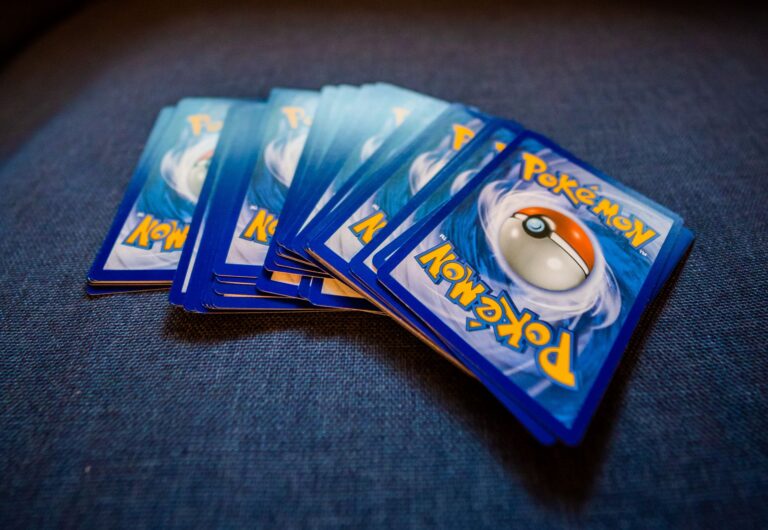
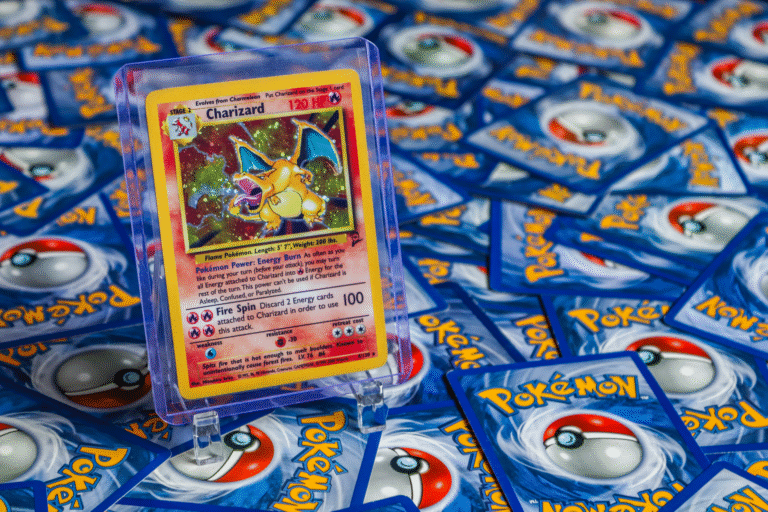
Nostalgia could turn Base Set Pokémon cards into long-term grails because the demographic that grew up with these cards—Millennials now in their peak earning years—possess both the disposable income and emotional connection to justify sustained price appreciation. Base Set cards have already appreciated 3,261% over 20 years, the largest long-term increase among all card categories, and recent market activity suggests this trajectory is far from finished. The 1st Edition Shadowless Charizard sold for $550,000 in December 2025, while a Logan Paul variant reached $954,800 in February 2026, demonstrating that nostalgia is no longer a secondary driver in valuations—it’s the primary engine fueling a $10 billion graded market.
What separates genuine grail potential from speculative hype is the durability of the nostalgia cycle. Unlike trends that spike and collapse, the Base Set nostalgia wave is reinforced by multiple factors: generational wealth transfer, institutional investor adoption of alternative assets, and the simple fact that 1st Edition cards from 1999 become scarcer and more culturally significant with every passing year. A collector buying a PSA 10 Blastoise today at $180,000 isn’t merely purchasing cardboard—they’re acquiring a cultural artifact from one of the largest entertainment franchises in history, backed by a demographic cohort that will remain relevant for decades.
Table of Contents
- Why Millennials Are Driving Base Set Card Values to New Heights
- Record-Setting Auction Prices Prove Base Set Cards Are Becoming Grail Status
- How Collector Demographics Are Reshaping Long-Term Demand
- Building a Long-Term Collection Strategy Around Nostalgia-Driven Base Set Cards
- The Risks Hidden in the Nostalgia Narrative
- Condition and Grading as Determinants of True Grail Potential
- What the Future Holds for Base Set Nostalgia as a Generational Asset
- Conclusion
Why Millennials Are Driving Base Set Card Values to New Heights
Millennials born between 1981 and 1996 entered the job market during a period of economic uncertainty but are now reaching peak earning potential, exactly when base Set nostalgia hit critical mass. These collectors were 3 to 18 years old when pokémon cards launched in the United States in 1999, making the Base Set cards genuine artifacts of their childhoods. They remember the playground economics of trading cards, the urgency of collecting all 102 cards, and the specific cards that held cultural weight—Charizard wasn’t just powerful; it was the card everyone wanted. Now, with the financial ability to acquire what they couldn’t afford as children, this generation is pursuing Base Set cards with investment-grade seriousness.
The COVID-19 pandemic accelerated this trend exponentially. Nostalgic adults with stimulus money, lockdown-imposed free time, and a desire for tangible investments outside traditional markets rediscovered cards from their late-1990s childhood. The Pokémon Company reported producing 10.2 billion cards in fiscal year 2024-2025, yet despite unprecedented current production, older Base Set cards appreciate steadily. This counterintuitive dynamic—supply abundance creating scarcity in vintage products—demonstrates that nostalgia isn’t competing against modern convenience but rather against the irreproducibility of 1999. You can open a modern Pokémon booster box today, but you will never open a genuine 1st Edition Base Set booster from 1999.

Record-Setting Auction Prices Prove Base Set Cards Are Becoming Grail Status
The auction market for Base set cards has shattered expectations repeatedly since 2023, with prices that would have been unthinkable a decade ago. A 1st Edition Shadowless Charizard graded PSA 10 sold for $550,000 at Heritage Auctions in December 2025, representing the most stable data point for high-grade Charizards in the current market. Even more dramatically, a Logan Paul variant 1st Edition Charizard reached $954,800 in February 2026, though this extreme outlier reflects celebrity provenance rather than pure card fundamentals. The 1st Edition Blastoise has demonstrated sustained six-figure valuations, selling for $180,000 in February 2024 and $135,209 in September 2023, proving that triple-digit-thousand values are becoming normalized, not anomalous.
One critical limitation must be acknowledged: these record prices apply exclusively to cards graded PSA 10 or PSA 9, representing the top 0.1% of existing inventory. A 1st Edition Venusaur in PSA 10 trades around $55,000, while an Unlimited Base Set Charizard in Near Mint condition costs approximately $2,000—a 27-fold price differential based solely on edition and grade. For collectors entering the Base Set market, this pricing stratification matters enormously. The grail-status prices are real, but they apply to cards that may be the only example at that grade in existence. Most Base Set collectors will never own a $550,000 Charizard; instead, they’ll build collections around more accessible cards while understanding that even moderately graded Base Set cards—PSA 7 or PSA 8—have appreciated significantly relative to ten-year price history.
How Collector Demographics Are Reshaping Long-Term Demand
The collector base for Base Set cards has fundamentally shifted. Where previous eras of collecting were dominated by kids seeking completionist collections, today’s market comprises Millennials blending nostalgia with deliberate investment strategy. These collectors aren’t buying Base Set cards to play with; they’re acquiring scarce, culturally significant cards expected to appreciate long-term. Gen Z and Millennials increasingly view graded Pokémon cards as alternative investments comparable to stocks and cryptocurrency, with the advantage that these assets produce emotional satisfaction alongside financial returns. The global Pokémon Trading Card Game market was valued at $21.4 billion in 2024 and is projected to reach $58.2 billion by 2034, representing a 13% compound annual growth rate that outpaces most traditional markets.
This demographic stability matters for grail positioning because it ensures sustained demand from a large, wealthy cohort with decades of earning potential ahead. A 35-year-old Millennial Pokémon collector today will likely remain active in the market at age 55, competing for the same 1st Edition cards and potentially introducing their own children to the hobby. The nostalgia cycle, unlike typical collectibles trends that peak and decline, is self-reinforcing across generational wealth transfer. However, there’s a crucial caveat: grail status requires scarcity, and scarcity is vulnerable to sudden inventory dumps. If dormant Base Set card collections enter the market in volume, prices could compress, particularly in lower grades. The grail premium exists precisely because 1st Edition Base Set cards are difficult to locate in high grades; the day the market floods with PSA 8 Charizards at $50,000 each, the psychological perception of rarity shifts.

Building a Long-Term Collection Strategy Around Nostalgia-Driven Base Set Cards
For collectors genuinely interested in grail positioning, the strategy differs fundamentally from speculative flipping. Rather than buying individual high-grade cards hoping for appreciation, successful grail collectors construct thematic or complete sets, understanding that the narrative value—”I own a first-generation Pokémon card set graded at this level”—becomes more compelling over decades than holding a single card. Acquiring a collection of PSA 8 1st Edition Base Set non-holos costs a fraction of the charizard trophy cards yet positions the collector as a keeper of Pokémon history. The practical advantage is liquidity and risk distribution; if one card’s grade becomes questioned or the market for a specific Pokémon shifts, a diversified collection absorbs the volatility.
The tradeoff between condition and accessibility is acute at the PSA 10 level. A PSA 10 Blastoise at $180,000 may never move (who has $180,000 in liquid capital for one card?), whereas a PSA 8 Blastoise at $15,000-$25,000 maintains acquisition realism while still capturing appreciation upside. Grailed status doesn’t require perfection; it requires scarcity and cultural resonance. A PSA 8 1st Edition Charizard from the original release, while lacking the prestige of a PSA 10, remains one of approximately 500-1,000 estimated surviving examples in that grade. Twenty years from now, when fewer than 200 PSA 8 copies may remain in circulation, that card will have appreciated substantially simply due to attrition and generational wealth consolidation.
The Risks Hidden in the Nostalgia Narrative
The primary risk threatening Base Set grail status is the Pokémon Company’s ongoing printing decisions. Despite producing 10.2 billion cards in fiscal year 2024-2025—down from 11.9 billion the previous year—the company continues massive production runs. If first-edition vintage cards lose their scarcity premium to modern reprints or special editions, the nostalgia narrative could weaken. Already, recent controversy around card counterfeiting and grading inconsistencies has shaken collector confidence; a major grading scandal or the discovery that a significant percentage of existing PSA 10 cards may not meet modern standards could crater valuations faster than any market correction. The Beckett News market watch has documented continued gradual appreciation in graded cards, but this data point should not be mistaken for guaranteed future performance.
Another underestimated risk is psychological: nostalgia is strongest for those who actually lived through 1999-2003, meaning the demographic driving Base Set valuations has a roughly 30-year window of peak earning potential. By 2050-2055, the last Millennials will be approaching retirement, and the psychological connection to childhood Pokémon diminishes for subsequent generations who never experienced the original craze. This doesn’t mean Base Set cards become worthless; it means the nostalgia-driven premium—the excess value beyond intrinsic scarcity—could compress significantly. Gen Z’s Pokémon nostalgia centers on different eras and games, not necessarily the original Base Set. Collectors pursuing grail status should view Base Set cards as long-term holdings (15+ years) rather than short-term appreciating assets, because the sustained value depends on demographic staying power rather than new money entering the market.
Condition and Grading as Determinants of True Grail Potential
The difference between a PSA 8 and a PSA 9 Base Set Charizard can mean $50,000 to $150,000, a price differential that makes grading accuracy not merely important but absolutely critical to grail positioning. The Pokémon Grading ecosystem is dominated by PSA, Beckett, and CGC, with PSA commanding approximately 70% of the market for vintage cards. The implication is that a PSA 10 1st Edition Charizard is more liquid and carries more narrative weight than a BGS 10 (Beckett) equivalent, even if the cards are objectively identical. This grading-driven premium has created an entire cottage industry of re-grading services and authentication specialists, but it also introduces fraud risk; counterfeit high-grade slabs exist, and distinguishing genuine PSA 10s from sophisticated fakes requires expertise most collectors lack.
For grail collectors, this reality suggests a practical constraint: buy only from auction houses with authentication guarantees and established provenance, even if it means paying 10-15% premiums over private sales. A $100,000 card with perfect historical documentation and auction house backing has grail potential. A $90,000 card purchased from a private seller with incomplete history or unknown storage conditions introduces risk that erodes long-term appreciation. The true grail is not just rare; it’s verified and irreproachable.
What the Future Holds for Base Set Nostalgia as a Generational Asset
The next decade will test whether nostalgia-driven Base Set appreciation is sustainable or a generational bubble destined to deflate. Several signals suggest ongoing strength: institutional investors, including hedge funds and high-net-worth collectors, are now treating graded Pokémon cards as alternative asset classes equivalent to fine art or vintage sports cards. The $10 billion graded Pokémon card market represents only the apex of collecting; including raw cards and mid-tier grades, the total addressable market exceeds $50 billion globally. Pokémon’s sustained cultural presence through gaming, streaming, and media keeps the franchise relevant even as individual cards age. Most importantly, 1st Edition Base Set cards cannot be reprinted at 1st Edition pricing, meaning true vintage scarcity is mathematically guaranteed to increase.
However, the wild card is technological disruption or unexpected market shifts. If NFTs or digital Pokémon collectibles experience a resurgence, they could cannibalize physical card interest among younger collectors. Alternatively, a significant economic recession could force liquidations of high-end collections, compressing prices across the board. The most probable scenario is that nostalgia-driven appreciation continues but at a more measured rate than the speculative 2020-2023 period. In this outcome, Base Set cards graded PSA 7 through PSA 9 become the true long-term holdings, appreciating steadily without the volatility that plague six-figure trophy cards. Grails aren’t measured purely by price; they’re measured by the resilience of their appeal across decades and demographic cohorts.
Conclusion
Nostalgia could turn Base Set Pokémon cards into long-term grails because the combination of demographic spending power, cultural significance, mathematical scarcity, and generational wealth transfer creates conditions unlikely to reverse within the next 20 years. A Millennial who purchased a 1st Edition Charizard for $5,000 in 2015 has watched that investment appreciate over 100 times, but the real test comes next: whether that same card appreciates another 50-100 times over the next 20 years, transforming it from merely expensive to genuinely priceless. Base Set cards are already grails to many collectors; the question is whether their status solidifies as artifacts treasured across generations or whether the nostalgia wave crests and recedes like other collectibles trends.
For collectors considering Base Set acquisition, the practical path forward involves accepting a 10-20 year investment horizon, focusing on card grades that balance accessibility with scarcity (PSA 8 and PSA 9 rather than the unattainable PSA 10), and understanding that grail status requires patience. The cards that were $100,000 in 2020 might be $500,000 in 2040, not because the cardboard improved but because the number of existing examples in high grades diminishes while the collector base expands. This is the quiet truth behind nostalgia-driven grails: their value isn’t determined by utility or innovation but by the simple fact that fewer will exist tomorrow than exist today, and the people who value them will keep growing older and wealthier.