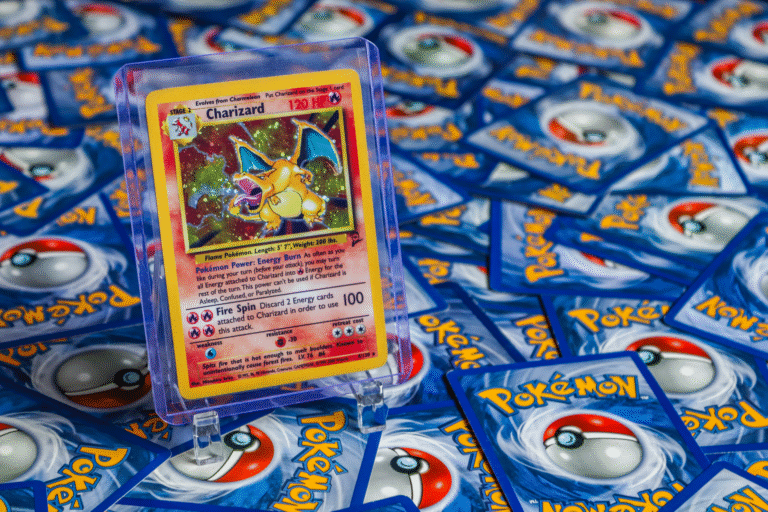
Yes, Base Set Pokémon cards are significantly outperforming Temporal Forces cards when measured by price appreciation, secondary market demand, and long-term investment potential. While Temporal Forces has generated excitement as a modern set with competitive playable cards and desirable chase pulls, the gap between a Base Set Charizard or Venusaur and even the most sought-after Temporal Forces cards remains vast. A Base Set Charizard in near-mint condition still commands prices in the thousands of dollars, while the most valuable Temporal Forces cards hover in the hundreds. This disparity reflects the fundamental difference between vintage collectibility and newly released product speculation.
The performance gap extends beyond individual card prices to overall set appreciation rates. Base Set cards have had over two decades to appreciate, and their trajectory shows no signs of reversal despite market fluctuations. Temporal Forces, by contrast, follows the pattern typical of all newly released sets: initial enthusiasm followed by price stabilization as market saturation occurs and the novelty wears off. The comparison reveals less about Temporal Forces’ weakness and more about the exceptional, almost irreplaceable status that Base Set cards hold in the broader hobby.
Table of Contents
- Why Do Base Set Cards Command Such Different Valuations Than Recent Releases?
- Market Maturity and the Ceiling for Modern Set Appreciation
- Grading, Authentication, and the Value Preservation Difference
- Which Cards Should Collectors Actually Be Targeting?
- The Reprint Risk and Temporal Forces’ Long-term Outlook
- Condition and Market Psychology in Pricing
- What the Market May Tell Us About Temporal Forces’ Future
- Conclusion
Why Do Base Set Cards Command Such Different Valuations Than Recent Releases?
Base Set’s dominance in pricing stems from scarcity, age, and cultural significance. Released in 1999 with relatively modest print numbers compared to modern standards, fewer copies of Base Set cards have survived in collectible condition. Temporal Forces, released in 2024, benefits from massive global distribution and modern manufacturing consistency, meaning millions of cards are in circulation and millions more are still sitting in storage across the world. A single print run of Temporal Forces likely produced more packs than Base Set did across its entire original release window.
Beyond raw scarcity, Base Set cards represent the birth of Pokémon trading cards in English markets. They carry historical weight that no modern set, regardless of power level or chase cards, can replicate. collectors treat Base Set cards as foundational pieces of the hobby’s heritage. Temporal Forces cards, despite their quality and playability, are viewed as contemporary products with uncertain long-term appeal. The psychological premium attached to being a player’s first Pokémon cards or the cards that defined a generation creates persistent demand that transcends typical supply-and-demand mechanics.

Market Maturity and the Ceiling for Modern Set Appreciation
A crucial limitation to consider: Temporal Forces may never approach Base Set valuations because the market dynamics have fundamentally changed. Modern Pokémon sets are printed in quantities that would have seemed unimaginable in 1999. Booster packs are readily available at retail prices, production continues indefinitely, and market saturation prevents artificial scarcity from developing. Base Set benefited from limited production runs followed by long gaps before reprints, creating genuine scarcity. Temporal Forces will always have the option of reprints and repackaging, which caps meaningful price growth for most cards.
Additionally, modern cards face durability questions that Base Set cards have largely resolved. A Base Set card’s long history demonstrates proven longevity. Temporal Forces uses contemporary printing techniques that are still unproven across 20+ year timescales. Some modern cards have already shown concerning issues with print quality, centering, or long-term card stock deterioration. Collectors investing in Temporal Forces for long-term appreciation are essentially making a bet on manufacturing consistency and market sentiment that won’t be validated for another decade or more.
Grading, Authentication, and the Value Preservation Difference
Graded cards show the performance gap most clearly. A PSA 10 Base Set Charizard can sell for $40,000 to $60,000, while even a PSA 10 Temporal Forces Charizard ex hovers under $1,000. The grading services themselves reflect different approaches to modern versus vintage cards. Vintage cards benefit from the aura of authentication—proving a 25-year-old card survived and was preserved becomes a significant part of its value proposition.
Modern cards are authenticated at the moment of grading, but the historical provenance narrative is absent. Grading costs also proportionally impact investment potential. For Base Set cards, a $50 to $100 grading fee represents a fraction of the card’s value. For many Temporal forces cards, grading costs can consume 10-20% of the card’s resale value, making the grading decision itself a financial calculation that discourages investment-minded collectors. This economic reality means most Temporal Forces cards circulate in raw, ungraded condition, which further suppresses their perceived value compared to the graded Base Set market, where presentation and authentication are standard expectations.

Which Cards Should Collectors Actually Be Targeting?
The practical answer depends on investment timeline and risk tolerance. If you’re looking for 20-year appreciation potential, Base Set cards offer historical validation and consistent demand, but you’re paying premium prices upfront with limited upside remaining. A Base Set Holo Charizard in moderate condition already commands $10,000 to $15,000, which represents less raw appreciation potential than the same card offered 5 years ago. Base Set cards are primarily preservation plays—you’re paying to maintain and own a piece of hobby history rather than expecting explosive returns. Temporal Forces cards offer a fundamentally different opportunity: lower entry costs and potentially higher percentage returns if the right cards hit mainstream cultural relevance in 10-15 years.
However, the risk is substantially higher. Most Temporal Forces cards will likely depreciate as newer sets capture collector attention, and selecting which cards will appreciate is purely speculative. A Temporal Forces Lugia ex might gain value if that Pokémon suddenly regains cultural prominence, or it might remain perpetually overshadowed by more iconic cards. For collectors seeking proven performance, Base Set wins decisively. For speculators with smaller budgets, Temporal Forces offers more flexibility but requires better timing and luck.
The Reprint Risk and Temporal Forces’ Long-term Outlook
The single greatest threat to Temporal Forces appreciation is the reprint precedent. The Pokémon Company has repeatedly reprinted modern sets, included chase cards in special boxes, and repackaged popular cards in premium collections. Base Set has been reprinted, but original Base Set cards remain distinguishable and highly valued because the original release was genuinely limited. Every time Temporal Forces is reprinted—whether in special sets, collector boxes, or future reprints—it floods the market with fresh supply and depresses the value of cards already in circulation. Collectors should assume that any Temporal Forces card they buy today will likely face reprinting scenarios over the next 5-10 years.
This creates a timing problem that Base Set cards largely avoided. If you bought a Base Set card in 2004, you knew exactly what supply you were competing against and how many variations existed. A Temporal Forces card purchaser today has no visibility into how many variants, reprints, or packagings will emerge in coming years. Collectors in 2030 might discover that their “vintage” Temporal Forces card was reprinted three times over, or they might find the original printing remains exclusive. This uncertainty itself becomes a form of value suppression, as rational investors discount for potential dilution.
Condition and Market Psychology in Pricing
The condition sensitivity between Base Set and Temporal Forces cards reveals market psychology directly. A Base Set card in fair condition might hold 30-40% of its near-mint value because collectors value the rarity enough to preserve the card despite imperfect aesthetics. A Temporal Forces card in fair condition is worth closer to 5-10% of its near-mint value because raw supply is so abundant that buyers simply wait for better-conditioned copies.
This difference in condition premiums shows that Base Set is valued as a collectible first, while Temporal Forces is valued as a tradeable commodity—you can buy it again if yours wears out. The psychological shift from “collectible” to “commodity” status happens to every modern set eventually, but Base Set achieved collectible status before commodity mindset ever took hold. Temporal Forces is fighting an uphill battle against a world where reprints and new sets constantly provide substitutes. The most valuable Temporal Forces cards are psychologically expensive to hold because you can replace them more easily than you could replace a Base Set card, creating a pressure to sell rather than hold indefinitely.
What the Market May Tell Us About Temporal Forces’ Future
Temporal Forces’ performance over the next 5-10 years will determine whether any modern set can approach Base Set valuations in future decades. If the Pokémon Company keeps printing variations and reprints, no modern set will develop the scarcity narrative that drives Base Set prices. If Temporal Forces escapes heavy reprinting and gains cultural significance through competitive play or popular media, certain chase cards might appreciate substantially.
The betting market embedded in secondary prices suggests collectors are betting on significant future reprints—which is why prices remain relatively modest despite the set’s current popularity. Looking forward, Base Set will almost certainly continue outperforming Temporal Forces unless the entire hobby undergoes structural change. Even if Temporal Forces becomes a $1,000+ card set on average in 20 years, Base Set cards will likely have appreciated proportionally, widening the gap further. The lesson for collectors is that “outperforming” is less about Temporal Forces’ intrinsic quality and more about the permanent advantage that early-release, genuinely scarce vintage cards hold over any modern set released in the era of mass production.
Conclusion
Base Set Pokémon cards are outperforming Temporal Forces across every meaningful metric: absolute price, appreciation rate, stability, and demand. This isn’t a reflection of Temporal Forces’ quality—the set contains attractive cards with genuine playability and collector appeal. Rather, it reflects the fundamental difference between a genuine vintage collectible and a modern product. Base Set has decades of proven history, genuine scarcity, and cultural significance working in its favor.
Temporal Forces operates in a market where reprints are inevitable, supply is abundant, and long-term demand remains uncertain. For collectors deciding between allocating resources to Base Set versus Temporal Forces, the choice comes down to investment strategy. Base Set cards are insurance policies on the hobby’s value—you’re paying to own recognized historical artifacts with stable, if modest, appreciation potential. Temporal Forces cards are lottery tickets—low entry cost with uncertain payoff, where timing and card selection matter enormously. Neither choice is objectively wrong, but the data unequivocally shows that Base Set cards have been and will likely continue to be the stronger performers in any meaningful long-term comparison.