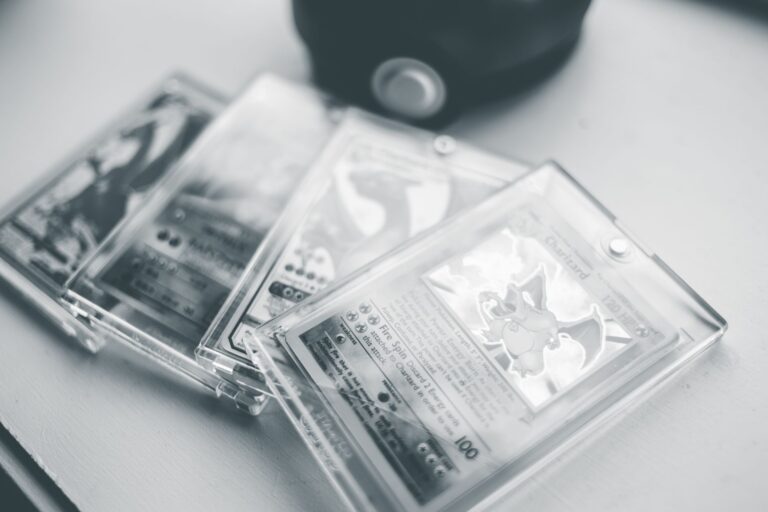
Demand for PSA 9 Base Set holographic cards remains quite strong after the 25th anniversary, though it has shifted from the frenzied speculation of 2020-2021 toward a more stable collector-driven market. The 25th anniversary celebrations in late 2021 and early 2022 created renewed interest in original Base Set cards, but by mid-2024 and beyond, the market has matured considerably. PSA 9s occupy a sweet spot in the grading spectrum—high enough to command serious premiums over lower grades, but low enough to remain accessible to collectors who want display pieces rather than investment-grade trophy cards.
A PSA 9 Base Set Charizard, for example, can still command $5,000 to $8,000 depending on the specific sale, indicating that demand persists even as volatility has decreased. The trajectory of this market segment tells an important story about Pokemon card collecting: the 25th anniversary temporarily boosted prices across the board, but PSA 9s have proven more resilient than lower grades because they represent a real step up in eye appeal and condition. Unlike PSA 8s, which can show visible wear under casual inspection, a PSA 9 presents nearly pristine centering and sharp corners that serious collectors actively seek. The sustainability of this demand, however, depends heavily on which card you’re discussing—iconic first editions and shadowless Charizards remain perpetually sought after, while less desirable commons in PSA 9 have seen their premiums flatten considerably.
Table of Contents
- What Happened to PSA 9 Base Set Holo Demand During and After the 25th Anniversary Boom?
- The Gap Between PSA 9 and PSA 10: Why This Grade Still Matters
- Condition Variance and What PSA 9 Actually Looks Like in Person
- Comparing PSA 9 to Other Grading Services and Raw Card Markets
- Market Manipulation, Inflated Prices, and the Risks of Overpaying
- Regional Demand and International Market Shifts
- Long-Term Outlook for PSA 9 Base Set Demand Through 2026 and Beyond
- Conclusion
- Frequently Asked Questions
What Happened to PSA 9 Base Set Holo Demand During and After the 25th Anniversary Boom?
The 25th anniversary period (October 2021 through mid-2022) created artificial scarcity psychology around original Base Set cards, as new players and nostalgia-driven collectors rushed into the market. psa 9 cards benefited enormously from this wave because they offered a perceived hedge between affordability and condition—cheaper than PSA 10s but far more impressive than PSA 7s or 8s. Prices across the entire PSA 9 Base Set spectrum roughly doubled or tripled during this window, with some of the rarer first editions seeing even more aggressive appreciation. However, what happened next is crucial: as the anniversary excitement faded and new market realities emerged (including high PSA submission volumes and longer grading turnarounds), speculative demand evaporated, and prices corrected downward.
Today, PSA 9 Base Set holos command a market price that reflects genuine collector demand rather than speculation. A PSA 9 Blastoise from Base Set typically sits in the $800–$1,500 range depending on whether it’s shadowless or unlimited and whether it’s a first edition, while a PSA 9 Venusaur hovers similarly. These prices are down from the peak highs of 2021-2022, but they represent a floor where actual collectors are willing to buy for personal collections or as long-term holds. The key difference is that buyers today are far more selective—they’re not buying every PSA 9 they see, only the cards they genuinely want or believe have staying power.
The Gap Between PSA 9 and PSA 10: Why This Grade Still Matters
The jump from PSA 9 to PSA 10 represents an enormous leap in both price and scarcity, which is why PSA 9s remain an important compromise for collectors. A PSA 10 Base set Charizard can easily fetch $15,000 to $25,000 or more at auction, while a PSA 9 version of the same card might go for $5,000–$8,000. That pricing gap exists because PSA 10s are exceedingly rare—only a tiny percentage of Base Set cards were produced in sufficient condition to achieve a perfect grade nearly three decades later. For collectors with limited budgets, PSA 9 represents the highest realistic ceiling; for investors, PSA 9 offers a more liquid alternative to PSA 10s, which can take months to sell if they ever sell at all.
A critical limitation of relying solely on PSA 9 as a store of value is the risk of grade inflation and market saturation. As more cards have been submitted for grading over the past five years, the pool of available PSA 9s has expanded dramatically. Cards that might have been graded as PSA 8s in earlier years now routinely achieve PSA 9 under current standards, which can suppress premiums. Additionally, raw (ungraded) PSA 9 equivalents are often available at significant discounts, meaning a buyer willing to accept the lack of official authentication can sometimes find better deals by purchasing high-quality raw cards and enjoying them immediately rather than waiting for a graded copy to become available.
Condition Variance and What PSA 9 Actually Looks Like in Person
Understanding what a PSA 9 actually represents—as opposed to what sellers claim it represents—is essential for anyone buying in this segment. A PSA 9 card should show minimal wear, with sharp corners, excellent centering (typically within 55/45 or better), and near-perfect surface quality visible to the naked eye. In practice, however, some PSA 9 Base Set cards show more visible centering issues or slight edge wear than others, because PSA’s grading standards have evolved over decades and cards submitted during different periods were held to subtly different criteria. A PSA 9 from 2005 might have looser centering than a PSA 9 from 2015, even though both received the same numerical grade.
This variance creates both opportunity and risk. Collectors who understand the nuances of individual PSA 9 grades—who can look at a specific card and assess whether it’s a “strong 9” or a “weak 9″—can negotiate better prices. A PSA 9 Blastoise with slightly loose centering might trade at a 10–15% discount to an identical card with tighter centering, even though both carry the same label. The flipside is that buyers who assume all PSA 9s are visually identical often overpay for lower-end examples or underpay for exceptional ones. Demand for PSA 9s is, in many ways, demand for the specific card and its visual appeal, not just the numerical grade itself.
Comparing PSA 9 to Other Grading Services and Raw Card Markets
PSA 9 cards command a significant premium partly because PSA itself remains the industry standard for vintage card grading and authentication. However, the rise of BGS/Subgrades and recently sanctioned alternatives has fractured the market somewhat. A BGS 9 (formerly known as BGS/Beckett Grading Services) of the same Base Set Blastoise might trade 20–30% lower than a PSA 9, not because the card quality is different, but because collectors perceive PSA as the primary investment-grade authority for vintage Pokemon cards. This collector psychology is real and affects daily market dynamics.
For practical buyers, this creates a tradeoff worth considering: if you want the card to display and enjoy immediately, a high-quality raw (ungraded) PSA 9 equivalent might deliver better value than paying premium prices for the label. A raw Charizard that objectively looks identical to a PSA 9 might sell for 40–50% less simply because it lacks official grading, yet it will look identical on your shelf. Conversely, if you’re planning to sell the card in the future, a PSA 9 label provides authentication and pedigree that makes resale easier and potentially more profitable. The choice between graded and raw ultimately depends on your intended holding period and whether you value the insurance of official certification against the cost of obtaining it.
Market Manipulation, Inflated Prices, and the Risks of Overpaying
One overlooked aspect of PSA 9 demand is the reality that online sales platforms and auction sites can skew perception of actual market value. A single PSA 9 Base Set card might sell for an extraordinarily high price at a public auction—often inflated by collector bidding wars or wealthy buyers competing for bragging rights—only to sit unsold for months at lower price points on secondary markets. Newer collectors sometimes anchor their valuations to these high-profile sales, leading them to assume that all PSA 9s command similarly astronomical premiums. The reality is far more nuanced: most PSA 9 Base Set holos trade in the mid-range of their historical price band, with outlier sales on both high and low ends.
A warning: be skeptical of any seller claiming a card is an “investment” or asserting that demand for PSA 9s is stronger today than it was in 2021. Demand is actually more selective and educated than it was during the height of the boom, which means speculative upside is limited. If you’re buying a PSA 9 Base Set holo, you should buy it because you genuinely want it for your collection or believe it has fundamental long-term appeal to the broader collecting community—not because you expect it to double in value in the next two years. Cards that fit those criteria (charismatic holos, first editions, iconic imagery) will likely maintain or appreciate modestly; everything else carries real downside risk.
Regional Demand and International Market Shifts
Demand for PSA 9 Base Set holos varies significantly by geography and which specific cards you examine. In North America, PSA 9 Charizards, Blastoise, and Venusaur remain perennially sought after, but less iconic cards like Zapdos or Raichu have seen demand softness. In Japan and Southeast Asia, the dynamics differ—Japanese collectors often prefer Japanese edition cards or PSA 9 Japanese holos over English Base Sets, which means English language PSA 9s sometimes face more sluggish demand in those regions. The European market, meanwhile, has increasingly active collectors, but shipping costs and tariffs have created friction that can suppress prices.
For collectors specifically seeking PSA 9 English Base Set holos, understanding regional demand hotspots can provide pricing advantages. A PSA 9 Base Set holo that’s slow to sell in Asia might find a buyer quickly on American platforms, and vice versa. Some savvy collectors and dealers exploit these regional price disparities, buying in softer markets and reselling into stronger ones. This arbitrage opportunity suggests that global demand for PSA 9s remains robust overall—it’s just unevenly distributed, which creates inefficiencies that informed buyers can leverage.
Long-Term Outlook for PSA 9 Base Set Demand Through 2026 and Beyond
Looking forward, several forces will shape PSA 9 Base Set holo demand over the next several years. First, as the original Base Set approaches its 30th anniversary in January 2026, there may be another modest wave of nostalgia-driven collector interest—though nothing comparable to the 25th anniversary spike. Second, the broader Pokemon TCG market has matured considerably, with newer sets and modern era cards offering alternative collecting targets; this maturity may actually stabilize PSA 9 Base Set prices by reducing speculative volatility.
Third, the supply of PSA 9 Base Set cards will likely remain relatively stable unless PSA experiences significant processing bottlenecks, which would artificially constrain supply and support prices. The most plausible scenario is that PSA 9 Base Set holos settle into a sustainable, collector-driven market where prices remain in the ranges we see today (often 30–50% below the 2021-2022 peaks). This represents a healthier, less bubble-like market compared to what we’ve experienced, and it’s more likely to reward long-term collectors than short-term speculators. Expect continued strong demand for iconic cards (Charizards, first editions) and softer demand for niche or less desirable holos, with pricing reflecting actual collector preference rather than investment momentum.
Conclusion
Demand for PSA 9 Base Set holographic cards remains strong in absolute terms, but it has fundamentally shifted from speculative fervor to genuine collector interest. The 25th anniversary temporarily inflated prices across the segment, but the market has now normalized to reflect realistic value—which for many cards still commands impressive premiums over lower grades. PSA 9s remain attractive because they offer a meaningful step up in eye appeal and condition from PSA 8s without the prohibitive cost or scarcity of PSA 10s.
If you’re considering purchasing PSA 9 Base Set holos, focus on cards that have intrinsic appeal and collecting longevity rather than those purchased purely as investment vehicles. Understand that pricing varies by specific card, regional market, and current supply dynamics. The market for these cards will likely continue to mature, with stronger fundamentals supporting long-term demand for the most iconic pieces while encouraging more selective (and realistic) pricing across the broader segment.
Frequently Asked Questions
Is a PSA 9 Base Set Charizard a good investment in 2026?
If you genuinely want the card for your collection, yes—PSA 9 Charizards maintain strong demand and are likely to hold or appreciate modestly. If you’re expecting rapid appreciation, no—those days ended in 2022, and the card is more likely to trade sideways or see modest gains over 5–10 years.
Why are PSA 9s so much cheaper than PSA 10s?
PSA 10s are extraordinarily rare in vintage Base Set cards produced nearly 30 years ago. The jump in condition requirements between 9 and 10 is substantial, and there are far fewer cards that can achieve that standard, making PSA 10s effectively a different product category with limited supply.
Should I buy a raw card instead of a PSA 9?
If you’re collecting for display and won’t resell, a high-quality raw card offers better value. If you plan to sell or want the security of official authentication, a PSA 9 is worth the premium—usually 30–50% more than a raw equivalent.
Which PSA 9 Base Set cards have the strongest demand right now?
Charizard, Blastoise, and Venusaur (especially first editions) remain perpetually strong. Shadowless versions of these three command particular premiums. Less iconic holos like Zapdos or Electrode see softer demand and lower prices.
Will PSA 9 Base Set prices increase after the 30th anniversary in 2026?
Possibly a modest uptick from renewed interest, but nothing comparable to 2021-2022. The market is now more mature and less vulnerable to speculative bubbles, which means demand spikes are typically smaller and shorter-lived.
How do I know if a PSA 9 card is overpriced?
Research recent sales of the same card on multiple platforms (eBay, Heritage Auctions, etc.) over the last 30–60 days. Be skeptical of outlier sales that seem unusually high; focus on median prices. If a seller is asking 20–30% above the most recent comparable sales, walk away.