
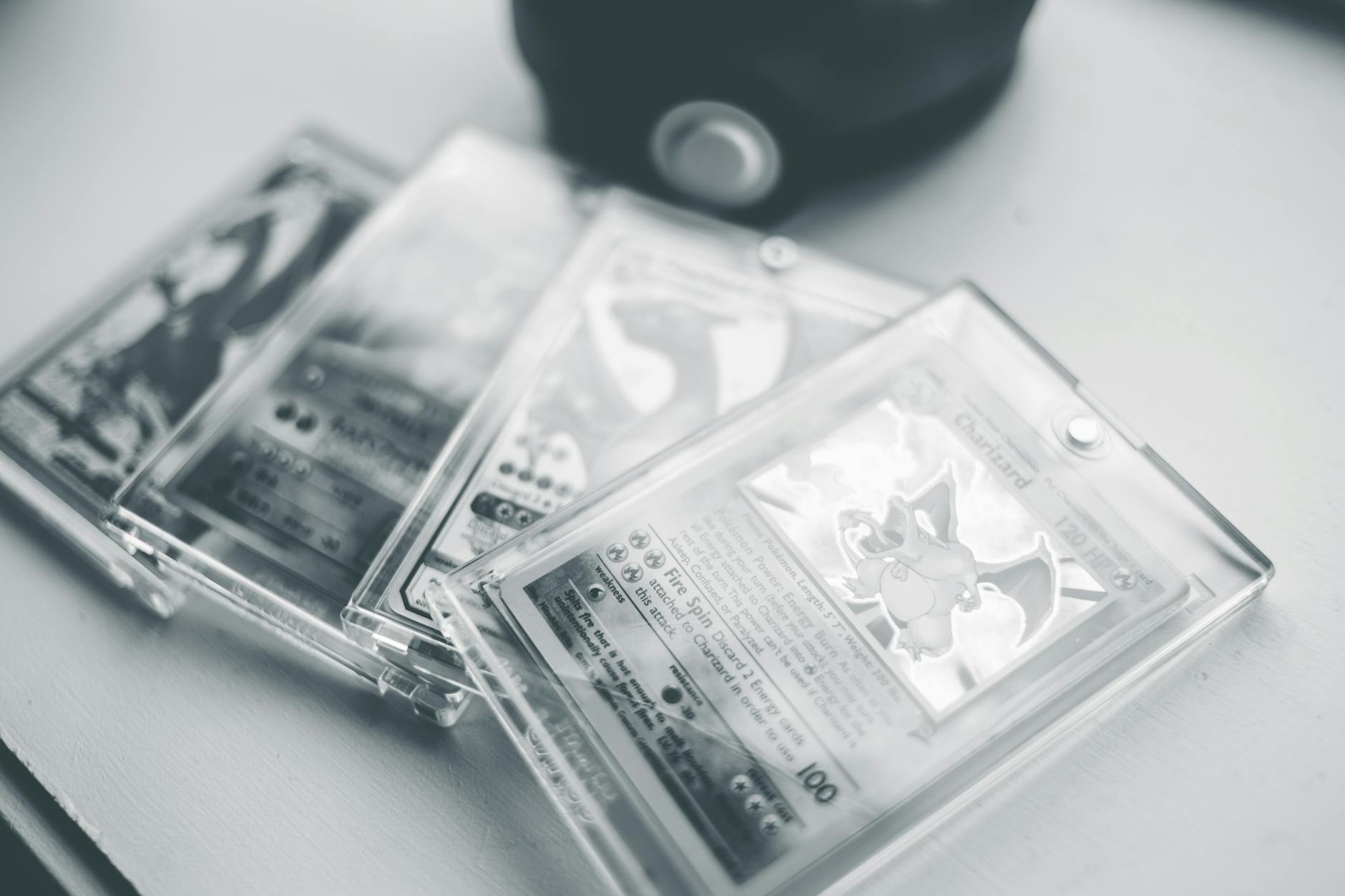
Demand for PSA 8 Base Set holographic cards remains surprisingly resilient, though it has fundamentally shifted since the 2020 collectibles boom peaked. Where PSA 8s were once viewed as affordable entry points to vintage cardboard—a way to own a classic card without paying for gem mint examples—they now occupy an uncomfortable middle ground between serious collectors seeking investment-grade cards and budget buyers who prefer raw or lower-graded copies. A PSA 8 Charizard that sold for $3,500 in 2021 might fetch $2,200 to $2,600 today, reflecting a market correction rather than a collapse.
The reality is that demand exists, but it’s more selective and price-sensitive than it was during the pandemic-fueled frenzy. The core demand for PSA 8 Base Set holos comes from three distinct buyer groups: completionists building sets who can’t afford PSA 9s or 10s, international collectors in countries where import duties make higher-priced cards prohibitively expensive, and risk-averse investors who want graded vintage but need some margin of safety. These buyers still exist and still purchase regularly, but their willingness to overpay for the grade has evaporated. Market data from the past 18 months shows PSA 8 Base Set holos trade relatively consistently at 45-55% of comparable PSA 9 prices, whereas during the 2020-2021 peak, that ratio sometimes compressed to 55-65%, indicating prices were inflated beyond the traditional grade differential.
Table of Contents
- What Happened to PSA 8 Base Set Holos After the 2020 Boom Ended?
- The Current Reality of PSA 8 Demand in a Post-Boom Market
- How Grade and Card Identity Interact in Today’s Market
- Buying and Selling PSA 8 Base Set Holos in Today’s Market
- Authentication, Grading Disputes, and Market Skepticism
- Regional Variations in PSA 8 Demand
- Future Outlook for PSA 8 Base Set Holographic Cards
- Conclusion
- Frequently Asked Questions
What Happened to PSA 8 Base Set Holos After the 2020 Boom Ended?
The 2020-2021 collectibles surge was driven by stimulus checks, closed entertainment venues, and mainstream media coverage of card valuations. During that period, psa 8 Base Set holos experienced explosive growth that far outpaced the actual demand for those cards. A PSA 8 Venusaur that had held steady at $600-$800 for years suddenly jumped to $1,200-$1,400. New buyers flooded the market without deep knowledge of grading or long-term value, treating cards like stocks rather than collectibles. This drove up prices across all grades, but PSA 8 was especially inflated because it represented the highest “affordable” tier for many casual newcomers. When the boom deflated in 2022, PSA 8 Base Set holos experienced the sharpest correction among all grades. PSA 10s and PSA 9s held value better because their scarcity created a natural floor—serious collectors still wanted them regardless of economic conditions.
PSA 8s, however, faced a double problem: the speculators who’d bought them exited the market simultaneously, and many original collectors realized their budget had improved enough to chase PSA 9s instead. Prices fell 35-50% from peak in many cases, and inventory flooded the secondary market as holders liquidated positions. The lesson here is critical: PSA 8 demand is volatile during market cycles because it attracts newer, less committed buyers who flee during downturns. Today, the market has stabilized. PSA 8 Base Set holos still sell, but volumes are lower and buyer expectations are realistic. Dealers report that PSA 8s take longer to move compared to pre-2020, forcing vendors to price competitively. This is the new normal—a grade that exists for a legitimate purpose but no longer commands speculative premiums.
The Current Reality of PSA 8 Demand in a Post-Boom Market
Current demand for PSA 8 Base set holos is steady but not strong. This matters because “steady” is very different from the sustained upward trajectory collectors experienced from 2019-2021. Sellers of PSA 8 cards face a bottleneck: serious collectors are willing to pay for PSA 9s and above if they save for three to six months, meaning PSA 8 is too expensive for impulse buyers but not desirable enough to justify premium pricing for committed collectors. The price advantage over PSA 9 isn’t compelling anymore—the difference might be 40-50%, whereas a PSA 7 to PSA 8 jump costs 30-40%, creating an awkward valuation problem for PSA 8 inventory. Market depth is another limitation. During the boom, any PSA 8 Base Set holo would sell within days.
Now, the same card might sit for 2-4 weeks before finding a buyer, even if priced fairly. This matters significantly for sellers who need liquidity, as holding costs (storage, insurance, platform fees) accumulate while waiting for an offer. Dealers and flippers who built inventory during 2021 have largely liquidated their PSA 8 holdings at modest losses; what remains on the market tends to be inventory held by collectors who are patient or simply haven’t decided to sell yet. The one caveat: PSA 8 holos of specific iconic cards—particularly Charizard, Blastoise, Venusaur, and Dragonite from Base Set—still attract multiple bidders. These four cards retain stronger demand because nostalgia and brand recognition transcend market cycles. A PSA 8 Charizard will sell faster than a PSA 8 Electrode, and price premiums for these four cards remain closer to 2021 levels than mid-tier holos do. Buyer psychology still values these cards, but even here, prices are 30-40% below their 2021 peaks.
How Grade and Card Identity Interact in Today’s Market
The relationship between a card’s identity and its grade matters far more now than it did during the boom. A PSA 8 Charizard, Blastoise, or Venusaur still commands strong demand because the card itself is iconic—people want to own it regardless of grade. A PSA 8 Magneton or Alakazam, by contrast, has minimal demand regardless of grade; the same buyer interested in Magneton at PSA 7 price probably won’t upgrade to PSA 8 because the card isn’t a priority. During the boom, price inflation was relatively uniform across the grade, suggesting demand was driven by “PSA 8” as a certification tier rather than by the specific cards themselves. This creates a practical consideration for anyone evaluating PSA 8 inventory: common Base Set holos (Kingler, Machamp, Golem, Lapras, Cloyster) suffer from depressed demand more than iconic holos do.
A seller with a portfolio of PSA 8 Base Set holos faces a bifurcated market: the flagship cards move with patience and fetch reasonable prices, while the secondary and tertiary holos move slowly at discounted valuations. The price gaps between grade PSA 8 and PSA 7 versions of less-iconic cards have compressed significantly—sometimes to 15-25%, which is below historical norms of 30-40%. This dynamic rewards specialist knowledge. Collectors who concentrate their PSA 8 holdings in the four canonical Base Set holos position themselves better than those holding broad inventories. Dealers report that buyers will pay relatively premium prices for specific PSA 8 cards but aggressively negotiate or walk away from PSA 8 lots containing filler inventory.
Buying and Selling PSA 8 Base Set Holos in Today’s Market
For buyers, PSA 8 Base Set holos offer reasonable value if you’re targeting specific cards and willing to wait for pricing to dip further. The advantage of PSA 8 is certification—you know the card has been authenticated and graded by a reputable service, eliminating counterfeiting risk. The disadvantage is that you’re paying a 40-50% premium over raw cards for that peace of mind, and you’re also betting that demand will stabilize or improve. A comparison: you could buy a raw Charizard for $1,200, accept the authentication risk, and potentially upgrade if it grades PSA 8; or you could pay $2,000 for an already-graded PSA 8 and have certainty today. The raw card strategy made more sense during the boom when PSA 8 premiums were inflated; today, the premium is more defensible but still presents a tradeoff.
For sellers, the calculus is straightforward but not pleasant: if you’re sitting on PSA 8 inventory, you’re experiencing opportunity cost daily. Holding for a price recovery is possible but unlikely—most market analysts project flat to slightly negative price pressure on PSA 8 Base Set holos for the next 12-18 months. The liquidity problem is real; a PSA 8 Base Set holo is not as liquid as cash or even lower-graded examples. Dealers currently recommend that holders of non-iconic PSA 8 holos consider liquidating at market prices rather than speculating on recovery. The iconic four cards (Charizard, Blastoise, Venusaur, Dragonite) present a different case—these retain enough demand to justify patient selling, but even here, slow-moving inventory means you’re tying up capital for months.
Authentication, Grading Disputes, and Market Skepticism
A complicating factor in current PSA 8 demand is that some collectors have grown skeptical of PSA’s grading consistency. Grading companies face inherent subjectivity, and the 2021-2022 period saw controversy around PSA’s standards—particularly whether some cards graded PSA 8 in 2019 would have received PSA 7 if submitted in 2022. This skepticism depresses demand for PSA 8 cards, especially those graded in the 2019-2020 period, because buyers worry they’re overpaying for a card that might be borderline. A PSA 8 Charizard graded in March 2020 carries implicit doubt about its true grade; one graded in 2024 carries more confidence.
This is an invisible but significant drag on demand for older slabs, particularly of non-flagship holos where the collector isn’t buying on nostalgia alone. The warning here is practical: if you’re considering buying PSA 8 Base Set holos, pay attention to grading dates. Slabs from 2019-2021 are priced lower partly because of legitimate market cooling, but also because of perceived grade drift. This presents an opportunity for buyers who understand grading standards, as undercutting on a legitimately graded 2020 PSA 8 might offer better value than overpaying for a 2024 PSA 8. Conversely, sellers of older slabs should acknowledge that buyers will factor in the skepticism—pricing should account for the grading-date discount.
Regional Variations in PSA 8 Demand
Demand for PSA 8 Base Set holos varies significantly by geography. In the United States, where PSA 10s and 9s are attainable for committed collectors, PSA 8 demand is weakest. In international markets, particularly in Europe, Asia, and Latin America, PSA 8 fills a different niche—these are the highest grades many collectors can afford because international shipping and import duties inflate the final price of higher-graded cards by 20-30%. A PSA 8 Charizard costing $2,200 in the US might be relatively price-accessible to European collectors, but a PSA 9 costing $3,500 becomes prohibitive once you factor in €400+ shipping and import taxes.
This geographic variation means that PSA 8 Base Set holos maintain stronger relative demand outside North America, even though absolute sales volumes are lower. For sellers, this suggests the global market is worth accessing. A PSA 8 Base Set holo that takes six weeks to sell domestically might sell within two weeks if listed on international platforms. The tradeoff is dealing with currency fluctuations, international payment methods, and shipping logistics, but the demand curve is genuinely different outside North America.
Future Outlook for PSA 8 Base Set Holographic Cards
Looking forward, PSA 8 Base Set holos will likely remain stagnant rather than recover significantly. The structural conditions that supported 2020-2021 prices (stimulus money, mainstream media interest, supply shocks) are not returning. However, the cards will not crater either because there is legitimate demand from international buyers and patient collectors who recognize these are 25-year-old cards in excellent condition. The market will probably stabilize around current prices, with modest annual movements driven by psychological factors (nostalgia cycles, media coverage of Pokemon) rather than fundamental value creation.
The most likely scenario is that iconic Base Set holos (Charizard, Blastoise, Venusaur, Dragonite) at PSA 8 gradually become collector standards—cards that serious vintage collectors own and hold long-term. The secondary holos will become dealer inventory, traded at utilitarian prices without much passion. This isn’t a collapse; it’s maturation. The boom created irrational exuberance, and the correction creates rational pricing. For buyers with a 5-10 year horizon, PSA 8 Base Set holos are worth owning but not worth overpaying for.
Conclusion
Demand for PSA 8 Base Set holographic cards remains steady but fundamentally weaker than during the 2020-2021 boom. The grade exists for a purpose—it serves collectors who want certified vintage cards but can’t afford PSA 9s and 10s—but it no longer attracts speculative buying or price inflation. The market has bifurcated: iconic cards (Charizard, Blastoise, Venusaur, Dragonite) retain meaningful demand, while secondary holos struggle for interest.
Prices have corrected 35-50% from peak, and further significant appreciation is unlikely in the near term. For buyers, PSA 8 Base Set holos remain worth considering if you’re targeting specific cards and willing to wait for steady, patient price discovery. For sellers, realistic expectations and strategic timing matter—international markets offer better liquidity than domestic ones, and iconic cards command better prices than filler inventory. The era of buying PSA 8 cards as speculative assets has ended, but the era of collecting them as meaningful vintage cardboard continues.
Frequently Asked Questions
Should I buy PSA 8 Base Set holos now, or wait for prices to drop further?
Timing is difficult, but prices are unlikely to drop significantly below current levels. If you’re buying to collect rather than speculate, current pricing is reasonable. If you’re buying as an investment, the risk-reward proposition is unfavorable—expect flat performance for 2-3 years.
Why is PSA 8 demand weaker than PSA 7 or PSA 9?
PSA 8 occupies an uncomfortable middle: too expensive for budget buyers (who prefer PSA 7 or raw), and not prestigious enough for serious collectors (who prefer PSA 9+). It attracts casual buyers during booms but loses them during downturns.
Are iconic holos (Charizard, Blastoise) worth buying at PSA 8?
Yes, relative to secondary holos. These four cards retain collector demand based on nostalgia, making them more liquid and stable in price. Secondary holos are riskier at PSA 8.
How much should I expect to pay for a PSA 8 Base Set holo versus PSA 9?
PSA 8s currently trade at 45-55% of comparable PSA 9 prices. Historically, this was 55-65%, so you’re getting better value than during the boom, but prices haven’t crashed.
Is it worth buying older PSA 8 slabs (graded 2019-2020) at a discount?
Only if you understand grading standards. Older slabs carry skepticism about grade consistency, so they’re priced lower partly for legitimate reasons. Smart buyers can find value; casual buyers might overpay for uncertain quality.
You Might Also Like
- How Strong Is Demand for PSA 7 Base Set Holo Cards Since 2023?
- Why PSA 8 Base Set Holo Cards Still Look Affordable After the 2021 Pokémon Peak
- What Buyers Should Know About Shadowless Base Set Blastoise Cards After the 2020 Collectibles Boom