The short answer is: some PSA 9 Base Set holo cards are still undervalued since 2018, but not all of them. The market has undergone significant shifts over the past seven years. While certain cards have appreciated steadily, others inflated dramatically during the 2020-2021 pandemic boom, then cooled considerably. The real opportunity lies in identifying which specific cards remain cheap relative to their scarcity, not in blanket assumptions about the grade as a whole.
Take Charizard 1st Edition PSA 9 as an example: it climbed from roughly $5,500 in early 2020 to $18,000–$31,000 at the 2021 peak, but has since corrected downward. Meanwhile, cards like Raichu PSA 9 have held relatively steady around $385, suggesting different cards face different supply-demand dynamics. The question of undervaluation requires looking deeper than grade alone. PSA 9 cards occupy a sweet spot between accessibility and scarcity, but that position has compressed as the market matured. To understand whether the grade still represents value today, we need to examine how the market has evolved, why certain cards remain reasonable purchases, and what metrics actually reveal genuine opportunities.
Table of Contents
- How Base Set Holo PSA 9 Prices Have Moved Since 2018
- Understanding the 2021 Peak and the Market Correction
- Current Valuation Landscape for PSA 9 Base Set Holos
- Finding Actual Undervalued PSA 9s Through Population Data
- The Edition Trap and Why 1st vs. Unlimited Matters More Than Grade Alone
- Why Specific Cards Hold Better Than Others
- What’s Next for PSA 9s in the Base Set Market
- Conclusion
How Base Set Holo PSA 9 Prices Have Moved Since 2018
The base set holo market in 2018 was a vastly different landscape. PSA 9s were sought-after but not yet commanding the premiums we see today. The grade was considered “high quality” and prices reflected that, but the market hadn’t yet developed the intense competition for top grades that emerged later. Flash forward to 2020-2021, and the market experienced explosive growth driven by new collectors, limited supply, and media attention. During this period, PSA 9 prices for key cards tripled or quadrupled.
What’s changed most significantly is the realization that PSA 9 cards don’t hold the mystique they once did. Competition from PSA 10s has intensified, and pricing has become more efficient. A card like Zapdos PSA 9, now selling in the $120–$130 range, represents steady appreciation from 2018 levels but not the explosive growth we saw in prestige cards. This suggests the market has become more rational: cards are increasingly priced based on actual rarity metrics rather than grade alone. The stabilization from 2022 onward indicates that many PSA 9s have found their true floor, though some key cards continue to appreciate modestly.

Understanding the 2021 Peak and the Market Correction
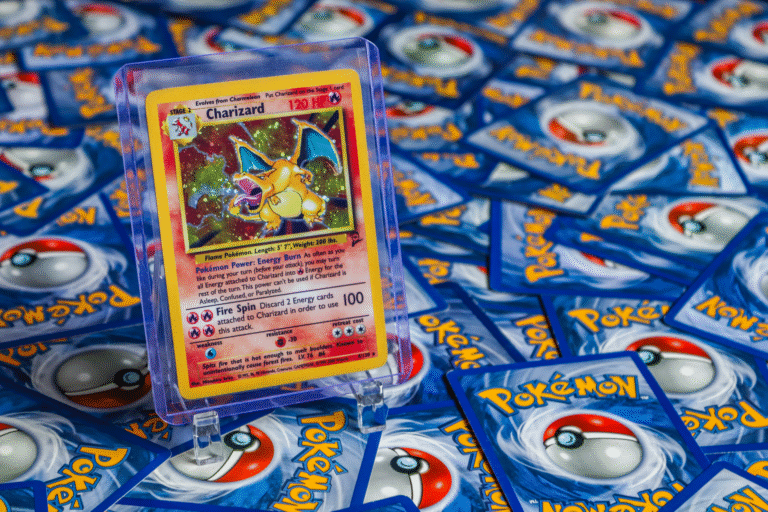
The 2020-2021 boom created an artificial inflation that affected the entire market. Base set charizard 1st edition PSA 9, one of the category’s most iconic cards, demonstrated this vividly. Priced around $5,500 in early 2020, it skyrocketed to the $18,000–$31,000 range by mid-2021. This wasn’t driven by scarcity alone; it was fueled by FOMO, celebrity endorsements, and a flood of new money entering the hobby. The critical warning here is that just because a card climbed dramatically doesn’t mean it holds that value.
Since 2021, the market has cooled considerably. PokeScope data confirms that Charizard PSA 9 prices have stabilized at levels well below the 2021 highs, though still meaningfully above 2018-2020 prices. This cooling tells us something important: the peak was a bubble, but the correction wasn’t a total collapse. Mid-tier cards and lower-tier holos didn’t experience the same bubble dynamics, which is why Mewtwo PSA 9 now averages around $190—a more modest but steady climb from earlier years. The lesson is that cards with celebrity status (Charizard, Blastoise, Alakazam) behaved differently than broader-based appreciation. PSA 9 grades for popular cards may have overcorrected downward if you believe in long-term Base Set rarity, but they were definitely overpriced in 2021.
Current Valuation Landscape for PSA 9 Base Set Holos
As of 2024-2025, PSA 9 Base Set holos exist in a state of relative equilibrium compared to earlier volatility. Raichu sits at approximately $385, Zapdos at $120–$130, Mewtwo at $190, and these represent the current market consensus based on recent sales activity. These price points suggest the market is no longer in panic-buying or panic-selling mode. Instead, prices now reflect a reasonable balance between supply, demand, and perceived rarity. The current environment is neither a screaming bargain nor an obvious trap.
Many PSA 9s have appreciated from 2018 levels but remain below 2021 peaks. This middle ground matters because it means the grade still offers value to collectors who want high-quality cards without paying PSA 10 premiums. However, the margin for error has shrunk. Unlike 2018 when PSA 9s were relatively underappreciated, today’s market has priced the grade fairly for most cards. The remaining opportunities are card-specific, not grade-specific.

Finding Actual Undervalued PSA 9s Through Population Data
The most reliable method for identifying genuinely undervalued PSA 9s involves analyzing PSA population reports. This is where scarcity actually translates to value. Consider Base Set Alakazam: if thousands of PSA 9s exist but fewer than 100 PSA 10s have been graded, that gap suggests the jump from 9 to 10 carries real scarcity. If the price premium for PSA 10 doesn’t reflect this rarity gap adequately, the PSA 9 may be undervalued by comparison.
The strategy requires comparing three data points: the PSA population at each grade, the price difference between grades, and the absolute card popularity. A card with a 50-to-1 population ratio between PSA 9 and PSA 10 but only a 2-to-1 price difference may represent opportunity. Conversely, a card with a 10-to-1 ratio and a 4-to-1 price difference is likely fairly priced. This approach is labor-intensive—it requires consulting the PSA Price Guide, cross-referencing PSA population data, and researching recent sales—but it’s the most objective way to find legitimately undervalued cards. Generic statements about the grade being undervalued don’t hold up under this scrutiny.
The Edition Trap and Why 1st vs. Unlimited Matters More Than Grade Alone
One critical limitation when discussing PSA 9 Base Set holos is that edition dramatically affects value and valuation logic. A 1st Edition Charizard PSA 9 and an Unlimited Charizard PSA 9 inhabit completely different markets. The 1st Edition sits in the ultra-premium category and follows celebrity-card dynamics, while the Unlimited version is more reasonably priced and follows broader market logic. Conflating the two when discussing undervaluation is a common mistake. Many collectors assume that because some 1st Edition PSA 9s have corrected from 2021 peaks, all PSA 9s of that card are now undervalued.
This is flawed reasoning. An Unlimited Base Set Holo PSA 9 may be appropriately priced even while a 1st Edition version is momentarily cheap. This distinction matters enormously for purchasing decisions. Before concluding a card is undervalued, confirm which edition you’re analyzing and whether you’re comparing it to the right benchmarks. Comparing an Unlimited Raichu PSA 9 to 1st Edition pricing will lead you astray.

Why Specific Cards Hold Better Than Others
Not all Base Set holos have behaved identically since 2018. Tier-1 cards like Charizard, Blastoise, and Venusaur experienced more dramatic price swings because of their iconic status and finite population of early printings. Secondary holos like Arcanine, Gyarados, and Alakazam appreciated more steadily and have shown more resilience post-correction. A PSA 9 Arcanine may be less exciting than a Charizard, but it’s also experienced less volatility and may represent better risk-adjusted value.
This variation suggests that PSA 9 undervaluation is most likely found in mid-tier cards rather than premium cards. The hype surrounding Charizard, Blastoise, and Venusaur means those cards are scrutinized constantly and repriced frequently. Secondary characters and utility Pokémon receive less attention, which creates pockets where PSA 9s might lag behind fair value. The tradeoff is liquidity: a premium card sells quickly at any reasonable price, while a secondary holo may languish if you price it too aggressively.
What’s Next for PSA 9s in the Base Set Market
Looking forward, PSA 9 Base Set holos are unlikely to experience another dramatic surge unless the broader Pokemon card market receives a major catalyst. The low-hanging fruit of 2018-2020 has been picked. However, this doesn’t mean the grade has finished appreciating. Long-term, as original print runs age and population ceilings on high grades become apparent, PSA 9s may continue their steady climb.
The supply of truly high-graded cards is finite, and PSA 9 remains close enough to perfection to appeal to serious collectors. The market is also becoming more sophisticated. As new entrants stop chasing hype and instead focus on collecting strategy, cards with genuine scarcity and historical significance will likely hold value better. PSA 9s fit this profile—they’re old, preserved, and increasingly difficult to replace. The most likely scenario is continued modest appreciation rather than explosive growth, which means today’s prices, while no longer cheap, are likely better than prices five years from now.
Conclusion
The answer to whether PSA 9 Base Set holo cards are still undervalued since 2018 is nuanced. They’re not undervalued as a category, but specific cards within the grade certainly are. The market has become too efficient to allow broad arbitrage opportunities based on grade alone. However, by analyzing population data, comparing price premiums to rarity gaps, and focusing on secondary holos rather than celebrity cards, collectors can still find PSA 9s trading below their long-term intrinsic value.
To find these opportunities, prioritize research over impulse. Check the PSA Price Guide for recent sales data, consult population reports to understand scarcity context, and compare the price premium between grades. A PSA 9 that’s truly undervalued will show a price-to-scarcity ratio that lags behind the market as a whole. In 2025, the era of obvious bargains in Base Set holos has ended, but the era of patient, data-driven collecting is just beginning.