
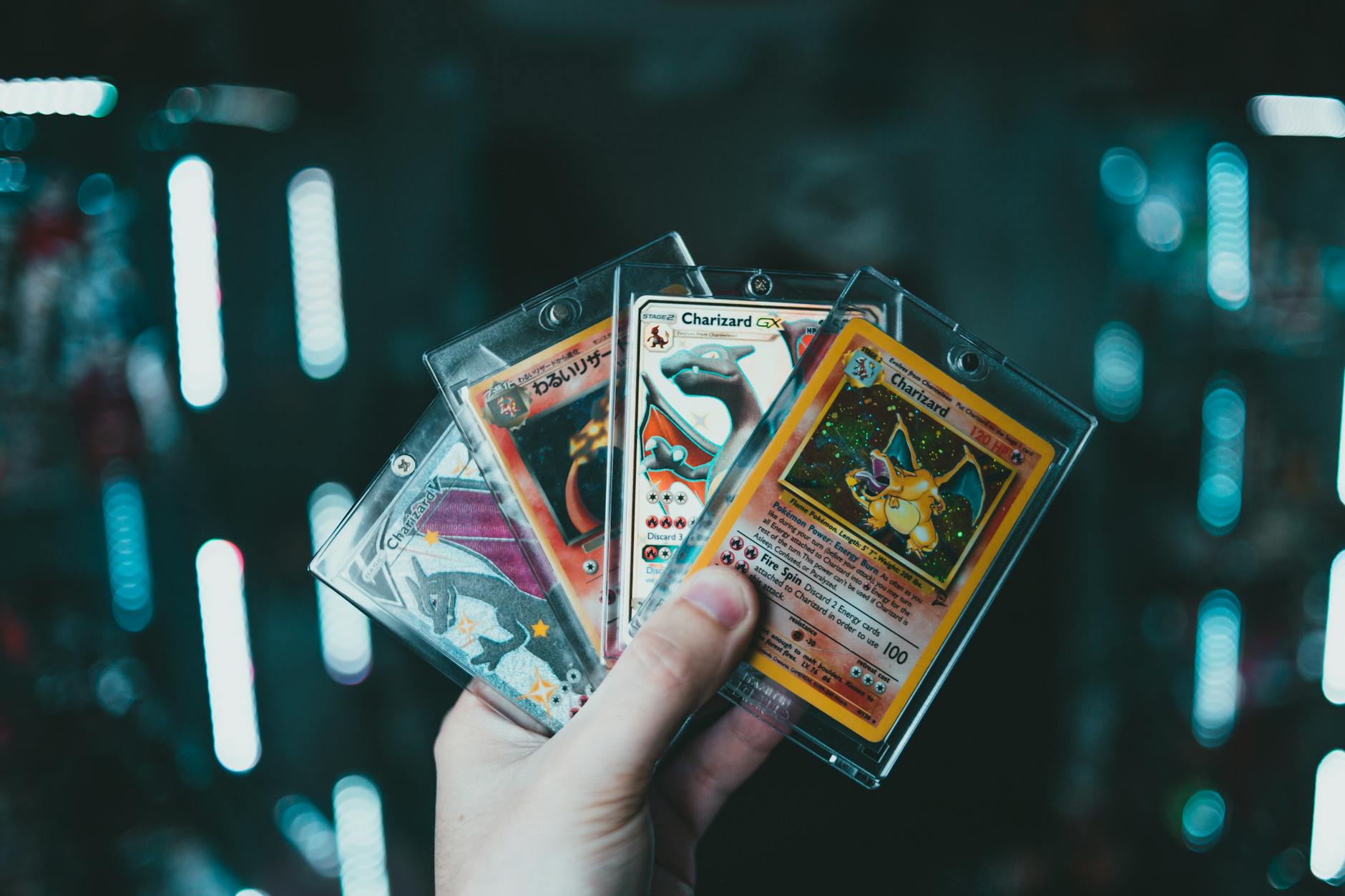
PSA 9 Base Set holographic cards have experienced persistent underperformance relative to higher grades in the vintage Pokémon market, though this appears to be a structural characteristic of grading economics rather than a phenomenon solely triggered by Pokémon 151’s release. When Pokémon 151 arrived in late 2024 to early 2025, it brought renewed collector attention to retro cards, yet PSA 9 Base Set holos continued to lag behind PSA 10 and PSA 10 cards, trading at approximately 60-70% of PSA 10 pricing across the board. For example, a PSA 9 Charizard Base Set may trade in the $2,000-$3,500 range, while the same card graded PSA 10 commands $4,500-$6,000, demonstrating a consistent valuation gap that persists even as other vintage segments show steady appreciation.
The underlying issue is market psychology: PSA 9 represents “near-mint” condition, but in a category where “perfect” or near-perfect cards (PSA 10) are the status symbol for serious collectors, the step down in grade carries disproportionate pricing penalties. Base Set holographic cards, being the most iconic and pursued segment of vintage Pokémon, are where this gap becomes most pronounced. The release of Pokémon 151 intensified demand for vintage cards generally, but higher-graded vintage material attracted fresh capital far more aggressively than mid-tier PSA 9 cards, widening the relative gap.
Table of Contents
- How PSA Grading Economics Drive the PSA 9 Gap in Base Set Holographics
- Base Set Holos vs. Other Vintage Segments—Why the Lag Is More Pronounced Here
- Market Sentiment Shift After Pokémon 151’s Release
- Practical Considerations for Collectors Holding or Buying PSA 9 Base Set Holos
- The Grading Ceiling Effect and Market Inefficiency
- Comparison Across Other Vintage Segments
- Future Outlook and What Collectors Should Monitor
- Conclusion
- Frequently Asked Questions
How PSA Grading Economics Drive the PSA 9 Gap in Base Set Holographics
The 60-70% valuation ratio between psa 9 and PSA 10 is not unique to the post-Pokémon 151 era—it reflects fundamental grading market mechanics that have existed for years. However, this gap became more visually apparent after Pokémon 151’s launch because the market bifurcated: new money flowing into vintage cards often targets PSA 10 or higher grades as “investment-grade” assets, while PSA 9 cards sit in a middle position, too expensive for casual buyers but not prestigious enough for vault-focused collectors.
A PSA 9 Raichu Base Set holo, for instance, typically trades around $350-$385, while a PSA 10 of the same card can reach $600-$750, despite minimal physical difference in condition. This dynamic exists because grading is ordinal, not linear—the jump from 9 to 10 represents crossing a psychological threshold, not a 10% improvement in objectivity. PSA 9 cards may have minor surface wear or print defects invisible to the naked eye, but the label itself signals “not quite perfect,” which in collectibles markets means “not quite investment-grade.” The post-Pokémon 151 environment amplified this because new collectors entering the market often research “what should I buy” and hear “PSA 10 is the real store of value,” leaving PSA 9 cards as orphans—better than PSA 8 but not aspirational enough to justify their premium pricing.

Base Set Holos vs. Other Vintage Segments—Why the Lag Is More Pronounced Here
PSA 9 Base set holographics lag more noticeably than PSA 9 cards in other vintage sets, partly because Base Set is the most liquid and competitive segment of the vintage market. Vintage Pokémon cards in general show steady 5-10% monthly appreciation across 2025, but this trend masks internal variation: PSA 10 Base Set holos are appreciating faster than PSA 9, while PSA 8 and lower grades are moving more slowly, creating a compression in the mid-grade market. Base Set’s extreme brand power means that every grade is actively traded and priced, making the gaps between grades more visible and more punishing for mid-tier holders.
A critical limitation of the mid-grade segment is liquidity under stress: if you hold a PSA 9 Zapdos Base Set ($120-$130), your buyer pool is narrower than if you held a PSA 10. In a bull market, this doesn’t matter much; in a correction, mid-tier cards experience steeper selloffs because large collectors aren’t focused on that grade. The post-Pokémon 151 period has been bullish overall, but the relative outperformance of higher grades suggests that when collector capital is selective, PSA 9 cards get passed over. Rare Base Set cards like first editions and shadowless variants experience less of this gap because scarcity overrides grading sensitivities, but unlimited-edition PSA 9 Base Set holos are most vulnerable to the grade-driven pricing differential.
Market Sentiment Shift After Pokémon 151’s Release
pokémon 151, which released as both a standard set and in special premium formats during late 2024 and early 2025, reignited mainstream interest in Pokémon cards and prompted established collectors to reassess their vintage holdings. New capital entering the space did not distribute evenly across all grades; instead, it concentrated on PSA 10, PSA 10 Pristine, and other top-tier designations, which serve as status symbols and perceived inflation hedges. Meanwhile, PSA 9 cards—despite being strong condition cards worth thousands of dollars—were perceived as “the compromise grade,” neither exclusive enough for whale collectors nor accessible enough for budget-conscious players.
This sentiment shift manifested in secondary market pricing: PSA 9 Base Set holos saw modest price increases in absolute terms (keeping pace with general vintage card appreciation), but relative to PSA 10 and higher grades, they fell behind. For example, a PSA 9 Blastoise Base Set holo may have gained $50-$100 in value over 12 months post-Pokémon 151, while a PSA 10 of the same card gained $300-$500, creating a widening gap in percentage terms. The psychology is self-reinforcing: collectors see PSA 10 cards appreciating faster, so they buy PSA 10, which increases demand and prices, which further discourages PSA 9 purchases.
Practical Considerations for Collectors Holding or Buying PSA 9 Base Set Holos
For collectors holding PSA 9 Base Set holos, the lag is real but manageable if you understand the holding horizon. If you plan to sell within the next 12-24 months, PSA 9 cards will still move, but the price ceiling is constrained by the valuation ratio relative to PSA 10. A collector who bought a PSA 9 Alakazam Base Set at $200 two years ago may have seen it appreciate to $250 today, but a PSA 10 of the same card appreciated far more steeply, creating opportunity cost. The tradeoff: PSA 9 cards are more affordable as entry points for vintage collecting, and the absolute appreciation is still positive; the downside is that you’re buying into a grade that the broader market is consciously deprioritizing.
For new buyers, the practical question is whether to stretch budget for a PSA 10 or accept PSA 9 and deploy capital elsewhere. If you’re building a vintage collection for long-term holding, PSA 9 cards offer reasonable value and will appreciate in absolute terms as the overall vintage Pokémon market matures. However, if you’re seeking the highest appreciation potential, PSA 10 is the proven preference post-Pokémon 151. The key warning: do not overpay for PSA 9 cards on the assumption that grading will be overlooked; market participants are increasingly grade-conscious, not less, making mid-grade vulnerability a structural risk rather than a temporary distortion.
The Grading Ceiling Effect and Market Inefficiency
One underexplored aspect of the PSA 9 lag is the “grading ceiling” effect: cards that would naturally grade PSA 9 or PSA 10 become supply-constrained by graders’ standards, meaning the PSA 9 supply grows while PSA 10 becomes rarer. Paradoxically, this should make PSA 9 cards more valuable due to higher relative supply, but the opposite occurs because demand is concentrated on the highest available grades. This is a market inefficiency that creates a warning sign: if you hold a portfolio of PSA 9 cards, you’re betting on future correction toward more rational grade-based pricing, but there’s no guarantee that correction occurs before broader market shifts alter vintage card valuations.
The limitation of holding mid-grade vintage cards is that they occupy an awkward position in collector portfolios: too expensive to be “fun” casual purchases, not prestigious enough to be portfolio anchors. In a downturn, PSA 9 cards would likely experience steeper relative selloffs than PSA 10 or PSA 8, because there’s no natural constituency fighting to hold them. The post-Pokémon 151 market has been kind to vintage cards broadly, masking this vulnerability, but collectors should not extrapolate the recent bull market into perpetuity. PSA 9 Base Set holos are solid collectibles, but they’re not the automatic winners in the current market environment.
Comparison Across Other Vintage Segments
Outside of Base Set, PSA 9 cards experience less severe grading penalties, partly because rarity and set prestige are more concentrated on specific cards rather than on all cards within a set. For instance, PSA 9 cards from Jungle or Fossil editions show more modest grade-driven price gaps because these sets are less universally pursued.
Base Set’s dominance in collector consciousness means that grade becomes a proxy for investment quality—”if it’s not PSA 10, is it really worth holding?”—whereas other vintage sets receive more pragmatic grade-agnostic valuations. This makes PSA 9 Base Set cards particularly vulnerable to the post-Pokémon 151 sentiment shift, whereas PSA 9 cards from lower-tier vintage sets remain undervalued relative to their actual scarcity and condition.
Future Outlook and What Collectors Should Monitor
The lag between PSA 9 and PSA 10 Base Set holos will likely persist as long as the vintage Pokémon market remains focused on “investment-grade” assets and status symbols. However, if the market matures and becomes more rational about grading—recognizing that PSA 9 is excellent condition with minimal real-world impact—the gap could compress.
Alternatively, if broader crypto/collectibles markets contract, mid-grade cards may suffer disproportionately, widening the gap further. For forward-looking collectors, the key is to monitor whether PSA 10 price gains decelerate (suggesting the market is reaching saturation at the top) or whether PSA 9 demand increases from institutional buyers seeking efficient entry points into Base Set without paying for perfection.
Conclusion
PSA 9 Base Set holographic cards are lagging behind higher grades in the post-Pokémon 151 environment, but this lag reflects broader market psychology favoring “investment-grade” top-tier cards rather than a fundamental weakness in PSA 9 condition. The 60-70% valuation ratio between PSA 9 and PSA 10 is structural, not temporary, and new collector capital entering the vintage market after Pokémon 151’s release has overwhelmingly targeted higher grades, leaving PSA 9 cards as a middle-market segment without a clearly defined constituency.
If you hold PSA 9 Base Set holos, understand that your upside is capped relative to PSA 10 while you face real downside risk if collector sentiment shifts further toward grade-exclusive investing. For new buyers, PSA 9 cards remain good absolute value and will appreciate, but they are not the margin-of-safety leaders in the current market. Monitor whether top-grade appreciation decelerates over the next 12 months; if it does, mid-grade cards may enjoy relative gains as buyers become more price-conscious.
Frequently Asked Questions
Should I sell my PSA 9 Base Set holos and buy PSA 10 instead?
Not necessarily. If you need liquidity, selling is reasonable, but the cost and hassle of rebuying at higher grades may exceed future appreciation gains. If you can hold long-term, PSA 9 cards will appreciate in absolute terms, though slower than PSA 10.
Why does PSA 9 underperform if it’s still excellent condition?
Grading creates psychological thresholds; PSA 10 signals “investment-grade,” while PSA 9 signals “good but not perfect.” Collectors prioritize prestige and perceived value storage, not condition quality alone.
Are PSA 9 Base Set holos a bad investment right now?
Not bad, but not optimal. They’re solid holding assets with positive expected appreciation, but the risk/reward favors PSA 10 or PSA 8 (better value) in the current market environment.
Will the PSA 9 gap ever close?
Possibly, if the market matures and becomes more rational about grading, or if top-grade supply tightens, forcing buyers down-market. Monitor 2026-2027 for signals of this shift.
How much appreciation can I expect from PSA 9 Base Set holos?
Historical data shows 5-10% monthly appreciation across vintage cards broadly, but PSA 9 typically underperforms this range. Budget for 3-7% annual appreciation in a healthy market.
What’s the best use case for PSA 9 Base Set cards?
Entry point into vintage collecting, completion of sets, or holding for eventual sale to less grade-conscious buyers. Avoid overloading your portfolio with PSA 9 if you’re focused on maximum appreciation.
You Might Also Like
- Why Shadowless Base Set Blastoise Cards Are Lagging Behind the Rest of Vintage Pokémon Since 2019
- Why PSA 7 Base Set Holo Cards Are Creating New Entry Points for Vintage Buyers Since 2025
- What Buyers Should Know About PSA 7 Base Set Holo Cards During the Latest Vintage Rebound