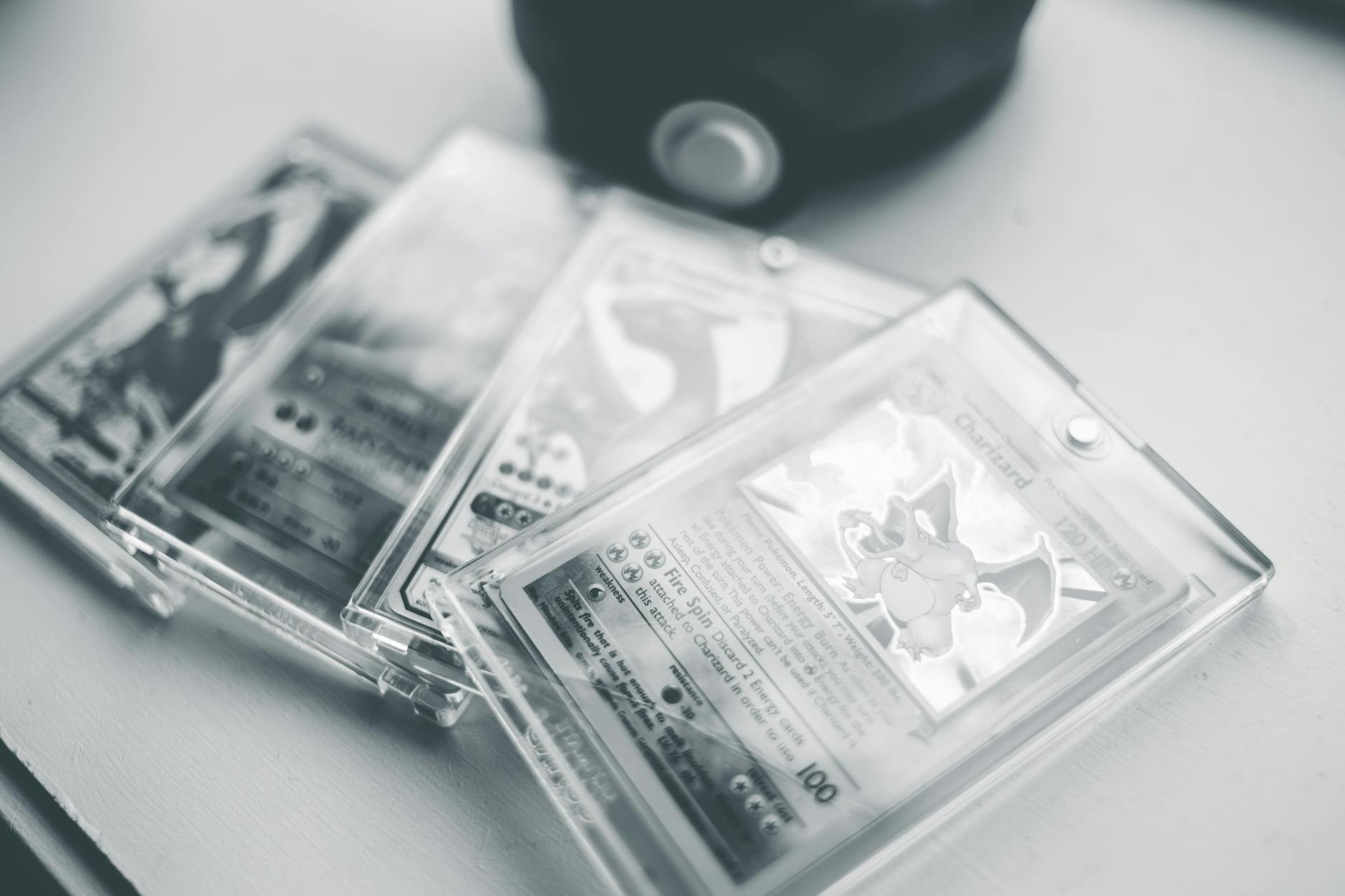
First Edition Pokémon cards are poised to become far more valuable than modern chase cards—not because of hype, but because of three decades of market evidence and investor behavior. While collectors today chase newer releases like Scarlet and Violet booster boxes, the data shows that vintage Base Set cards have consistently delivered returns that dwarf modern alternatives. A 1st Edition Base Set Charizard currently trades near $168,000 to $170,000, while the most valuable modern chase card, Mega Gengar ex, peaks around $1,000—a gap that reflects the fundamental difference between cards being played and collected versus cards being preserved and held as investment assets.
The reason for this gap is simple: scarcity compounds over time, grading standards remain consistent, and there are only so many first printings to go around. Since 2020, graded vintage Pokémon cards have outperformed the S&P 500 by over 600%, while modern booster boxes show mostly negative returns of -10% to -20%. This divergence isn’t temporary market volatility—it reflects a structural reality that becomes clearer every year.
Table of Contents
- How Vintage First Edition Cards Deliver Returns Modern Cards Cannot Match
- The Pandemic Boom Revealed the Weakness in Modern Card Investment
- The First Edition Stamp Creates an Irreversible Value Gap
- Preservation and Grading Standards Work in Vintage Cards’ Favor
- The Liquidity and Market Depth Difference Between Eras
- What Happens When Modern Cards Age: The 10-Year Test
- The Future Role of First Edition Cards in Pokémon Collecting
- Conclusion
How Vintage First Edition Cards Deliver Returns Modern Cards Cannot Match
The math of vintage appreciation is straightforward: Base Set Unlimited booster boxes have shown 22.375% compound annual growth over 25 years, translating to cards that were purchased for dozens of dollars in the 1990s now commanding five-figure sums at auction. Modern cards, by contrast, are produced in quantities that dwarf vintage printings by orders of magnitude. A Base Set Unlimited booster box from 1999 might contain only a few thousand examples globally, while a 2024 booster box might have hundreds of thousands of identical copies in collectors‘ hands.
The most striking example of this difference is the 1st Edition Base Set Charizard. Fewer than 5,000 copies were printed in the first printing, and only a fraction of those were ever graded at PSA 10 (gem mint condition). That scarcity, combined with decades of cards being lost, damaged, or destroyed, means the supply will only shrink. A modern equivalent chase card like a special illustration rare from Scarlet and Violet will eventually find its way into the hands of thousands of collectors and investors, permanently capping its potential maximum value.
The Pandemic Boom Revealed the Weakness in Modern Card Investment
The 2020-2021 pokémon boom delivered a critical lesson that modern card holders learned painfully: newly released cards can surge 200-500% in a speculative frenzy, then correct 30-40% when the bubble deflates. Modern boxes that sold for $75-100 during peak pandemic mania dropped back to $50-70 within two years. Collectors who bought at the top to “hold for investment” instead watched their portfolios shrink.
vintage cards experienced a smaller correction during the same period, primarily because they had already appreciated significantly and fewer people were selling panic-driven volumes. The 1st Edition Charizard, for instance, peaked around $550,000 in December 2025, then settled into the $168,000-$170,000 range—a decline in percentage terms but still reflecting an entirely different price ceiling than modern cards. The warning here is that modern chase cards carry speculative risk that vintage cards have already absorbed over three decades.
The First Edition Stamp Creates an Irreversible Value Gap
Every first edition Pokémon card printed before 1999 carries a small stamp on the left side of the card identifying it as a 1st Edition release. An Unlimited edition of the same card—printed after that first run sold out—carries no such stamp and looks virtually identical to the naked eye. Yet that tiny difference in printing history creates a value gap worth tens of thousands of dollars. A 1st Edition Base Set Blastoise sold for approximately $88,000 in July 2025.
An Unlimited edition Blastoise, even in the same condition, would sell for a fraction of that price. Modern chase cards have no equivalent differentiation because all copies from a given set were printed at the same time. A player might pull a premium Pokémon from a booster pack in 2024, but so did hundreds of thousands of other collectors. The “first edition” concept simply doesn’t apply to products where new copies are always being printed until the set rotates out of production.

Preservation and Grading Standards Work in Vintage Cards’ Favor
The Pokémon Structured Gradebook Scale (PSA) introduced consistent grading standards that apply equally to vintage and modern cards. A PSA 10 (gem mint) card from Base Set received the same scrutiny and carries the same authentication as a PSA 10 from a modern set. However, vintage cards carry an additional advantage: the population of high-grade vintage cards is fixed and finite, while modern cards continue to enter the market as sealed products are opened.
Consider a complete 1st Edition Base Set with all cards graded PSA 10: such a set sold for $911,629.69, reflecting the rarity of finding an entire vintage collection in pristine condition. Finding even one card in that condition from the 1st Edition set becomes increasingly difficult as time passes and cards deteriorate. By contrast, a modern complete set built today might contain recent cards in PSA 10 condition, but finding a matching complete set five years from now will simply require purchasing another sealed product and hoping for the same grades—no rarity premium applied.
The Liquidity and Market Depth Difference Between Eras
Vintage cards trade in a different market environment than modern cards. A high-grade 1st Edition Base Set card has an active community of institutional collectors, investment firms, and serious hobbyists competing for ownership. The Pikachu Illustrator card—arguably the most iconic Pokémon card ever printed—sold for $16,492,000 at Goldin Auctions in February 2026, establishing a global price benchmark that attracts international attention. The warning: vintage cards trade at premium prices precisely because liquidity is constrained.
You cannot convert a $100,000 vintage card into cash overnight without accepting discounts. Modern cards offer better liquidity in smaller denominations but trade at far lower absolute values. An investor seeking to move $500,000 out of the Pokémon market would have an easier time with three vintage cards than with hundreds of modern chase cards. This liquidity tradeoff means that entry prices for vintage cards reflect both their scarcity and the reality that selling them requires patience or auction house support.

What Happens When Modern Cards Age: The 10-Year Test
The oldest modern Pokémon cards are roughly 20-25 years old (original Base Set reprint era in the early 2000s), but the vast majority of “modern” cards entered circulation after 2015. In another decade, cards printed in 2024-2026 will be 10-15 years old. Will they appreciate? The evidence suggests most will not.
The mechanism is simple: a card that was mass-produced in 2024 and remains in good condition in 2035 still represents one of hundreds of thousands of preserved copies. The scarcity element that drives vintage appreciation—where only low thousands exist in high grades—never materializes for modern cards because printing volumes are so large. A player’s random pack pull from today is unlikely to ever achieve the rarity status of a 1st Edition card from the 1990s.
The Future Role of First Edition Cards in Pokémon Collecting
As the Pokémon TCG continues evolving with new mechanics, new Pokémon, and new sets, the original Base Set cards increasingly occupy a historical position similar to vintage comic books or early baseball cards. They represent a fixed, finite historical record of the hobby’s origins. Newer cards, no matter how popular or valuable today, will eventually be displaced by even newer products.
This generational cycling ensures that first edition cards from the 1990s will retain value precisely because they cannot be reprinted in the same way. The Pokémon Company occasionally reprints 1st Edition products (particularly Base Set), but reprints are always labeled as such and carry far lower value. A collector in 2035 interested in owning a piece of Pokémon history will have roughly the same choices available today: vintage 1st Edition cards from the original era, or modern cards from the 2020s that were produced in mass quantities. History suggests the choice will be obvious.
Conclusion
First Edition Pokémon cards are becoming more important than modern chase cards because value is ultimately determined by scarcity, preservation, and the passage of time. Modern cards chase hype; vintage cards accumulate history. The data from two decades of market performance shows this distinction playing out consistently: vintage Base Set cards have delivered 600%+ returns since 2020, while modern booster boxes have delivered losses.
A 1st Edition Charizard trading at $168,000 is not an outlier—it’s a logical outcome of there being only so many copies in gem condition. For collectors deciding whether to pursue vintage cards or modern chase cards, the question should not be “which is more exciting right now?” but rather “which asset class has proven it can preserve and compound value over decades?” The answer, written in market data and auction results, points clearly to first edition vintage cards. Modern cards offer enjoyment and engagement with the current hobby; first edition cards offer both that engagement and the historical permanence that turns collections into investments.
You Might Also Like
- Why the First Pokémon Cards May Matter More With Every Passing Decade
- Why the First Pokémon Cards May Become More Important Than Newer Chase Cards
- How First Edition Pokémon Cards Could Become the Blue-Chip Collectibles of the Future