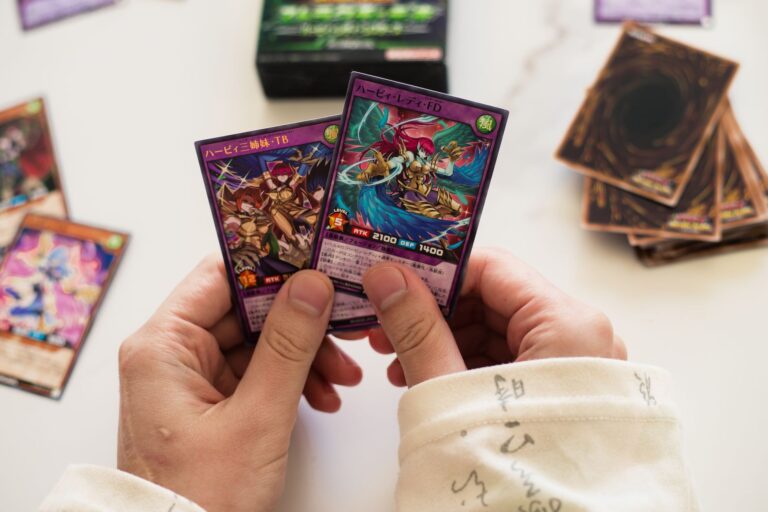
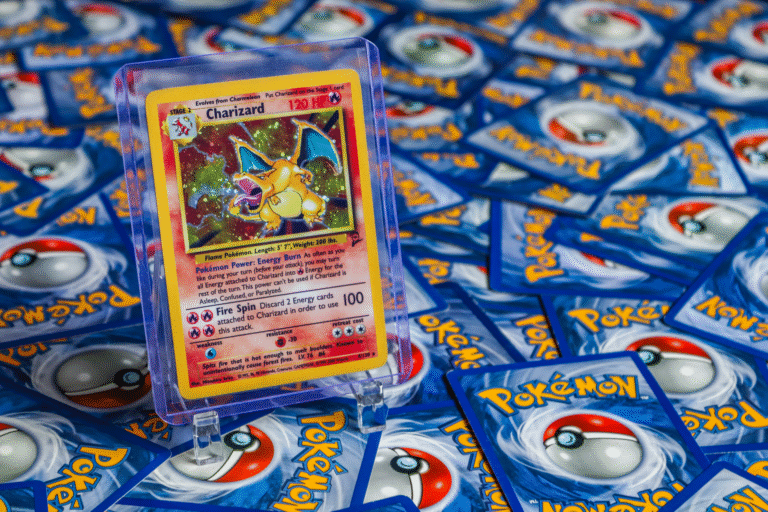
First edition and vintage Pokémon cards are becoming more valuable than newer chase cards for a simple reason: they’re running out. Cards printed in the late 1990s had production runs measured in the thousands for high-grade copies, not millions. In contrast, 9.7 billion Pokémon cards were printed in a single recent year—nearly triple the previous year’s output. Once vintage inventory is gone, it’s gone forever.
New chase cards, no matter how desirable today, can be reprinted next year or in five years, which fundamentally limits their long-term floor value. The market has already begun pricing in this reality. A PSA 10 First Edition Shadowless Charizard sold for $550,000 in December 2025, not because it’s the flashiest card on the block, but because maybe 15 to 20 copies exist in that grade worldwide. Meanwhile, modern chase cards that sold for thousands just a few years ago are now worth a fraction of that when reprints flood the market or competitive play trends shift. For collectors thinking beyond the next few years, vintage first editions are becoming the safer long-term bet.
Table of Contents
- The Permanent Scarcity Advantage of Vintage Cards
- The Reprint Risk That Modern Chase Cards Cannot Escape
- Record Sales Prove the Market’s Confidence in Vintage Over Modern
- The Investment Case for Vintage: 46% Annual Appreciation vs. Modern Volatility
- The Problem with Chasing Modern Trends and Competitive Relevance
- The Emerging Opportunity in Non-Elite Vintage First Editions
- The Structural Shift Reshaping the Pokémon Card Market
- Conclusion
The Permanent Scarcity Advantage of Vintage Cards
The most straightforward reason vintage cards outpace modern chase cards is supply. Pokémon’s early print runs were constrained by manufacturing capacity, distribution limitations, and the simple fact that the company didn’t anticipate the lasting collector appeal of these cards. Most first edition cards printed in 1999 and 2000 were opened, played with, and destroyed. Graded copies in near-mint condition became scarce almost immediately. A PSA 10 First Edition Base Set card today exists in quantities you can count on two hands, sometimes fewer.
Modern cards face the opposite problem. The Pokémon Company has learned that collectors will buy sealed products at scale, so production volumes have exploded to meet demand. This creates a paradox: the more desirable a modern card is, the more copies are printed, which eventually depresses its value. A chase card from 2023 might feel rare now, but the company can always print more next year if demand justifies it. Vintage cards have no such option. When a First Edition Jungle Blastoise reaches near-mint grade, that’s it—no more are coming into the market through new manufacturing.

The Reprint Risk That Modern Chase Cards Cannot Escape
One of the most overlooked vulnerabilities of modern chase cards is reprint exposure. A card that defines today’s competitive environment can be reprinted in a future set, often with identical or nearly identical artwork. This happened repeatedly during the Scarlet and Violet era, where chase cards from earlier years were reimagined in new sets, fragmenting collector demand and destroying the scarcity that once drove their prices upward. A vintage First Edition card, by definition, can never be reprinted as a First Edition.
The condition of existing copies is all the market will ever have. Consider the practical implication: if you buy a modern chase card for $300 hoping it appreciates, you’re betting that reprints won’t occur, that the card’s competitive relevance won’t fade, and that collector trends will move in your favor. If you buy a psa 10 First Edition Cubone for $15, you’re betting on something more fundamental—that future collectors will value a card that existed in tiny quantities 25 years ago. The first edition Cubone actually increased to $15 by December 2025, a card that would have been overlooked five years ago. It gained value not because it dominated any tournament or appeared in a viral pack opening, but because demand for vintage first editions is broadening beyond just the elite holographics.
Record Sales Prove the Market’s Confidence in Vintage Over Modern
The auction market doesn’t lie. A complete First edition base Set in PSA 10 condition sold for $911,000, with only about nine estimated to exist worldwide. That price wasn’t driven by one collector willing to overpay—it reflected a market floor where the rarest vintage Pokémon cards are treated as alternative assets comparable to fine art or vintage sports memorabilia. These are not speculative bets. These are prices paid for cards with provenance, scarcity documentation, and zero risk of reprinting.
By contrast, look at what’s happened to modern chase cards over the same timeframe. High-end modern holographics from 2018 to 2021 that sold for four figures are now worth a fraction of their peak. The reprinting of popular cards and the cyclical nature of competitive metas means modern card values are vulnerable to sudden drops. A PSA 10 First Edition Blastoise Holo from Base Set brought roughly $88,000 in July 2025. There’s only one version of that card that will ever exist with that grading, and demand for it has only grown with each passing year. Modern cards lack that structural protection.

The Investment Case for Vintage: 46% Annual Appreciation vs. Modern Volatility
Pokémon cards as an asset class have appreciated at an average rate of 46% annually, far outpacing the S&P 500’s typical returns. But that aggregate number masks an important distinction: vintage cards deliver consistent appreciation, while modern card appreciation is volatile and trend-dependent. Over 20 years, Pokémon cards have appreciated 3,200% as a category, compared to 483% for the S&P 500. That outperformance is almost entirely driven by vintage inventory.
If you’re using Pokémon cards as an investment vehicle rather than purely for enjoyment, the allocation question becomes critical. Modern chase cards might deliver spectacular short-term returns if you pick the right card at the right moment, but vintage first editions offer something more valuable to a cautious investor: predictability. Nostalgia, scarcity, and broad collector demand create a safety net that modern cards simply don’t have. A mid-grade First Edition card from 1999 is worth more today than it was five years ago, and it will likely be worth more in five years than it is today, absent a complete collapse in the hobby itself.
The Problem with Chasing Modern Trends and Competitive Relevance
A significant risk with modern chase cards is their dependence on game competitiveness and tournament relevance. When a card dominates the competitive Pokémon Trading Card Game metagame, its price rises sharply. But once that format rotates out of competitive play, demand dries up. A card that sold for $2,000 during its peak competitive season might be worth $200 a year later. Collectors chasing these trends get caught holding overvalued inventory when the next wave of competitive cards takes over. Vintage cards sidestep this problem entirely.
A First Edition Cubone isn’t valuable because it’s good in games—nobody plays First Edition Base Set cards competitively at scale. It’s valuable because it’s old, rare, and increasingly sought after by collectors building vintage sets. The demand is structural, not trend-dependent. This makes vintage cards far less vulnerable to the kind of sharp corrections that plague modern chase cards. The limitation here is obvious: if you want the hottest competitive cards for tournament play, you’ll necessarily be holding some modern inventory. Just don’t confuse short-term competitive demand with long-term investment value.
The Emerging Opportunity in Non-Elite Vintage First Editions
One of the most interesting market dynamics of 2025 is the rising demand for non-elite First Edition cards that previously traded for pocket change. Cards like First Edition Cubone, Kabuto, and other commons and uncommons from Base Set are now in serious demand from collectors building complete vintage sets. The Cubone reached $15, and the Kabuto approached $30—cards that would have been overlooked even two years ago.
This represents a broadening of vintage demand beyond just the iconic holographics like Charizard, Blastoise, and Venusaur. This expansion is crucial because it means vintage appreciation isn’t limited to the ultra-rare, ultra-expensive cards that only a handful of collectors can access. A collector with $500 can now build a meaningful position in mid-tier and lower-tier First Edition cards that still benefit from the same scarcity and nostalgia drivers as their expensive counterparts. As more collectors recognize the value proposition of vintage cards, demand for these historically overlooked cards will likely continue climbing.
The Structural Shift Reshaping the Pokémon Card Market
The Pokémon Company’s decision to increase production volumes to meet booming demand in the early 2020s has inadvertently created a market bifurcation. Vintage cards, fixed in supply, are now the scarce asset. Modern cards, printed by the billions annually, are becoming commoditized. Over the next five to ten years, this dynamic will likely drive a permanent revaluation where vintage inventory commands a significant premium relative to modern cards of similar artistic or competitive appeal.
The market has already begun pricing this in. Auction houses and serious collectors are shifting focus toward vintage, not because modern cards lack potential, but because the structural risk profile is completely different. Vintage represents a finite pool of increasingly valuable assets. Modern represents an infinite supply competing with reprints and market saturation. As this realization spreads through the collector base, expect the gap between vintage and modern valuations to widen significantly.
Conclusion
First edition and vintage Pokémon cards are becoming more important than newer chase cards because they solve a fundamental investment problem: scarcity you can trust. Modern cards offer excitement, competitive relevance, and short-term appreciation potential, but they lack the structural protection that comes from being finite and irreplaceable. A First Edition card from 1999 cannot be reprinted, cannot be made more abundant, and cannot lose value because some new set makes it obsolete. That permanence is increasingly valuable in a market flooded with billions of new cards every year.
For collectors approaching Pokémon cards as a long-term investment or serious collecting pursuit, the data is clear: vintage first editions have outperformed modern chase cards, will continue to outperform them, and offer a better risk-adjusted return profile. You don’t need to abandon modern cards entirely, but understanding the scarcity advantage and structural differences between vintage and modern is essential to making smart allocation decisions. The market is already making that shift. The question for collectors is whether they’ll follow it willingly or realize it too late.