PSA 7 Base Set holo cards occupy a unique position in today’s vintage Pokemon market: they offer genuine collector value at prices that remain accessible to serious buyers, while still benefiting significantly from the 20% value increases seen across the Pokemon card market in the past six months. A PSA 7 Machop might cost you $15.99, while a PSA 7 Poliwag reaches $44.99, putting these cards within reach of collectors with moderate budgets. The key insight for buyers is understanding that PSA 7 cards—graded as “Near Mint”—have experienced genuine price stabilization and gains as the market has recovered from the 30-50% decline in PSA 10 Charizard prices that occurred between 2022 and 2024.
The vintage rebound fundamentally changes the calculation for PSA 7 buyers. These aren’t speculative plays on lower-grade cards; they’re legitimate portfolio pieces in a market where grading premiums matter. PSA-graded cards now command 15-25% price premiums over BGS equivalents and 20-35% more than CGC alternatives. For someone considering a modest investment in vintage Base Set holos, PSA 7 cards represent the intersection of affordability, authenticity assurance, and market momentum.
Table of Contents
- Why Are Buyers Prioritizing PSA 7 Base Set Holos During the Market Rebound?
- Understanding the Price Range and Market Positioning of PSA 7 Holos
- How Recent Market Recovery Has Reshaped PSA 7 Values
- The PSA Grading Premium and Why It Dominates Buyer Preferences
- Authenticity Risks and Slab Integrity Concerns
- Investment Focus: Which PSA 7 Base Set Holos Show the Most Momentum?
- Market Outlook and What the Vintage Rebound Means for PSA 7 Going Forward
- Conclusion
Why Are Buyers Prioritizing PSA 7 Base Set Holos During the Market Rebound?
The answer lies in the fundamental economics of grading premiums and card value distribution. A raw Base Set Charizard in Near Mint condition sells for $300-$500, but that same card at psa 9 jumps to $1,500-$2,500. The price multiplier for PSA-graded vintage cards ranges from 10-30x the raw Near Mint equivalent, and while PSA 7 sits below PSA 9 on that curve, it still captures substantial grading premium without requiring mint-condition specimens that command premium prices.
PSA 7 cards have emerged as the practical sweet spot because they balance scarcity against acquisition cost. A PSA 7 Base set venusaur holo can range from $101 to $1,680.46 depending on specific edition and condition variations, demonstrating that even within a single grade, the card itself matters enormously. Common and uncommon holos in PSA 7—cards like Machop and Poliwag—remain highly accessible, while rarer holos from the base set offer meaningful appreciation potential without the five-figure pricing of PSA 10 specimens.
Understanding the Price Range and Market Positioning of PSA 7 Holos
The PSA 7 price landscape is far from uniform, and that’s critical information for buyers. Commons and uncommons cluster in the $15-$45 range, making them affordable entry points into graded vintage collecting. Semi-rare cards and popular holos begin to show price separation, with significant variations based on which specific Pokemon is being offered. This fragmentation is important because it means you can’t treat PSA 7 as a monolithic category—the actual value depends heavily on the card’s rarity and collector demand.
The recent market recovery has created conditions where even cards at PSA 7 are experiencing price stability after years of volatility. The market corrected sharply from 2022-2024 as speculative buyers exited, but cards with genuine collecting appeal—including PSA 7 examples of popular holos—have climbed steadily since early 2025. One limitation worth noting is that commons and uncommons, while affordable, appreciate more slowly than higher grades or more sought-after holo cards. A PSA 7 Machop may hold its $16 value, but it won’t experience the same multiplier effects as a scarcer Base Set holo.
How Recent Market Recovery Has Reshaped PSA 7 Values
The December 2025 record sale of a PSA 10 First edition Base Set Charizard at $550,000 creates psychological momentum across all grades, but the real story for PSA 7 buyers is the 20% general market value increase in the last six months. This isn’t just high-grade lottery tickets appreciating—it’s a broad-based recovery that reflects renewed collector confidence in vintage Pokemon authenticity and grading legitimacy.
The recovery pattern is telling: after prices dropped 30-50% for PSA 10 cards between 2022-2024, the market began stabilizing around early 2025 and has climbed steadily. PSA 7 cards, being more numerous and less subject to the extreme volatility that affects PSA 9 and PSA 10 specimens, experience this recovery as a floor-building exercise. When the highest grades stabilize, lower grades—which are more accessible and less subject to speculation—benefit from increased collector attention flowing downward from the trophy-hunt tier.

The PSA Grading Premium and Why It Dominates Buyer Preferences
PSA’s market dominance creates a tangible pricing advantage that PSA 7 buyers should understand. PSA-graded vintage cards sell for 15-25% more than BGS-equivalent specimens and 20-35% more than CGC alternatives. This isn’t a minor premium—it’s a structural market fact that affects both acquisition cost and future liquidity. When you buy PSA 7, you’re paying for the most liquid and widely-recognized grading certification in the vintage Pokemon market.
The premium exists because PSA holds the reputation for consistency in vintage grade determination, and collectors have voted with their dollars over decades to make PSA the default standard. This matters for PSA 7 specifically because you’re buying a card that will have the broadest potential buyer base if you ever decide to sell. A BGS 7 might be equally well-preserved, but a PSA 7 simply has more market depth. The tradeoff is that PSA’s premium pricing is baked into the current market, so you’re never getting a discount for choosing PSA—you’re just ensuring you’re buying something that maintains liquidity.
Authenticity Risks and Slab Integrity Concerns
One critical limitation that PSA 7 buyers must navigate is the distinction between authentic PSA slabs and counterfeit grading enclosures that have proliferated in the market. While PSA 7 cards carry the grading certificate, the authentication burden still falls on the buyer to verify that the slab itself is legitimate. Counterfeit slabs have become sophisticated enough that casual inspection isn’t always reliable, especially for cards purchased online without in-person verification.
The supply dynamics of PSA 7 cards have also tightened in recent years. PSA stopped accepting bulk submissions in 2021 and has maintained restrictive submission windows, creating artificial scarcity of newly graded vintage cards. What this means for buyers is that fresh PSA 7 Base Set holos are more limited than they were five years ago, potentially supporting prices but also limiting your selection when shopping. You may find yourself choosing between paying a premium for specific cards or accepting whatever PSA 7 specimens are currently available on the secondary market.
Investment Focus: Which PSA 7 Base Set Holos Show the Most Momentum?
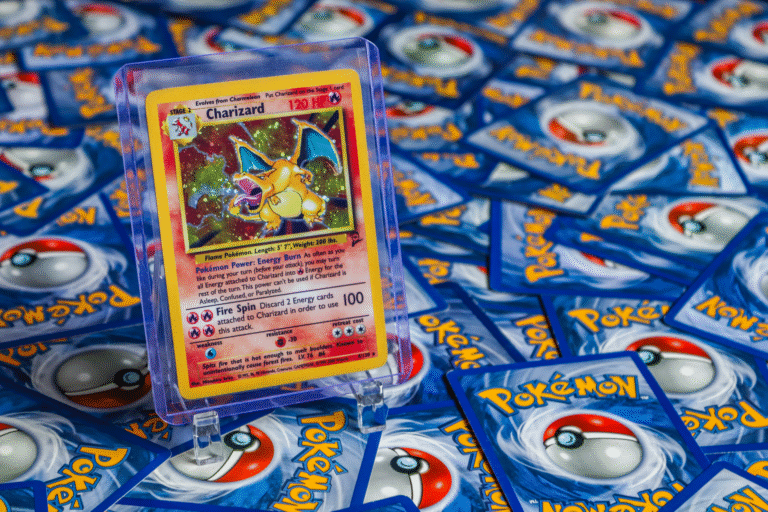
PSA 7 Charizard, Blastoise, and Venusaur cards remain the anchor holdings in any vintage Base Set collection, and the recent record sales of their PSA 10 counterparts have created downstream demand. The July 2025 sale of a PSA 10 First Edition Blastoise for approximately $88,000 doesn’t directly tell you a PSA 7 will appreciate sharply, but it does indicate where collector attention is focused. Rarer holos and first editions command substantially higher premiums than unlimited printings, so a PSA 7 First Edition card will have different appreciation dynamics than a PSA 7 Unlimited equivalent of the same Pokemon.
Lesser-known holos that have strong artwork or nostalgic appeal—cards like Hypno, Dragonite, or Machamp at PSA 7—have historically demonstrated more stable collecting appeal than commoditized commons. These cards maintain value because they appeal to players and casual collectors, not just investment speculators. The downside is that these cards don’t spike in value the way a Charizard might; they’re holdings for stability rather than explosive appreciation.
Market Outlook and What the Vintage Rebound Means for PSA 7 Going Forward
The completion of a full 1st Edition Base Set with all cards graded PSA 10 that sold for $911,629.69 demonstrates that the market for high-grade vintage Pokemon has stabilized at genuinely elevated levels. This suggests that the recovery from the 2022-2024 crash was legitimate, reflecting actual collector demand rather than speculative exuberance. For PSA 7 buyers, this signals that the market foundation is solid rather than fragile.
Going forward, PSA 7 cards will likely continue experiencing modest appreciation aligned with broader collector interest in vintage Pokemon, without the volatility that affects higher grades. The 20% gains over the last six months suggest the market still has room for growth as newer collectors discover vintage cards, but expect appreciation to normalize as the recovery from the crash matures. New collectors entering the vintage market will probably start with PSA 7 and PSA 8 cards simply because the entry costs are manageable compared to four and five-figure PSA 9 and PSA 10 holdings.
Conclusion
Buyers should approach PSA 7 Base Set holo cards with clear eyes about what they’re acquiring: authentic, reasonably accessible vintage Pokemon cards in a market that has stabilized and is experiencing genuine recovery momentum. The 15-35% PSA pricing premium over competitors is real but justified by market liquidity and collectibility.
PSA 7 specimens remain affordable enough for serious collectors to build meaningful positions while still capturing appreciable grading value—a combination that’s becoming rarer as the market recovers. Your next step should be identifying which specific holos align with your collecting goals and budget, verifying slab authenticity through careful examination or trusted dealers, and recognizing that PSA 7 cards appreciate more slowly than higher grades but offer better stability for long-term holding. The vintage rebound is genuine, but it’s also maturing; buying now captures real value rather than speculative upside.