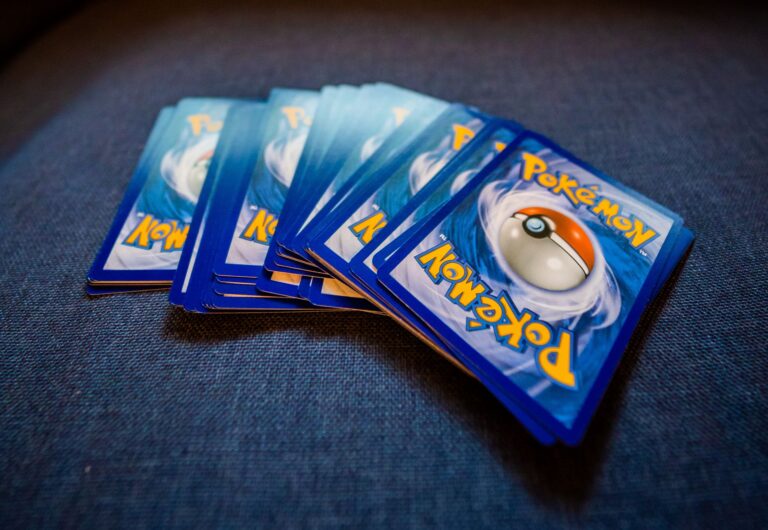
Nintendo nostalgia matters for vintage Pokémon card buyers because it directly drives demand and market prices for cards from the original trading card game era. When a collector holds a first-edition Base Set Charizard from 1999, they’re not just acquiring a piece of cardboard—they’re reclaiming a tangible connection to a specific moment in their childhood when Pokémon was a cultural phenomenon. That emotional weight translates into concrete pricing power. A card worth $200 in near-mint condition twenty years ago can now fetch $5,000 to $10,000, not because the card’s physical properties changed, but because the nostalgia surrounding it has intensified as millennial collectors have entered their peak earning years.
Nostalgia creates a floor beneath prices that rational economics alone doesn’t explain. The game itself hasn’t been played competitively for most of these cards in decades—they have no utility in the modern Trading Card Game environment. Yet their value persists and grows because nostalgic demand is inelastic. Collectors will pay premium prices for cards that represent formative memories, often prioritizing emotional significance over practical considerations like rarity or condition. This nostalgia-driven market dynamic separates vintage Pokémon cards from other collectibles that rise and fall with trend cycles.
Table of Contents
- How Generational Nostalgia Creates Card Market Tiers
- The Risk of Pricing Nostalgia Over Fundamentals
- Condition, Authenticity, and the Nostalgia-Preservation Link
- Building a Nostalgia-Driven Collection Without Overspending
- The Nostalgia Trap: Avoiding Common Pitfalls in Vintage Acquisition
- Preservation and Storage as an Extension of Nostalgia
- The Future of Nostalgia-Driven Pokemon Card Collecting
- Conclusion
How Generational Nostalgia Creates Card Market Tiers
The first wave of Pokémon nostalgia originated with players and collectors born between 1985 and 1995, who experienced the original 1996 Trading Card Game launch as children or teenagers. These buyers now have disposable income, and they’re spending it on the exact cards they wanted but couldn’t afford in 1998. A first-edition holographic Blastoise from Base Set commands $3,000 to $5,000 today largely because Gen X millennials remember standing in Toys “R” Us, watching other kids pull it from booster packs. The card hasn’t become more rare—there are thousands of copies in circulation—but the demographic willing to pay collector prices for it has swelled significantly. A secondary nostalgia wave is emerging now from younger millennials and early Gen Z collectors who didn’t participate in the original craze but who experienced Pokémon through the game boy titles, the anime series, or the 2016 Pokémon Go phenomenon. These buyers create demand for a different era of cards.
While they may still covet a Base Set card for its historical prestige, they’re more likely to pursue first-edition Gym Heroes or Neo Genesis cards that align with their own childhood memories. This generational segmentation creates multiple price floors within the vintage card market, protecting values across different eras rather than concentrating all demand at the oldest releases. The limitation here is that nostalgia-driven markets are vulnerable to saturation. As Pokémon cards have become mainstream collectibles, prices have inflated far beyond what economic fundamentals support. A card that cost $0.50 to produce in 1999 now trades for hundreds or thousands of dollars. If a significant percentage of nostalgic buyers achieve their collecting goals and exit the market, or if the underlying nostalgia weakens as new entertainment options capture younger generations’ attention, vintage card prices could contract sharply. Cards aren’t immortal investments—they’re sentiment-driven assets.

The Risk of Pricing Nostalgia Over Fundamentals
Separating nostalgia value from actual rarity is one of the biggest challenges in the vintage card market. A Base Set Blastoise is genuinely rare in mint condition—cards from 1999 weren’t stored carefully by most owners, and finding a psa 10 copy is difficult. But its price has also been driven upward by nostalgia, which inflates the perceived rarity. Meanwhile, a card from a smaller print run like Dark Rites or Aquapolis might be objectively rarer but command a fraction of the price because it generates less nostalgic pull. Buyers paying $4,000 for a Blastoise need to understand whether they’re paying for scarcity or for the feeling the card evokes. This distinction matters intensely when it comes to long-term value retention. A card that’s rare and has genuine collector demand may hold value across decades. A card that’s popular primarily because of nostalgia risks devaluation as new generations of collectors emerge with different sentimental attachments.
Someone who paid $8,000 for a near-mint Charizard in 2020 may find it worth $5,000 in 2035 if nostalgia for 1999 has dimmed among the overall collecting population. Conversely, original collectors who bought their cards for $10-20 before the nostalgia wave arguably made better investments per dollar spent, because they accumulated cards before the emotional premium was fully priced in. A critical warning: the vintage Pokémon card market has already experienced significant price corrections from its 2021 peak. Graded cards in general have lost 30-50% of their value since the PSA grading surge. This is partly because the novelty of the collectible card investment boom has worn off, and nostalgia alone cannot sustain prices that spiraled into speculative territory. New buyers entering the market should proceed with caution, recognizing that past appreciation does not guarantee future performance. Many cards that sold for $1,000-2,000 in 2021 are now available for $300-600 in the same condition. Nostalgia provided initial demand, but speculation created the bubble.
Condition, Authenticity, and the Nostalgia-Preservation Link
Nostalgia-driven buyers face a practical paradox: the cards they most want are the ones they wanted to use and enjoy as kids. A 9-year-old with a 1999 Charizard was thinking about playing with it, showing friends, and maybe even bending it a little—not storing it in a PSA slab. Yet the market values Charizards almost exclusively based on condition grades, with near-mint copies worth 10 to 20 times more than played-with copies. A PSA 8 Charizard might sell for $1,500, while a PSA 6 in the same set goes for $150. This creates a strange dynamic where nostalgia attracts buyers seeking to reclaim their childhood, but the collectible market structure requires them to own cards in pristine, unplayable condition rather than cards that reflect how they actually experienced the game. Some collectors resolve this by owning two versions: a graded, investment-grade copy for preservation, and a played-with copy for enjoyment. This approach allows them to satisfy nostalgic impulses while protecting the asset value of the premium card.
Others accept that they’ll view their vintage cards through a protective plastic case and embrace the museum-piece mentality. A smaller number attempt to play with their vintage cards—a genuine way to reconnect with childhood—but this is risky, as even minor play can drop a card’s grade by 2-3 points, destroying much of its monetary value. Authenticity is a second major concern layered on top of nostalgia. Counterfeit Pokémon cards from the era are increasingly sophisticated, and nostalgic buyers eager to own a piece of their childhood without paying thousands of dollars are prime targets for fakes. A buyer might find what appears to be a near-mint 1st Edition Charizard priced suspiciously low, purchase it for $500 or $1,000, only to discover it’s a counterfeit. The emotional disappointment—finally reclaiming that childhood card, only to have it be fake—is compounded by the financial loss. Buying from reputable grading companies like PSA, BGS, or Sportscard Guaranty is the safest path for high-value cards, though it adds grading costs and reduces the pool of nostalgic “raw” cards available.
Building a Nostalgia-Driven Collection Without Overspending
Many collectors approach vintage Pokémon cards with a budget-first mentality after recognizing they can’t afford first-edition Base Set cards. A practical strategy involves collecting within a specific era or theme that resonates personally—whether that’s the Gym Heroes set from 2000, the Fossil set, or non-holographic cards from early releases. This allows buyers to build a collection of 50-100 cards for under $2,000, creating a genuine sense of completion and nostalgia without the financial exposure of chasing the absolute rarest cards. A themed collection of 100 different non-holo cards from Base Set through Jungle might cost $500-800 and provide far more daily enjoyment and nostalgia connection than a single PSA 10 Charizard gathering dust in a safe. Another approach is to pursue lower-grade copies of iconic cards. A PSA 5 or 6 Charizard, which shows visible wear and played condition, might cost $200-400 instead of $2,000. It’s the same card, with the same image and nostalgic pull, but it reflects how most collectors actually experienced it in the 1990s.
The psychological satisfaction of owning a Charizard is often 90% achieved at the PSA 6 level compared to the PSA 10, but the financial cost is one-tenth. The tradeoff is that lower-grade copies appreciate more slowly and may eventually depreciate if the collector needs to sell. High-grade copies are more stable assets, though they require accepting the higher entry cost and the museum-piece constraints they impose. Local card shops and hobby communities offer another avenue for nostalgia collecting at more reasonable prices. Dealers often sell bulk lots of vintage commons and uncommons from specific sets for $1-2 per card, allowing collectors to complete entire non-rare sets for under $50. These cards generate substantial nostalgia—seeing all 102 different Base Set cards arranged in a binder is a powerful experience—without the capital investment of pursuing holographics. The limitation is that commons rarely appreciate in value and may never be worth more than a dollar regardless of condition, so this approach is purely for enjoyment rather than investment.
The Nostalgia Trap: Avoiding Common Pitfalls in Vintage Acquisition
Overvaluing emotional attachment is one of the most dangerous pitfalls. A collector might convince themselves that a specific card is “the one” from their childhood, pay a premium price to acquire it, and only later recognize that it was a common card they could have afforded for $20 instead of $500. Memory is unreliable—most 1990s kids owned dozens of duplicates, and the specific condition and edition of a card from 30 years ago is nearly impossible to verify. Entering the market with a list of specific cards you owned, rather than a general category, is a recipe for overpaying. If you remember owning “a Blastoise,” that’s worth maybe $30-50 in any condition. If you’re pursuing “a first-edition Base Set Blastoise in near-mint,” you’re entering a completely different price tier driven by rarity collectors, not nostalgia. A second pitfall is buying graded cards from lesser-known graders. PSA, BGS, and Sportscard Guaranty are the only graders with strong market liquidity and consistent pricing.
Slabs from CGC, SGC vintage submissions, or especially unknown graders may have cards of genuinely good condition inside, but collectors cannot reliably resell them at fair prices. A card in a non-standard slab might be worth 40-60% of the price of an identical card in a PSA slab, even if both are objectively the same condition. This creates financial drag for buyers who later want to sell, and it’s a particular danger for nostalgic buyers buying for the first time, who might not understand the importance of the grading company. A warning on payment methods and scams: high-value vintage cards attract fraudsters. Buyers paying $3,000+ for a single card should avoid payment methods without chargeback protection. Using credit cards or PayPal goods and services provides some recourse if the seller ships a counterfeit or misrepresented card. Wire transfers, cryptocurrency, or cash sales offer no protection and are common in fraud schemes. Nostalgic buyers eager to own a card quickly are particularly vulnerable to taking shortcuts on verification and payment security. Wait the extra week for a safe transaction method; it’s worth the delay to ensure you’re not sending $2,000 to a scammer.

Preservation and Storage as an Extension of Nostalgia
Owning a vintage card is only half the equation—preserving it is the other half. Cards stored in humid environments, exposed to sunlight, or kept in poor-quality sleeves deteriorate rapidly. A card left in a shoe box in an attic for 25 years might have dropped two or three grades in condition due to environmental exposure. Nostalgic collectors who want their cards to retain or appreciate in value need to invest in proper storage: acid-free sleeves, archival-quality binders, climate-controlled storage, and ideally, graded slabs for the most valuable cards. A PSA slab costs $20-50 depending on the card value and turnaround time, but it protects the card from handling, dust, and environmental damage far more effectively than a binder.
Some collectors display their cards rather than storing them in slabs, prioritizing visual enjoyment over maximum condition preservation. This is a valid choice for cards worth under $100-200, where the cost of grading outweighs the value retained. A PSA-graded card in a slab is essentially frozen—you see it through plastic and cannot handle it without risks. Many nostalgic collectors find more satisfaction in a high-quality binder where they can hold and examine cards, even if this carries a modest condition risk. The tradeoff is clear: display value versus preservation value. Cards in binders may slowly decline in grade by 0.5-1.0 points per decade with proper storage, while slabbed cards hold their grade indefinitely.
The Future of Nostalgia-Driven Pokemon Card Collecting
The vintage Pokémon card market is maturing from a speculative bubble into a more stable, nostalgia-anchored category. Prices have corrected significantly from the 2021 peak, which is healthier for long-term collectors but painful for speculative buyers who overpaid. Going forward, cards will likely appreciate based on genuine scarcity and nostalgia demand rather than pure investment momentum. New sets released by Pokémon Company continue to generate their own nostalgic followings—cards from 2010-2015 are beginning to show the early signs of the nostalgia pattern as buyers who grew up with those sets enter the collector market.
Within a decade, cards from that era will likely occupy a position analogous to where Base Set cards are today. The integration of vintage cards into mainstream pop culture—through social media platforms like TikTok and YouTube, celebrity collectors, and sports-card-style investment discourse—has permanently altered the market. Vintage Pokémon cards will never return to being purely a niche hobby. This means nostalgia-driven buyers should expect continued competition for high-value cards and increased prices over the very long term, even as short-term volatility persists. For collectors motivated by nostalgia rather than speculation, this suggests a focus on cards that are personally meaningful rather than purely rare, because personal significance is a form of value that will outlast market cycles.
Conclusion
Nintendo nostalgia matters for vintage Pokémon card buyers because it creates real economic value in a market where the cards themselves have zero utility. The emotional weight of owning a card from your childhood drives demand that transcends normal collectible dynamics, and this demand has created a market where some cards are worth thousands of dollars despite costing less than a dollar to produce. Understanding the role of nostalgia helps buyers make smarter decisions: separating which portions of a card’s price come from genuine scarcity versus nostalgia, recognizing which eras and cards align with their own memories, and making informed choices about condition grades and preservation methods that match their personal collecting goals.
For new buyers entering the vintage card market, the key is to approach nostalgia intentionally rather than impulsively. Build a collection around cards and eras that genuinely resonated with you, prioritize condition grades and prices that match your budget, and avoid chasing the absolute rarest cards unless you’re comfortable with high financial exposure and the volatility that accompanies speculation. Vintage Pokémon cards can be a rewarding, personally meaningful way to reconnect with childhood, but only when nostalgia is balanced with financial prudence and realistic expectations about long-term value.