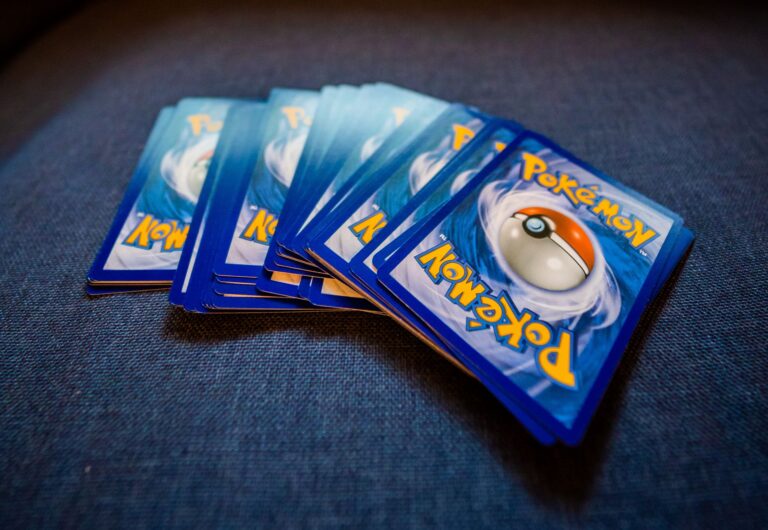
PSA’s card grading backlog currently sits at 11 million units, representing one of the longest processing delays in the company’s history. This staggering number means that if you submitted your Pokemon cards to PSA today, you would be joining a queue of 11 million cards waiting for evaluation. To put this in perspective, imagine a line of graders working back-to-back; even at an accelerated pace of 10,000 cards per day, clearing this backlog would take nearly three years without a single new submission arriving.
The backlog reached its peak of 14 million cards earlier in 2026, but despite recent operational improvements, the current 11 million figure demonstrates that PSA is still managing an unprecedented volume of submissions. The explosion in grading requests stems directly from the Pokemon card market’s expansion and the investment speculation that has driven collector demand. High-profile sales of rare Pokemon cards—particularly first editions and holographic cards from early sets—have fueled interest in getting cards professionally graded, which affects their resale value and market credibility. PSA’s reputation for quality and a 99.4% operational success rate in grading accuracy and card safety has made it the default choice for serious collectors, but this demand has created the current crunch.
Table of Contents
- What Does an 11 Million Card Backlog Actually Mean for PSA?
- Why the Backlog Exploded and What Triggered the Crisis
- PSA’s $200 Million Investment and the Backlog Tracker Initiative
- Timeline Projections—How Long Until the Backlog Clears?
- The Real Impact on Pokemon Card Collectors and Investors
- The Quality Question—99.4% Success Rate Under Pressure
- Monitoring the Backlog—Resources Available to Collectors
- Frequently Asked Questions
What Does an 11 Million Card Backlog Actually Mean for PSA?
An 11 million card backlog represents a fundamental operational challenge for psa. The company processes cards through multiple service tiers—from bulk Value submissions to expedited express services—and each tier has different processing speeds. When backlog numbers grow this large, it affects all tiers because PSA must allocate staff and resources across its entire operation. A collector who paid for a Standard service might typically wait 20–40 business days; with 11 million cards ahead, realistic timelines stretch considerably longer.
The backlog isn’t uniformly distributed across all service levels. PSA paused Value tier submissions effective June 2, 2026, following a 20% spike in submissions that threatened to push delays even further. This pause targeted the lowest-cost service level, protecting higher-revenue tiers (Standard, Express, Immediate) from even longer waits. While this decision reduced the rate of new incoming cards, it also meant casual collectors and budget-conscious customers could no longer submit cards at all for weeks or months, creating a two-tier system where wealthier collectors could still obtain grading through express services while others waited.
Why the Backlog Exploded and What Triggered the Crisis
The surge in PSA submissions didn’t happen overnight. The pokemon card market experienced a significant boom driven by nostalgia, investment interest, and celebrity involvement in collecting. When card values spike and graded cards command higher prices, the incentive to submit raw (ungraded) cards for professional evaluation intensifies. A common scenario: a collector finds a Charizard card in their attic, checks eBay sold listings, discovers graded versions of similar cards selling for thousands of dollars, and immediately ships their card to PSA.
What PSA didn’t anticipate was the velocity of submissions. The 20% spike that triggered the Value tier pause in June 2026 showed that PSA’s existing capacity—while substantial—couldn’t absorb demand growth at that rate. The company’s physical facilities, grading staff, and quality control processes all have maximum throughput limits. Unlike a software platform that can scale with code updates, grading requires physical infrastructure: workstations, staff trained in card authentication, and climate-controlled facilities for card safety. This created a dangerous feedback loop: the longer the backlog grew, the more discouraged collectors became, yet paradoxically, this discouraged some from submitting cards while others doubled down to secure their place in line.
PSA’s $200 Million Investment and the Backlog Tracker Initiative
Recognizing the severity of the situation, PSA announced a $200 million investment aimed at increasing operational capacity. This capital deployment signals the company’s commitment to expansion—new facilities, additional staff hiring, upgraded sorting and handling systems, and potentially new grading stations. While $200 million is substantial, the timeline for translating infrastructure investment into additional grading volume typically spans months or even years. A new facility doesn’t start processing cards the day construction finishes; staff must be hired, trained, and integrated into quality control workflows.
Alongside the investment, PSA launched a public Backlog Tracker, a real-time dashboard showing current backlog numbers, submission pause status, and grading volume metrics. This transparency tool represents a strategic shift; rather than obscuring delays, PSA acknowledged them publicly and gave collectors actual data to work with. The tracker updates reflect the company’s bi-weekly operational reports, showing that as of mid-to-late July 2026, the backlog remains substantial, though it has decreased from the 14 million peak. This transparency helps collectors make informed decisions about submission timing and service tier selection.
Timeline Projections—How Long Until the Backlog Clears?
PSA projects it will take 5–6 months from mid-to-late July 2026 to reduce the backlog to their target of 5 million units. This timeline assumes consistent grading volume and no major new surge in submissions. July 2026 grading projections are on track to surpass June’s record pace by more than 10%, suggesting that PSA’s operations are accelerating despite the massive queue. If these projections hold, the company could see meaningful relief by November or December 2026.
However, this timeline includes a significant caveat: it depends on the Value tier pause remaining in effect and on submission volumes staying relatively stable. If the pause lifts and casual collectors flood the system with cards again, or if another market catalyst (a major auction result, celebrity endorsement, or new Pokemon release) spikes interest in grading, the 5–6 month timeline becomes fantasy. Collectors planning submissions should assume these projections are optimistic scenarios, not guaranteed outcomes. The company’s own history shows that unexpected demand spikes can arrive suddenly and dramatically compress timelines.
The Real Impact on Pokemon Card Collectors and Investors
For serious collectors, the 11 million card backlog creates genuine constraints. A collector who wants to sell a valuable card must choose between waiting months for grading (and potentially missing a market peak) or selling it raw and accepting a significant price discount. A rare 1st Edition Charizard graded PSA 8 might fetch $15,000–$25,000, while the same card ungraded sells for $6,000–$12,000. Waiting 4–6 months for grading could mean missing a buyer who has cash available today. This timing pressure is a real cost imposed by the backlog.
Investors in Pokemon cards face similar pressures. Market sentiment shifts quickly; a card that’s hot today might be forgotten tomorrow. Flippers who buy raw cards with the intention of grading and reselling them are especially vulnerable to backlog delays. Their capital gets locked up in PSA’s queue, unable to generate returns, while market conditions change. This dynamic has already pushed some investors toward alternative graders like Beckett Grading or PSA’s Sportscard division, fragmenting the market and reducing price transparency.
The Quality Question—99.4% Success Rate Under Pressure
PSA’s 99.4% operational success rate in grading accuracy and card safety is exceptionally high, yet it becomes more important to verify when the company is under extreme pressure. A 99.4% rate means that 1 in 166 cards experiences a problem—whether that’s a grading error, damage during handling, or other quality issues. With 11 million cards in the queue, that translates to roughly 66,000 cards potentially affected by errors or damage. While PSA’s insurance and dispute resolution processes handle these cases, a collector who receives a damaged card or incorrect grade must initiate a claim and navigate customer service, delaying their ability to sell or trade the card.
The backlog itself doesn’t necessarily reduce grading accuracy—PSA’s trained evaluators can assess cards as quickly or slowly as needed. However, the pressure to process high volumes can introduce inefficiencies. Longer wait times mean cards sit in storage longer, increasing the risk of environmental damage (humidity, temperature fluctuation, light exposure) even when handled perfectly. PSA’s climate-controlled facilities mitigate this risk, but it remains a secondary concern when 11 million cards occupy storage space.
Monitoring the Backlog—Resources Available to Collectors
PSA maintains a real-time backlog tracker at their official site (psacard.com), where collectors can check current queue status, submission tier information, and grading timelines. This resource updates regularly, reflecting the company’s bi-weekly operational reports published by outlets like Baseball America and Sports Illustrated collectibles coverage.
Collectors who track this data closely can identify patterns: Does the backlog shrink during summer? Do certain months see faster processing? Does PSA’s grading volume spike after specific announcements? Collectors can also monitor industry news sources that cover PSA operational updates. The baseline facts are these: as of mid-to-late July 2026, 11 million cards sit in the queue; July’s grading pace is projected to exceed June by 10%; the target is 5 million units within 5–6 months; and Value tier submissions remain paused. For anyone considering a submission, checking the Backlog Tracker before sending cards provides the most current, accurate data available.
Frequently Asked Questions
Should I submit my cards to PSA right now?
It depends on your timeline and card value. If the card is valuable enough to justify expedited service fees, or if you can afford to wait 4–6 months, yes. If you need quick turnaround and budget-conscious Value tier service is your only option, the pause on Value submissions means you’ll need to wait for that tier to reopen or pay for a higher service level.
What’s the difference between 11 million and the 14 million peak?
The 3 million card reduction shows PSA’s grading volume is exceeding new submissions, but slowly. At this rate of progress, reaching 5 million units will still take months. The improvement is real but incremental.
Is PSA’s 99.4% success rate reliable given the backlog pressure?
The high success rate reflects PSA’s quality control protocols, not the backlog size. However, longer storage times for queued cards do introduce marginal additional risk of environmental damage, though PSA’s climate-controlled facilities minimize this.
Will the $200 million investment solve the backlog?
It will help prevent future backlogs and accelerate processing, but infrastructure expansion takes time. Don’t expect dramatic backlog reduction within weeks; results will materialize over months as new facilities come online.
Should I use an alternative grader like Beckett?
PSA still commands the Pokemon market. Beckett grades have lower market acceptance and resale value for Pokemon cards. The backlog is frustrating, but it reflects PSA’s market dominance, not declining quality.
When will the Value tier reopen?
PSA hasn’t announced a specific date. Monitor the Backlog Tracker for updates. The pause remains in effect as of late July 2026 and will likely stay until backlog reduction hits certain thresholds.