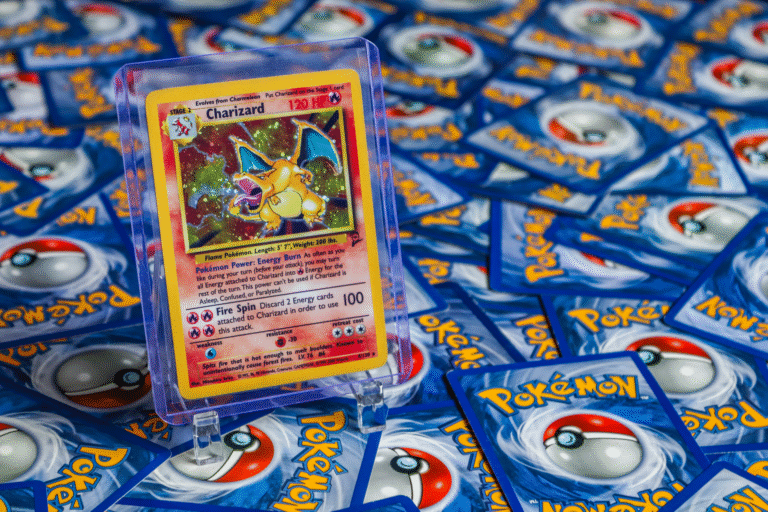
Nintendo nostalgia is reshaping Pokemon card prices across both the vintage and modern markets in 2026, with the franchise’s 30th anniversary serving as the primary catalyst for sustained price growth. Adults who grew up in the late 1990s and early 2000s now possess significant disposable income and are actively reclaiming the cards they remember from childhood, pushing vintage prices upward by 30-50% over the past 12 months. This nostalgia effect has become so powerful that a PSA 10 Pikachu Illustrator sold for over $5 million in 2026—the highest price ever recorded for any Pokemon card—demonstrating that sentimental value is translating directly into tangible market premiums. The broader market reflects this nostalgia wave across multiple price tiers. Vintage Base Set Charizard cards reached $420,000 for PSA 10 examples in 2024, while more accessible vintage cards have climbed steadily into the five-figure range.
Even within the past year, individual cards like Umbreon reached $48,500 and a Gem Mint Blastoise sold for $88,000 on eBay. These aren’t isolated spikes—they represent a sustained shift in collector behavior, where nostalgia-driven demand is outpacing supply constraints that have existed since these cards were printed. The mathematical scale of this appreciation underscores how nostalgia has transformed the market. Pokemon card prices rose 282% between 2004 and 2020, but the rate of growth accelerated dramatically after the 2020 boom, with prices increasing 1,350% since then. This acceleration correlates directly with the entry of millennial collectors with actual childhood memories of opening Base Set and Jungle packs, creating a market dynamic entirely different from earlier speculation-driven bubbles.
Table of Contents
- Why Does the 30th Anniversary Matter More Than Any Other Market Factor in 2026?
- The Vintage Market’s Nostalgia Premium and Its Real Limits
- Who Is Actually Driving the Nostalgia Effect—And What Happens Next?
- Modern Cards, Market Saturation, and Why Nostalgia May Hurt New Releases
- Warning: Speculative Overheating and the Risk of a Nostalgia Correction
- The Ex Era as the Next Nostalgia Frontier
- The Broader Nostalgia Market and What It Means for 2026 and Beyond
- Conclusion
Why Does the 30th Anniversary Matter More Than Any Other Market Factor in 2026?
The January 30, 2026 kickoff of Pokemon’s 30th anniversary has emerged as the single dominant price driver for the entire year, reshaping the trajectory of both vintage and modern card values. This anniversary isn’t just a marketing moment—it has triggered a psychological inflection point where collectors who might have otherwise remained casual buyers are making accelerated purchasing decisions around cards that represent formative moments in their youth. The 30-50% price increases observed on many vintage cards in the 12 months leading up to the anniversary date demonstrate that the nostalgia surge isn’t a speculative bubble but rather a measurable shift in how the market values historical cardboard. The anniversary has amplified existing nostalgia trends by creating artificial scarcity in the collector narrative. When a mainstream cultural moment arrives that definitively marks “30 years of Pokemon,” it signals to aging millennials that this may be their last major opportunity window to acquire the cards they remember.
This creates urgency that translates into accelerated bidding, higher asking prices, and a willingness to pay premiums that would have seemed unreasonable just two years prior. The release of the Prismatic Evolutions set and related anniversary products in early 2026 has only intensified this collector mentality, driving unprecedented demand across categories. The limitation to understand here is that not all vintage cards benefit equally from the anniversary effect. The most iconic cards—Base Set Charizard, Pikachu Illustrator, and similar heavy-hitters—have captured the majority of the anniversary-driven price appreciation. Mid-tier and bulk vintage inventory, while stronger than in 2025, isn’t experiencing the same explosive growth, suggesting that the anniversary effect has a diminishing effect as you move away from the most recognizable and nostalgia-laden cards.

The Vintage Market’s Nostalgia Premium and Its Real Limits
The vintage market has become increasingly bifurcated between cards that carry significant nostalgia weight and those that don’t, creating a pricing landscape where a single card’s emotional resonance can determine whether it appreciates 50% or stagnates. Vintage Pokemon cards (1996-2003) currently range from $500 to $550,000 for iconic psa 10 graded examples, but that massive range exists precisely because nostalgia operates on a spectrum. A card like Blastoise carries Pokedex utility and appears in the early games that defined the franchise, generating stronger nostalgia than an equally rare but less iconic vintage card from the same era. This nostalgia dynamic has created a real risk for collectors buying expensive vintage inventory based solely on rarity metrics. The total graded Pokemon cards market cap exceeds $10 billion, but that capital concentration is heavily weighted toward the most recognizable cards.
A PSA 10 first edition Base Set card with strong cultural resonance might appreciate 40-60% over the next two years, while a similarly graded non-holographic foil variant of a less iconic card might appreciate only 10-15%. The warning here is direct: buying vintage cards purely on rarity or PSA grade, without considering their nostalgia factor and recognizability, exposes you to potential downside if the broader market corrects and only the most iconic cards retain their premium valuations. Additionally, the Japanese market is already showing signs of divergence that suggest nostalgia-driven appreciation has limits. Modern singles in the Japanese market have corrected 20-30% from their launch peaks, while vintage and sealed products have climbed 15-25%. This divergence indicates that nostalgic demand for older, familiar card designs is actually cannibalizing demand for brand-new releases, suggesting that nostalgia is a zero-sum force in the collector’s budget. As the calendar moves further from the 30th anniversary milestone, expect to see nostalgia’s relative influence diminish—which could flatten prices on vintage cards that rose primarily due to anniversary momentum rather than fundamental scarcity.
Who Is Actually Driving the Nostalgia Effect—And What Happens Next?
The primary demographic fueling the nostalgia-driven price surge are millennials aged 30-45 who opened Pokemon cards during the original trading card boom of the late 1990s and early 2000s. These collectors now have career-stage incomes that allow them to re-enter the hobby at a different price point than they experienced as children, creating a one-time wealth effect that has fundamentally altered how the market values vintage inventory. This demographic is conscious, deliberate in their purchasing, and willing to pay substantial premiums for cards that represent specific memories—catching their first Charizard, trading with friends at recess, or remembering the exact pack they opened. However, Generation Z presents a completely different and potentially transformative nostalgia opportunity over the next 5-10 years. Gen Z collectors who remember the XY and Sun & Moon eras (roughly 2013-2020) are now entering the workforce with their own disposable income. These cards are now 6-13 years old and beginning to cross the threshold into “vintage” territory in collector psychology.
Over the next 5-10 years, expect to see the ex era cards (Ruby & Sapphire through Power Keepers, approximately 2003-2007) and early Sun & Moon cards experience the same nostalgia-driven appreciation that Base Set cards currently enjoy. This creates a secondary opportunity for younger collectors to acquire the cards of their youth before Gen Z demand fully awakens. The practical implication is that nostalgia effects follow a predictable generational wave. Base Set cards experienced their primary nostalgia surge in 2020-2026 (millennial wealth entry). The ex era is now becoming the “next frontier” of vintage cards and will likely experience accelerated appreciation between 2026-2031 as that era crosses into the 20+ year mark where nostalgia psychology typically solidifies. This suggests that collectors interested in capturing nostalgia-driven appreciation should be looking ahead to the next wave of cards that will resonate with Gen Z over the next 5 years.

Modern Cards, Market Saturation, and Why Nostalgia May Hurt New Releases
The Pokemon Company produced 9.7 billion cards in the previous fiscal year—a production volume that creates genuine structural headwinds for modern card appreciation, even in the presence of nostalgia-driven demand. This massive supply has created a bifurcated market where vintage cards benefit from scarcity-based nostalgia premiums while modern cards face downward pressure from overproduction. Prismatic Evolutions and anniversary releases have driven unprecedented near-term demand in 2026, but this demand is competing against the reality that for every special release, the Pokemon Company is simultaneously flooding the market with standard set releases at enormous print runs. Modern Pokemon card singles have still managed 46% year-over-year price increases, with specific chase cards experiencing 200-500% gains in 2026. However, this appreciation is heavily concentrated in chase rares and secret rares—the same psychological targets that nostalgia-driven speculation amplifies.
Commons and uncommons from the same sets are appreciating slowly or depreciating, suggesting that the modern market’s price increases are driven by the same demographic (older, nostalgic collectors) buying the same type of card (iconic, tournament-playable, or chase artwork). This creates a comparison dynamic: nostalgia is lifting all boats in the vintage market, but in the modern market, nostalgia is actually creating a tiered effect where only specific cards benefit. The tradeoff collectors face is that buying modern cards for nostalgia appreciation is a fundamentally different bet than buying vintage cards. Vintage cards appreciate partially because they’re no longer printed and their scarcity is permanent. Modern cards will appreciate only if they remain playable in competitive formats, achieve iconic status through tournament success, or become target pieces for nostalgia waves 15-20 years from now. Modern cards purchased today on the assumption that they’ll experience the same appreciation as Base Set Charizard are assuming that future generations will care about the exact same cards in the exact same way—a bet that works poorly for 99% of modern inventory.
Warning: Speculative Overheating and the Risk of a Nostalgia Correction
The trading card market’s total size is substantial—the global TCG market is projected to grow from $52.1 billion in 2026 to $90.2 billion by 2034 at a 7.1% compound annual growth rate. However, this overall market growth can mask the reality that the Pokemon segment itself is showing signs of overheating in specific price tiers. When a single card (Pikachu Illustrator) sells for over $5 million, it’s worth asking whether the price reflects underlying nostalgia demand or whether it reflects a speculative bubble where wealthy collectors are purchasing art assets and investment pieces rather than cards driven by genuine emotional resonance with the source material. This distinction matters because nostalgia-driven demand, while powerful, is also finite. Once the millennials who grew up with Pokemon have purchased their “target cards,” the demand curve flattens. If you bought Charizard in 2023 for $250,000 based on nostalgia trends, you may struggle to sell it for $300,000 in 2028 once the primary nostalgia wave has completed.
The warning here is specific: nostalgia-driven appreciation works extremely well in real-time for well-known cards but is a terrible long-term holding assumption. A Charizard purchased today for nostalgia reasons will need to find a secondary buyer in 5-10 years who has their own nostalgia driver—a buyer that may not exist if the card’s primary appeal was millennial demand. Additionally, the market saturation issue compounds this risk. With 9.7 billion cards in production annually and a total graded market cap of $10 billion, the average price-per-card across graded inventory is extremely low. This suggests that the $10 billion in value is heavily concentrated in a tiny number of elite cards and that the bulk of the market operates on much thinner margins. If nostalgia-driven buyers overextend on mid-tier cards expecting them to behave like Base Set chase rares, they may face 10-20% corrections once the 30th anniversary marketing cycle concludes and general nostalgia intensity begins to normalize.

The Ex Era as the Next Nostalgia Frontier
The ex era (Ruby & Sapphire through Power Keepers, roughly 2003-2007) has emerged as the “next frontier” for nostalgia-driven appreciation, and cards from this period are now showing early signs of the same demand acceleration that Base Set cards experienced in 2020-2024. These cards are now 19-23 years old, approaching the psychological threshold where “old and collectable” becomes “vintage with nostalgic value.” Collectors who were teenagers when these cards were released are now in their late twenties and early thirties—exactly the age when they have the income to re-enter the hobby and the disposable capital to buy the cards they remember.
The practical implication is that ex era cards currently represent better value than Base Set equivalents if your investment thesis is nostalgia appreciation. A PSA 8 ex era Mewtwo that costs $400 today could reasonably appreciate to $2,000-3,000 over the next 5 years as Gen Y collectors (who remember these cards from their teenage years) begin acquiring them in earnest. This is not speculation—it’s observing the exact pattern that happened with Base Set cards in 2020-2024 and extrapolating it forward to the next generational cohort of cards.
The Broader Nostalgia Market and What It Means for 2026 and Beyond
The Pokemon card market in 2026 is experiencing a nostalgia-driven surge that is fundamentally different from the speculation and gaming-driven demand that dominated the market in 2015-2019. This shift from speculation to nostalgia represents a maturing market where price increases are anchored to demographic purchasing patterns and genuine collector psychology rather than crypto-adjacent speculation or trading floor mentality. As long as millennial collectors continue to have disposable income and retain emotional attachment to the cards they opened as children, nostalgia will remain a powerful price driver.
However, the sustainability of nostalgia-driven appreciation depends on continuous waves of new nostalgic demographics entering the collector base. The Base Set nostalgia wave is already reaching maturity by 2026, and the ex era wave is just beginning. Without a subsequent Gen Z nostalgic event or hobby-culture moment that similarly elevates a new generation’s card preferences, the market could face flat-to-declining prices in the 2030s once the primary nostalgia waves complete. Collectors should think of 2026 as a peak year for nostalgia intensity, position accordingly, and avoid assuming that cards purchased today will appreciate at the same rates they have over the past 2-3 years.
Conclusion
Nintendo nostalgia is actively and measurably affecting Pokemon card prices in 2026, with the franchise’s 30th anniversary and the entry of millennial collectors into the market serving as the primary catalysts. Vintage cards, especially iconic designs like Charizard and Pikachu Illustrator, have experienced 30-50% appreciation over the past 12 months and will likely remain supported by nostalgia-driven demand through 2026 and 2027. However, this appreciation is concentrated in recognizable cards with genuine cultural resonance, not in rare but obscure inventory, and it follows a predictable generational wave that will eventually flatten as the primary nostalgic demographic completes their acquisitions.
For collectors participating in the market today, the key insight is to understand whether you’re buying for nostalgia sustainability or short-term appreciation momentum. Base Set cards have already captured the majority of millennial nostalgia value, while the ex era and early Sun & Moon cards represent the next-generation opportunity for 5-10 year appreciation horizons. Avoid overpaying for modern cards under the assumption they’ll replicate 2024-2026 gains, as the market saturation and speculative overheating suggest that most new releases will face downward pressure once the 30th anniversary marketing cycle concludes. Buy cards with genuine emotional resonance to you or your collector demographic, and remain skeptical of ultra-high-priced purchases that depend on a secondary buyer experiencing the same nostalgia wave you do.