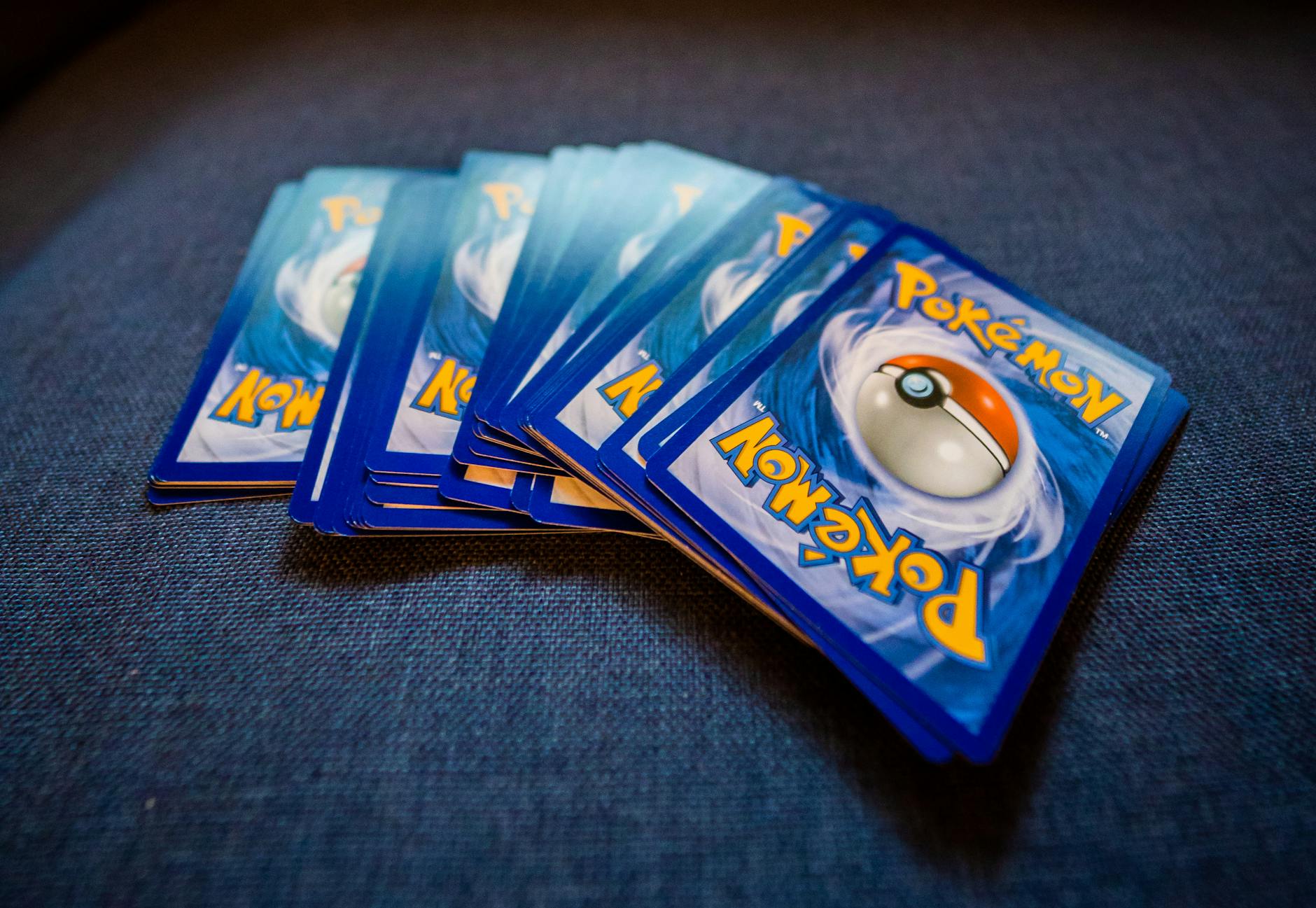
Japanese Pokemon cards are gaining attention primarily because of Pokemon’s 30th anniversary in 2026, which is driving unprecedented demand across the entire card market, combined with the massive success of Pokemon TCG Pocket—a mobile game that generated $1.25 billion in revenue within its first year and converted digital collectors into physical card buyers faster than manufacturers can produce inventory. The shift toward Japanese cards specifically reflects both practical advantages and market realities: Japanese cards feature superior printing quality, rarity advantages due to limited distribution compared to the global English market, and significantly lower purchase prices compared to English equivalents—a combination that has pushed Japanese card prices from an average of ¥70,000 ($470 USD) in May 2025 to over ¥160,000 ($1,070 USD) by March 2026, more than doubling in just 11 months.
This surge is not a temporary spike. The market has been trending upward for two years, and the momentum has only accelerated with recent developments in the Pokemon video game franchise, most notably the return of Mega Evolution in Pokemon LEGENDS Z-A, which has directly boosted demand for specific cards like Rayquaza. Meanwhile, Japanese sealed products—booster boxes and packs—cost 30-40% less than their English counterparts, making them the preferred choice for serious investors and collectors looking for value without sacrificing quality or rarity.
Table of Contents
- What’s Driving Demand for Japanese Pokemon Cards Right Now?
- Superior Printing Quality and the Grading Advantage
- Price Trends and the Divergence Between Modern and Vintage Cards
- Notable Cards Driving Japanese Market Attention
- Exclusive Availability and the Scarcity Factor
- Market Strategy and the Value Proposition
- The Market’s Future Trajectory and Staying Alert
- Conclusion
What’s Driving Demand for Japanese Pokemon Cards Right Now?
The 30th anniversary of pokemon in 2026 is the single biggest catalyst reshaping the collector market, as nostalgia-driven demand has created a generational moment for both casual and serious buyers. The anniversary has coincided with the success of Pokemon TCG Pocket, which converted millions of digital players into people seeking tangible cards—particularly Japanese versions, which holders perceive as higher-quality alternatives. This dual catalyst has outpaced production capacity, creating artificial scarcity even for newly released products. Beyond anniversaries and mobile games, specific franchise developments are creating demand spikes for particular cards.
The announcement that Mega Evolution would return in Pokemon LEGENDS Z-A triggered a surge in Rayquaza demand, demonstrating how gaming announcements directly influence card market behavior. Similarly, the Pokemon Card 151 set, released in June 2023 and featuring the original 151 Kanto Pokemon with modern artwork, continues to drive demand through pure nostalgia mechanics—buyers want cards that connect them to their childhood through current production standards. The result is a market where Japanese cards occupy a unique position: they’re positioned as premium alternatives to English cards, they’re cheaper to acquire on a per-unit basis, and they’re connected to multiple demand drivers simultaneously. When prices climb 21.2% cumulatively since 2022, and a single premium card like the Shibuya Pikachu breaks ¥100,000 in PSA 10 grading, the attention is justified by actual market movement, not speculation.

Superior Printing Quality and the Grading Advantage
Japanese Pokemon cards are manufactured to tighter quality control standards than English cards, resulting in noticeably superior printing. Colors are deeper and more saturated, holofoil patterns are more refined, and card centering—the alignment of the image on the card stock—is more consistent. This is not subjective preference; it directly impacts grading outcomes. Japanese cards achieve higher grading success rates, meaning a higher percentage of raw Japanese cards will achieve near-mint grades (9 or 10) when submitted to grading companies compared to English cards from the same set. This grading advantage compounds the investment argument.
A collector opening a Japanese booster box has a statistically better chance of pulling cards that will grade well, which increases the potential resale value of higher-grade specimens. However, this advantage comes with a caveat: the grading premium assumes continued relevance of grading companies and maintained demand for graded cards. If the collector market shifts away from grading-dependent valuations—which is possible but unlikely given current market structure—the printing quality advantage becomes more aesthetic than financial. The practical implication is that Japanese cards represent a lower-risk entry point for collectors interested in sealed product investing, particularly for modern sets. The difference between opening a Japanese booster box priced at ¥6,000 ($40 USD) versus an English equivalent at $90-100 USD is not just the purchase price; it’s the likelihood that the cards you pull will meet professional standards without visible centering or print defects.
Price Trends and the Divergence Between Modern and Vintage Cards
The Japanese Pokemon card market is experiencing a two-tier correction that reflects sophistication in collector behavior. Modern singles—cards from recently released sets—are correcting downward by 20-30% from their launch peaks, a natural market cycle as initial speculation settles into actual demand. Vintage and sealed products, by contrast, are climbing 15-25%, indicating that collectors with capital are rotating away from speculative modern singles and toward tangible, historically scarce inventory. May 2026 brought the first Japanese booster pack price increase in four years: packs climbed from ¥180 to ¥200, and booster boxes from ¥5,400 to ¥6,000.
This 11.1% increase signals that the Pokemon Company views the market as strong enough to sustain higher manufacturing costs, but it also represents a warning sign for collectors considering sealed product investment. The cumulative 21.2% increase in pack prices since 2022 means that a booster box purchased today costs substantially more than it did four years ago—reducing the margin of safety if the collector market contracts. Japanese sealed products remain attractive at current prices due to the English price premium, but this advantage narrows with each price increase. A collector considering investment in sealed inventory should treat the May 2026 increase as a marker: future price increases will further compress the value gap between Japanese and English products, making the current 30-40% discount potentially the widest it will be.

Notable Cards Driving Japanese Market Attention
The Shibuya Pikachu serves as a concrete example of how rarity and nostalgia compound into significant price movement. This Japan-exclusive promotional card reached ¥100,000 for PSA 10 graded copies by early 2026, while raw copies jumped to over ¥70,000 in the same period. The Shibuya card was available only through a limited, geographically restricted distribution in Tokyo, creating scarcity that persists years after distribution ended. This single card demonstrates the premium that collectors assign to Japan-exclusive inventory versus cards available in both markets.
Rayquaza represents a different dynamic: demand isn’t primarily driven by historical scarcity but by upcoming franchise content. The announcement of Mega Evolution’s return in Pokemon LEGENDS Z-A created a buying surge for Rayquaza cards, including older copies and modern versions. This illustrates how Japanese card collectors closely monitor video game announcements and build their collections around anticipated mechanics and features. Pokemon Card 151, the modern set released in June 2023, continues to maintain strong demand because it appeals simultaneously to nostalgia-driven buyers, new collectors attracted by the Kanto region’s cultural significance, and grading enthusiasts targeting specific cards with high PSA populations. Booster boxes from this set remain sought after because the artwork updates to the original 151 created a legitimate collecting narrative distinct from simple speculation.
Exclusive Availability and the Scarcity Factor
Japanese Pokemon cards are inherently rarer than English equivalents because distribution is limited to the Japanese market, preventing reprints destined for international release. When the Pokemon Company creates a promotional card available only through Japanese Pokemon Centers or tournaments, that card’s supply is mathematically finite and region-locked. English promotional cards often see reprints in different regions or languages, diluting scarcity; Japanese exclusives do not. This exclusivity is sustained by design. Japanese exclusive promotional cards have been on a sustained upward price trajectory for two years, indicating that scarcity is driving value rather than speculation. However, collectors should recognize a limitation: the value of Japanese exclusives depends on continued availability restrictions.
If the Pokemon Company decides to reprint a popular exclusive card in English or other regions, the scarcity advantage evaporates. This happened with some historical exclusives, and the price corrections were severe. For investors, exclusivity is a strength only insofar as the Pokemon Company maintains regional distribution restrictions. The strategic implication is that Japanese exclusive cards should be evaluated primarily on their status as collectible items, not purely as investment vehicles. The price appreciation of Shibuya Pikachu is real, but it’s also dependent on that card remaining exclusive to Japan. If you purchase Japanese cards primarily for appreciation, weighted your portfolio toward cards that have proven scarcity and brand recognition, not toward newer promos that might be reprinted.
Market Strategy and the Value Proposition
Japanese sealed products cost 30-40% less than English equivalents, a discount that exists specifically because the English market spans multiple countries and supports higher demand. A Japanese booster box trading at ¥6,000 (approximately $40 USD) versus a comparable English box at $90-100 USD creates an obvious arbitrage opportunity for collectors with access to Japanese retail. However, this discount presupposes that English prices remain elevated relative to Japanese prices—a condition that changes if English demand softens or Japanese demand climbs to price parity.
The practical strategy for collectors is to use the current price gap as a window of opportunity for sealed product accumulation, but to recognize that this gap will narrow as Japanese cards gain mainstream attention in English-speaking markets. Collectors who purchased Japanese sealed products at significant discounts two years ago are now facing a different equation: holding costs, grading costs, and storage costs compound over time, and the 30-40% discount advantage only justifies these carrying costs if you believe Japanese sealed inventory will appreciate faster than competing investments. For newer collectors considering entry into the Japanese market, the play is not “buy sealed Japanese products and hold for appreciation.” The play is “buy Japanese sealed products because you prefer the print quality, the grading likelihood, and the specific cards you want to pull, and treat any price appreciation as secondary to the collecting experience.”.
The Market’s Future Trajectory and Staying Alert
The Japanese Pokemon card market is entering a critical phase. The combination of the 30th anniversary, Pokemon TCG Pocket success, and video game franchise developments created a perfect storm of demand in 2026. As these catalysts mature and become baseline conditions rather than special events, the growth rate will inevitably slow.
Collectors should prepare for normalization: modern singles that currently command launch-day premiums will settle into equilibrium pricing, sealed products will face pressure from the May 2026 price increase, and attention will increasingly focus on actually scarce inventory—true vintage cards and region-exclusive promos. The longer-term opportunity lies in recognizing that Pokemon’s 30th anniversary is a once-per-decade event, and the infrastructure supporting it (Pokemon TCG Pocket, video game launches, promotional campaigns) creates a high baseline for card demand compared to pre-2026 levels. Japanese cards will likely remain elevated compared to five years ago, not because they’re better alternatives to English cards, but because the entire market is larger and more competitive. Smart collectors are already identifying specific Japanese cards with genuine scarcity, proven demand catalysts, and limited reprinting risk—the Rayquazas and Shibuya Pikachus, not the commodity products.
Conclusion
Japanese Pokemon cards are gaining attention because they represent a convergence of fundamental advantages—superior printing quality, regional scarcity, lower baseline prices compared to English equivalents—at a moment when the overall Pokemon card market is experiencing unusual growth. The 30th anniversary, the success of Pokemon TCG Pocket, and ongoing video game franchise developments have created demand that outpaces production, making Japanese cards the obvious choice for collectors prioritizing quality and value over brand familiarity or English-language convenience. However, this attention has already priced in significant appreciation.
The doubling of Japanese card prices in 11 months reflects the market recognizing these advantages; further gains require either sustained demand growth or the identification of genuinely scarce inventory that hasn’t yet been discovered by Western collectors. For collectors considering entry into the Japanese market now, the focus should be on which specific cards offer ongoing scarcity and demand drivers, not on the assumption that Japanese cards as a category will continue appreciating at double-digit rates. The market opportunity exists, but it requires selectivity.
You Might Also Like
- Why Auction Results Can Make Pokemon Cards Look More Valuable Than They Are
- Are Pokemon Cards More Stable Than Crypto During Market Volatility?
- Are Pokemon Cards Really Beating Traditional Collectibles?