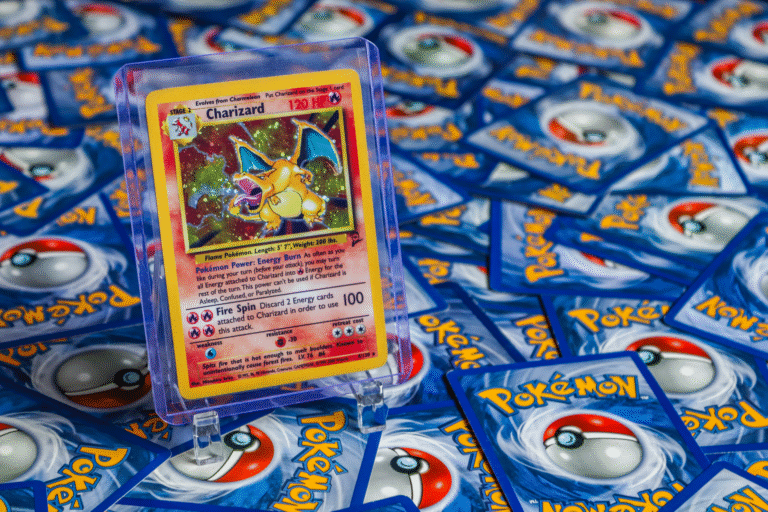
Base Set Pokémon cards will almost certainly be worth more when supply tightens further, because the market has already demonstrated this dynamic repeatedly. With only 486 PSA 10 copies of the Shadowless Base Set Charizard in existence—roughly 7.1% of all cards graded to that standard—and demonstrated price appreciation of 30% in 2025 alone, the fundamental economics are straightforward: fewer cards in the market drive higher prices. A PSA 10 1st Edition Base Set Charizard sold for $550,000 at Heritage Auctions in December 2025, while an ungraded Charizard worth approximately $1,900 achieved $16,270 in PSA 10 condition—an 8.5x value increase tied directly to scarcity and condition grading.
As more collectors grade their cards and PSA’s backlog grows, the supply of high-graded Base Set cards becomes progressively constrained. The grading companies themselves are overwhelmed—PSA has received more cards in three days than during the previous three months during peak demand periods. This bottleneck actually works in favor of investors holding vintage Base Set cards, because fewer new graded copies enter the market while demand from collectors and investors with disposable income continues to climb. The nostalgia factor driving this market—millennials in their 30s and 40s seeking cards they owned or couldn’t afford as children—shows no signs of slowing as Pokémon approaches its 30th anniversary.
Table of Contents
- How Scarcity Drives Base Set Card Valuations Higher
- The Supply Constraint: Why Fewer New Graded Cards Matter
- Record Sales and the Collector Demand Behind Them
- Timing the Grading Decision When Supply Gets Tighter
- The Risk of Overgrading and Market Saturation
- Nostalgia and Disposable Income: The Long-Term Demand Driver
- The 30th Anniversary Effect and Forward-Looking Scarcity
- Conclusion
How Scarcity Drives Base Set Card Valuations Higher
The rarity of Base Set cards at high grades is not hypothetical—it’s measurable and extreme. Shadowless variants are the most scarce, but even standard 1st Edition Base Set cards demonstrate scarcity that directly correlates to price premiums. The market data shows 1st Edition Base Set cards consistently outperform unlimited editions by 400–800%, meaning a 1st Edition card worth $100 might reach $500–$900 when a comparable unlimited edition costs significantly less. This spread exists because fewer 1st Edition cards were produced, fewer survived in good condition, and fewer collectors have them available for sale at any given moment.
The grading bottleneck amplifies this scarcity effect. When PSA receives more cards than it can process, the backlog delays the creation of new high-grade copies entering the secondary market. Investors who already hold graded Base Set cards benefit from this delay, because their cards represent a larger percentage of available supply. A collector sitting on a PSA 10 1st Edition Base Set Blastoise—which sold for approximately $88,000 in July 2025—holds one of the few certified examples available for purchase at that grade. As new submissions age in the queue, the relative scarcity of already-graded cards increases.
The Supply Constraint: Why Fewer New Graded Cards Matter
The limited number of base Set cards printed in 1999 and 2000 is fixed, but the percentage of those cards that exist in psa 10 condition remains surprisingly low. At 7.1% grading to PSA 10, the Shadowless Charizard demonstrates this reality clearly. Of all Shadowless Charizards ever produced, graded and submitted to PSA, only about one in fourteen achieves the top grade. This ceiling on available high-grade supply will never increase—it can only stay the same or decline as cards deteriorate, get lost, or are removed from circulation.
A critical limitation to understand: not every Base Set card will reach PSA 10, and not every card deserves grading. Cards with print lines, centering issues, or wear from childhood use may grade at PSA 8 or PSA 9, where the price premiums are smaller. An investor considering grading decisions needs to be realistic about a card’s condition before spending money on the submission. Additionally, grading costs (currently $20–$100 per card depending on service level) must be offset by the value increase. A card worth $500 ungraded that reaches $1,500 graded in PSA 10 makes sense; a card worth $100 that reaches $150 graded does not, after accounting for the grading fee.
Record Sales and the Collector Demand Behind Them
The $550,000 Heritage Auctions sale of a PSA 10 1st Edition shadowless Base Set Charizard in December 2025 represents more than an isolated transaction—it signals that deep-pocketed collectors are actively purchasing the rarest cards at premium prices. This sale occurred during a period when Base Set era cards appreciated 15–25% heading into Pokémon’s 30th anniversary year, with 1st Edition cards projected for 30–50% appreciation through 2026. That projection reflects real demand from individuals with significant disposable income who view vintage Pokémon cards as both collectible and investment assets. The 8.5x value increase from ungraded ($1,900) to PSA 10 ($16,270) for Base Set Charizard illustrates a practical dynamic: grading itself creates value by certifying condition and authenticity.
However, this same dynamic has created a grading market gap. PSA 10 graded cards command 10–30% premiums over the same card graded by competitors, meaning PSA’s reputation—not just the grade itself—drives additional value. For collectors deciding whether to grade cards, understanding this hierarchy matters. A PSA 10 will fetch more than a CGC 10 or BGS 10 of the same card, all else equal.

Timing the Grading Decision When Supply Gets Tighter
For collectors holding Base Set cards in strong condition, the grading decision becomes more strategic as supply tightens. The cost of grading (typically $30–$100 per card through various PSA service levels) is fixed, but the value added by grading increases when fewer graded copies exist. A collector with a borderline PSA 9 candidate today might wait six months as the grading queue grows, assuming the card will still be worth grading when processed. Conversely, if the card is genuinely PSA 10 quality and grading delays continue to extend, submitting now locks in a position in the queue while supply remains comparatively higher.
A practical tradeoff: fast grading services cost more but bypass the queue, securing the grade sooner when supply is still looser. Standard services cost less but guarantee a longer wait, potentially delaying entry into the market. For a card expected to appreciate 30–50% through 2026, the cost difference between fast and standard grading may be worthwhile. An investor should calculate whether the faster grade justifies the higher fee based on their card’s estimated value trajectory and their investment timeline.
The Risk of Overgrading and Market Saturation
One risk that often goes unmentioned is overgrading—submitting cards that don’t deserve high grades and wasting money on fees for marginal results. If a card grades PSA 8 instead of the hoped-for PSA 9 or PSA 10, the grading cost becomes a sunk loss with no value added. The Base Set market has experienced this problem at scale as grading demand surged. Casual collectors and speculators submitted thousands of cards expecting higher grades, only to receive 6s and 7s, locking in losses on grading fees.
Another limitation is market saturation at lower grades. While PSA 10 and PSA 9 remain scarce and valuable, PSA 8 and below cards are far more common. A Base Set card graded at PSA 8 will appreciate slower than a PSA 10 and may not justify the grading cost at all. Before grading, collectors should be honest about condition and either have the card evaluated by an experienced collector or study PSA grading standards thoroughly. The 30–50% appreciation projected for 1st Edition Base Set cards through 2026 assumes typical cards in solid condition—not every card will hit that mark.

Nostalgia and Disposable Income: The Long-Term Demand Driver
The purchasing power driving Base Set card prices comes from a specific demographic: millennials now in their 30s and 40s who owned Pokémon cards as children and now have disposable income to repurchase and upgrade their collections. This demographic is not fleeting—as they age and accumulate wealth, the demand for these cards likely continues. A collector who buys a PSA 10 Base Set card at $16,000 is often not a speculative trader but a long-term holder seeking a piece of childhood nostalgia.
This demand dynamic creates a floor under Base Set prices that doesn’t exist for newer cards. When a collector holds a graded 1st Edition Base Set card, they’re holding a product from 1999–2000 that was printed in limited quantities and has already survived 25 years of potential deterioration. As time passes and more copies deteriorate or get lost, the scarcity floor only strengthens. The $88,000 sale of a PSA 10 Blastoise demonstrates that even secondary Charizard cards command premium prices when graded well.
The 30th Anniversary Effect and Forward-Looking Scarcity
Pokémon’s 30th anniversary in 2026 has already created a measurable market boost, with 15–25% appreciation observed heading into the milestone year. Historical data from collectibles markets suggests these milestone years can sustain elevated demand even after the anniversary passes. Commemorative interest may pull new collectors into the market, increasing demand while supply remains constrained by the slow rate at which graders process submissions. Looking forward through 2026 and beyond, the projection for 30–50% appreciation in 1st Edition Base Set cards reflects realistic expectation based on tightening supply, continued demand, and the milestone effect.
The one wild card is grading turnaround times. If PSA dramatically expands capacity and processes thousands of backlogged cards, supply could briefly loosen. However, even a large processing surge would only create a temporary increase—the underlying supply of ungraded Base Set cards is finite, and many cards will never be submitted for grading. The long-term trajectory remains toward tightening scarcity.
Conclusion
Base Set Pokémon cards will be worth more when supply gets even tighter because the dynamics are already in motion. Scarcity at high grades is mathematically real—only 486 PSA 10 copies of the Shadowless Charizard exist, and that number will never increase. Demand from collectors with disposable income continues to climb as nostalgia drives purchasing decisions. Meanwhile, the grading bottleneck and the finite supply of ungraded Base Set cards guarantee that high-grade copies will become proportionally rarer.
The December 2025 sale of a PSA 10 1st Edition Shadowless Charizard for $550,000 and the 30–50% appreciation projected for 2026 demonstrate that the market has already priced in this scarcity dynamic. For collectors and investors, the window to acquire Base Set cards at current prices remains open, but it’s narrowing. As more collectors grade their holdings and the 30th anniversary effect continues, the supply-demand equation shifts further in favor of those who already hold graded cards or have access to high-quality ungraded Base Set cards still available for purchase. The practical question is not whether Base Set cards will be worth more, but whether the appreciation will be gradual or accelerate as supply constraints become more visible to the broader collecting community.