
Yes, Base Set Pokémon cards are likely to be worth significantly more by the time the Pokémon Trading Card Game reaches its 50th anniversary in 2046. A combination of scarcity, proven market growth, and the built-in demand catalyst of Pokémon’s milestone anniversaries suggests that high-grade Base Set cards could appreciate far beyond their current values over the next two decades. Consider this: a PSA 10 first edition Base Set Charizard sold for $550,000 at Heritage Auctions in December 2025—the highest recorded price ever for this card—yet market analysts project Base Set values to surge another 30–50 percent leading up to Pokémon’s 50th anniversary milestone. The foundation for this appreciation is mathematical and structural. The Pokémon TCG celebrated its 30th anniversary in 2026, and the 50th is now within the timeframe of serious collectors and investors.
Over the past year alone, Base Set values climbed 30 percent, with industry forecasts predicting a compound annual growth rate of 15–25 percent through 2035 for graded cards. These aren’t speculative projections—they’re based on observable market behavior, finite supply, and the consistent pattern of collector demand spikes around major anniversaries. The critical difference between past booms and this anticipated growth is market maturity. The speculator exodus that characterized the 2020–2024 correction has largely cleared the market, leaving behind a more stable foundation of serious collectors and institutional interest. This shift from speculative frenzy to genuine investment demand suggests that Base Set appreciation over the next two decades will be more sustained and durable than the volatility collectors experienced earlier in this decade.
Table of Contents
- How Base Set Scarcity Drives Long-Term Value
- Market Momentum and the 15–25 Percent Annual Growth Projection
- The Anniversary Catalyst and Collector Demand Patterns
- Pricing Tiers and the Hierarchy of Appreciation
- Grading, Authenticity, and the Risks of Condition Uncertainty
- The Maturing Collector Base and Institutional Interest
- The 20-Year Outlook: Pokémon’s 50th Anniversary and Beyond
- Conclusion
How Base Set Scarcity Drives Long-Term Value
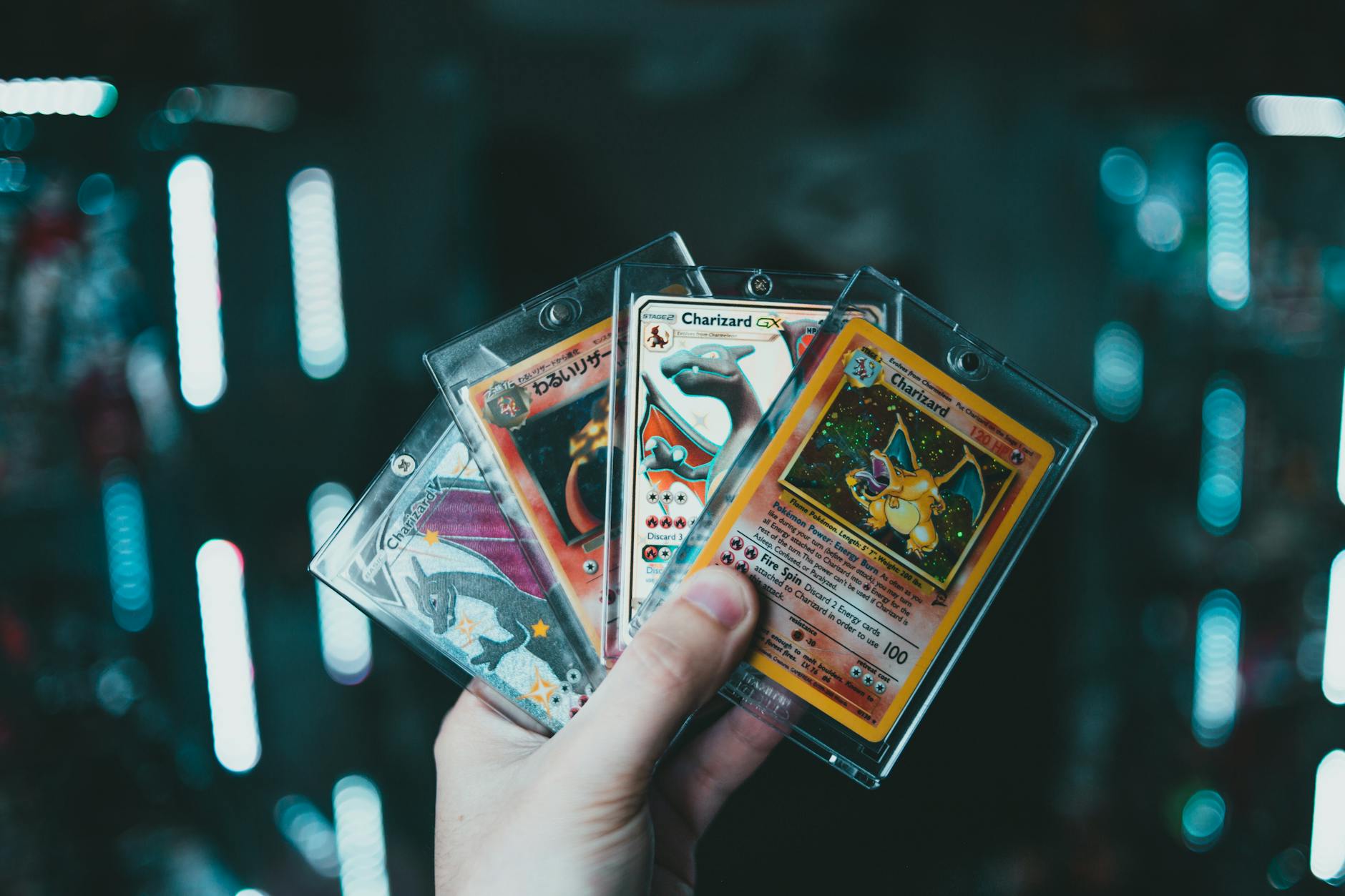
base Set cards are the pokémon TCG’s scarcest resource. Printed in 1999 and 2000, they’ve been in circulation—and out of circulation—for over 25 years. Most were opened, played with, damaged, or lost entirely. The surviving cards in near-mint condition represent a fraction of an already-small surviving population. This scarcity is not artificial; it’s a function of age, attrition, and the sheer rarity of finding a 25-year-old card still in pristine condition. Condition grading amplifies this scarcity dramatically. A Base Set unlimited edition Charizard might fetch $300–$500 in average condition, but a PSA 10 Shadowless first edition of the same card commands $15,000–$25,000.
The difference isn’t just quality—it’s rarity. PSA 10 grades represent cards in gem mint condition, a threshold so rare that only a handful of Base Set cards in each category meet this standard. As more cards are graded and cataloged over the next 20 years, collectors will develop an even clearer picture of how few truly flawless examples exist. This transparency increases competition for the available supply. By 2046, the supply of PSA 10 Base Set cards will be even more restricted than it is today. No new PSA 10 Base Set cards will be discovered—only existing cards already in collections. This immovable scarcity, combined with growing global collector wealth and the milestone anniversary effect, creates powerful upward pressure on prices.
Market Momentum and the 15–25 Percent Annual Growth Projection
The Base Set market has already demonstrated sustained momentum after exiting its correction phase in 2024–2025. Industry data shows a 30 percent value increase across Base Set cards in 2025 alone, signaling robust demand from collectors ready to pay premium prices. More importantly, forecasts from established market analysts project a compound annual growth rate of 15–25 percent through 2035 for graded Base Set cards—a figure that compounds significantly over two decades. Let’s apply this mathematically to a concrete example. A PSA 10 first edition Charizard valued at $15,000 today, growing at a conservative 15 percent annually, would appreciate to approximately $163,000 by 2046. At the higher end of the 25 percent projection, the same card could exceed $390,000.
These are not guaranteed outcomes, but they’re based on the actual growth patterns observed in the market during 2024–2026. The warning here is critical: these projections assume stable market conditions and assume the card remains in the same grade. A single authenticity issue, corner wear, or other discovery could significantly impact value. Additionally, economic recession, shifts in collector interest, or oversaturation of graded inventory could dampen growth rates below historical averages. The 30–50 percent surge expected specifically in the years leading up to Pokémon’s 50th anniversary adds another layer. This surge typically coincides with increased media coverage, anniversary products, and renewed collector excitement. The pattern was evident around Pokémon’s 25th anniversary in 2021, when certain Base Set cards spiked in value before the market stabilized.
The Anniversary Catalyst and Collector Demand Patterns
Pokémon’s milestone anniversaries act as powerful demand catalysts. The 30th anniversary in 2026 already demonstrated this effect, with the Pokémon Company planning the 30th Anniversary Celebration set for October 2026. This anniversary release, consistent with the 25th Anniversary model from October 2021, drives renewed interest in nostalgic collectibles and original Base Set cards. Collectors often return to the hobby during these milestone years, and new collectors enter the market specifically to obtain pieces of Pokémon history. The 50th anniversary in 2046 will be even more significant. It marks not just half a century of Pokémon as a franchise, but the 50th anniversary of the Trading Card Game itself—a moment of genuine cultural and collectible significance. Leading up to 2046, expect sustained media cycles, documentaries, anniversary celebrations, and nostalgia-driven content that will keep Base Set cards in the collector consciousness.
A specific example: During the 25th anniversary in 2021, a PSA 10 first edition Charizard appreciated by roughly 40 percent in the months surrounding the anniversary. The 50th anniversary will likely generate even greater demand. The limitation here is predictability. While anniversaries tend to drive spikes, the exact timing and magnitude vary. The market could anticipate the 50th anniversary so thoroughly that prices climb steadily beginning now, with less dramatic spike at the anniversary itself. Alternatively, a major anniversary set release could satisfy casual collectors, reducing demand for original Base Set cards. The safest assumption is that anniversary proximity will drive meaningful but not predictable price movements.

Pricing Tiers and the Hierarchy of Appreciation
Not all Base Set cards appreciate equally. The market has clear tiers, and appreciation rates vary based on edition, condition, and card identity. Unlimited editions typically range from $300–$500 for Charizards in good condition, while first edition Base Set Charizards command $3,000–$6,000. PSA 10 graded cards occupy a different universe entirely: $15,000 and above for most high-demand cards. Shadowless first editions represent the apex, with PSA 10 examples reaching $15,000–$25,000, while PSA 9 Shadowless cards range from $4,000–$7,000. This hierarchy matters for long-term appreciation projections. Lower-grade and unlimited edition cards have more room for absolute dollar appreciation, but the percentage gains may be more modest.
A $400 unlimited Charizard growing at 20 percent annually reaches $2,700 by 2046—an impressive percentage gain, but smaller in absolute dollars. Meanwhile, a $15,000 PSA 10 growing at the same rate reaches approximately $163,000. However, lower grades also face a compression risk: as grading technology improves and collectors invest in upgrading their collections, high-grade cards may appreciate faster than lower grades, eventually approaching saturation at the top end. For investors and collectors, this tier structure creates different strategic approaches. Collectors with limited budgets might build collections of lower-grade or unlimited cards, accepting that percentage gains may be lower but dollar amount is more attainable. Serious collectors and investors prioritize PSA 10 and high-condition cards, where absolute appreciation potential is higher. Neither approach is wrong; the choice depends on financial capacity and risk tolerance. The trade-off is clear: lower-grade cards are more affordable but less likely to match the appreciation of gem-mint examples.
Grading, Authenticity, and the Risks of Condition Uncertainty
One critical limitation overlooked by many collectors is the risk associated with grading and authenticity. A card’s value is inextricably tied to its grade and its authentication. A first edition Charizard that you believe to be PSA 10 but receives a PSA 8 at submission could drop from $15,000 to $1,000 instantly. Similarly, cards authenticated as genuine today might face re-evaluation as authentication technology advances. The PSA and BGS grading systems are the industry standard, but even these services have occasionally been subject to scrutiny regarding consistency. The “holy grail” concept in Base Set collecting highlights another risk: extreme rarity creates illiquidity.
A PSA 10 Shadowless first edition Charizard might be valued at $20,000, but finding a buyer willing to pay that price at the exact moment you want to sell is not guaranteed. These ultra-high-value cards trade infrequently. The broader market prices them based on sales data and comparable auctions, but actual liquidity for the rarest cards is limited. By 2046, this problem might be solved by institutional investment and dealer networks, but for now, owning a card valued at five or six figures carries the risk of illiquidity. There’s also the ongoing question of whether the grading standard will shift. If PSA, BGS, or other authentication companies tighten their grading criteria in the future, cards currently graded PSA 10 might face downgrades in a hypothetical resubmission scenario. This is speculative, but it illustrates the point: perceived value and actual liquidity are not identical, especially in the ultra-rare segment of the market.
The Maturing Collector Base and Institutional Interest
The departure of speculators from the Pokémon TCG market in 2024–2025 represents a structural shift. During the 2020–2024 boom, casual investors with no prior collecting experience purchased bulk Base Set cards, graded them, and flipped them for quick profit. Many of these investors exited the market when the easy gains disappeared. What remains is a more stable foundation: serious collectors who buy to hold, institutions building holdings, and professional dealers with long-term perspectives. This maturation suggests that appreciation will be more gradual and sustained, less volatile, and less subject to speculative bubbles.
A concrete example illustrates this difference. In 2021, at the peak of the 25th anniversary mania, a PSA 10 first edition Charizard sold for over $300,000—an astronomical price driven partly by speculative frenzy. That card would likely not command the same price today, even though the market has grown. However, the $550,000 sale in December 2025 demonstrates that the market has found a new equilibrium at genuinely high valuations. This equilibrium reflects real collector demand, not speculative excess. As the collector base continues to mature and stabilize, the foundation for consistent, compound appreciation strengthens.
The 20-Year Outlook: Pokémon’s 50th Anniversary and Beyond
Looking toward 2046, several factors will likely contribute to Base Set appreciation. The 50th anniversary will be a genuine cultural moment, generating media coverage and nostalgia-driven demand. By that year, the oldest surviving Base Set cards will be nearly 50 years old—genuine artifacts of Pokémon history. The surviving population of high-grade examples will be even smaller, as cards deteriorate, get lost, or are damaged. Simultaneously, collector wealth globally is increasing, expanding the pool of buyers capable of paying premium prices for rare cards.
The range of potential outcomes is wide. A conservative scenario—assuming the market grows steadily at 15 percent annually with modest demand from the 50th anniversary—suggests that current PSA 10 Base Set cards could double in value or slightly more. An aggressive scenario—assuming stronger growth rates, increased institutional investment, and a major anniversary demand spike—could see appreciation approaching 200–300 percent or higher for the rarest cards. A pessimistic scenario would involve market saturation, economic recession, or a shift away from Pokémon nostalgia, dampening growth. Most likely, reality will fall somewhere in the middle: meaningful appreciation driven by genuine scarcity and growing collector interest, tempered by market corrections and variability.
Conclusion
Base Set Pokémon cards are positioned for substantial appreciation by the time Pokémon reaches its 50th anniversary in 2046. The combination of absolute scarcity, proven market momentum, and the built-in demand catalyst of milestone anniversaries creates a compelling case for long-term value growth. A PSA 10 first edition Charizard at $15,000 today could realistically reach $100,000–$300,000 by 2046 under various growth scenarios, though results will vary by card, grade, and market conditions. For collectors and investors, the path forward requires clarity about your actual goals. If you’re collecting for the passion of owning Pokémon history, that motivation is intrinsically valuable and doesn’t depend on price appreciation.
If you’re investing for financial return, focus on the highest grades you can afford—PSA 10 and PSA 9 cards have the greatest appreciation potential due to extreme scarcity. Avoid the temptation to treat every Base Set card as an investment; lower-grade cards may appreciate, but the percentages pale next to gem-mint examples. Finally, prepare for volatility. Even assuming steady long-term growth, the path will include corrections, market cycles, and periods of stagnation. The surest strategy is to buy cards you’re comfortable holding for years, regardless of month-to-month price fluctuations.
You Might Also Like
- Why Vintage Pokémon Base Set Cards Could Become the Next Big Generational Collectible
- Are Celebrations Cards Still Worth Watching After the Hype Faded?
- Why Pikachu Cards Can Spike Without Warning