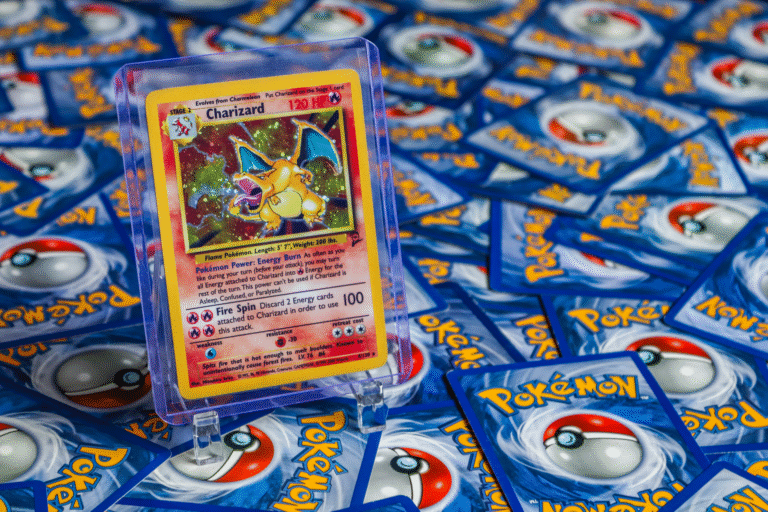
Official Pokémon rankings reveal a generational fandom landscape that tells a clear story: Generation 1 maintains overwhelming dominance, but the fandom itself is far more fragmented and diverse than many collectors realize. The numbers don’t lie—Charizard stands as the most popular Pokémon overall with 3,105 favorites on Serebii.net, more than double Pikachu’s 1,524 and Eevee’s 1,430—but this singular stat masks a more nuanced reality about how different age cohorts of fans have shaped decades of popularity trends. What these rankings truly expose is not a monolithic fanbase locked in nostalgia, but rather distinct waves of attachment based on when players entered the franchise, which cards they first collected, and what the cultural moment meant to them.
The 2025 Johto Times Poll involving over 580,000 total votes across all generations, combined with Japanese survey data capturing 18,345 responses, provides unprecedented insight into how fandom actually breaks down by era. These rankings show us which Pokémon hold genuine staying power versus which ones merely benefited from being first, and they reveal emerging favorites that challenge the assumption that newer generations cannot achieve the loyalty commanded by the original 151. For serious card collectors and investors, understanding what these rankings reveal about generational fandom is essential—because the Pokémon worth money tomorrow often correlates directly with which generation’s fans are currently driving demand.
Table of Contents
- Why Charizard’s Supremacy Reveals Generation 1’s Gravitational Pull
- Generation 1’s Dominance Across Nearly Every Metric
- The Surprising Ascent of Later-Generation Favorites
- What These Rankings Mean for Collectors and Card Market Positioning
- The Hidden Biases in Official Pokémon Ranking Data
- How Different Age Cohorts Interpret the Ranking Data
- The Evolution of Fandom and What Tomorrow’s Rankings Might Show
- Conclusion
Why Charizard’s Supremacy Reveals Generation 1’s Gravitational Pull
Charizard’s overwhelming lead as the most popular pokémon isn’t accidental or arbitrary—it reflects a fundamental truth about pokémon fandom: Generation 1 created the template that all subsequent games would follow, and it did so at a moment when trading card games, television, and video games collided perfectly. The Kanto region generated 86,868 votes from 14,478 participants in the Johto Times Poll, more than any other generation, and this dominance cascades down through the entire franchise’s popularity hierarchy. Charizard benefits from being rare in the original card set, appearing as a stage-2 evolution that collectors had to actually hunt for, plus it received iconic treatment in the anime series and boasts legitimate competitive viability across decades of gameplay. What’s critical to understand is that this isn’t simply a nostalgia effect—it’s a compounding advantage.
Every collector who started in the 1990s learned to value Charizard. Their spending power increased as they aged into adulthood. Those same collectors now influence younger players through parents introducing their kids to the franchise, through social media content celebrating vintage cards, and through the sheer market pressure of Charizard remaining the most photographed, most-discussed, and most-expensive Pokémon card on record. The limitation here is that this ranking data captures *current* popularity; it doesn’t distinguish between collectors who love Charizard for what it represents in their childhood versus pure monetary investment, and those two groups often behave very differently when cards spike in value.

Generation 1’s Dominance Across Nearly Every Metric
Generation 1 doesn’t just lead in overall votes—it leads across almost every measurable category. According to data from MRO Electric, Generation I accounts for 11 of the most-searched Pokémon across U.S. states, including not just Charizard and Pikachu but also Blastoise, Venusaur, and others that combine nostalgia with competitive utility. Gengar, specifically, ranks as the most beloved Generation 1 Pokémon when you isolate fan voting to that generation alone, commanding 2,447 votes according to Comic Book’s generational breakdown. This isn’t a minor preference—it’s a structural reality of the modern Pokémon ecosystem.
The danger here is assuming that Generation 1’s dominance means later generations don’t matter. The same Johto Times Poll that showed Kanto leading with 86,868 votes also revealed Johto with 74,742 votes and even Paldea (Generation 9, the most recent) pulling 55,524 votes—significant engagement that represents tens of thousands of active, voting fans. Meanwhile, the Johto Times data included participation from all nine generations, indicating that the fandom isn’t bifurcated into old versus new, but rather exists as overlapping cohorts. A critical limitation of popularity rankings is that they measure fan preference in the abstract, not purchasing behavior or card market demand, which often correlate imperfectly. A Pokémon could rank fifteenth overall but still command higher card prices than the second-ranked favorite if fewer collectors pursue it and those who do are wealthy.
The Surprising Ascent of Later-Generation Favorites
Mimikyu’s placement as the third-most popular Pokémon overall in major 2025 Japanese rankings fundamentally challenges the assumption that only Generation 1 and early-generation Pokémon can achieve iconic status. Mimikyu didn’t exist before Generation 7, and yet it outranks Pikachu—the franchise’s literal mascot—in fan preference voting. This represents a generational shift where players who grew up with the Nintendo Switch and Alola region are now old enough to participate in fan surveys, and their preferences are displacing the purely nostalgic order that dominated discussions for decades. Mimikyu resonates because of its design philosophy: it’s a ghost-type with personality quirks, a compelling Pokédex entry explaining its motivation, and competitive viability in structured play.
The broader pattern shows diverse generational representation in the top rankings, with the 2025 legend survey pulling from five different generations represented in its top 10. This means that the idea of “Generation 1 forever” is slowly being challenged by accumulating fandoms. Younger players who started their Pokémon journey in 2016 or later have no inherent loyalty to the original 151—they’re attached to the starters they chose, the legendaries they pursued, and the region they explored. For card investors, this is significant because it suggests that future price spikes won’t necessarily concentrate on Base Set Charizard; emerging favorites from Generations 5-9 could develop the same cultural stickiness as classic cards once those generations of players achieve buying power in the collector market.

What These Rankings Mean for Collectors and Card Market Positioning
Rankings provide data about preference, but collectors often misinterpret what that preference translates to in card values. Charizard’s dominance as the most popular Pokémon correlates with it being one of the most expensive and sought-after card prices historically—but the relationship isn’t perfectly linear. A Pokémon ranked tenth in fan preference might have far fewer collectors pursuing its cards, making those cards rarer in high-grade condition and therefore more valuable to the subset of players who specifically want them. The 2025 Japanese survey’s 18,345 votes provide a snapshot of preference, but that survey likely skewed toward players in their late teens and twenties, potentially underrepresenting older collectors who might prioritize different Pokémon when spending money on sealed product or graded singles.
The tradeoff between popularity and scarcity is crucial here. Gengar’s designation as the most popular Generation 1 Pokémon makes it a natural target for collectors, but the original Base Set Gengar was printed in reasonable quantities compared to the extreme scarcity of shadowless or first-edition variants. By contrast, a less popular Pokémon that appeared only in a limited set or as a promotional card might command higher prices despite lower fan vote totals. Savvy collectors recognize that rankings like these are most useful when cross-referenced with set data: if Charizard appears in five major sets from the 1990s and early 2000s, increased supply dampens price growth compared to a less-popular Pokémon appearing in only two sets. The rankings tell you what fans want; print runs and availability tell you whether that want can be satisfied.
The Hidden Biases in Official Pokémon Ranking Data
Ranking surveys are methodological snapshots, and the composition of who participates shapes outcomes dramatically. The Johto Times Poll’s 580,516 total votes across all generations came from 14,478 participants in Kanto alone, suggesting the survey required active participation on a specific Pokémon fan website—meaning it likely overrepresented engaged hardcore fans and underrepresented casual players who own cards but don’t vote in online polls. The 2025 Japanese Legends: Z-A Survey with 18,345 votes was likely conducted in Japan specifically, which could skew toward Pokémon popular in Japanese culture or more recent releases emphasized in Japanese regional events. These surveys don’t capture the silent majority of collectors who buy what their friends have, what’s trending on resale sites, or what fits their budget.
A significant warning: official Pokémon rankings based on fan voting can be influenced by community dynamics, memes, and social media momentum as much as genuine long-term preference. A Pokémon might spike in rankings during a specific generation’s game launch or anime release, only to settle lower once that cultural moment passes. Gengar’s high ranking within Generation 1 reflects decades of consistent appreciation, but a Pokémon currently climbing rankings might not maintain that trajectory. Investors and collectors should treat these rankings as one data point among many—combined with print run data, competitive viability, anime prominence, and historical price trends—rather than as predictive tools for future card values. The limitation is that rankings capture a moment in time, not a direction of travel.

How Different Age Cohorts Interpret the Ranking Data
The generational breakdown in rankings reveals stark patterns in how different age groups within the Pokémon fandom actually relate to the franchise. Players who were ten years old in 1999 rank differently from those who were ten in 2009 or 2019, and these demographic cohorts command vastly different spending power now. A thirty-five-year-old collector with disposable income from the original Generation 1 boom has different priorities and purchasing patterns than a twenty-year-old who discovered Pokémon through competitive VGC circuits or through content creators on streaming platforms. The Johto Times Poll’s 14,478 Kanto participants represented 86,868 votes—meaning some participants voted multiple times or weighted their preferences, creating a more nuanced picture than simple popularity contest data.
The 2025 survey results showing representation across all nine generations suggest that the fandom has genuinely diversified. Rather than a pyramid where Generation 1 towers above all others, it’s becoming more like a landscape with multiple peaks. This has direct implications for card values: a Pokémon might be less popular overall but be intensely collected by a specific demographic, creating pockets of demand that defy the broader rankings. Charizard remains dominant, but its dominance is increasingly a historical artifact combined with current continued preference, rather than the inevitable outcome of universal fandom consensus.
The Evolution of Fandom and What Tomorrow’s Rankings Might Show
The trajectory visible in current rankings suggests that future popularity data will show continued diversification rather than Generation 1 consolidating its dominance further. Each new generation brings new favorite Pokémon, and unlike earlier eras when older games became inaccessible, modern players can easily revisit all nine generations through remakes, ports, and online services. This means that Pokémon from Generations 3-9 aren’t competing against a fading memory of Generation 1; they’re competing against an actively playable generation that new players can experience directly. Mimikyu’s remarkable placement despite being only five years old at the time of the 2025 rankings suggests that newer Pokémon can achieve the cultural stickiness traditionally reserved for the original 151.
The future card market will likely fragment into more specialized segments. Generation 1 cards will remain the prestige tier and price anchor, but generations 5-9 will develop their own collector bases with devoted fans in their twenties and thirties with substantial buying power. The current rankings are still dominated by nostalgia, but as today’s teenagers age into collectors, the next ranking survey in 2030 might show a very different distribution. For collectors building long-term holdings, this suggests value not just in chasing current favorites, but in identifying emerging favorites that haven’t yet been fully valued by the market.
Conclusion
Official Pokémon rankings reveal that generational fandom is neither a simple nostalgia hierarchy nor a purely merit-based system of preference—it’s a complex interaction of introduction timing, design appeal, competitive viability, cultural saturation, and sheer historical momentum. Charizard’s dominance is real and deserves respect, but it coexists with genuine, measurable fan preference for later-generation Pokémon like Mimikyu, and with substantial engagement across all nine generations. The 2025 data captures a moment when the original 151 still commands attention but younger cohorts are building their own collection preferences that will shape market values for the next decade.
For collectors evaluating their portfolios, the key insight is this: these rankings matter, but they’re most valuable when understood as preference data rather than predictive pricing signals. They show you what fans currently love, but not necessarily what cards will appreciate. Use ranking data to understand the broader fandom landscape, identify emerging favorites before they’re expensive, and recognize that the most profitable strategy isn’t always chasing what everyone already wants. The next major price spike might come from a currently under-appreciated Pokémon from Generation 6 or 7, once its fan cohort matures into serious collectors and realizes how few high-grade versions of their favorite cards were ever printed.