Pokémon rankings spark fierce debate because they represent fundamentally different ways of measuring what makes a Pokémon valuable or powerful. When Japan’s official 2026 Pokémon popularity poll crowned Pikachu as the undisputed champion with 113 votes—edging out Eevee and its evolutions’ collective 90 votes—it settled one question while opening dozens more: Were voters choosing based on nostalgia, competitive viability, design aesthetics, or cards in their collections? The same ranking methodology that produces a clear winner in a national poll produces wildly different results when competitive players, content creators, collectors, and casual fans each apply their own criteria.
The disagreement runs so deep because there’s no single universal ranking that matters everywhere. A Pokémon might dominate in the Video Game Championships (VGC) while remaining worthless in card prices, or capture hearts in a popularity vote while failing to crack competitive viability lists. This fragmentation of authority is what transforms rankings from simple lists into the internet’s most reliably contentious Pokémon conversations.
Table of Contents
- Why Do Different Ranking Systems Produce Such Different Results?
- The Problem With Claiming Any Single Ranking Is Authoritative
- How Card Prices Reveal What Collectors Actually Value
- Where Competitive Players and Casual Collectors Fundamentally Disagree
- The Danger of Assuming Tier Lists Apply Across Formats
- What Popularity Rankings Actually Measure
- The Future of Pokémon Rankings in an Increasingly Fragmented Community
- Conclusion
Why Do Different Ranking Systems Produce Such Different Results?
The core tension is that rankings measure different things. Competitive legend WolfeyVGC spent nearly four hours creating a video ranking all 1,133 pokémon in a metagame context, and his top choice—Kyogre, narrowly ahead of Groudon—reflects what works best in tournament play, not what the general public loves. Meanwhile, official popularity rankings like Japan’s 2026 poll measure emotional attachment and cultural relevance. A Pokémon can be simultaneously the best option for winning tournaments and virtually unknown outside competitive circles. VGC tournament data amplifies this split even further. In the 2026 Regulation Set M-A format, Sneasler dominated at a 43.80% usage rate, supported by consistent appearances from Garchomp, Kingambit, Basculegion, and Incineroar.
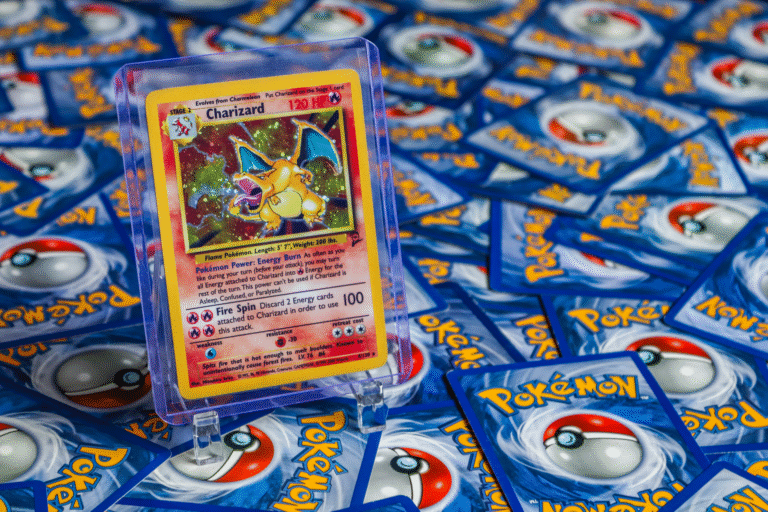
These weren’t voted there by fans—they earned their positions through proven performance across 112,446 competitive battles analyzed from March 14 through April 9, 2026. A trainer who builds decks based on popularity rankings would make fundamentally different choices than one optimizing for tournament success. The Trading Card Game adds yet another layer of complexity. The 2026 Europe International Championships were dominated by four distinct archetypes: Gardevoir ex, Dragapult ex, Gholdengo ex, and Charizard ex. A card-focused collector cares deeply about these rankings, while a VGC player might find them irrelevant. The same Pokémon species can be competitively dominant in cards, moderately useful in video game tournaments, and entirely unpopular in fan votes—creating a three-way split that almost guarantees disagreement.

The Problem With Claiming Any Single Ranking Is Authoritative
The biggest source of online friction emerges when someone asserts that one ranking methodology should override all others. Smogon University maintains the most respected tier system for singles battles, but that system doesn’t apply to VGC (which uses a different ruleset entirely), doesn’t predict card prices, and doesn’t measure popularity. When a player argues “Kyogre is actually the best Pokémon” based on WolfeyVGC’s ranking, they’re correct within a specific context—competitive singles or their interpretation of it—but that claim becomes inflammatory when presented as universal truth. The limitation of any ranking system is that it captures a single moment in time within a specific format or community. VGC metagames shift annually as new expansions release and tournament regulations change. Card prices fluctuate based on supply, print runs, and collector demand rather than inherent competitive value.
Popularity polls measure the preferences of voters in that specific year, not timeless truth. Someone citing a 2026 ranking as proof of a Pokémon’s “true” strength in 2027 is already working with outdated information. This temporal instability drives much of the debate. A Pokémon that’s unquestionably top-tier in April can fall from favor by autumn when the metagame shifts. Defenders of previously-dominant species argue those rankings were “illegitimate” or “fluky,” while detractors use the new data as evidence the earlier defenders were wrong all along. Both are partly right—the metagame genuinely evolved—but people frame it as a debate about truth rather than a natural progression in a dynamic system.
How Card Prices Reveal What Collectors Actually Value
While competitive metrics and popularity votes offer clear numerical rankings, card prices represent the most honest market-based ranking of what Pokémon truly matter to collectors. A Pokémon favored in the European TCG Championships like Charizard ex commands premium prices because tournament players and collectors both recognize its value. But this creates a third axis of disagreement: is a Pokémon “good” because it wins tournaments, because fans love it, or because its cards are expensive? The connection between tournament dominance and card prices isn’t automatic.
Some competitively strong Pokémon never see significant price spikes because they appeared in high-print-run sets. Others become collector favorites despite competitive irrelevance, driving scarcity and value purely through aesthetic appeal or cultural significance. Pikachu’s position as the official franchise mascot means its cards hold value regardless of tournament performance—a pattern that frustrates competitive players who argue the ranking rewards marketing over merit.

Where Competitive Players and Casual Collectors Fundamentally Disagree
The deepest divide emerges between people optimizing for competitive success versus those collecting based on personal preference or investment value. A VGC player building around the 43.80% usage rate of Sneasler makes decisions that maximize win probability in a specific tournament season. A card collector might view Sneasler as a temporary trend and instead invest in Charizard or Pikachu, whose value transcends any single competitive cycle.
This creates a paradox: following competitive rankings for collection strategy often means buying into temporary peaks rather than stable value. Many collectors who chased Sneasler in 2026 because of its tournament dominance would discover in 2027 that other Pokémon have taken its place, leaving them holding cards that fell from competitive relevance. The practical lesson is that tournament rankings and card investment strategy require different approaches, yet the same Pokémon rankings are often used for both purposes.
The Danger of Assuming Tier Lists Apply Across Formats
A critical limitation of comparing different ranking systems is assuming they use compatible information. Smogon’s tier system ranks Pokémon in singles battles with specific rule constraints; VGC uses doubles formats with different team-building rules; the TCG operates on an entirely different strategic framework. A Pokémon ranked as “top tier” in Smogon has no direct comparison to a top-tier VGC choice—the formats are fundamentally incompatible.
This incompatibility creates endless opportunities for false debate. Someone arguing “Kyogre is better than Sneasler” might be comparing a Smogon singles ranking to a VGC doubles format, which is technically comparing apples and oranges. The Pokémon might genuinely be optimal in different formats without either ranking being wrong—but the average observer doesn’t recognize the format difference and reads it as a factual contradiction. These misaligned comparisons compound across forums, social media, and trading communities, turning format-specific rankings into perceived conflicts about fundamental Pokémon strength.

What Popularity Rankings Actually Measure
Japan’s 2026 official ranking provides a case study in how popularity voting captures something real but not what most debate participants think it measures. Pikachu won with 113 votes, but that reflects recognition, childhood association, and franchise prominence as much as genuine preference over newer or more complex Pokémon. Eevee and its evolutions’ 90 collective votes suggest interesting patterns about which evolution stages resonated differently with voters.
These rankings matter for merchandise, marketing, and cultural relevance rather than strategic value. A Pokémon winning a popularity poll strengthens its brand position, justifies higher print runs for its cards, and influences promotional strategy—but none of those factors make it competitively superior. The ranking is accurate within its scope (measuring popularity) while being entirely irrelevant to competitive questions (whether it wins tournaments). Treating them as interchangeable is where casual and serious players talk past each other constantly.
The Future of Pokémon Rankings in an Increasingly Fragmented Community
As the Pokémon community continues fragmenting into specialized subgroups—competitive VGC players, singles battlers, card investors, casual collectors, speedrunners, content creators with their own ranking systems—single authoritative rankings become increasingly meaningless. WolfeyVGC’s 4-hour ranking of all 1,133 Pokémon represents one creator’s opinion applied systematically, but it won’t prevent other creators from making different rankings using different criteria and potentially reaching different conclusions. This fragmentation is likely permanent rather than a temporary phase. Each community genuinely needs different rankings for different purposes.
Card players benefit from market-based rankings reflecting actual selling prices. Competitive players need format-specific tier systems updated regularly. Collectors might prioritize rarity, aesthetic design, or cultural significance. Accepting that multiple legitimate ranking systems exist simultaneously—rather than seeking a mythical universal truth—would reduce much of the pointless debate while preserving genuine discussion about the merits of different ranking methodologies.
Conclusion
Pokémon rankings turn into massive online debates because the community has collectively forgotten that multiple valid ranking systems can coexist. Japan’s 2026 popularity poll, WolfeyVGC’s competitive ranking of all 1,133 Pokémon, the VGC tournament data showing Sneasler’s 43.80% usage dominance, the Trading Card Game’s four dominant archetypes, and Smogon’s tier system aren’t competing for authority—they’re measuring different things for different audiences. The real conflict emerges when someone treats their ranking’s purpose as universally applicable, claiming a Pokémon is “actually best” without specifying the context in which that truth holds.
Moving forward, more productive discussions require clearly stating which ranking system matters for which decision. Are you building a competitive team, investing in cards, building a collection, or just exploring what other fans think? Each question has a different ranking as the honest answer. Until the community normalizes this multiplicity rather than seeking a singular truth, Pokémon rankings will remain sources of endless, irresolvable debate—not because anyone is wrong, but because they’re using different measuring sticks without realizing it.