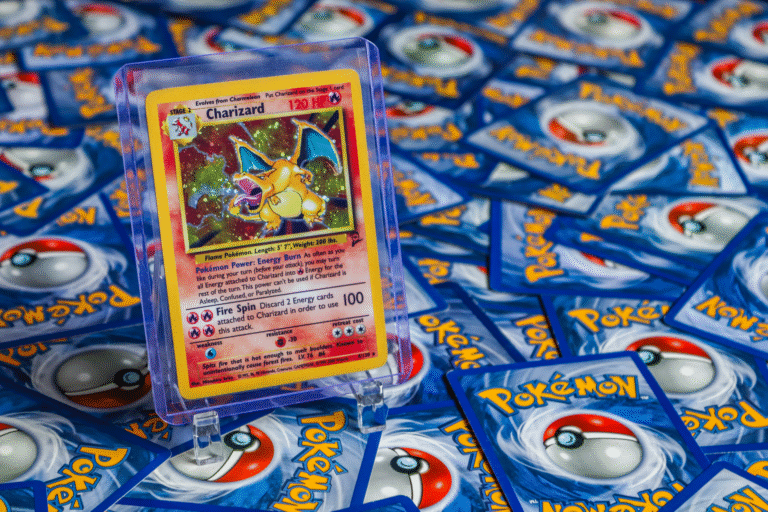
Recent sales data for Base Set 1st Edition Charizard in PSA 3 condition reveals an inconsistent market with significant price volatility and surprisingly limited trading volume. The most recent verifiable sales come from Portuguese 1st Edition versions graded PSA 3, which sold for $2,974 in October 2020 and $630 just two months later in December 2020. This dramatic 79% drop between sales demonstrates why the PSA 3 segment receives minimal attention from major auction houses compared to the high-grade specimens that dominate Pokemon card pricing discussions.
The scarcity of PSA 3 Charizard sales data reflects a fundamental market reality: most collectors and investors pursuing Base Set 1st Edition Charizards focus exclusively on PSA 7 and higher grades, where specimens command tens of thousands to hundreds of thousands of dollars. This focus means that PSA 3 cards—while more affordable for budget-conscious collectors—operate in a relatively opaque corner of the market where prices are determined by sporadic private sales, small dealer networks, and occasional auction lots rather than consistent market activity. Understanding what little we know about PSA 3 pricing requires acknowledging the limitations of available data and recognizing that this condition tier represents a fundamentally different investment category from the trophy-grade Charizards that make headlines. For collectors considering a PSA 3 Base Set 1st Edition Charizard, the lack of recent sales activity is both a warning sign about liquidity and an opportunity to understand where true value lies in the Pokemon card market.
Table of Contents
- Why PSA 3 Sales Data Remains Elusive in the Modern Collector Market
- The 2020 Portuguese Edition Sales—What Price Variance Tells Collectors
- The Price Hierarchy Across Grades—Where PSA 3 Stands in the Market
- Where Collectors Actually Find and Price PSA 3 Base Set Charizards Today
- The Liquidity Trap—Why Selling a PSA 3 Charizard Takes Longer Than Buying One
- Authentication and the Paradox of Lower-Grade Charizard Value
- The Future of PSA 3 Charizards in an Evolving Collector Market
- Conclusion
Why PSA 3 Sales Data Remains Elusive in the Modern Collector Market
The Pokemon card market has undergone dramatic consolidation around high-grade specimens over the past five years, a trend that makes finding reliable PSA 3 pricing information increasingly difficult. While PSA 10 Base Set 1st Edition Charizards sold for approximately $55,000 in February 2026 and reached $550,000 at Heritage Auctions in December 2025, PSA 3 examples rarely appear in the same auction catalogs or trading platforms. This disparity reflects market mechanics rather than the inherent lack of value—dealers and collectors simply prefer to move inventory through channels where demand is concentrated. Major platforms like PSA Auction Prices and Heritage Auctions focus their cataloging efforts on cards worth tracking at premium prices.
A PSA 3 Charizard, while still valuable, may sell through private dealer channels, Facebook Marketplace, eBay, or local collector networks where sales don’t get recorded in the formal auction databases that shape public pricing knowledge. This means collectors hunting for PSA 3 pricing information will find better results on real-time platforms like the price guide or direct quotes from dealers rather than historical auction records. The lack of visible PSA 3 sales volume also reflects the condition’s positioning: it’s too expensive for casual buyers without the prestige of higher grades, yet too low-value to interest serious investors seeking blue-chip collectible status. This awkward middle position explains why serious market research into PSA 3 pricing requires checking multiple sources rather than relying on the kind of auction price history available for PSA 7 and above.

The 2020 Portuguese Edition Sales—What Price Variance Tells Collectors
The only recent confirmed PSA 3 Base Set 1st Edition Charizard sales come from Portuguese editions, graded and sold through PSA’s auction tracking system. The October 28, 2020 sale at $2,974 and the December 1, 2020 sale at $630 represent the most reliable data points available for understanding PSA 3 market behavior, yet they also highlight the central challenge: massive price swings within the same condition grade. The 79% decline between these two sales in just 34 days suggests that condition-specific pricing for PSA 3 cards depends heavily on context rather than a stable market rate. This volatility likely reflects differences in the Portuguese edition market itself, variations in the specific card’s centering or surface quality within the PSA 3 range, or changes in buyer appetite during that period.
Portuguese cards command different premiums than English editions, and the specific characteristics of each card—whether the PSA 3 grade came from light wear or moderate play damage—would significantly impact collector interest. Without detailed information about each sale’s lot description, bidding competition, or auction venue, the data points demonstrate that quoting a “typical PSA 3 price” would be misleading. The lesson for collectors is clear: transaction prices in the PSA 3 range vary substantially and depend on multiple factors beyond grading alone. When evaluating a specific PSA 3 Charizard for purchase or valuation, relying on these historical Portuguese sales as the only benchmark would be insufficient. Instead, they serve as proof that PSA 3 specimens have sold recently—establishing that a market exists—rather than establishing a reliable pricing floor.
The Price Hierarchy Across Grades—Where PSA 3 Stands in the Market
Understanding PSA 3 pricing requires viewing it within the broader context of base Set 1st Edition Charizard valuation across all condition tiers. The jump from PSA 3 to PSA 10 represents a price increase of roughly 18,500% to 85,000%, depending on the exact PSA 3 baseline and current PSA 10 selling prices. This enormous differential—from under $3,000 to over $50,000—illustrates why the Pokemon card market has become stratified into essentially different products based on grade. PSA grades 4 through 6 occupy the lowest tier of Charizard trading, representing play-worn cards that retain authenticity and nostalgia value but lack the eye-appeal or collectible prestige of higher grades.
A PSA 3 sits at the extreme low end of this spectrum, meaning it likely shows visible wear including creasing, corner wear, surface marks, or other damage that’s immediately apparent to the naked eye. This practical reality means PSA 3 cards appeal to collectors seeking genuine Base Set cards for actual collection purposes rather than investment vehicles. The price spread across grades reveals why PSA 3 cards exist in a market blind spot: they’re expensive enough that casual nostalgic buyers without deep hobby knowledge may hesitate, yet inexpensive enough that serious investors view them as inferior alternatives to higher grades. Someone paying $3,000 for a Charizard could instead pay $4,000-$5,000 for a PSA 5 or PSA 6 with noticeably better eye appeal and stronger long-term appreciation potential. This tradeoff explains why dealers don’t aggressively stock PSA 3 inventory.

Where Collectors Actually Find and Price PSA 3 Base Set Charizards Today
For collectors seeking current PSA 3 pricing, the price guide and PSA CardFacts represent the most reliable starting points despite their limitations. The price guide aggregates pricing from multiple online retailers and marketplaces, providing real-time data on available inventory and asking prices, though it may not capture all private dealer networks or specialized forums where serious collectors transact. PSA CardFacts, maintained by PSA itself, provides historical sales data and current price trends, though the site sometimes reflects slower updates than active market activity. eBay sold listings provide another valuable resource for understanding what PSA 3 Charizards have actually sold for in recent months, offering recent transaction prices for base set 1st editions across multiple grades.
When evaluating a specific PSA 3 card, checking 30 to 60 days of completed eBay listings in the same grade and condition note provides better current pricing context than relying on the 2020 Portuguese sales or dealer asking prices. However, eBay skews toward smaller dealers and hobbyist sellers rather than the institutional auction houses that handle premium inventory. The practical limitation collectors face is accepting that no single source provides authoritative PSA 3 pricing. Instead, a responsible evaluation requires triangulating asking prices from multiple dealers, recent completed sales on eBay, guidance from the price guide, and consultation with dealers who specialize in mid-grade Pokemon cards. When a specific seller is quoting a PSA 3 price, requesting recent comparable sales in that price range helps verify whether the quote reflects actual market activity or optimistic positioning.
The Liquidity Trap—Why Selling a PSA 3 Charizard Takes Longer Than Buying One
Collectors often discover an uncomfortable truth when attempting to sell a PSA 3 Charizard: while purchase options exist through dealers and marketplace platforms, achieving a quick sale at fair market value requires significantly more effort than selling a PSA 7 or higher. The market for PSA 3 specimens is thinner, meaning fewer active buyers are browsing this tier at any given moment. A high-grade Charizard attracts bidding wars; a PSA 3 may sit on a marketplace for weeks or months before finding the right buyer. This liquidity challenge has real financial consequences. A seller might need to accept a price 10-20% below asking value to move a PSA 3 card quickly, whereas PSA 7 and higher grades typically achieve asking prices within days.
For collectors viewing Pokemon cards as investments rather than long-term collection pieces, this difference matters significantly. The time-to-liquidity for PSA 3 cards converts a seemingly affordable entry price into a potential disadvantage when circumstances require faster exit. Additionally, the PSA 3 segment is where counterfeit risk becomes more relevant—not because counterfeits don’t exist in higher grades, but because collectors may be less vigilant about authentication when purchasing “lower value” cards. A significant portion of PSA 3 Charizards purchased through non-professional channels may actually be ungraded counterfeits misrepresented as authentic. This warning applies especially to deals found outside established dealer networks or without proper provenance documentation.

Authentication and the Paradox of Lower-Grade Charizard Value
The presence of a PSA 3 grade on a Base Set 1st Edition Charizard provides significant assurance about authenticity, a characteristic that actually elevates PSA 3 value above ungraded specimens in similar condition. An ungraded play-worn Charizard might sell for $500-$1,500 in local collector networks or casual online transactions, whereas a PSA 3 graded by a reputable service provides institutional verification that the card is genuinely from the 1999 Base Set. This authentication premium represents the real ongoing value proposition of PSA grading, especially as counterfeit Pokemon cards become more sophisticated. For collectors building collections rather than pursuing investment returns, a PSA 3 Charizard therefore represents better value than equivalent ungraded cards.
The grade itself—even at low numbers like 3—signals that a third-party expert has examined the card for authenticity markers, alignment, centering, and actual wear patterns. This authentication function makes PSA 3 graded Charizards particularly valuable for filling collection gaps without excessive expense or authentication anxiety. However, this authentication value doesn’t change the core limitation: collectors should still expect PSA 3 cards to appreciate slowly compared to higher grades, appreciate primarily through general hobby growth rather than rarity premiums, and present challenges when resale becomes necessary. The grade provides authenticity assurance and hobby prestige, but doesn’t overcome the fundamental market position of condition-tier 3.
The Future of PSA 3 Charizards in an Evolving Collector Market
As Base Set 1st Edition Charizards continue commanding record prices at the PSA 9-10 tiers, the relative positioning of PSA 3 specimens may shift. If overall market values for high-grade cards continue climbing significantly, PSA 3 cards could appreciate as secondary options for price-conscious collectors priced out of higher grades. Alternatively, if market speculation cools and the collector base refocuses on condition-appropriate pricing over pure chase-grade mentality, PSA 3 cards may find stronger demand as legitimate collection pieces rather than consolation options.
The current market opportunity for PSA 3 Base Set 1st Edition Charizards lies in their role as accessible entry points for serious collectors building comprehensive collections. They provide authentic, graded examples of one of the hobby’s most iconic cards at prices that don’t require institutional investment capital. For collectors who prioritize holding a genuine 1st Edition Charizard over optimizing for maximum condition or resale value, PSA 3 specimens remain sensible acquisitions despite limited sales transparency.
Conclusion
Recent sales data for Base Set 1st Edition Charizard in PSA 3 condition reveals a market segment characterized by opacity, inconsistent pricing, and limited trading volume. The available Portuguese edition sales from 2020—ranging from $630 to $2,974—establish that transactions occur, but the volatility and scarcity of this data demonstrate that PSA 3 pricing cannot be reliably established through historical auction records alone. Collectors pursuing PSA 3 specimens must instead develop pricing frameworks by checking multiple contemporary sources including the price guide, PSA CardFacts, eBay completed listings, and dealer quotes.
For collectors considering a PSA 3 Base Set 1st Edition Charizard, success requires acknowledging both the practical realities of this tier and its legitimate place in the hobby. These cards offer authentic, professionally graded examples at prices far below the tens of thousands commanded by higher grades, making them valuable for completing collections, introducing new participants to the hobby, or acquiring the card without championship-level financial commitment. Understanding where PSA 3 fits in the market—neither investment vehicle nor flagship collectible, but functional middle ground—enables collectors to make informed decisions aligned with their actual collecting goals.