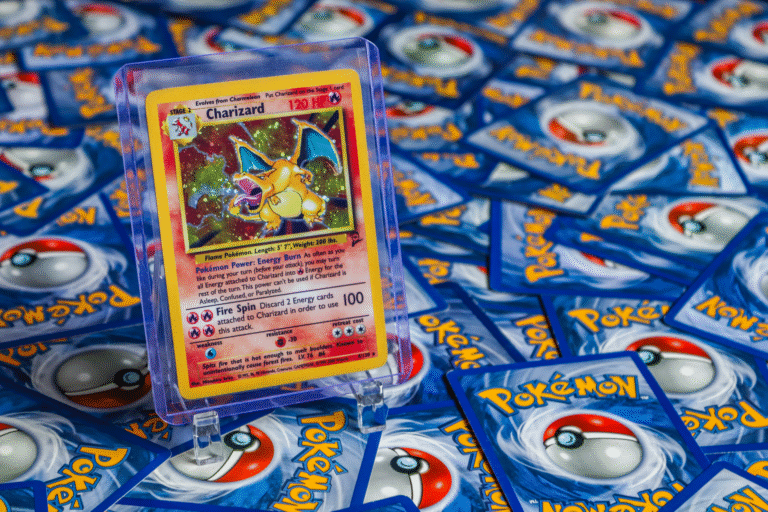
Recent sales data confirms that Base Set Unlimited Charizard in PSA 9 has become a reliable mid-tier collectible with consistent transaction momentum. In December 2025, a PSA 9 Unlimited Charizard sold for $1,725, a figure that sits comfortably within the current market range of $800–$1,500, though broader market data suggests trading between $1,000–$3,000 depending on eye appeal and seller circumstances. What these sales reveal is straightforward: PSA 9 specimens maintain steady demand, command fair premiums over lower grades, and show no signs of speculative collapse despite the broader Pokemon card market’s cycles.
The grade itself—PSA 9—represents a meaningful sweet spot in the Charizard hierarchy. It’s high enough to command serious collector interest without requiring the investment leap of PSA 10 cards (which currently fetch $3,000–$6,000), yet it’s significantly harder to find and more expensive than PSA 8 copies. This middle position has made PSA 9 increasingly attractive to collectors who want prestige without the extreme capital requirement, and recent sales activity reflects that consistent demand pressure.
Table of Contents
- How Recent Charizard Sales Have Trended Through Early 2026
- Understanding PSA 9 and Why It Commands a Premium
- Comparing PSA 9 Value Across the Grade Spectrum
- Market Appreciation Projections and Investment Outlook
- Supply Constraints and Long-Term Scarcity Dynamics
- The December 2025 Benchmark Sale and What It Tells Us
- March 2026 Market Records and Forward-Looking Outlook
- Conclusion
- Frequently Asked Questions
How Recent Charizard Sales Have Trended Through Early 2026
The December 2025 sale at $1,725 sets an important benchmark for the grade, but it doesn’t exist in isolation. When placed alongside comparable transaction data from early 2026, a clear picture emerges of stable pricing with slight downward pressure on lower grades. In January 2026, PSA 8 copies sold for $1,078 and $891—a wide range that underscores how condition variance, centering, and surface quality within a single grade drive real price volatility. A PSA 7 unlimited charizard sold for $635 in the same month, while a PSA 6 moved for $430.
These transactions reveal the grade ladder: each step up costs roughly 50–100% more, but each step down cuts the price dramatically. What’s particularly telling is that PSA 9 has not been oversupplied relative to demand. The December sale price of $1,725 hasn’t triggered a wave of sellers dumping inventory—a common outcome when a grade becomes momentarily overpriced. Instead, it appears to have been absorbed as a fair market clearing price, with subsequent months showing no dramatic repricing downward. This stability matters to collectors considering a PSA 9 as a longer-term hold rather than a quick flip.
Understanding PSA 9 and Why It Commands a Premium
PSA 9 is graded as “Mint” condition, which means the card exhibits virtually no wear to the naked eye, though it may have minor imperfections visible under close inspection—a light crease barely visible under the right lighting, slight print spotting, or very minor corner wear. This grade represents the highest practical tier for high-volume cards like Unlimited Charizards; reaching PSA 10 (Gem Mint) becomes exponentially rarer and costlier as cardboard ages and surviving copies accumulate grading submissions. According to PSA’s population data, 8,417 Unlimited base Set Charizards have received a PSA 9 grade out of 92,856 total cards graded across all grades.
That’s roughly 9% of all graded specimens reaching PSA 9—a meaningful but not extraordinary achievement. The limitation here is important: many of those cards may have been graded years ago and have since been resubmitted, sold, or disappeared from the active market. The population report captures historical grading, not current inventory, so treating the PSA 9 population as “available inventory” would be a significant error. Some cards are locked in collection vaults; others have been lost or damaged post-grading.
Comparing PSA 9 Value Across the Grade Spectrum
The price progression from PSA 6 through PSA 9 tells a story about how the market values condition increments. A PSA 6 card (Fine-Very Fine, with moderate play wear) reached $430 in January 2026. Moving to PSA 7 (Very Fine, light play wear) pushed that to $635—an increase of roughly 48%. PSA 8 (Near Mint-Mint, very light wear) jumped to $891–$1,078, an additional 40–70% increment.
Finally, PSA 9 (Mint) landed at $1,725 in the December sale, another 60–95% step up from the high end of PSA 8 sales. This acceleration is not linear, and that’s the key insight: the jump from PSA 8 to PSA 9 is steeper than the jump from PSA 7 to PSA 8. This reflects genuine scarcity. PSA 9s are far less common than PSA 8s, and the surviving population of Unlimited Charizards in top condition is small relative to the overall print run. A collector hoping to acquire a PSA 9 under $1,000 is likely to be disappointed; conversely, anyone holding a PSA 8 and considering the upgrade path to PSA 9 should factor in that a $300–$400 investment in a new submission might not yield a proportional return if the card barely grades up to a 9.
Market Appreciation Projections and Investment Outlook
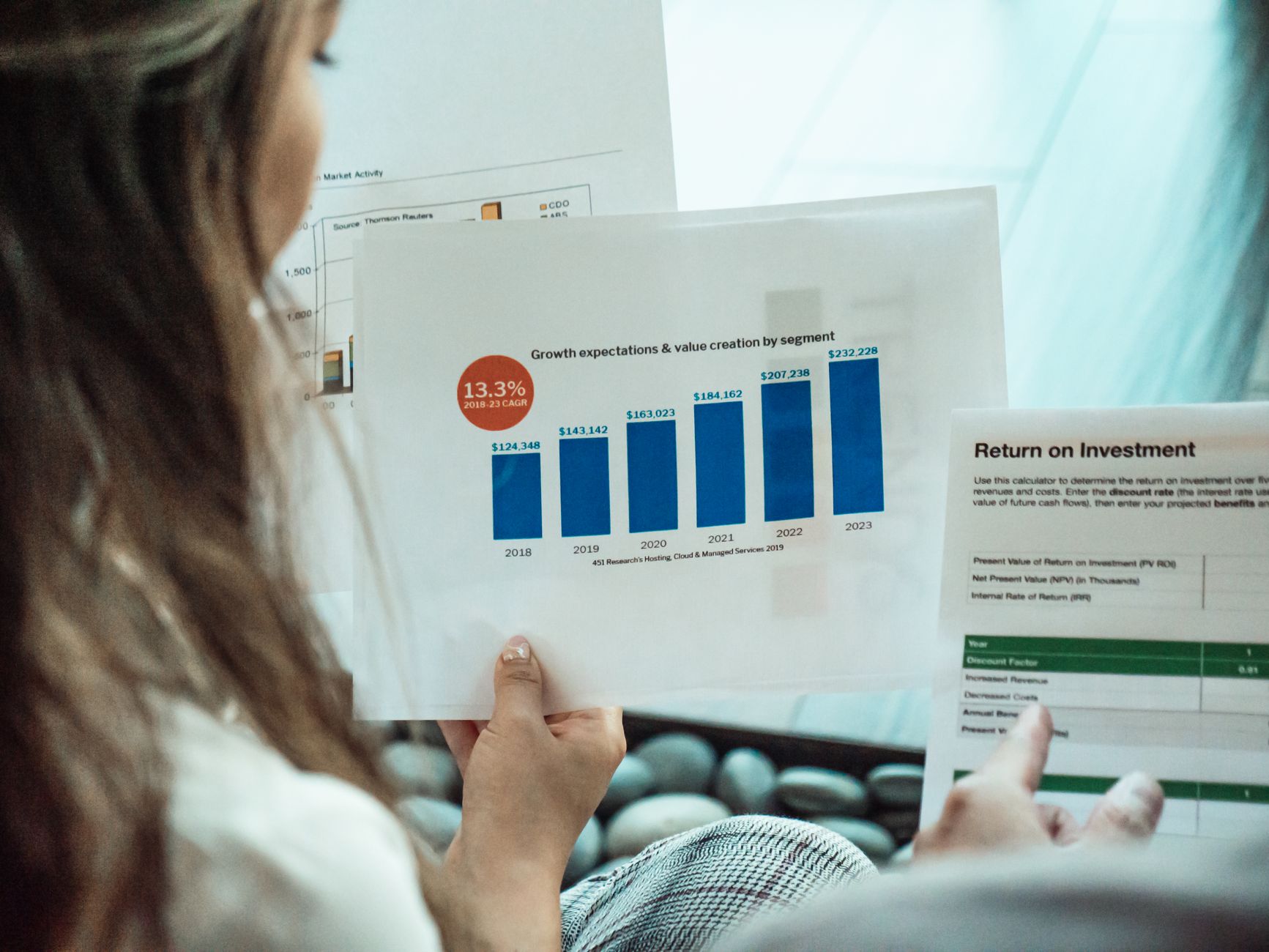
Market analysis from PokemonPriceTracker projects PSA 9 and PSA 10 Unlimited Charizards will appreciate 8–12% annually, while lower grades (PSA 7 and below) are expected to grow 4–6% per year. This projection assumes continued collector demand and no major supply shocks—reasonable assumptions given the card’s legendary status in the Pokemon TCG. An 8–12% annual return would double a $1,725 PSA 9 Charizard to roughly $3,450–$3,900 over ten years, though real-world outcomes depend heavily on market cycles, broader Pokemon TCG health, and when a collector needs to exit.
The tradeoff worth considering: PSA 9 Charizards appreciate faster than PSA 7 or PSA 6 copies, but they command a much higher entry price. A collector with $1,725 to invest might buy one PSA 9, or four PSA 6–7 copies if bulk diversification appeals. The PSA 9 offers faster projected growth; the lower grades offer more copies and reduced concentration risk. Neither approach is objectively “correct,” but the appreciation data favors concentrated positions in higher grades for collectors with sufficient capital.
Supply Constraints and Long-Term Scarcity Dynamics
The Base Set itself was printed from 1999 through 2000, and Unlimited prints ran in enormous quantities—far exceeding First Edition. However, the Charizard holo was a chase card even in Unlimited, and survivor rates in PSA 9 condition remain tight. The population of 8,417 PSA 9 copies sounds substantial until context is applied: roughly 25 years have elapsed since original release, and many surviving copies remain ungraded, in lower conditions, or locked away in dormant collections.
The active trading population—cards that regularly change hands—is likely a small fraction of the graded total. A critical limitation: as more cards are submitted for grading, the population numbers increase, but this doesn’t always translate to price pressure if demand grows proportionally. Conversely, if grading submissions slow and existing PSA 9 copies remain concentrated among long-term holders, available inventory shrinks relative to buyer demand, which could support continued appreciation. The recent March 2026 world record sales suggest that Charizard enthusiasm remains elevated, but these outlier transactions shouldn’t be confused with typical market pricing for standard PSA 9 copies.
The December 2025 Benchmark Sale and What It Tells Us
The $1,725 PSA 9 sale on December 23, 2025, is the single most concrete data point available for assessing current fair value. This was a completed transaction—not an asking price, not an estimate—and it occurred recently enough to reflect current market conditions. For practical purposes, any PSA 9 Unlimited Charizard listed between $1,500–$2,000 in mid-2026 would be reasonably positioned relative to that benchmark.
Prices significantly below that range might indicate a card with notable surface issues, centering problems, or aggressive seller motivation. Prices significantly above would require an exceptional specimen with pristine centering, flawless surface, and strong eye appeal. It’s worth noting that this sale occurred in the pre-holiday season, when collector spending can spike, but it wasn’t an outlier result driven by auction fever. The price aligns with the stated market range of $800–$1,500 and the broader trading data from early 2026, suggesting the December transaction was a fair clearing price rather than an anomalous spike.
March 2026 Market Records and Forward-Looking Outlook
March 2026 brought notable activity to the Charizard market, with world record sales dominating headlines and collector attention. These record transactions typically involved exceptional specimens—PSA 10 copies, unique provenance, or cards with extraordinary eye appeal—rather than standard PSA 9 copies. The record sales are meaningful for sentiment but shouldn’t reset expectations for typical PSA 9 trading. However, they do confirm sustained collector enthusiasm for the card and suggest that demand headwinds remain minimal heading into mid-2026.
Looking forward, PSA 9 Unlimited Charizards appear positioned to maintain their current trading range provided no major macro shocks disrupt the Pokemon card market. The projected 8–12% annual appreciation assumes stable demand, continued collector interest in graded vintage cards, and no significant supply influx from dormant collections flooding the market. These are reasonable assumptions but not guarantees. Collectors and investors should treat this appreciation as an expected baseline, not a promise, and diversify their Charizard exposure across grades or complementary vintage holos if capital allows.
Conclusion
Recent sales confirm that PSA 9 Base Set Unlimited Charizards remain a credible collectible with steady demand, fair pricing between $800–$3,000 depending on market conditions, and reasonable long-term appreciation prospects. The December 2025 sale at $1,725 provides a concrete benchmark; the January 2026 comparable sales data across grades demonstrate how each condition step commands specific premiums; and the PSA population of 8,417 confirms genuine but not extreme scarcity. For collectors, the grade represents a meaningful middle ground—prestigious enough to satisfy serious interest without requiring the capital of PSA 10 specimens.
The path forward for PSA 9 holders is straightforward: these cards are not lottery tickets or speculation plays, but rather stable vintage collectibles with modest appreciation potential. Buy with a plan to hold 5–10 years, maintain realistic expectations about volatility, and recognize that exceptional specimens (pristine centering, flawless surface) will command premiums over average PSA 9 copies. The market has spoken through recent transactions, and the message is consistent: PSA 9 Unlimited Charizards have earned their position as cornerstone vintage Pokemon cards.
Frequently Asked Questions
Is a PSA 9 Unlimited Charizard a good investment?
Yes, with realistic expectations. Market projections suggest 8–12% annual appreciation, but this assumes stable demand and a 5–10 year hold. It’s not a get-rich scheme, but a stable vintage collectible with reasonable growth potential.
Why does PSA 9 cost so much more than PSA 8?
The scarcity gap widens significantly at PSA 9. PSA 9 Charizards are genuinely hard to find; PSA 8 copies are more common. The 60–95% price premium reflects real supply constraints, not arbitrary grading differences.
How many PSA 9 Unlimited Charizards are actually available for sale?
The population report shows 8,417 graded PSA 9s, but many are locked in collections or inactive inventory. The actively traded pool is far smaller, likely under 10% of the population at any given time.
Did the $1,725 December 2025 sale represent a peak or a fair market price?
It appears to be fair market value based on comparable sales and current asking prices. It was not driven by auction hype or scarcity panic, and prices have remained stable around that level into early 2026.
Should I buy PSA 9 or PSA 10 instead?
PSA 10 copies appreciate faster (8–12% annually vs. slower for lower grades) but cost $3,000–$6,000 versus $1,500–$2,000 for PSA 9. PSA 9 offers better capital efficiency; PSA 10 offers prestige and stronger growth potential. Choose based on budget and risk tolerance.
What happens if I grade my raw Unlimited Charizard and it comes back PSA 7 instead of PSA 9?
Expect a price around $635, which is significantly less than the cost of grading plus the PSA 9 premium. Many collectors avoid submitting raw Charizards unless they’re confident the card will grade 8 or higher due to this risk.