
Base Set 1st Edition cards are extraordinarily difficult to price accurately because the value of any single card is determined by an intersection of factors that few collectors fully understand: manufacturing defects that only emerge during professional grading, microscopic condition variations that swing prices by tens of thousands of dollars, and a market so volatile it can shift 50% in under two years. A PSA 10 Charizard might sell for $264,000, while a PSA 8 version of the same card—separated by just two grades—trades for $14,000 to $20,000. The gap between these grades represents not a minor quality difference but a fundamentally different asset. The core problem is that Base Set 1st Edition cards were produced over 25 years ago in an era when nobody was preserving them for investment.
They survived in whatever condition they landed, and the distribution of surviving cards across grade levels is wildly uneven. When a card exists in only a handful of pristine copies and thousands in lower grades, the pricing model breaks down entirely. You cannot simply chart a linear progression from PSA 6 to PSA 10. Instead, you have isolated data points with massive gaps between them—and collectors trying to price everything else based on incomplete information.
Table of Contents
- Why Do Small Grading Differences Create Massive Price Jumps?
- Manufacturing Defects and the Hidden Condition Problem
- Market Volatility Makes Accurate Pricing Almost Impossible
- The Disconnect Between Raw Cards and Graded Cards
- Scarcity Compounds the Pricing Problem
- Card-to-Card Hierarchy Fluctuations
- The Future of Base Set 1st Edition Pricing
- Conclusion
Why Do Small Grading Differences Create Massive Price Jumps?
The relationship between PSA grades and price is nonlinear for Base Set 1st Edition cards, and this is where most pricing fails. Two PSA grades may seem like a marginal difference to someone unfamiliar with the grading scale, but on the market, it often represents a 50% to 200% price increase. A card graded PSA 9 versus PSA 10 can show price differences reaching tens of thousands of dollars on high-value holos. This happens because collectors are not buying cards for playability or nostalgia—they are buying scarcity and condition.
Each grade tier represents exponentially fewer cards that survived in that condition. The PSA grading scale (1-10) looks deceptively simple: slight wear becomes moderate wear becomes heavy wear. But in practical terms, the jump from PSA 9 (Mint) to PSA 10 (Gem Mint) is the difference between “shows signs of human handling” and “appears to have never been touched.” For cards that have been circulating in the market for decades, this distinction becomes almost binary—most 1st Edition cards exist in lower grades simply because the probability of finding a card that survived unplayed from 1999 is vanishingly small. When demand is high and supply is low, pricing becomes speculative rather than empirical.
Manufacturing Defects and the Hidden Condition Problem
Not all condition damage comes from handling after purchase. Base Set 1st Edition cards arrived from the factory with defects that collectors cannot easily predict or account for when evaluating raw cards. The most notorious example is Base Set 1st Edition Chansey, a card legendary among graders for its holographic scratching problems during manufacturing. Only 48 PSA 10 copies of Chansey exist—a staggering scarcity driven entirely by production flaws, not collector negligence. This means two raw Chansey cards that appear identical to the naked eye can receive drastically different grades when examined under professional equipment, and pricing models built on assumptions about condition will fail.
These manufacturing issues create a blind spot in the pricing market. When you are buying a raw 1st Edition Chansey, you are not just betting on how well it survived—you are gambling on whether it emerged from the factory without defects in the holographic layer. Sellers cannot price with certainty because the condition is partly hidden. Buyers face an information gap: a raw Chansey might be worth $100 or $2,000 depending on whether professional graders detect manufacturing issues. This uncertainty compresses prices on raw cards while inflating prices on already-graded copies where the manufacturing lottery has already been resolved.
Market Volatility Makes Accurate Pricing Almost Impossible
The Base Set 1st Edition market has experienced price swings so dramatic that even professional dealers struggle to maintain consistent pricing models. In November 2025, a complete set of 1st Edition cards graded PSA 10 sold for $911,629. This same set had sold just 17 months earlier in June 2024 for $317,206—a 188% increase in less than two years. These are not small fluctuations.
They represent a market where fundamental pricing principles have broken down and speculation has taken over. When a market is this volatile, any pricing you establish today becomes outdated within months. The $911,629 sale does not establish a “true” price for a complete 1st Edition set—it establishes only that someone was willing to pay that much on that specific day, likely betting that the trend would continue. Market volatility of this magnitude suggests that prices are being driven by speculative demand rather than by any stable calculation of card scarcity or condition. For collectors trying to price individual cards, this volatility creates a fundamental problem: you can anchor to historical sales data, but that data may already be obsolete by the time you list a card for sale.
The Disconnect Between Raw Cards and Graded Cards
One of the most disorienting aspects of Base Set 1st Edition pricing is the massive gap between raw card values and graded card values for the same card in similar condition. An ungraded Clefairy in damaged condition might sell for $93. The same card in Heavily Played condition trades for around $130. But jump to a Clefairy graded PSA 9 (Near Mint), and the price suddenly reaches $1,000 or more—a tenfold increase for a single quality tier. This gap reflects the fact that collectors do not trust their own condition assessment when thousands of dollars are on the line.
The problem this creates for pricing is that raw cards and graded cards trade in almost separate markets. Someone buying a raw card accepts the condition risk in exchange for a lower price. Someone buying a graded card pays a premium for professional authentication and verified condition. When you try to price a raw card, you must decide which market it belongs to—but the boundary between these markets is not clearly defined. Is a raw card in great condition worth 20% of the graded equivalent? 30%? The answer varies depending on the card, the seller’s reputation, and market conditions. This ambiguity makes consistent pricing extremely difficult.
Scarcity Compounds the Pricing Problem
First Edition cards were only in retail distribution for a short window before Second Edition and unlimited versions flooded the market. This scarcity is absolute—no more 1st Edition Base Set cards can ever be printed. But the distribution of surviving cards across different conditions is not random, and it is not well-documented. You cannot simply calculate how many Charizards exist in PSA 10 condition and divide total demand by supply, because nobody knows these numbers with precision until they appear on market for sale.
Scarcity becomes particularly acute for mid-range cards that never received the same collector attention as Charizard, Blastoise, or Venusaur. A card like Farfetch’d or Jynx in high grades might have only a handful of PSA 10 copies in existence, but because there is minimal collector demand for these cards, pricing becomes essentially speculative. You might find a graded copy listed for $500, then see another listed for $1,200, with no clear explanation for the difference other than seller expectations. The rarity exists, but the demand does not match it, so pricing models fail.
Card-to-Card Hierarchy Fluctuations
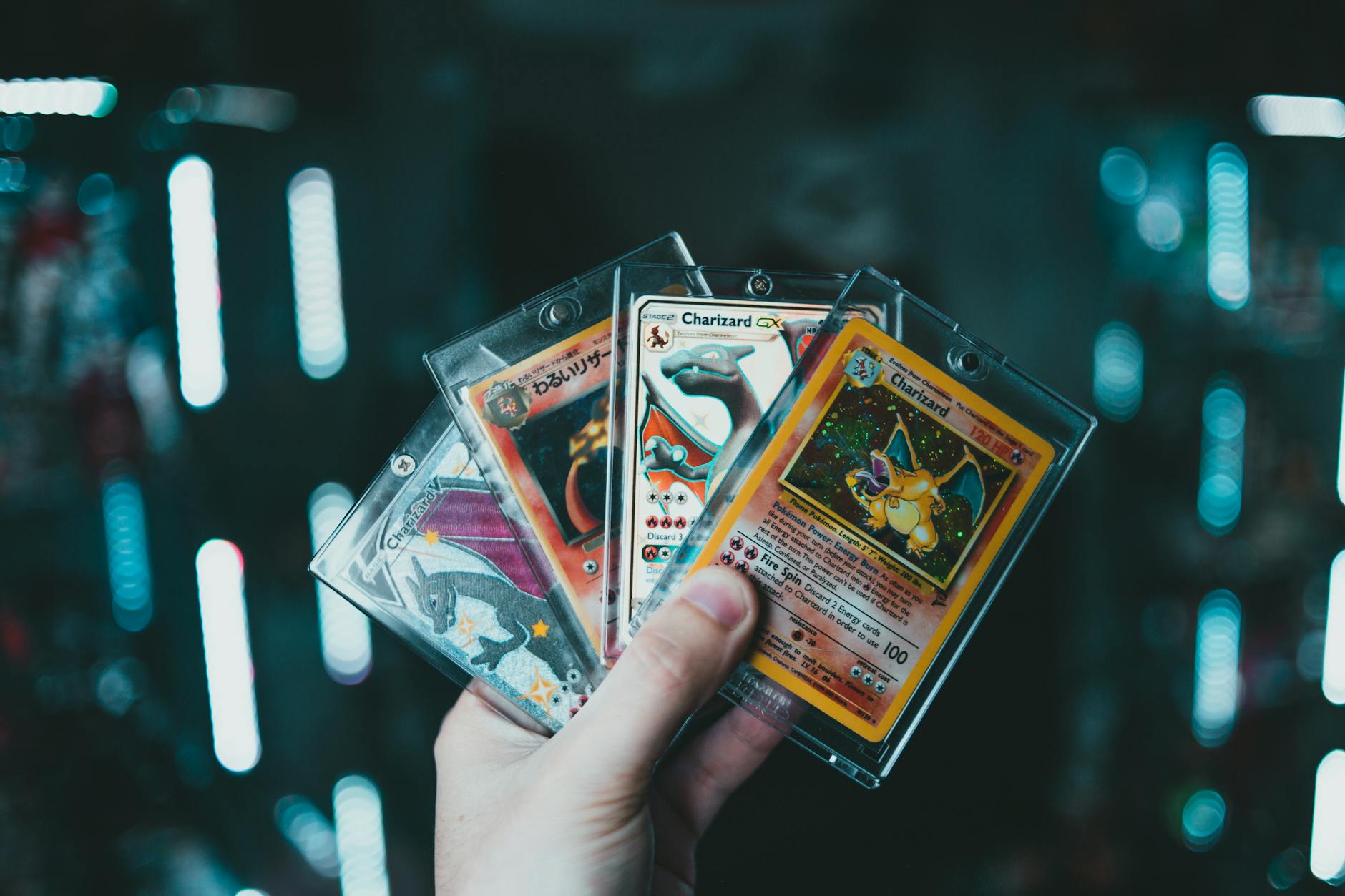
While Charizard has maintained its position as the most expensive card in the set, pricing hierarchies among other cards shift unpredictably. A year ago, certain holo cards held consistent premium over others. Today, market shifts have reorganized these relationships.
Blastoise and Venusaur remain chase cards, but the gap between them and secondary holos narrows and widens depending on collector interest and market conditions. This instability within the set hierarchy means that any pricing model based on “Charizard is worth X, so Blastoise should be worth 40% of X” will regularly produce inaccurate results. The relationship between these prices is not fixed—it changes as collector preferences shift, as sales create anchoring points that move the market, and as supply on the market fluctuates. For someone trying to build a consistent pricing model, this card-to-card instability is nearly impossible to account for.
The Future of Base Set 1st Edition Pricing
As time passes and surviving cards age further, the scarcity issue will likely intensify. Cards in lower grades may experience deterioration, further reducing the population of cards that could qualify for higher grades if regraded. Meanwhile, each major sale creates new anchoring points that shift market expectations. Whether this leads to stabilization or to even greater volatility remains unclear.
What is certain is that anyone attempting to price these cards must accept that precision is impossible—only best estimates based on limited data. The rise of more detailed population data from grading companies may eventually help, but only for cards that have been graded in volume. For mid-range and bulk cards that few collectors bothered to grade, this data will never fully materialize. The pricing challenge may never be fully resolved, only managed by accepting the uncertainty as part of the Base Set 1st Edition market.
Conclusion
Base Set 1st Edition cards resist accurate pricing because of a perfect storm of factors: extreme condition sensitivity that creates nonlinear price jumps between grades, manufacturing defects that hide within cards and only emerge under professional examination, decades-old manufacturing runs whose exact surviving populations are unknown, and a volatile market driven by speculation rather than stable demand patterns. A difference of one or two PSA grades can represent a tenfold price swing, making pricing precision a statistical impossibility rather than a realistic goal. For collectors and dealers, the lesson is clear: treat all Base Set 1st Edition pricing as approximate.
Build in safety margins for uncertainty. Weight actual market sales more heavily than calculated estimates. And understand that in a market this volatile and information-scarce, the difference between a great deal and a poor investment often comes down to luck and timing rather than careful analysis.
You Might Also Like
- The Pokémon Cards Climbing Fastest in Price This Week – 05/24/2026
- The Pokémon Cards Climbing Fastest in Price This Week
- The Biggest Weekly Price Gainers in Pokémon Cards – 05/24/2026