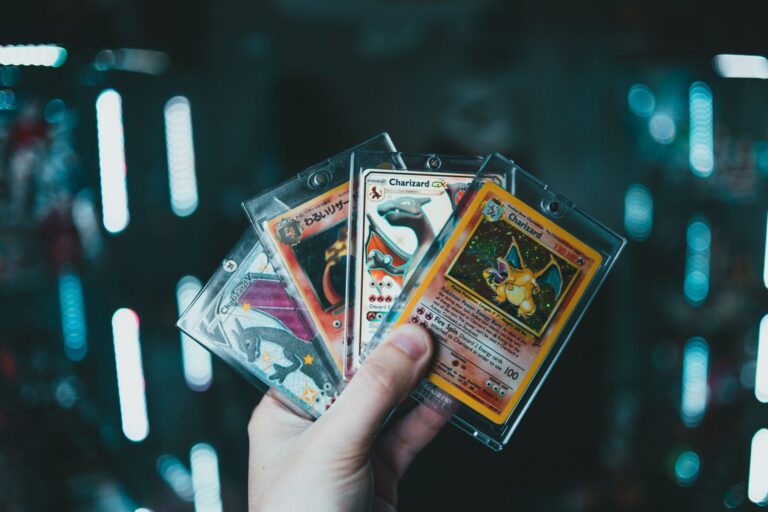
Yes, Base Set Pokémon cards remain among the safest vintage collectible bets in the trading card market, but “safe” now means something different than it did five years ago. The Pokémon Trading Card Game market has matured into a $2.7 billion annual ecosystem driven by genuine collectors rather than speculative hype, and Base Set cards—produced only through 1999—benefit from absolute scarcity with no additional supply ever entering circulation. A Base Set Charizard 1st Edition PSA 10 sold for a record $550,000 at Heritage Auctions in December 2025, yet these same cards currently trade at $168,000-$170,000, demonstrating that while the market rewards patient collectors, the explosive gains of the 2020-2021 era have normalized into more predictable 15-25% annual appreciation.
The key distinction: Base Set cards are no longer the riskiest bet in Pokémon collecting, but they’re also not the slam-dunk investment some promoted them to be during the pandemic boom. Your safety now depends on understanding authentication, diversification, and the fundamental drivers pushing prices upward in 2026—primarily Pokémon’s 30th anniversary and the shift toward serious collecting over speculation. If you’re considering Base Set as your primary vintage investment, understand the landscape has shifted considerably.
Table of Contents
- Why Base Set Pokémon Cards Command Lasting Collector Demand
- The Charizard Benchmark and Entry Point Reality
- The 30th Anniversary Surge and 2026 Price Acceleration
- Market Maturity and What It Means for Investment Safety
- The PSA Grading Scandal and Authentication as a Critical Risk Factor
- Accessibility Tiers and Budget-Specific Strategies
- Diversification and the Limits of an All-Base-Set Strategy
- Conclusion
Why Base Set Pokémon Cards Command Lasting Collector Demand
base Set’s unassailable position stems from a simple economic fact: production ceased in 1999, and no additional copies will ever be manufactured. This absolute scarcity, combined with the set’s cultural significance as the foundation of the entire pokémon TCG, creates genuine long-term demand independent of market cycles. The 30-50% appreciation projected for 1st Edition Base Set cards through 2026 reflects realistic growth driven by a shrinking pool of available cards and generational nostalgia rather than speculative frenzy. Compare this to modern sets, which remain in continuous production—newer cards may spike temporarily but face inevitable supply increases that erode value.
The maturation of the Pokémon market itself strengthens Base Set’s position. When the 2020-2021 bubble burst, speculators exited, but institutional collectors and serious hobbyists doubled down on vintage investments. Base Set now trades primarily among people who understand what they’re buying—not newcomers chasing hype. This shift from hype-driven to fundamentals-driven pricing actually increases stability, since Base Set appreciation is now tied to genuine scarcity and collector demand rather than social media trends.
The Charizard Benchmark and Entry Point Reality
The Base Set Charizard 1st Edition PSA 10 serves as the market’s primary price anchor, and its December 2025 record of $550,000 followed by current pricing in the $168,000-$170,000 range illustrates both the opportunity and the challenge for collectors. that price point is inaccessible to most hobbyists, yet it demonstrates the liquidity and price appreciation potential at the top end of the market. A meaningful warning: if you’re considering Base Set as an investment, be honest about whether you can afford the cards that will actually appreciate. The most liquid and historically stable performers—1st Edition holos in PSA 9-10—often exceed $50,000-$100,000+ depending on the specific card.
Entry points exist at lower tiers. Unlimited Edition Base Set cards, raw (ungraded) copies, and lower PSA grades (7-8) trade in the $1,000-$20,000 range and have appreciated steadily. However, liquidity decreases significantly as you move down the quality ladder, meaning you may own an appreciating card but struggle to sell it quickly if you need to exit. The tradeoff is clear: premium condition guarantees faster resale and stronger appreciation, but standard condition offers more affordable entry with slower but still positive returns.
The 30th Anniversary Surge and 2026 Price Acceleration
Pokémon’s 30th anniversary in 2026 is functioning as a powerful catalyst for vintage Base Set prices, amplifying collector demand at precisely the moment when fewer cards remain available in high grade. This nostalgia-driven phenomenon parallels what we’ve seen in other collectible markets during significant anniversaries—Star Wars cards spiked around the franchise anniversaries, comic books saw surges on milestone years. The 30th anniversary effect compounds the natural scarcity advantage, as older collectors re-enter the market and younger collectors seek foundation pieces for their collections.
The timing advantage for current buyers is real but finite. If Base Set appreciation continues at projected 30-50% through 2026, much of that upside may already be priced into current market valuations. This doesn’t mean prices won’t continue rising—the scarcity isn’t disappearing—but explosive annual gains like we saw in 2021 are unlikely to repeat. Plan for steady appreciation rather than rapid flips.

Market Maturity and What It Means for Investment Safety
The shift from speculation to genuine collecting fundamentally altered Base Set’s risk profile. In 2020-2021, you could lose money on a Base Set card if you bought near a local peak or if the broader hype cycle turned. Today, Base Set prices are more anchored to long-term collector demand and scarcity, which are relatively stable variables.
The $2.7 billion market size provides genuine depth—there’s actual money from institutional collectors, museum acquisitions, and serious hobbyists supporting Base Set values, not just retail trading hype. However, “safer” doesn’t mean “risk-free.” Market corrections are always possible, particularly if the Pokémon TCG experiences a sudden decline in cultural relevance or if a flood of previously unknown Base Set inventory somehow enters the market (extremely unlikely but theoretically possible). Additionally, the matured market means you’re competing with sophisticated collectors and investment firms, not just casual enthusiasts. Your research and authentication diligence need to match that sophistication.
The PSA Grading Scandal and Authentication as a Critical Risk Factor
A December 2025 grading scandal represents the most significant warning sign for Base Set collectors: PSA Grading Services was caught conducting secret grade upgrades on approximately 36% of affected cards after buyback transactions, without notifying collectors or recording the improvements in official databases. This conflict of interest—where PSA profits from both grading cards and purchasing them at prices tied to those grades—created perverse incentives that directly undermined the authentication system that Base Set collectors rely on. Secondary market PSA slab listings dropped 10-20% on eBay following the scandal’s disclosure, illustrating how quickly authentication concerns can impact valuations.
The practical implication: before purchasing any high-value Base Set card, verify its certification number directly through PSA’s official database and physically inspect the slab for security features. Many collectors have shifted to alternative graders like Beckett and SGC, which saw approximately 15% volume increases immediately following the scandal. This fragmentation of the grading ecosystem creates new risks—a Beckett 9 and a PSA 9 may no longer be perfectly substitutable, and future price comparisons become more complex. If you’re building a Base Set collection, strongly consider prioritizing cards graded by firms with less conflict-of-interest exposure, even if prices are slightly higher.

Accessibility Tiers and Budget-Specific Strategies
Base Set accessibility varies dramatically by budget. Unopened booster boxes remain six-figure collectibles, and individual booster packs range $5,000-$15,000 depending on condition and art variance—out of reach for most hobbyists. However, individual Base Set holos in Unlimited Edition or lower grades (PSA 6-7) start around $500-$3,000 for common holos and $5,000-$20,000 for desirable cards like Blastoise or Alakazam.
This tier has appreciated 15-20% annually and offers meaningful appreciation with significantly lower capital requirements than 1st Edition high-grade cards. The budget-tier tradeoff is straightforward: lower graded or Unlimited Edition Base Set cards appreciate more slowly and sell less quickly than pristine 1st Editions, but they’re accessible to average collectors and still hold their value. Many experienced collectors build mixed portfolios—perhaps one or two high-grade 1st Edition cards as anchor pieces and a broader collection of mid-grade holos. This approach spreads risk, ensures liquidity (you can always sell mid-tier cards), and still positions you for the 30th anniversary upside.
Diversification and the Limits of an All-Base-Set Strategy
Investment professionals tracking the Pokémon market recommend a diversified approach rather than concentrating entirely on Base Set: 40% vintage Base Set and early era cards, 40% modern chase cards (high-grade recent chase holos), and 20% speculative picks on emerging sets or variants. This allocation captures Base Set’s stability and appreciation while avoiding over-concentration in a single era that, despite its scarcity, represents only one chapter of a 30-year card game.
Looking forward, the Pokémon TCG market will likely continue maturing, with vintage becoming a more distinct asset class from modern collecting. Base Set will remain the most coveted vintage foundation, but its growth rate may moderate toward the 10-15% annual appreciation we’re seeing in other mature collectible markets—still strong by traditional investment standards, but less dramatic than the 2020-2025 period. The 30th anniversary boost provides a near-term tailwind, but long-term Base Set success depends on sustaining collector interest across generations, not short-term hype cycles.
Conclusion
Base Set Pokémon cards remain a legitimate investment within the context of a diversified collecting strategy, not as a standalone bet. The absolute scarcity, generational demand, and 30th anniversary catalyst provide genuine upside, with 30-50% appreciation projected through 2026. However, the safest approach means understanding authentication risks (particularly post-PSA scandal), accepting that explosive gains are behind us, and recognizing that entry prices for top-tier cards exceed most collectors’ budgets.
If you’re entering Base Set now, focus on high-grade Unlimited Edition or mid-grade 1st Edition holos rather than chasing the iconic blue-chip cards. Verify all authentication directly and consider cards graded by alternative services if you can find comparable pricing. Pair Base Set investment with modern chase cards and selective speculative picks to build a resilient portfolio that captures both nostalgia-driven appreciation and emerging opportunities in a maturing $2.7 billion market.