Base Set Pokémon card prices are climbing again in 2026, driven primarily by the Pokémon franchise’s 30th anniversary celebration and the market’s renewed focus on iconic cards from 1999. The most dramatic example is the Japanese Base Set Charizard (Shadowless) in PSA 10 condition, which sold for $1,700,000 in March 2026—an all-time record that sent shockwaves through the collecting community. This isn’t a flash-in-the-pan rally; it reflects structural shifts in how the market values the oldest, rarest Pokémon cards.
The 30th anniversary has injected fresh energy into the trading card game ecosystem since February 2026. Collectors are reassessing vintage inventory, new investors are entering the space, and the combination is pushing prices upward across the Base Set spectrum—from modest unlimited editions to championship-tier graded cards. The supply of Base Set cards remains finite and shrinking, while demand is accelerating, creating the conditions for sustained price increases through 2026 and beyond.
Table of Contents
- What’s Driving the 30th Anniversary Price Surge?
- The Scarcity Problem That Keeps Prices Rising
- The Full Spectrum of Base Set Card Values
- How Grading Mechanics and Slabbing Intensify Price Movements
- Investment Risk and Market Limitations
- Base Set Booster Box Recovery and Sealed Product Trends
- What’s Next for Base Set Prices in 2026 and Beyond
- Conclusion
What’s Driving the 30th Anniversary Price Surge?
The pokémon franchise’s milestone 30th anniversary is the primary engine behind Base Set price acceleration. Anniversaries create temporal markers that prompt media coverage, nostalgia-driven buying, and institutional attention. In 2026, that attention has translated into real buying pressure on the oldest and most desirable cards—particularly the Base Set, which represents the origin point of the entire TCG. The psychological impact of a 30th anniversary cannot be overstated in collectibles markets, where scarcity and historical significance are the dual drivers of value.
Beyond nostalgia, the anniversary is attracting a different type of buyer. Investors with capital are now treating graded Base Set cards as alternative assets comparable to fine art or rare coins. A $1,700,000 Charizard sale isn’t just enthusiast demand; it signals institutional validation. When a single card reaches seven figures, it legitimizes the entire category and attracts wealth that wouldn’t normally flow into trading cards. This diversification of buyer profiles—from collectors to investors to financial advisors seeking non-traditional assets—is a structural change that’s likely to persist beyond 2026.

The Scarcity Problem That Keeps Prices Rising
Base Set production ended in the early 2000s, and The Pokémon Company has made clear that authentic Base Set cards will never be reprinted. This is not a constraint that will ease; it only tightens as cards age, get damaged, or are removed from circulation. Every card that gets graded, slabbed, and locked away in a collection is one fewer card available in the secondary market. As demand rises, supply actually declines—a dynamic that underpins sustained price appreciation. The grading data reveals just how scarce the highest-quality examples truly are.
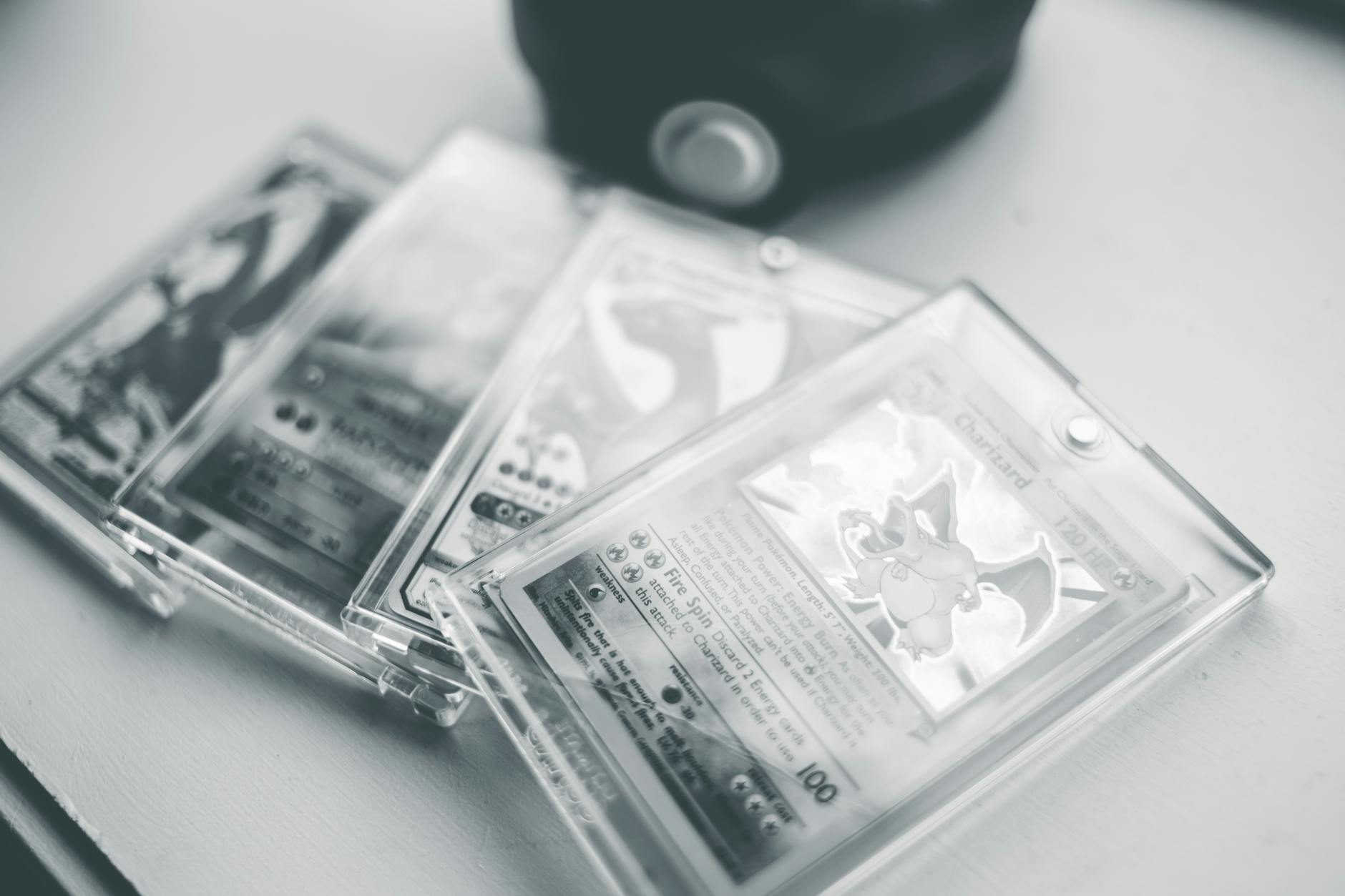
Out of 2,300+ submissions of 1st Edition Base Set Charizard to PSA since 1999, only 121 received a PSA 10 grade. That’s a 5.3% success rate. To put this in perspective, if you acquired 19 graded 1st Edition Base Set Charizards at random, statistically zero of them would be PSA 10. This rarity gap has a direct impact on pricing: a PSA 9 1st Edition Base Set Charizard trades around $50,000, while a PSA 10 of the same card commands approximately $550,000. The jump isn’t linear—it’s exponential, because the grade represents a scarcity boundary that collectors cannot cross.
The Full Spectrum of Base Set Card Values
Charizard dominates headlines, but the price movement extends across the entire Base Set ecosystem. The 1st Edition Base Set Charizard PSA 10 sits at approximately $264,000, reflecting strong secondary market activity. Unlimited Base Set Charizards in PSA 10 condition trade in the $15,000+ range—still substantial, but roughly 5.6% of the 1st Edition price. This tiering shows that print runs, production dates, and condition all compound scarcity; collectors must understand which lever has the most impact on their target card.
Beyond Charizard, other iconic cards like Blastoise and Alakazam have also appreciated, though at lower absolute values. A PSA 10 Base Set Blastoise, for instance, carries significant value but commands a fraction of a Charizard’s price. This differentiation is important because it means the broader Base Set isn’t rising as one monolithic block; rather, the most iconic, historically significant cards are pulling the hardest, while supporting cast cards appreciate more moderately. Collectors chasing quick gains often focus solely on Charizard and Blastoise, overlooking deeper roster pieces that may offer better risk-adjusted returns.
How Grading Mechanics and Slabbing Intensify Price Movements
The professional grading industry—primarily PSA, BGS, and CGC—has become the mechanism through which price discovery actually happens in the Base Set market. A raw, ungraded Charizard from someone’s collection might sell for $5,000 to $30,000 depending on condition. That same card, if authenticated and graded PSA 10, becomes a $264,000+ asset. The 10- to 50-fold price multiplier isn’t arbitrary; it reflects the market’s willingness to pay a premium for certified authenticity and transparent condition assessment.
This creates a potential pitfall for newer collectors and investors. Grading costs between $100 and $500 per card, depending on turnaround time and the grading company. If you submit a card expecting a PSA 10 and receive a PSA 8, you’ve paid grading fees but may have actually destroyed the card’s value relative to keeping it raw. The psychological impact of a disappointing grade can distort pricing as sellers become emotional about cards they expected to achieve higher marks. Additionally, grading turnaround times can be 4-12 months, meaning capital is locked in uncertainty for an extended period—a real cost that many optimistic submitters underestimate.
Investment Risk and Market Limitations
While the headline prices are impressive, Base Set card investing carries significant risks that deserve emphasis. Liquidity is the first constraint. A $1,700,000 Charizard is newsworthy precisely because sales at that level are rare and often require months of negotiation. Most collectors and investors cannot simply convert a high-value card to cash in days or even weeks. The buyer pool for PSA 10 cards shrinks dramatically as price increases, meaning you may own an asset worth $264,000 on paper but struggle to find a buyer willing to pay that amount in the real world.
Authentication and grading risk present another limitation. If a grading company’s standards shift, or if a card is later deemed to have been improperly graded, the market can reprrice overnight. Additionally, the Base Set market is still relatively small compared to equities or bonds; a single large sale or acquisition by a major collector can swing sentiment. There is no regulatory oversight of card pricing, no transparent order book like a stock exchange, and no circuit-breaker mechanisms. Prices can move dramatically on rumor or a single high-profile transaction. Collectors should view Base Set cards primarily as collectibles first and alternative assets second, not as stable stores of value.
Base Set Booster Box Recovery and Sealed Product Trends
While individual cards have been on a sustained rally, sealed Base Set booster boxes represent a distinct market segment with its own dynamics. Base Set boxes have recovered to the $400–$500 range after previous dips, making them more accessible entry points than graded singles but still expensive relative to modern product. A single booster box might contain anywhere from zero to three cards with competitive value, making box openings a high-variance gamble. The expected value of opening a box is often below the box’s market price, meaning serious collectors typically treat sealed boxes as long-term holds rather than products to rip and sell the contents.
Sealed product has also become attractive to institutional players and fund managers seeking tangible, portable assets. Unlike individual cards, sealed boxes have less variance in condition—either the seal is intact or it isn’t. This simplicity makes boxes easier to trade among non-specialist investors and reduces grading disputes. However, the $400–$500 price tag means that even sealed boxes now require capital deployment comparable to many alternative investments, and there’s no guarantee demand will remain strong indefinitely.
What’s Next for Base Set Prices in 2026 and Beyond
The 30th anniversary tailwinds will likely persist through the remainder of 2026, particularly if the Pokémon Company announces new TCG products, video games, or media tied to the milestone. Special anniversary editions, reprints of modern cards with retro aesthetics, or documentary content celebrating the franchise’s history could all serve as catalysts for continued price appreciation. However, the most explosive moves have likely already occurred; future gains will be more measured unless a new macro driver emerges.
Looking beyond 2026, Base Set prices will ultimately stabilize around a level determined by long-term demand from collectors and the declining rate of card degradation and loss. The cards that survive the next decade in good condition will become even scarcer, supporting prices even if annual appreciation slows. For collectors who bought at 1999 retail prices, 30-year price appreciation is remarkable; for buyers at 2026 peak prices, the forward-looking gains are less certain and depend on whether new generations of collectors develop the same affinity for 1999 Base Set cards that current collectors have.
Conclusion
Base Set Pokémon card prices are moving again in 2026 because the 30th anniversary is driving both nostalgia-based collector demand and capital inflows from a new class of investors. The $1,700,000 Charizard sale and sustained appreciation of PSA 10 examples reflect genuine scarcity—only 5.3% of submitted 1st Edition Base Set Charizards achieve top grades—combined with permanent supply constraints. The market has bifurcated into iconic cards like Charizard, which have reached speculative valuations, and supporting cast cards that offer more moderate appreciation with less hype.
If you’re considering Base Set cards as an investment, understand that liquidity is limited, grading risks exist, and prices can be volatile. If you’re a collector, the current environment offers both opportunity and peril; prices are high, but so is the emotional satisfaction of owning a piece of Pokémon history. The next 6-12 months will reveal whether this rally is anniversary-driven or the beginning of a longer structural shift in how the world values the oldest trading cards ever printed.
You Might Also Like
- The Fastest-Rising Pokémon Card Prices This Week – 05/24/2026
- Pokémon Card Prices That Spiked Hard This Week – 05/24/2026
- The Pokémon TCG Cards With Exploding Prices This Week – 05/24/2026