Australian buyers entering the Base Set market since early 2025 need to understand one fundamental shift: these cards have become genuinely valuable assets with real price floors, not speculative lottery tickets. The market has moved past the panic-buying frenzy of 2020–2022 and settled into a more mature period where vintage Base Set products command legitimate investment-grade pricing. A Base Set booster box that cost $12.80 AUD in 2023 now trades around $25.26 AUD in 2025—a 100% appreciation in two years—and high-grade Charizard cards regularly sell for five figures. This is not hype.
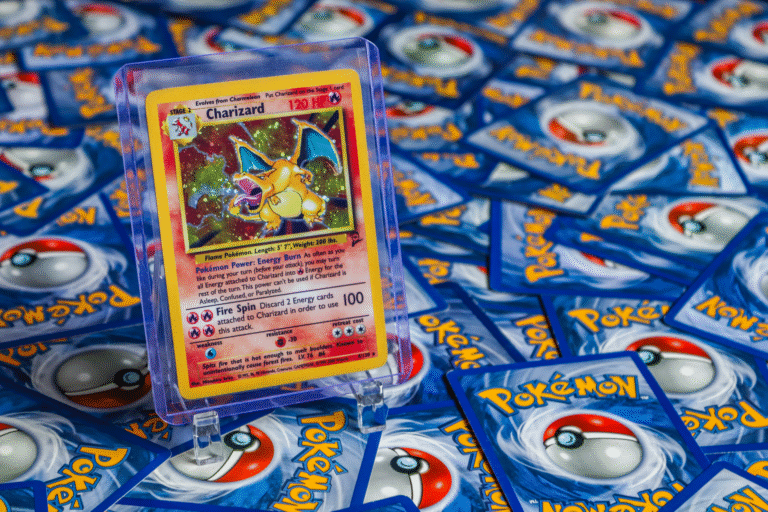
A pristine 1999 Base Set Charizard 1st Edition sold on eBay Australia for $25,800 AUD in 2025, reflecting the genuine scarcity and desirability of these 25-year-old cards. But appreciation and high resale prices come with real constraints that Australian collectors often overlook. Currency fluctuations, import logistics, grading costs, and authentication risks all directly affect what these cards are worth and whether they’re worth buying at current prices. Before you commit serious money to Australian Base Set purchases, you need to understand the forces shaping this market and the practical mechanics of buying, holding, and potentially selling.
Table of Contents
- Why Australian Base Set Prices Have Doubled Since 2023
- Market Consolidation and the End of Speculation
- Currency Risk and Supply Chain Delays Affecting Local Pricing
- Grading, Authentication, and the Reality of PSA Valuations
- Counterfeits and Red Flags in the Australian Market
- The 30th Anniversary Effect on Collector Interest
- Forward-Looking Positioning for Australian Buyers
- Conclusion
Why Australian Base Set Prices Have Doubled Since 2023
The price movement in australian Base Set cards is not random. Booster box pricing has climbed consistently as supply tightens and international demand pushes up the ceiling for vintage product. A booster box at $25.26 AUD may not sound dramatic to buyers familiar with opening-era pricing, but it represents a floor price supported by genuine buyer demand, not artificial scarcity created by early pandemic hoarding. High-grade individual cards show even more dramatic movement. Base Set Charizard cards graded PSA 10—the gold standard for condition—now command $8,000 to $14,000 AUD per card.
These are not unique or one-of-a-kind pieces; they are mass-produced cards from 1999 that have survived in exceptional condition. The price reflects the reality that very few Base Set Charizards exist in pristine state, and each card competing for attention among collectors worldwide creates genuine bidding competition. When a 1st Edition version hits auction, the price can spike dramatically, as the $25,800 eBay Australia sale in 2025 demonstrated. The key takeaway: these price levels are real and defensible, but they also mean the days of buying Base Set product as a casual investment are over. You’re buying at mature market prices, not early adopter prices.

Market Consolidation and the End of Speculation
The “healthy consolidation” currently underway in the Australian Base Set market represents a fundamental shift in buyer composition. The speculators who bought booster boxes by the pallet in 2021 have largely exited. What remains is a combination of serious collectors, long-term investors treating cards as alternative assets, and international buyers using Australia as a source for comparative pricing. This consolidation period has both advantages and risks. On the positive side, prices are now supported by genuine demand rather than fear-of-missing-out buying; if you purchase a Base Set box at $25.26 AUD today, you’re unlikely to see it crater to $10 AUD next month. On the negative side, prices have also stabilized upward, meaning the easy 50% gains of 2021–2022 are behind you.
You’re looking at low-to-mid single-digit annual appreciation if you buy at current market rates, assuming no major disruptions to collector interest or macroeconomic conditions. The consolidation also means that condition, grading, and specific card variant (1st Edition vs. unlimited, holo vs. non-holo) matter more than ever. A moderately played booster box might trade at a 15–20% discount to a near-mint example. This level of granularity was less important when prices were climbing rapidly; it’s essential now.
Currency Risk and Supply Chain Delays Affecting Local Pricing
Australian buyers face a currency headwind that directly impacts what they pay for Base Set cards sourced internationally. When the Australian dollar weakens against the US dollar—which has been the broad trend through early 2025—the cost of importing cards from international sellers or buying from overseas distributors increases proportionally. A card priced at $5,000 USD is worth approximately $7,600 AUD at current exchange rates (0.65 AUD/USD), but if the dollar drops to 0.60, that same card costs $8,333 AUD. For serious collectors accumulating cards over months, currency swings of 5–10% are not unusual and can meaningfully affect total portfolio value. Regional distribution delays create a secondary friction point. The Pokémon Company’s distribution network sometimes prioritizes other regions, creating short-term supply crunches in Australia.
When booster boxes become hard to find locally, prices spike as buyers compete for limited available stock. These spikes are temporary—supply eventually normalizes—but they can create buying pressure at exactly the wrong moment. A buyer desperate to complete a set after a three-month shortage may overpay relative to what prices normalize to once supply catches up. For Australian collectors, the lesson is clear: don’t buy on the assumption that prices in your local market are set by pure card fundamentals. Currency movements and logistical friction are real variables that affect your effective cost basis. If you’re planning a large purchase, track AUD/USD movements and regional supply patterns before committing significant capital.

Grading, Authentication, and the Reality of PSA Valuations
High-grade Base Set cards command premium pricing specifically because grading services like PSA and CGC provide authentication and condition certification that buyers trust. A Base Set Charizard graded PSA 10 is worth $8,000–$14,000 AUD in early 2025 because the PSA slab certifies its authenticity and condition; the same card, ungraded or in a lower grade, is worth substantially less—potentially 50–70% less depending on how much condition has deteriorated. However, grading is not free, and turnaround times matter for Australian buyers. Sending cards to PSA or CGC for grading typically involves international shipping, insurance, and submission fees that total $100–$300 per card depending on the service tier and turnaround speed.
For a card that might be worth $2,000 ungraded, those costs are justified. For a card worth $500 ungraded, grading expenses may consume 20–40% of its value, making the process economically irrational. This creates a practical cutoff: only cards with reasonable upside should be sent for grading, and that cutoff varies depending on your buy-in price and confidence in condition. Australian collectors also face longer shipping times and higher international postage costs than US-based collectors, which can make the economics of grading less favorable. Budget accordingly, and consider whether a card’s value justifies both the grading cost and the time delay in receiving it back.
Counterfeits and Red Flags in the Australian Market
The high prices now attached to Base Set cards have created genuine counterfeiting incentives. Fake booster boxes, counterfeit 1st Edition cards, and reproductions of rare variants are circulating in online marketplaces, and Australian buyers are not immune to these risks. A counterfeit Base Set booster box can look convincing to the untrained eye but is worth $0 if authentication fails during a resale attempt. Authentication relies on several physical characteristics: card stock quality and thickness, font rendering on text, centering of the image, back-of-card print quality, and holo pattern specifics. Learning to spot these differences takes time and often requires comparing against known authentic examples.
For high-value purchases—anything over $2,000—consider requiring third-party authentication before completing the transaction, even if the seller appears reputable. The extra cost of authentication is negligible compared to the risk of acquiring a $10,000 counterfeit. Australian eBay and Facebook Marketplace listings warrant extra scrutiny because international sellers sometimes misrepresent condition or authenticity, and the recourse available to Australian buyers can be limited depending on the platform and seller policies. If a deal seems unusually cheap for the condition claimed, it probably is. Trust your skepticism.

The 30th Anniversary Effect on Collector Interest
Pokémon’s 30th anniversary in 2026 and McDonald’s decision to bring back TCG Happy Meals in major markets including Australia and New Zealand are catalyzing renewed collector interest. Anniversary years historically drive nostalgia purchases, social media buzz, and media coverage that attract new buyers into the hobby.
For Base Set cards specifically, this creates a favorable backdrop: new money entering the market often gravitates toward the most historically significant and recognizable products, and Base Set is the origin point of the entire TCG. The McDonald’s Happy Meals angle is particularly interesting because it reintroduces cards to children and casual adult collectors who may have childhood memories of Base Set, creating a cultural touchstone that can sustain or accelerate demand. This is not guaranteed to push Base Set prices higher—30th anniversary products themselves sometimes disappoint or become overprinted—but the macro interest environment for vintage cards is likely to remain supportive through 2026 and possibly into 2027.
Forward-Looking Positioning for Australian Buyers
For Australian collectors with a 2–3 year investment horizon, Base Set cards appear positioned for continued moderate appreciation rather than explosive gains. The market is mature, prices are realistic, and catalyst events like the 30th anniversary provide some upside.
However, you should not expect double-digit annual returns or rapid price recovery if the broader hobby cools. The practical implication: buy Base Set cards because you genuinely value them as collectibles or because you believe in their long-term scarcity, not because you’re betting on them to outpace other assets. If your primary goal is capital appreciation, Base Set may not be the vehicle; if your goal is preserving purchasing power in a tangible, historically significant asset while enjoying the hobby, the risk-reward is reasonable at current Australian pricing.
Conclusion
Australian Base Set buyers in 2025 are entering a market defined by legitimate value, mature pricing, and real-world logistical constraints. Booster boxes at $25 AUD and Charizards at $10,000+ AUD are not speculative bubbles—they reflect genuine scarcity and persistent collector demand. But those same price levels also mean the margin for error has narrowed.
You must be disciplined about condition, authentication, and grading economics, and you must account for currency risk and supply chain friction specific to the Australian market. Start by defining your actual goal: are you buying to collect and enjoy, to preserve capital, or to speculate on appreciation? Your answer determines which cards make sense to buy and at what price. Then educate yourself on condition assessment, authentication, and the specific mechanics of buying, holding, and selling in the Australian market. The upside is there, but it requires more knowledge and discipline than it did during the 2020–2022 frenzy.