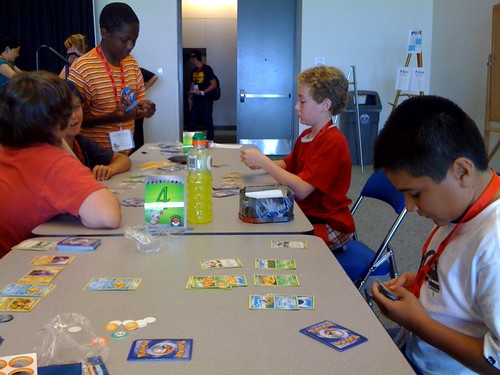
Trade for a Pokémon slab—a graded card sealed in a labeled holder—only after checking its certification, photos, and recent comparable sales. Record the negotiated value in writing before either person hands over cards or money. Pokémon Leagues may offer trading opportunities, but each League operates differently, so confirm the host's rules and event details beforehand, according to The Pokémon Company International.
Table of Contents
- Identify the Exact Slab
- What Does the Certification Check Prove?
- Compare Photos, Not Just Numbers
- Set a Defensible Trade Value
- Put the Agreed Value in Writing
Identify the Exact Slab
Do not begin with price. First, establish precisely what the other collector is offering. Read the card description, grade, grading company, and certification number directly from the holder.
Ask the owner to keep the slab available while you verify it. A screenshot, sales listing, or typed certification number is not a substitute for inspecting the item being exchanged. If the physical slab changes during the discussion, repeat the checks. This protects against accidentally negotiating for one card and receiving another similar-looking example.
What Does the Certification Check Prove?
For a psa slab, enter the certification number in PSA's Cert Verification service. Compare the resulting record with the card, label, grade, and number in front of you. A valid result is only a first check.
PSA warns that counterfeit holders can carry genuine certification numbers copied from public sources, so a database match does not guarantee that the physical slab is authentic. Stop the trade if the record conflicts with the slab. Do not dismiss a different grade, card description, or certification number as a minor database issue without resolving it.
Compare Photos, Not Just Numbers
PSA says it uploads in-house SecureScan images for cards, tickets, and packs. When images are available for the certification number, compare them with the offered card rather than relying on the label alone.
Look at visible details that can be compared consistently: Take clear photographs of the actual slab's front, back, and label with the owner's agreement. These images document what was traded, but they do not independently authenticate the holder or card.
- Card artwork, layout, and orientation
- Centering and identifiable edge or corner features
- Label description, grade, and certification number
- Any visible mark that appears in one image but not the other
Set a Defensible Trade Value
Search for completed sales involving the same card and grade. PSA's Auction Prices Realized contains more than five million PSA-graded auction results and is updated daily, making recent completed results more useful than an unsold asking price. Keep the comparison narrow.
A sale in a neighboring grade does not establish the value of the offered slab. PSA's price guide can provide another reference point by set and grade, but no guide guarantees what another collector will accept. If comparable sales are sparse, treat the value as uncertain. Write down which results both traders considered, reject obvious grade mismatches, and pause the exchange if the difference cannot be resolved.
Put the Agreed Value in Writing
"Written value" can mean either a simple trade record or a formal appraisal. For an ordinary trade night, a short record should identify the slab, its certification number, the items exchanged, any cash included, and the value both people assigned to each side.
A practical note can include: A formal PSA appraisal serves a different purpose. PSA says its appraisals reflect retail replacement cost for insurance or estate documentation, not support for a sale, and eligibility is limited to PSA-certified trading cards with declared values of at least $2,000. For an ineligible slab, attach or list the recent comparable sales used to reach the written trade value.
- Slab description, grade, and certification number
- Cards, slabs, or money provided in return
- Negotiated trade value for each side
- Date, location, names, and acknowledgments
- A statement that the figure is a negotiated trade value, not a formal appraisal
You Might Also Like
- How Opening a Slab Changes a Pokemon Card’s Grade, Guarantee, and Resale Value
- Why a Valid PSA Certification Lookup Does Not Prove the Pokemon Slab Is Genuine
- Why You Should Not Open a Suspicious Pokemon Card Slab Before Documenting It